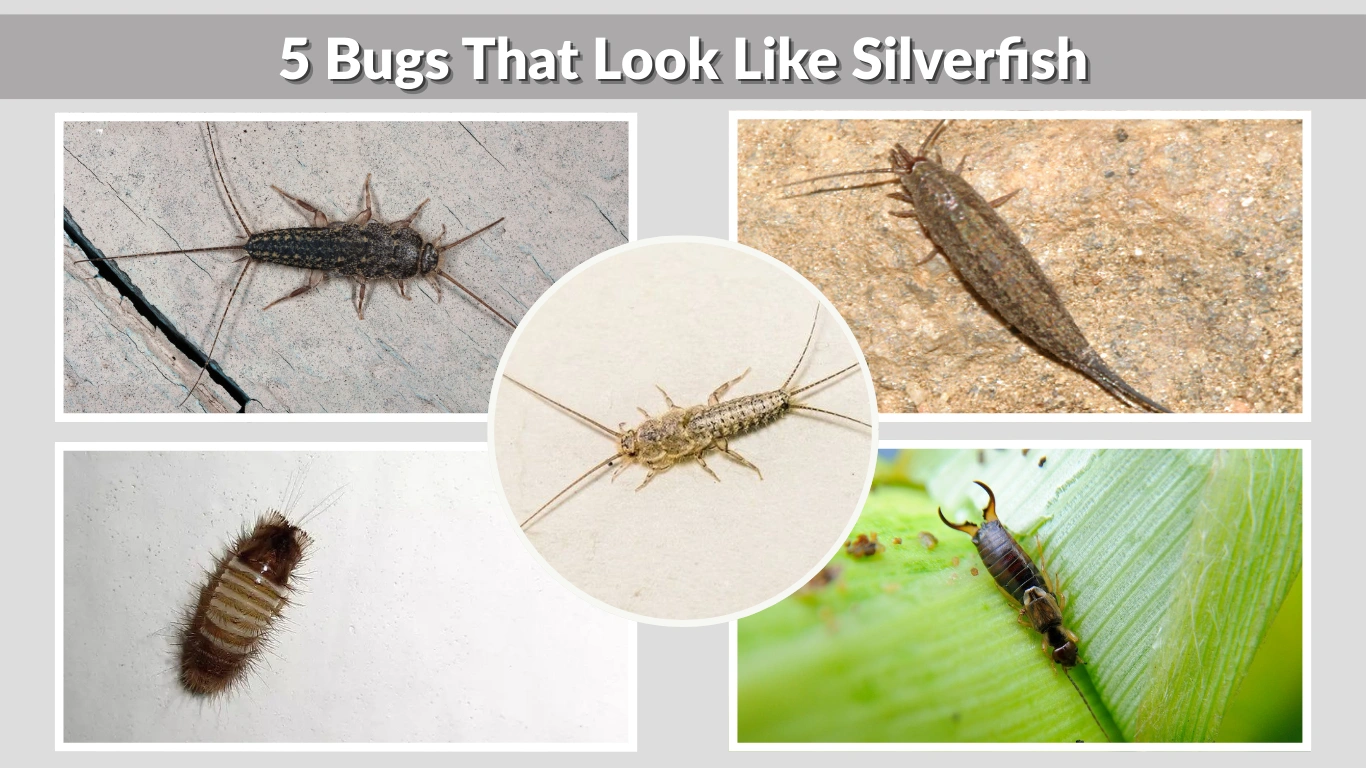
Silverfish aren’t the only small, fast-moving insects that can appear in your home. Several other bugs closely resemble them in size, shape, or behavior, making identification confusing. While some of these look-alikes are harmless outdoor insects, others can damage fabrics, paper, or stored items. Knowing the differences helps you choose the right control method and avoid unnecessary treatments. Below are five common bugs that look like silverfish but have distinct traits that set them apart.
1. Firebrat

Firebrats are small, fast-moving insects that closely resemble silverfish in both shape and behavior. Because of their similar appearance—long bodies, silvery-gray coloring, and quick, wriggling movements—they are often mistaken for silverfish inside homes. However, firebrats have distinct traits that set them apart, especially in their habitat preferences and environmental needs. Understanding these similarities and differences can help homeowners correctly identify the pest and address infestations more effectively.
Appearance
Firebrats (Thermobia domestica) are wingless insects with flattened, elongated bodies that taper toward the end. They typically measure about ½ inch long and have three long bristle-like appendages extending from the rear, just like silverfish. Their bodies are covered in tiny scales, giving them a slightly mottled gray or brown appearance. Unlike the shiny, metallic look of silverfish, firebrats tend to have a more speckled pattern.
They also have long antennae and move in a quick, darting motion when disturbed, which adds to the confusion during identification.
Similarities to Silverfish
Firebrats and silverfish belong to the same insect order (Zygentoma), which explains their nearly identical body structure. Both are wingless, nocturnal, and thrive in humid environments. They feed on carbohydrates such as paper, glue, book bindings, wallpaper paste, and starchy fabrics.
Like silverfish, firebrats are commonly found indoors and hide in cracks, crevices, and dark spaces during the day. Their rapid, fish-like movement is another shared trait that makes it difficult to distinguish between the two at first glance.
Differences from Silverfish
The biggest difference between firebrats and silverfish is their preferred temperature. Firebrats thrive in very warm environments, typically between 90–110°F (32–43°C). They are often found near heat sources such as furnaces, water heaters, boilers, ovens, and attics. Silverfish, on the other hand, prefer cooler, damp areas like bathrooms, basements, and kitchens.
In terms of appearance, firebrats usually have a mottled gray-brown pattern, while silverfish appear more uniformly silver and shiny. Firebrats are also slightly more tolerant of dry conditions, as long as warmth is present.
Habitat and Behavior
Firebrats are most active at night and avoid light. During the day, they hide in warm cracks and crevices, especially around insulation or heating units. They reproduce in warm environments, and infestations often persist in heated buildings year-round.
Because they require high temperatures, firebrats are less commonly found in naturally cool homes but may thrive in industrial settings, bakeries, or boiler rooms. Proper ventilation, reducing humidity, and sealing cracks can help control their presence.
Correct identification is important, as their heat-loving behavior often points to specific areas in the home that need attention.
2. Four-Lined Silverfish

The four-lined silverfish is a close relative of the common silverfish and is often mistaken for it due to its nearly identical body shape and movement. As its name suggests, this species has faint dark lines running lengthwise along its body, which help distinguish it from other silverfish types. While it shares many characteristics with the common silverfish, subtle differences in appearance and habitat preference can help with proper identification.
Appearance
The four-lined silverfish (Ctenolepisma lineata) has the same elongated, flattened body shape typical of silverfish. It grows to about ½ inch in length and is wingless, with long antennae at the front and three bristle-like appendages at the rear. Its body is covered in fine scales that give it a silvery-gray to brownish color.
The key identifying feature is the presence of four faint, dark longitudinal stripes running down its back. These lines may not always be very bold, but they are usually visible upon closer inspection. Like other silverfish, it moves in a quick, wriggling, fish-like manner when disturbed.
Similarities to Common Silverfish
The four-lined silverfish belongs to the same insect order (Zygentoma) as the common silverfish, which explains their near-identical body structure. Both are nocturnal, wingless insects that prefer dark, humid environments. They feed on similar materials, including paper, cardboard, book bindings, wallpaper paste, fabrics, and other starchy substances.
Both species are commonly found inside homes and hide in cracks, crevices, and clutter during the day. Their rapid movement and preference for undisturbed spaces make them difficult to spot unless their hiding places are disturbed.
Differences from Common Silverfish
The most noticeable difference is the striped pattern on the four-lined silverfish. While common silverfish typically appear uniformly silvery and smooth, the four-lined variety has subtle dark stripes that break up the uniform appearance.
Habitat preference can also vary slightly. Four-lined silverfish are sometimes found in slightly warmer and drier areas compared to common silverfish, though both still require moderate humidity to survive. They may be discovered in attics, storage areas, or upper parts of buildings more frequently than typical silverfish.
Habitat and Behavior
Like other silverfish species, four-lined silverfish are nocturnal and avoid light. They remain hidden during the day and become active at night to search for food. They reproduce in concealed spaces, laying eggs in cracks and sheltered areas.
They are most often found in residential homes, especially in places with stored paper products, books, and fabrics. Reducing humidity, sealing entry points, and minimizing clutter can help limit their presence. Proper identification ensures that homeowners can take appropriate measures to manage infestations effectively.
3. Jumping Bristletail

Jumping bristletails are primitive, wingless insects that closely resemble silverfish in body shape and movement. Because they share a long, tapered body and bristle-like appendages at the rear, they are frequently mistaken for silverfish. However, jumping bristletails have unique physical features and behaviors—especially their ability to jump—that clearly set them apart. Understanding these traits helps with accurate identification.
Appearance
Jumping bristletails (order Archaeognatha) have elongated, carrot-shaped bodies that taper toward the back. They usually grow between ½ to ¾ inch long. Like silverfish, they are wingless and have long antennae in front and three tail-like appendages at the rear.
Their bodies are typically brown, gray, or mottled with darker patterns. Unlike the smooth, silvery sheen of silverfish, jumping bristletails often appear more textured and slightly arched. In fact, their bodies have a noticeable humpbacked shape, which is one of their key identifying features.
Similarities to Silverfish
Both jumping bristletails and silverfish are primitive insects that have existed for millions of years. They share a similar body structure, including long antennae and three rear appendages. Both are wingless and move quickly when disturbed.
They also prefer moist environments and are commonly found in dark or hidden areas. Because of their size, shape, and rapid movements, homeowners often confuse bristletails with silverfish at first glance.
Differences from Silverfish
The biggest difference is movement. Jumping bristletails can leap several inches into the air using their abdominal muscles when threatened, while silverfish cannot jump at all. This jumping ability is a clear distinguishing behavior.
Another key difference is body shape. Jumping bristletails have a more arched, humpbacked appearance, whereas silverfish have flatter bodies. Bristletails are also more commonly found outdoors under rocks, bark, leaves, and in soil, while silverfish are primarily indoor pests.
Additionally, jumping bristletails tend to have larger, more noticeable compound eyes compared to silverfish, whose eyes are smaller and less prominent.
Habitat and Behavior
Jumping bristletails prefer damp outdoor environments and are often found in gardens, wooded areas, and around building foundations. They hide under stones, logs, and leaf litter during the day and are most active at night.
While they may occasionally wander indoors, they are not typically household pests like silverfish. Their presence inside is usually accidental and temporary. Reducing moisture and sealing cracks around foundations can help prevent them from entering homes.
Correct identification is important, as jumping bristletails are generally harmless and do not cause the same type of indoor damage associated with silverfish infestations.
4. Carpet Beetle Larva

Carpet beetle larvae are commonly mistaken for silverfish because they are small, elongated, and often found inside homes. While adult carpet beetles look very different, the larval stage can cause confusion due to its size and indoor presence. However, carpet beetle larvae have distinct physical features and feeding habits that clearly separate them from silverfish.
Appearance
Carpet beetle larvae are small, oval to elongated insects that typically measure about ⅛ to ¼ inch long. Unlike the smooth, shiny body of a silverfish, carpet beetle larvae are covered in stiff bristles or tiny hairs. Their bodies are usually brown or tan with visible banded segments.
They do not have the three long tail-like appendages that silverfish have. Instead, they often appear fuzzy or bristly, with some species having a tuft of longer hairs at the rear. Their slow crawling movement also differs from the quick, wriggling motion of silverfish.
Similarities to Silverfish
Both carpet beetle larvae and silverfish are commonly found indoors and can damage household materials. They may be discovered in closets, basements, attics, or storage areas where fabrics and paper products are present.
Because they are small, brownish, and found in similar areas of the home, they can be confused at a glance—especially in dim lighting. Both pests are also known to feed on household items, which increases the likelihood of misidentification.
Differences from Silverfish
The most noticeable difference is texture. Silverfish have smooth, flat, silvery bodies with three long bristles at the tail end. Carpet beetle larvae, on the other hand, are visibly hairy and lack the three tail appendages.
Their diet is also very different. Silverfish primarily feed on starchy materials like paper, glue, and wallpaper paste. Carpet beetle larvae prefer natural fibers such as wool, silk, leather, fur, feathers, and even pet hair. They are more likely to damage clothing, rugs, and upholstered furniture than paper products.
Movement is another key difference. Carpet beetle larvae move slowly and crawl, while silverfish move rapidly in a fish-like motion.
Habitat and Behavior
Carpet beetle larvae hide in dark, undisturbed areas such as closets, under furniture, inside air vents, or along baseboards. They are often found near their food sources, particularly in stored fabrics.
Unlike silverfish, which prefer high humidity, carpet beetle larvae can survive in a variety of indoor conditions. Regular vacuuming, cleaning fabrics, and sealing entry points can help reduce infestations.
Accurate identification is essential because carpet beetle larvae can cause significant damage to clothing and household textiles if left untreated.
5. Earwig

Earwigs are slender, fast-moving insects that are sometimes mistaken for silverfish due to their elongated bodies and quick movements. Although they look somewhat similar at a glance, earwigs have several noticeable features that clearly distinguish them from silverfish. Proper identification is important, especially since earwigs are more commonly outdoor insects that occasionally wander indoors.
Appearance
Earwigs have long, narrow bodies that typically measure about ½ to 1 inch in length. Their color ranges from reddish-brown to dark brown. Unlike silverfish, earwigs have a pair of curved pincers (called cerci) at the end of their abdomen. These pincers are one of their most recognizable features.
Some earwig species also have short wings folded under small wing covers, though they rarely fly. In contrast, silverfish are completely wingless and have three thin, bristle-like appendages instead of pincers. Earwigs also have a more segmented and slightly hardened body compared to the smooth, scaled body of silverfish.
Similarities to Silverfish
Both earwigs and silverfish have elongated bodies and move quickly when disturbed. They prefer dark environments and are often active at night. Because of their size and fast movements, people sometimes mistake earwigs for large silverfish, especially in basements or bathrooms.
Both insects may also be found in damp areas, which adds to the confusion. However, their overall body structure is quite different upon closer inspection.
Differences from Silverfish
The most obvious difference is the presence of pincers on earwigs. Silverfish do not have pincers; instead, they have three thin tail-like filaments. Earwigs also have shorter antennae compared to the long, delicate antennae of silverfish.
In terms of habitat, earwigs are primarily outdoor insects. They live under rocks, mulch, logs, and leaf litter. Silverfish are indoor pests that prefer humid areas like bathrooms, kitchens, and basements.
Their diet differs as well. Earwigs feed on plants, decaying organic matter, and small insects, while silverfish primarily consume starchy materials such as paper and glue.
Habitat and Behavior
Earwigs prefer moist outdoor environments and are commonly found in gardens and around foundations. They may enter homes during periods of heavy rain, extreme heat, or in search of shelter.
While earwigs may look intimidating because of their pincers, they are generally harmless to humans. Managing moisture, sealing cracks, and reducing outdoor debris near the home can help prevent them from coming indoors.
Correct identification ensures that homeowners address the right pest problem and use appropriate control methods.
FAQs
What bug is most commonly mistaken for a silverfish?
Firebrats are most commonly mistaken for silverfish because they share the same elongated body shape, quick movements, and three tail-like appendages. The main difference is that firebrats prefer very warm areas like near furnaces or boilers, while silverfish prefer cooler, damp spaces.
How can I tell if I have silverfish or carpet beetle larvae?
Silverfish have smooth, shiny bodies and three long tail filaments. Carpet beetle larvae are brown, fuzzy, and covered in bristles without tail filaments. Carpet beetle larvae also move slowly and primarily damage fabrics, while silverfish move quickly and feed on starchy materials like paper and glue.
Are jumping bristletails harmful inside the home?
Jumping bristletails are generally harmless and are usually outdoor insects. If they appear indoors, it is often accidental. Unlike silverfish, they can jump when disturbed and are not known for causing damage to paper, fabrics, or household materials.
Why do firebrats appear near heaters?
Firebrats thrive in high temperatures, typically between 90–110°F. They are attracted to heat sources such as furnaces, water heaters, and ovens. If you notice silverfish-like insects near heating systems, they are more likely to be firebrats than common silverfish.
Do earwigs cause the same damage as silverfish?
No, earwigs do not cause the same type of damage. Silverfish feed on paper, glue, and starchy materials, which can harm books and wallpaper. Earwigs mainly feed on plants and organic matter outdoors and rarely cause structural damage inside homes.