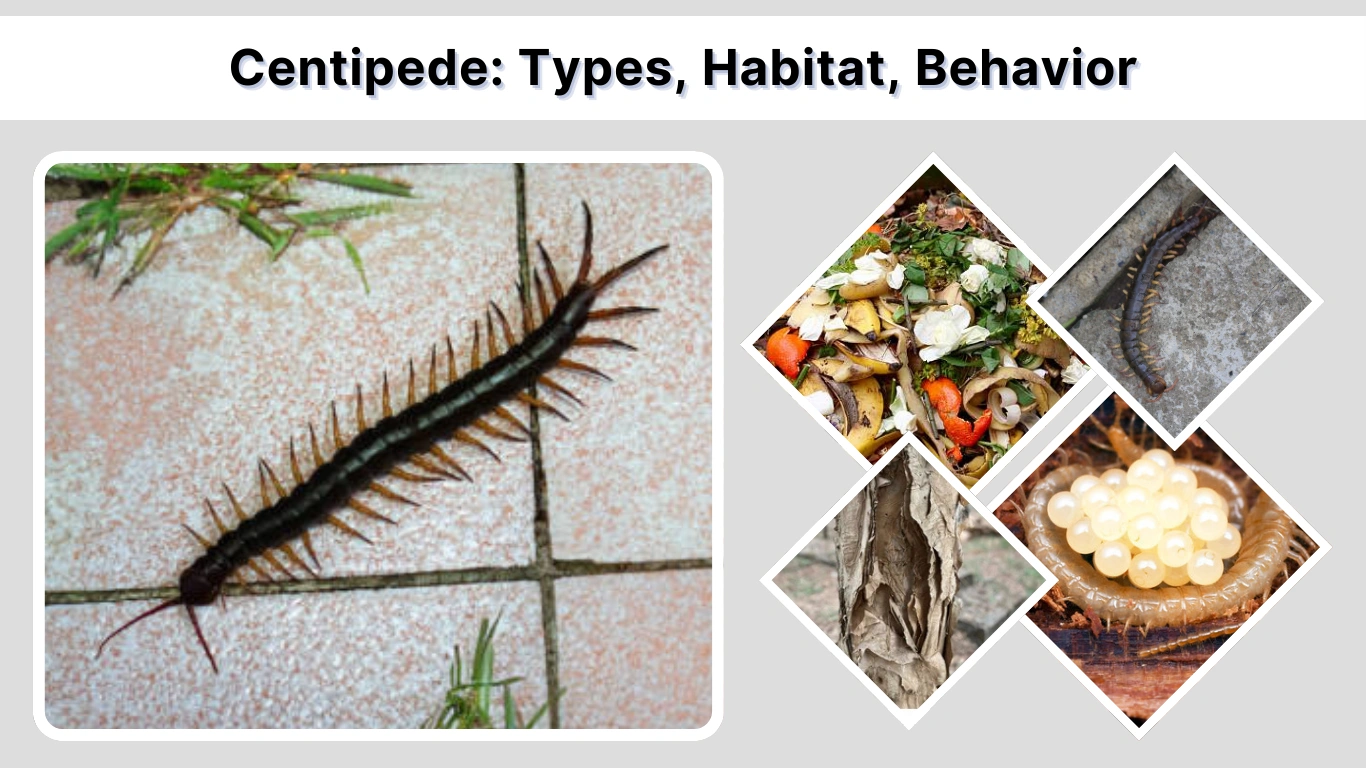
Centipedes are fast-moving, many-legged creatures that often trigger fear the moment they appear. Whether spotted in a bathroom, basement, or garden, they tend to raise immediate questions: Are they dangerous? Do they bite? Why are they inside my home? Despite their unsettling appearance, centipedes play an important role in the ecosystem and even inside houses. Understanding what they are, how they live, and whether they pose a real threat can help replace fear with facts. This guide explores their characteristics, habitat, diet, and potential risks.
What Is a Centipede?
A centipede is a long, segmented arthropod belonging to the class Chilopoda. Although many people think they are insects, centipedes are not insects at all. Insects have three body parts and six legs, while centipedes have elongated bodies made up of multiple segments, each with one pair of legs.
The word centipede literally means “one hundred feet,” but this is misleading. Most species do not have exactly 100 legs. Depending on the species, they can have anywhere from fewer than 30 legs to more than 300.
Centipedes are carnivorous predators. Unlike millipedes, which are slow and feed mostly on decaying plant matter, centipedes actively hunt other small insects. Their flattened bodies allow them to move quickly through tight spaces, making them effective nocturnal hunters.
Physical Characteristics and Anatomy

Centipedes have a distinctive appearance that makes them easy to identify. Their long, flexible bodies and numerous legs give them a somewhat intimidating look. However, each physical feature serves a specific purpose.
How Many Legs Does a Centipede Have?
The number of legs a centipede has depends on the species. Interestingly, centipedes always have an odd number of pairs of legs, meaning they never have exactly 100 legs.
Each body segment contains one pair of legs. Some small species may have around 30 legs, while larger tropical species can have well over 200. As centipedes grow, some species add more segments and legs during molting stages.
Body Structure and Movement
A centipede’s body is divided into a head and a segmented trunk. On its head, you will find:
- Two long, sensitive antennae
- Simple eyes (in some species)
- Specialized venom claws called forcipules
The forcipules are not true jaws. Instead, they are modified front legs that function like pincers. These claws inject venom into prey, allowing the centipede to immobilize and consume it.
Centipedes are known for their speed. Their legs move in a wave-like motion that allows them to run surprisingly fast. This quick movement helps them escape predators and catch prey efficiently.
Types of Centipedes

There are more than 3,000 known species of centipedes worldwide. While they share similar traits, some types are more commonly encountered than others.
House Centipede
The house centipede (Scutigera coleoptrata) is the species most often found indoors. It has:
- Very long, delicate legs
- A yellowish-gray body with dark stripes
- Extremely fast movement
House centipedes prefer damp indoor spaces like bathrooms, basements, and laundry rooms. While their appearance can be alarming, they rarely bite humans and are generally harmless.
In fact, they feed on household pests such as spiders, cockroaches, ants, and termites. This makes them somewhat beneficial inside homes.
Giant Centipede
Giant centipedes are typically found in tropical and subtropical regions. Some species can grow up to 12 inches long. These centipedes have stronger venom and are capable of subduing larger prey, including small reptiles and rodents.
Although their bites can be painful, they are rarely life-threatening to humans. Most incidents result in localized pain and swelling.
Soil and Garden Centipedes
Soil centipedes live outdoors in moist environments such as:
- Under rocks
- Beneath leaf litter
- In garden soil
They play an important ecological role by controlling insect populations. These species are usually smaller and less noticeable than house or giant centipedes.
Where Do Centipedes Live?

Centipedes thrive in dark, damp environments. Because their bodies lose moisture easily, they must stay in humid areas to survive.
Outdoors, they are commonly found:
- Under logs and stones
- In compost piles
- Beneath bark
- In moist soil
Indoors, they are attracted to similar conditions.
Why Do Centipedes Appear in Bathrooms and Basements?
Bathrooms and basements provide ideal living conditions for centipedes due to:
- High humidity levels
- Dark corners and cracks
- Access to small insects
If you frequently see centipedes in your home, it may indicate excess moisture or the presence of other insects they feed on. They typically enter through small cracks in walls, foundation gaps, or openings around pipes.
Reducing humidity and sealing entry points can significantly decrease their presence.
What Do Centipedes Eat?

Centipedes are strictly carnivorous. They hunt and feed on a wide variety of small creatures, including:
- Spiders
- Cockroaches
- Ants
- Silverfish
- Termites
- Bed bugs
They use their venom claws to paralyze prey before consuming it. Unlike scavengers, centipedes actively pursue their targets.
Because they feed on many common household pests, house centipedes can actually serve as natural pest control. While their appearance may be unsettling, their presence can indicate they are helping reduce more problematic insects.
Are Centipedes Dangerous?
One of the most common concerns about centipedes is whether they pose a threat to humans. Their speed and many legs often create the impression that they are aggressive or highly venomous.
In reality, most centipedes are not dangerous to humans.
Are Centipedes Poisonous or Venomous?
Centipedes are venomous, not poisonous. This means they inject venom into prey using their forcipules. They do not transmit toxins through touch or by being eaten.
Their venom is primarily designed to subdue insects and small animals. In most species, it is not strong enough to cause serious harm to humans.
Centipede Bite Symptoms
Although uncommon, centipede bites can happen if the insect feels threatened or trapped against skin.
Typical symptoms include:
- Mild to moderate pain
- Redness
- Swelling
- Temporary discomfort
The sensation is often compared to a bee sting. Severe reactions are rare but may occur in individuals with allergies or sensitive skin. Medical attention is usually only necessary if symptoms worsen or signs of infection appear.
Centipede vs Millipede

Centipedes and millipedes are often confused because they both have long, segmented bodies with many legs. However, they are very different in behavior, diet, and risk level.
One of the easiest ways to tell them apart is by looking at their legs. Centipedes have one pair of legs per body segment, while millipedes have two pairs per segment. This gives millipedes a denser, more compact appearance.
Centipedes are also much faster. They move quickly and actively hunt prey. Millipedes, on the other hand, move slowly and typically curl into a tight spiral when threatened.
Another major difference is diet. Centipedes are carnivores that hunt insects. Millipedes are mostly decomposers that feed on dead leaves and plant material. Because of this, centipedes have venom claws, while millipedes rely on defensive chemicals or their hard outer shell for protection.
In terms of danger, centipedes are more capable of biting, but most species pose little threat to humans. Millipedes rarely bite at all.
Life Cycle of a Centipede

Centipedes go through a gradual development process rather than a complete metamorphosis like butterflies or beetles.
The life cycle includes:
- Egg Stage – Female centipedes lay eggs in soil or protected, damp areas. Depending on the species, they may lay anywhere from a few dozen to several dozen eggs at a time.
- Juvenile Stage – Young centipedes resemble smaller versions of adults but may have fewer legs initially. Some species gain additional segments and legs as they molt.
- Adult Stage – As they mature, centipedes continue molting, shedding their exoskeleton to grow larger.
The lifespan of a centipede varies by species. Some can live for only a year or two, while others may survive up to five or six years under favorable conditions.
Unlike many insects, centipedes are attentive mothers. In certain species, the female guards her eggs until they hatch, protecting them from predators and fungi.
How to Get Rid of Centipedes
If you frequently see centipedes indoors, the goal should not only be removing them but also eliminating the conditions that attract them.
Natural Prevention Methods
The most effective way to control centipedes is to reduce moisture. Since they thrive in damp environments, lowering humidity can make your home less inviting.
Practical steps include:
- Using a dehumidifier in basements
- Fixing leaking pipes and faucets
- Improving ventilation in bathrooms
- Sealing cracks in walls and foundations
- Removing clutter where insects may hide
By addressing moisture issues, you also reduce the insects that centipedes feed on.
Home Remedies
Some homeowners prefer natural approaches before turning to chemicals. Common home remedies include:
- Spraying essential oils like peppermint or tea tree oil around entry points
- Using sticky traps to monitor activity
- Cleaning drains regularly
- Vacuuming areas where centipedes hide
While these methods may reduce sightings, they work best when combined with moisture control.
Chemical and Professional Solutions
In cases of heavy infestation, insecticide sprays may be necessary. Products labeled for crawling insects can be applied along baseboards and entry points.
If centipedes continue to appear despite preventive measures, professional pest control services can identify hidden moisture problems and treat both centipedes and their prey.
Interesting Facts About Centipedes
Centipedes are fascinating creatures with a long evolutionary history. Here are a few surprising facts:
- Not all centipedes have 100 legs — the number varies widely by species.
- They have existed for over 400 million years.
- Some species can regenerate lost legs.
- Giant tropical centipedes can prey on small birds, reptiles, and rodents.
- House centipedes can run extremely fast, making them difficult to catch.
Despite their frightening appearance, they are highly efficient predators that help maintain ecological balance.
FAQs
How many legs does a centipede really have?
The number of legs depends on the species. Centipedes can have anywhere from fewer than 30 legs to more than 300. They always have an odd number of leg pairs, meaning they never have exactly 100 legs despite their name.
Why do centipedes come into houses?
Centipedes enter homes searching for moisture and food. Bathrooms, basements, and kitchens provide damp conditions and access to insects like ants, spiders, and cockroaches, which serve as their primary food source.
What kills centipedes instantly?
Direct contact insecticide sprays labeled for crawling insects can kill centipedes quickly. However, eliminating moisture problems and reducing other insect populations is the most effective long-term solution.
Can centipedes climb walls or beds?
Yes, centipedes can climb walls and other surfaces, especially textured ones. House centipedes are agile climbers, which explains why they may occasionally be seen on ceilings or near beds.
Should I kill house centipedes or leave them?
House centipedes are generally harmless and help control other pests. If their presence does not bother you, they can be beneficial. However, if sightings are frequent, addressing moisture and insect issues is the best approach.
Conclusion
Centipedes may look intimidating, but most species are far less dangerous than they appear. As fast-moving predators, they play an important role in controlling insect populations both outdoors and indoors. While their bites can be uncomfortable, they rarely cause serious harm to humans.
If centipedes are appearing in your home, the real solution lies in reducing moisture and eliminating the pests they feed on. With proper prevention and maintenance, you can keep your home less inviting to these many-legged visitors while maintaining a balanced environment.