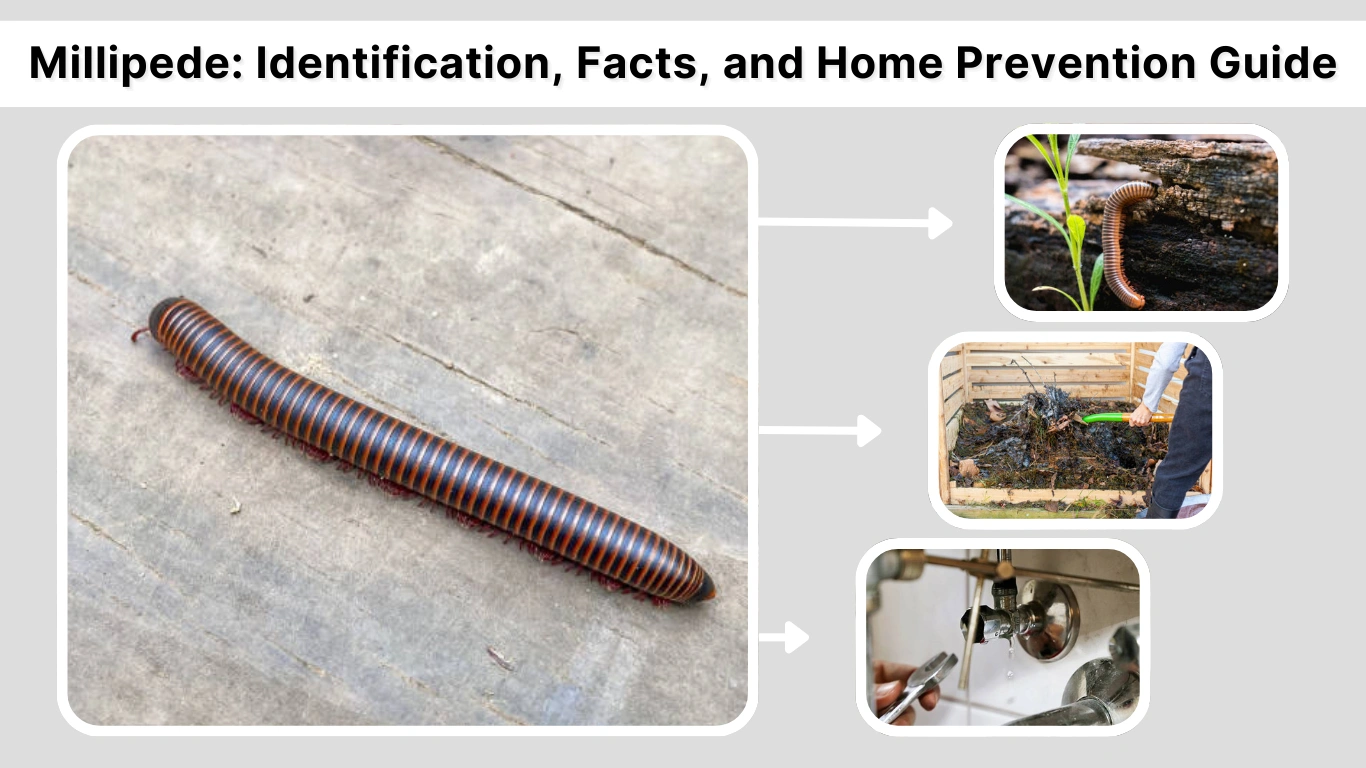
Millipedes are slow-moving, many-legged creatures that often spark curiosity—or concern—when spotted in gardens or homes. While their appearance may seem alarming, millipedes are generally harmless and play an important role in nature. Understanding how to identify them, how they differ from centipedes, and whether they pose any risk can help you respond calmly and effectively. This guide explains everything you need to know about millipedes, from their physical features to their behavior and safety.
What Is a Millipede?
A millipede is a long, segmented arthropod belonging to the class Diplopoda. Despite being commonly called insects, millipedes are not insects at all. Insects have three body segments and six legs, while millipedes have many body segments and dozens—or even hundreds—of legs.
The name “millipede” means “thousand feet,” but no species actually has a thousand legs. Still, some species come surprisingly close. These creatures are closely related to centipedes, but they differ significantly in structure and behavior. Millipedes are primarily decomposers, feeding on decaying plant material and contributing to soil health. They are slow, non-aggressive, and rely on simple defense mechanisms rather than speed or venom.
How to Identify a Millipede

Correct identification is important, especially since millipedes are often confused with centipedes. Their body structure and behavior offer clear clues.
Physical Characteristics
Millipedes have long, cylindrical bodies made up of many connected segments. Most segments contain two pairs of legs, which is a key identifying feature. Their bodies are usually dark brown or black, though some species may appear reddish or even patterned.
Other identifying traits include:
- Short antennae
- Small, rounded head
- Slow, steady movement
- Tendency to curl into a spiral when disturbed
Unlike centipedes, millipedes do not move quickly. They appear calm and deliberate, often staying close to the ground or burrowing slightly into soil and leaf litter.
How Many Legs Does a Millipede Have?
Despite their name, millipedes do not have 1,000 legs. Most common species have between 30 and 400 legs, depending on age and species. Interestingly, millipedes hatch with only a few segments and legs. As they grow and molt, they add more body segments and additional legs over time.
A recently discovered species holds the record with over 1,300 legs, making it the only known millipede to exceed the “thousand feet” idea in reality. However, such species are extremely rare and not typically encountered in everyday environments.
Millipede vs Centipede: Key Differences

Millipedes and centipedes are often mistaken for one another, but they are very different creatures in both behavior and risk level.
Body Structure Comparison
The easiest way to tell them apart is by examining their body shape and legs:
- Millipedes have rounded, cylindrical bodies with two pairs of legs per segment.
- Centipedes have flattened bodies with only one pair of legs per segment.
Centipedes also tend to have longer, more visible legs that stick out from the sides of their bodies, giving them a more aggressive appearance.
Behavior and Movement
Behavior is another major difference. Millipedes are slow and non-aggressive. When threatened, they curl into a tight spiral to protect their softer underside.
Centipedes, on the other hand, are fast runners. They actively hunt insects and use venomous claws to capture prey. Their quick movement is often what causes alarm when they are spotted indoors.
Which One Is Dangerous?
Centipedes can bite humans if handled, though bites are rarely serious. Millipedes, however, do not bite at all. They lack venom claws and do not attack.
Instead, millipedes rely on chemical defenses, which are typically mild and far less concerning than a centipede bite.
Are Millipedes Dangerous?
For most people, millipedes are more unsettling than harmful. They do not sting, bite, or chase humans.
Do Millipedes Bite?
Millipedes cannot bite. They do not have fangs, venom claws, or any aggressive mouthparts designed for defense. Their mouthparts are built for chewing soft, decaying plant matter—not for attacking animals or people.
If handled roughly, they will attempt to curl up rather than fight back.
Defensive Secretions Explained
Although millipedes do not bite, some species release a mild chemical secretion when threatened. This substance helps deter predators in the wild. In most cases, it is harmless to humans.
However, sensitive individuals may experience mild skin irritation if the secretion comes into contact with skin. Washing the affected area with soap and water is usually enough to resolve the issue.
Overall, millipedes are considered low-risk and non-dangerous household invaders.
Where Do Millipedes Live?

Millipedes thrive in moist, dark environments. Their bodies require humidity to survive, which is why they are most commonly found outdoors in damp areas.
Common habitats include:
- Under rocks and logs
- In leaf litter
- In compost piles
- Beneath mulch
- In forest soil
They are especially active after heavy rain, when the soil becomes saturated. Excess water can drive them out of their natural habitats and toward buildings, which explains why homeowners sometimes notice them indoors during wet seasons.
What Do Millipedes Eat?

Millipedes are decomposers, meaning they feed primarily on decaying organic matter. Their diet plays a crucial role in maintaining healthy soil ecosystems.
Common food sources include:
- Rotting leaves
- Dead plant material
- Wood debris
- Fungi
- Organic compost
By breaking down this material, millipedes help recycle nutrients back into the soil. This process enriches the ground and supports plant growth. Unlike centipedes, millipedes do not hunt insects or prey on other animals. Their slow movement matches their plant-based, decomposing diet.
Because they feed on damp organic matter, areas with excessive mulch, compost, or leaf buildup can attract them closer to homes.
Why Are Millipedes in My House?
Finding millipedes indoors can be surprising, but it usually signals a moisture issue rather than a serious infestation.
Millipedes typically enter homes for one of three reasons:
- Excess moisture around the foundation
- Heavy rainfall flooding their natural habitat
- Cooler temperatures driving seasonal movement
They often enter through small cracks in foundations, gaps under doors, basement windows, or damaged weather stripping. Once inside, however, they rarely survive long because indoor environments are too dry for them.
Unlike cockroaches or ants, millipedes do not reproduce indoors in significant numbers. If you see several at once, it usually means outdoor conditions are pushing them inside temporarily.
How to Get Rid of Millipedes

The most effective way to deal with millipedes is to address the conditions attracting them rather than relying solely on chemicals.
Natural Prevention Methods
Start by reducing moisture around your home:
- Fix leaking pipes and faucets
- Improve drainage around the foundation
- Clean gutters regularly
- Use a dehumidifier in damp basements
Next, remove outdoor hiding spots:
- Reduce thick mulch layers
- Clear leaf piles and organic debris
- Move firewood away from exterior walls
- Trim plants touching the house
Sealing cracks in walls, foundations, and around doors can also prevent entry.
Chemical & Professional Solutions
If millipedes continue entering in large numbers, insecticides may help create a barrier around the home’s perimeter. Products labeled for crawling insects can reduce outdoor populations near entry points.
Professional pest control services may be helpful if the problem becomes persistent. However, since millipedes usually die quickly indoors, chemical treatment is often unnecessary once moisture problems are resolved.
Benefits of Millipedes in the Ecosystem
Although they can be unwanted house guests, millipedes are beneficial in outdoor environments.
They contribute to:
- Soil aeration
- Nutrient recycling
- Faster decomposition of organic material
By breaking down dead plants and debris, millipedes improve soil structure and fertility. Gardens and forests rely on decomposers like millipedes to maintain ecological balance.
In most cases, their presence outdoors is a sign of healthy soil rather than a pest problem.
Interesting Millipede Facts
Millipedes are ancient creatures with a long evolutionary history. Fossil records show they have existed for over 400 million years, making them one of the earliest land-dwelling animals.
Here are a few fascinating facts:
- Some tropical species can grow over 10 inches long.
- The African giant millipede is one of the largest species in the world.
- Certain millipedes produce chemicals that glow under ultraviolet light.
- They add body segments and legs as they grow.
Despite their intimidating appearance, millipedes are slow, defensive creatures that prefer to avoid conflict.
Conclusion
Millipedes may look alarming due to their many legs and segmented bodies, but they are generally harmless and beneficial to the environment. Unlike centipedes, they do not bite or sting. Instead, they quietly help decompose organic matter and improve soil health.
If millipedes appear inside your home, the most likely cause is excess moisture or outdoor habitat disruption. Addressing humidity issues, sealing entry points, and maintaining your yard can effectively prevent future encounters. With proper understanding and simple prevention steps, millipedes become far less mysterious—and far less concerning.