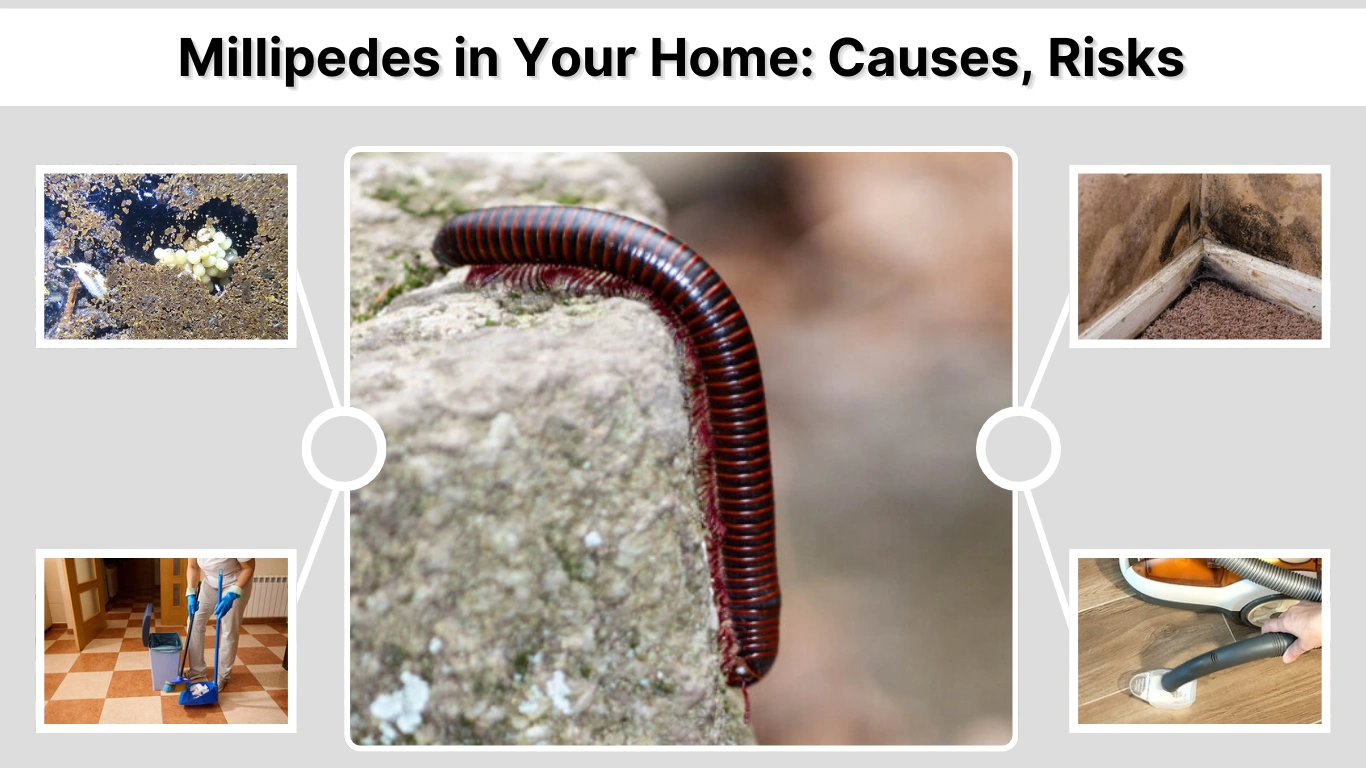
Finding millipedes crawling across your floor or gathering near a basement wall can be unsettling. While these many-legged creatures may look alarming, they are usually harmless and do not pose serious health risks. In most cases, millipedes enter homes because they are searching for moisture, not food. Understanding why they appear indoors is the first step toward controlling and preventing them. This guide explains the main causes, whether they’re dangerous, and what you can do to remove and stop them effectively.
Why Are Millipedes in Your Home?

Millipedes don’t randomly invade houses. Their presence is typically triggered by environmental changes, especially related to moisture and weather conditions. When outdoor conditions become too wet, too dry, or too cold, they may migrate indoors in search of a more stable environment.
Excess Moisture and Humidity
Millipedes thrive in damp, humid environments. Outdoors, they live in moist soil, under leaf piles, mulch, logs, and other decaying organic matter. If your home has areas with high humidity, it can unintentionally mimic their natural habitat.
Common moisture-related attractants include:
- Damp basements
- Crawl spaces with poor ventilation
- Leaking pipes or plumbing
- Condensation around windows
- Overwatered indoor plants
Because millipedes lose moisture easily, they seek environments where humidity is high. If your basement or lower-level rooms feel damp, they may become an attractive refuge.
Heavy Rain and Seasonal Changes
One of the most common times for millipede infestations is during fall or after heavy rainfall. Excess rain can flood their natural habitats, forcing them to migrate in large numbers.
Seasonal triggers include:
- Prolonged rainy periods
- Sudden temperature drops
- Early autumn cooling
- Flooded soil around foundations
When soil becomes waterlogged, millipedes move upward and outward. If your home’s foundation has small gaps or cracks, they may enter accidentally while searching for dry shelter.
Easy Entry Points Around the House
Millipedes don’t chew through structures, but they can squeeze through surprisingly small openings.
Common entry points include:
- Cracks in the foundation
- Gaps under exterior doors
- Damaged weather stripping
- Window frame gaps
- Utility pipe openings
- Garage door seals
Homes with poor sealing around lower levels are especially vulnerable. Even small structural openings can allow dozens of millipedes to enter during peak migration periods.
Are Millipedes Dangerous Indoors?

Despite their appearance, millipedes are not considered dangerous pests. They are more of a nuisance than a threat.
Do Millipedes Bite?
Millipedes do not bite or sting. Unlike centipedes, they do not have venom claws and are not aggressive toward humans. They move slowly and typically avoid confrontation.
If disturbed, their first instinct is to curl into a tight spiral rather than attack.
Defensive Secretions Explained
While they don’t bite, millipedes do have a defense mechanism. When threatened, they may release a mild chemical secretion from glands along their body.
This secretion:
- Has an unpleasant odor
- Can cause mild skin irritation
- May stain light-colored surfaces
In most cases, simply washing your hands after contact is enough. Serious reactions are rare.
Are They Harmful to Pets or Children?
Millipedes are generally harmless to pets and children. However, pets may experience mild stomach upset if they attempt to eat one due to the defensive chemicals. It’s best to discourage pets from playing with them.
They do not carry diseases and do not damage household structures, furniture, or food supplies.
Are Millipedes a Sign of a Bigger Problem?

Seeing millipedes inside can raise concerns about hidden structural damage or serious infestations. Fortunately, that’s rarely the case.
What Their Presence Usually Means
Millipedes indoors often indicate:
- High humidity levels
- Drainage issues around the home
- Excess mulch or organic debris near the foundation
- Poor ventilation in basements or crawl spaces
Their presence is often more about environmental conditions than structural failure.
If you consistently notice millipedes in specific areas, it may signal a moisture problem that should be addressed to prevent further issues like mold growth.
What It Does NOT Mean
Millipedes are not:
- Wood-destroying insects like termites
- Disease carriers
- Signs of structural rot
- Indicators of indoor breeding colonies
Unlike some pests, millipedes rarely reproduce inside homes. Most indoor sightings are due to outdoor migration rather than infestation from within.
How to Get Rid of Millipedes in Your House

Eliminating millipedes effectively requires both immediate removal and long-term environmental adjustments. Simply removing visible ones won’t solve the root cause if moisture remains.
Immediate Removal Methods
If you find millipedes indoors, you can remove them safely using simple tools:
- Vacuum them up
- Sweep and discard them
- Use sticky traps to monitor activity
Avoid crushing them directly on carpets or walls, as their defensive secretions may leave stains or odors.
These immediate steps help manage visible millipedes, but lasting control depends on addressing humidity and sealing entry points — which we’ll cover next.
Moisture Reduction Strategies
Since millipedes are attracted to damp environments, controlling indoor moisture is the most effective long-term solution.
Start by identifying areas in your home that feel humid or musty. Basements and crawl spaces are the most common trouble spots.
Effective moisture control steps include:
- Installing a dehumidifier in damp areas
- Repairing leaking pipes or plumbing fixtures
- Improving ventilation with exhaust fans
- Using waterproof sealants on basement walls
- Ensuring proper insulation to reduce condensation
Keeping indoor humidity levels below 50% makes your home far less appealing to millipedes.
Outdoor Prevention Steps
Because most millipedes originate outside, exterior maintenance plays a major role in prevention.
Focus on reducing damp, organic material near your foundation:
- Remove leaf litter and yard debris
- Keep mulch layers thin (1–2 inches maximum)
- Store firewood away from the house
- Trim dense vegetation touching exterior walls
- Clean gutters regularly
- Ensure downspouts direct water away from the foundation
Improving drainage around your home prevents soil from becoming oversaturated during heavy rains — one of the main triggers for millipede migration.
Do Millipedes Lay Eggs Indoors?

Millipedes typically lay their eggs in moist soil outdoors, not inside homes. Female millipedes create small nests in the soil where eggs can develop safely in humid conditions.
Indoor reproduction is rare because:
- Most homes are too dry
- Flooring and surfaces lack suitable soil
- Indoor temperatures fluctuate
If you’re seeing millipedes inside, it’s far more likely they migrated from outdoors rather than hatched indoors. However, severe moisture problems in crawl spaces with exposed soil could occasionally support reproduction.
Addressing moisture quickly prevents this possibility.
How Long Do Millipede Infestations Last?
Millipede infestations are often seasonal. In many regions, they peak during late summer and early fall when weather patterns shift.
After heavy rainfall or sudden cooling, you may notice a surge in activity. Fortunately, these spikes are usually temporary.
Most indoor millipedes:
- Die within a few days in dry conditions
- Disappear once weather stabilizes
- Decline naturally as temperatures drop
If you continue seeing large numbers for several weeks, it may indicate an ongoing moisture issue that needs correction.
When to Call Pest Control
In most cases, professional treatment is not necessary. Millipedes are nuisance pests rather than destructive invaders.
However, consider contacting a pest control professional if:
- Infestations are large and recurring
- DIY moisture control has failed
- Structural drainage problems are suspected
- You notice persistent dampness or mold growth
Professionals typically focus on exterior treatments and structural sealing rather than heavy indoor pesticide use. Long-term success depends more on environmental correction than chemical spraying.
Preventing Future Millipede Problems
Prevention is the most reliable way to keep millipedes out of your home. A combination of sealing entry points and reducing moisture will provide the best results.
Use this checklist:
- Seal foundation cracks with caulk or concrete filler
- Install door sweeps on exterior doors
- Repair damaged window screens
- Maintain gutters and downspouts
- Improve grading so water flows away from the home
- Keep basements well-ventilated
- Use dehumidifiers during humid months
- Remove mulch directly against the foundation
Regular exterior inspections, especially after storms, can help catch small issues before they become bigger problems.
FAQs
Why do millipedes suddenly appear in my house?
Millipedes usually enter homes due to excess moisture, heavy rainfall, or seasonal temperature changes. When their outdoor habitat becomes too wet or cold, they migrate in search of stable conditions. Small cracks and gaps in foundations allow them to enter easily.
Should I kill millipedes inside?
Millipedes are harmless and do not damage property, so killing them is not always necessary. Vacuuming or removing them is sufficient. Focusing on moisture control and sealing entry points is more effective than simply eliminating visible individuals.
Are millipedes a bad sign?
Millipedes typically indicate high humidity or drainage issues rather than structural damage. Their presence may signal excess moisture in basements or around foundations. Addressing humidity problems can prevent future occurrences and protect your home from related issues like mold.
How do I permanently stop millipedes?
Permanent prevention involves reducing moisture and sealing entry points. Install dehumidifiers, repair leaks, improve yard drainage, remove organic debris near the foundation, and seal cracks around doors and windows. These steps make your home less attractive to millipedes.
Can millipedes survive long indoors?
Millipedes usually cannot survive long in dry indoor environments. Without sufficient moisture, they typically die within a few days. Persistent sightings often suggest ongoing humidity issues rather than long-term indoor survival.
Conclusion
Millipedes in your home may look alarming, but they are generally harmless and temporary visitors. Most indoor appearances are triggered by moisture problems, heavy rainfall, or seasonal changes. Rather than focusing solely on removing visible millipedes, addressing humidity and sealing entry points provides lasting control.
With proper drainage, ventilation, and routine maintenance, you can significantly reduce the chances of future infestations. By understanding why millipedes enter and how to prevent it, you can keep your home comfortable and pest-free without unnecessary worry.