Emerald ash borer treatment can protect a healthy ash tree and may even help a lightly infested tree recover. However, treatment must begin before the beetle causes extensive canopy loss and damage to the tissues beneath the bark. Available options include professional trunk injections, soil-applied insecticides and basal bark treatments. The best choice depends on the tree’s size, health, location and value. Because protection is temporary, owners must also consider the long-term cost of repeated treatment.
Does Emerald Ash Borer Treatment Work?
Yes, properly selected and applied insecticides can effectively protect ash trees from emerald ash borer. Systemic products move through the tree’s tissues, killing adults that feed on leaves or larvae feeding beneath the bark. Untreated North American ash trees are highly vulnerable once emerald ash borer becomes established nearby.
Treatment works best preventively, before symptoms appear. It can also work during the early stages of infestation when the tree still has enough functioning tissue to move insecticide through its canopy.
Good Candidates for Treatment
An ash tree may be worth treating when it has:
- A full or mostly healthy canopy
- Less than approximately 30% canopy thinning
- A structurally sound trunk and branches
- No major cavities, cracks or root damage
- Significant shade, landscape or property value
- Enough growing space to remain healthy
- An owner willing to maintain recurring treatments
Research and extension guidance indicate that trunk-injected emamectin benzoate can sometimes help trees recover when emerald ash borer has caused no more than about 30% canopy thinning.
When Treatment Is Unlikely to Work
Trees showing approximately 60–70% canopy loss are generally beyond recovery. Severe damage prevents the tree from transporting water, nutrients and systemic insecticide effectively. Such trees may also become brittle and hazardous as branches and trunk sections die.
Emerald Ash Borer Treatment Options
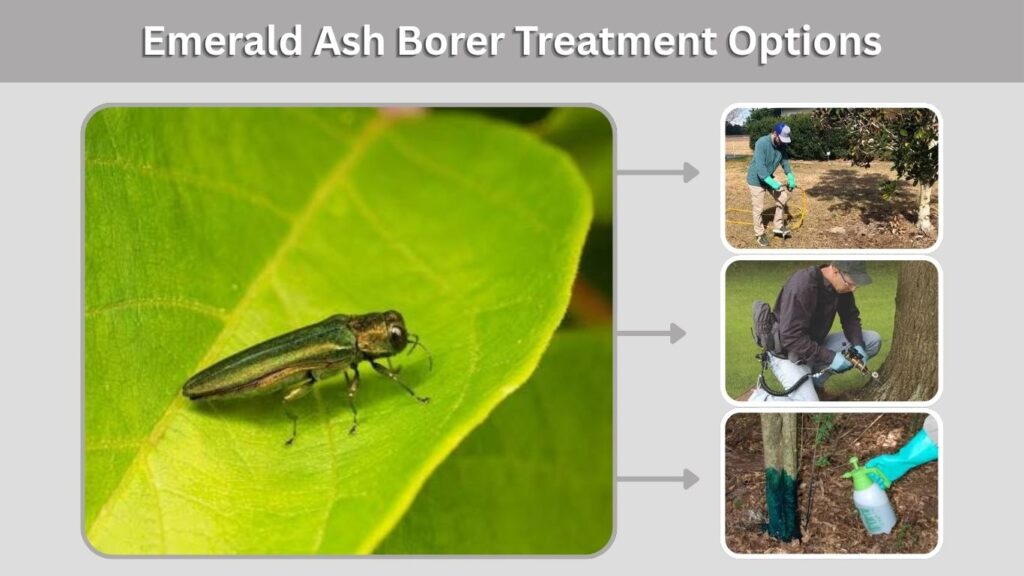
Four active ingredients are commonly used against emerald ash borer: emamectin benzoate, imidacloprid, dinotefuran and azadirachtin. Application methods include trunk injection, soil drench, soil injection and basal bark spray.
| Treatment | Application method | Typical use | Usual interval |
| Emamectin benzoate | Professional trunk injection | Medium to large or lightly infested trees | At least two years |
| Imidacloprid | Soil drench or soil injection | Primarily smaller, healthy trees | Annually |
| Dinotefuran | Basal bark spray or soil treatment | Small to medium trees requiring rapid uptake | Annually |
| Azadirachtin | Professional trunk injection | Preventive protection of selected trees | Depends on label |
Actual treatment intervals and permitted applications depend on the product label and local pesticide regulations.
Emamectin Benzoate Trunk Injection
For valuable landscape trees, emamectin benzoate is generally considered one of the strongest emerald ash borer treatment options. It is injected directly into the trunk using specialized equipment and can kill both young and older larvae.
Professional application is required to place the product correctly and minimize unnecessary injury to the trunk. Extension guidance supports reliable protection for two years, while evidence suggests some applications may remain effective into a third year.
A University of Minnesota research project also identified emamectin benzoate as an effective option for preserving urban ash trees and a potential alternative to neonicotinoid soil treatments.
Imidacloprid Soil Treatment
Imidacloprid is usually mixed with water and applied to the soil around the trunk or injected into the soil by a professional. The roots absorb it and transport it upward.
It is generally better suited to small, healthy ash trees. Colorado State University reports that soil-applied imidacloprid can control emerald ash borer in trees measuring less than six inches in diameter at breast height. It moves more slowly than some alternatives and may be ineffective when soil remains dry after application.
Imidacloprid normally requires annual retreatment. Its availability and legal status vary by state, so owners must check local regulations and the current product label.
Dinotefuran Basal Bark Treatment
Certain professional products containing dinotefuran can be sprayed onto the lower trunk. The insecticide penetrates the bark and moves systemically through the tree.
Dinotefuran moves rapidly but generally requires annual application. It may also be applied through the soil when allowed by the label. Professional service is preferable because correct coverage, dosage and environmental precautions are essential.
Azadirachtin Injection
Azadirachtin is injected into the tree and is sometimes selected for preventive treatment. It can help suppress emerald ash borer while limiting pesticide contact with the surrounding soil.
The exact retreatment schedule depends on the formulation and label. Like other trunk injections, it requires appropriate equipment and training.
Best Time for Emerald Ash Borer Treatment
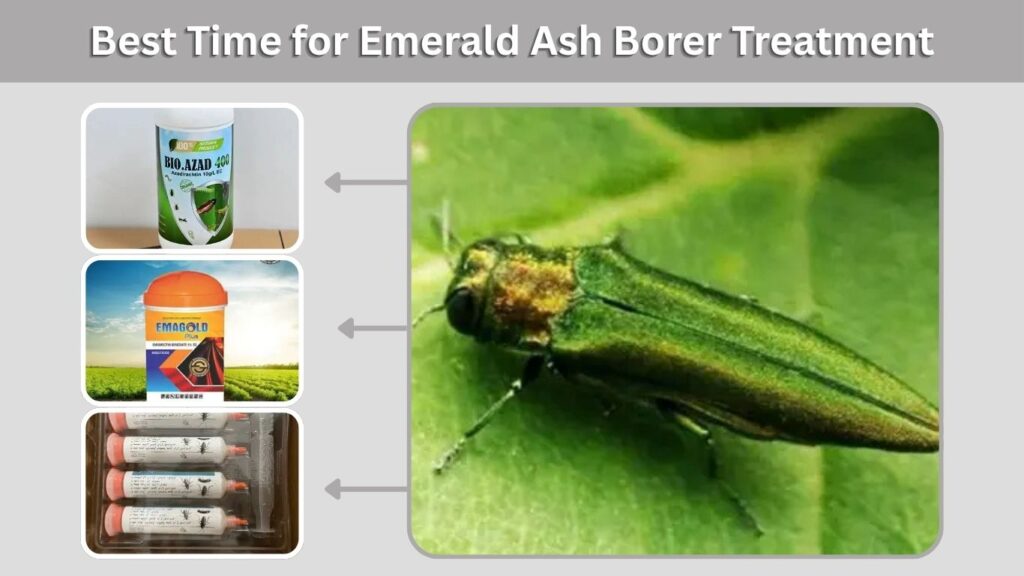
Most treatments work best after leaves emerge in spring, when the tree is actively moving water and systemic insecticide through its tissues. Applying too early, while the tree is dormant, can slow distribution.
Timing by Treatment Method
- Emamectin benzoate: Commonly applied from mid-to-late spring after leaves develop.
- Imidacloprid: Usually applied shortly after bud break.
- Dinotefuran: Commonly applied within about one month after bud break.
- Azadirachtin: Timing depends on the product, climate and application system.
Emamectin benzoate has greater timing flexibility than some alternatives and is commonly applied from spring bud break through late June or early July.
Treatment should begin when emerald ash borer is detected in or near the community rather than waiting for severe symptoms. The beetle is difficult to detect early because larvae remain hidden under the bark and decline develops gradually.
DIY Emerald Ash Borer Treatment
Some products may be available for homeowner use, particularly soil drenches containing imidacloprid. However, availability, application limits and pesticide classifications vary by state.
Before attempting home treatment:
- Confirm that the tree is a true ash.
- Measure its trunk at approximately 4.5 feet above the ground.
- Check the tree for canopy decline and structural defects.
- Confirm that the label lists ash trees and emerald ash borer.
- Calculate the dose exactly as directed.
- Protect nearby water, flowering plants and pollinators.
- Record the product, dosage and treatment date.
Professional trunk injection should not be treated as an ordinary DIY project. It requires specialized equipment, accurate dosing and proper injection placement. Poorly placed or excessive injection wounds can damage the trunk.
Soil-applied systemic insecticides may move into groundwater, runoff, pollen or nectar. Product labels include precautions intended to reduce exposure to aquatic organisms, bees and other beneficial insects.
Emerald Ash Borer Treatment Cost
There is no single national treatment price. The total depends on the number and size of the trees, treatment method, local labor costs, site accessibility, active ingredient and required treatment interval.
When comparing prices, request written estimates that identify:
- The active ingredient and product
- Application method
- Length of protection
- Price for each treatment
- Expected retreatment schedule
- Tree-health assessment
- Five- or ten-year projected cost
- Removal and replacement estimate
An inexpensive annual treatment is not automatically cheaper in the long term. A professional injection that lasts at least two years may require fewer visits. Treatment should therefore be compared with the full cost of removing the mature tree, grinding the stump, purchasing a replacement and waiting years for new shade.
Finding Emerald Ash Borer Treatment Near You
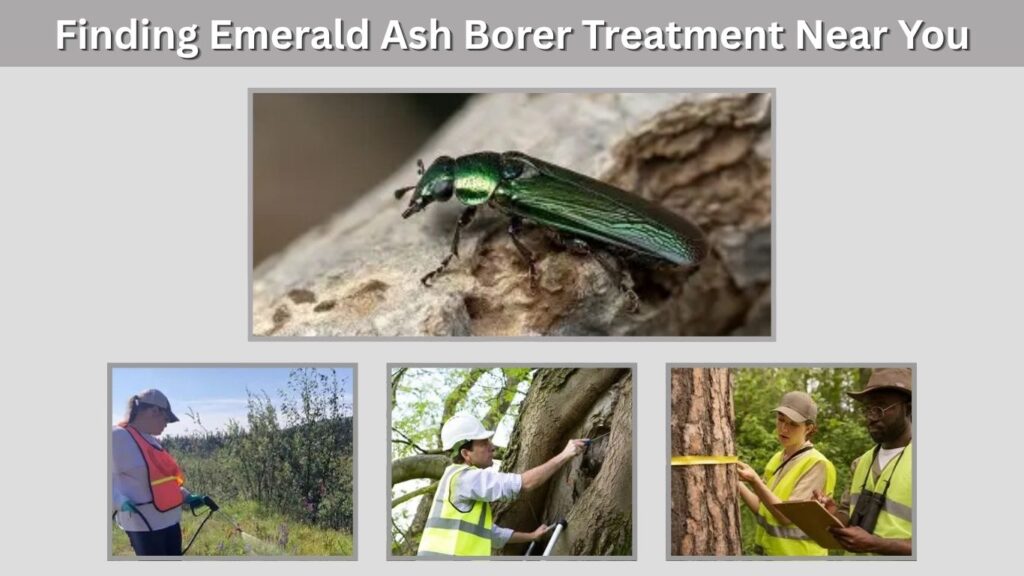
Local searches often include cities such as Minneapolis, Denver, Omaha, Madison and communities throughout Minnesota. Because pesticide licensing and emerald ash borer activity differ by location, local expertise is important.
Look for a company that:
- Employs a certified arborist or licensed pesticide applicator
- Inspects the tree before recommending treatment
- Identifies the active ingredient
- Carries insurance
- Provides a written estimate
- Does not promise permanent protection
- Discusses removal when the tree is beyond recovery
Avoid choosing a service solely because it offers the lowest initial price. The diagnosis, product, dose and application method determine whether treatment provides meaningful protection.
How Long Must an Ash Tree Be Treated?
Emerald ash borer treatment is an ongoing commitment. Most soil and basal bark products require annual application. Emamectin benzoate products are generally labeled for two years of protection and are commonly reapplied every other year.
Treatment should not automatically stop after most untreated ash trees in the neighborhood have died. New ash seedlings can support small emerald ash borer populations, allowing the pest to persist and attack previously protected trees if treatment ends.
FAQs
What is the best emerald ash borer treatment?
Professional trunk injection with emamectin benzoate is among the most effective treatments for healthy, valuable ash trees. It controls multiple larval stages, usually provides at least two years of protection and may help trees recover when canopy thinning has not exceeded approximately 30%.
How effective is emerald ash borer treatment?
Treatment can be highly effective when applied correctly before severe damage occurs. Preventive treatment offers the best results. Lightly infested trees may recover, but trees with extensive canopy loss and damaged vascular tissue are unlikely to distribute insecticide adequately.
Can I treat emerald ash borer myself?
Certain soil-applied products may be labeled for homeowners and smaller trees. Always follow the current label and local pesticide laws. Large trees, symptomatic trees and all professional trunk-injection treatments should be handled by a qualified arborist or licensed pesticide applicator.
How much does emerald ash borer treatment cost?
Cost varies according to tree size, treatment method, location, access and retreatment frequency. Request several written estimates and compare long-term treatment expenses with removal and replacement. The cheapest single application may not provide the lowest multi-year cost.
How often should an ash tree be treated?
Imidacloprid and dinotefuran treatments commonly require annual application. Emamectin benzoate trunk injections generally provide at least two years of protection. Always use the interval specified by the particular product label and the licensed applicator’s treatment plan.