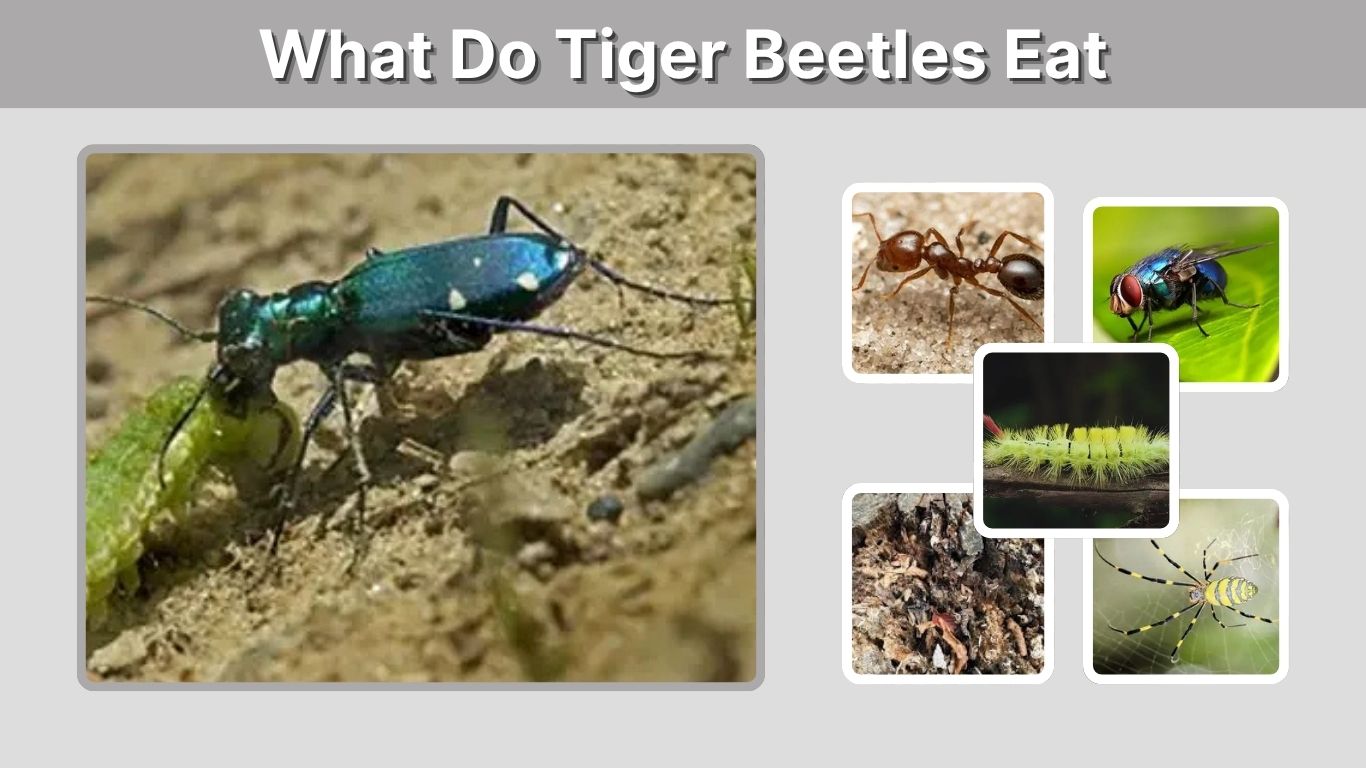
Tiger beetles are quick, aggressive predators that eat ants, flies, spiders, caterpillars, and many other small creatures. Adults chase prey across sand, soil, mudflats, and woodland paths, while larvae hide inside burrows and ambush animals passing the entrance. Their exact diet varies by species, habitat, season, and prey availability. Most tiger beetles are helpful predators rather than plant pests, and they contribute to natural insect control in gardens, grasslands, forests, beaches, deserts, and wetlands.
What Do Tiger Beetles Eat?
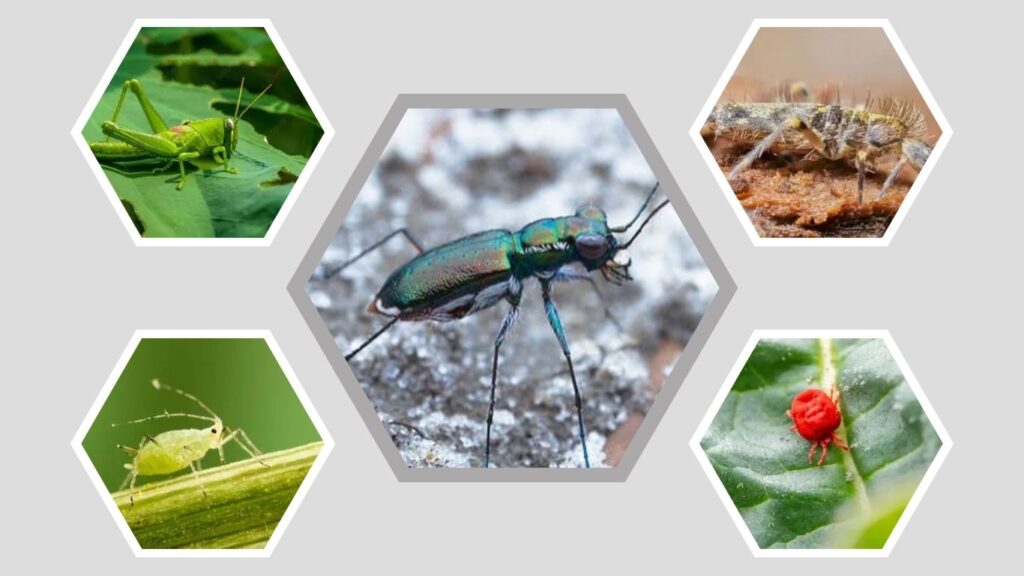
Tiger beetles mainly eat small insects and other arthropods. Their large eyes help them locate movement, while their long legs allow them to pursue prey rapidly. Sharp, curved mandibles seize, crush, and hold the victim.
Common tiger beetle foods include:
- Ants
- Flies and gnats
- Caterpillars
- Other beetles
- Spiders
- Grasshoppers
- Aphids
- Springtails
- Mites
- Dead insects
A tiger beetle does not normally depend on only one food. It usually captures whatever suitably sized prey is abundant in its habitat.
1. Ants
Ants are among the most important foods for many tiger beetles. They are common on open ground and regularly pass close to adult hunting areas and larval burrows.
An adult may run toward an ant, seize it with its jaws, and begin feeding immediately. Larvae wait at the mouths of their tunnels and grab ants that wander within striking distance. Research on several species suggests that ants form a large portion of the larval diet.
2. Flies and Gnats
Tiger beetles commonly catch small flies, gnats, shore flies, and similar insects. Species living around beaches, riverbanks, salt flats, and wetlands may depend heavily on flies that gather near water or decaying organic material.
Some tiger beetles hunt brine flies and shore bugs across moist ground. Adults chase them, while larvae capture insects walking over their burrow entrances.
3. Caterpillars
Small caterpillars provide a soft-bodied, nutritious meal. Woodland and garden species may find them crawling across the ground, on low plants, or among fallen leaves.
Tiger beetles are most likely to attack caterpillars that are small enough to control with their mandibles. Large, hairy, poisonous, or strongly defended caterpillars may be ignored. Caterpillars are included among the commonly documented prey of adult tiger beetles.
4. Other Beetles
Tiger beetles may eat smaller beetles, beetle larvae, and occasionally other tiger beetles. They are opportunistic hunters and do not avoid prey simply because it belongs to the same insect order.
Small ground beetles and other insects crossing exposed soil can be captured. Larger tiger beetle species may overpower prey nearly as large as themselves, although attacking larger animals carries a greater risk of injury.
5. Spiders
Although spiders are predators themselves, small spiders can become prey for tiger beetles. Adults may catch them while running across sand, bare soil, forest paths, or grassland openings.
Both federal wildlife information and university sources identify spiders as regular tiger beetle prey. A beetle generally targets spiders small enough to be restrained safely with its mandibles.
6. Grasshoppers
Young grasshoppers and other small jumping insects may be captured by larger tiger beetles. Newly hatched grasshoppers are especially vulnerable because they are smaller and have not yet developed their full jumping or flying ability.
Adult tiger beetles use rapid bursts of speed to approach them. However, a full-grown grasshopper is usually too large and powerful for an average tiger beetle.
7. Aphids
Aphids occasionally fall from vegetation or move across the ground, where tiger beetles can catch them. These soft-bodied insects are easy to crush and consume.
Aphids are more likely to be eaten by tiger beetles living near gardens, crop fields, grasslands, and low vegetation. They probably represent an occasional food rather than the main diet of most species.
8. Springtails
Springtails are tiny arthropods that thrive in damp soil, mud, leaf litter, and decaying vegetation. Their small size makes them suitable prey for young larvae and smaller tiger beetle species.
They can be particularly plentiful around moist burrows. Although springtails jump when disturbed, a larva positioned at its tunnel opening can seize one before it escapes.
9. Mites
Mites are another small food source found on soil, sand, and decomposing material. Tiny tiger beetle larvae may consume mites when larger prey is unavailable.
Because mites are extremely small, they probably contribute more to the diets of young larvae and small species than to large adults. Tiger beetles and related ground beetles are known to feed on mites encountered while searching the ground.
10. Dead Insects
Tiger beetles are primarily hunters, but some will scavenge fresh insect remains. A beetle may feed on a recently killed fly, ant, or other small arthropod when it finds one.
They are less interested in prey that has become completely dry. Scavenging allows them to gain energy without spending time and effort on a chase, especially when living prey is scarce.
How Adult Tiger Beetles Hunt
Adult tiger beetles are visual hunters. They scan open ground with large compound eyes and sprint toward moving prey. Their familiar run-stop-run behavior helps them relocate their target because their vision can temporarily become less effective at top speed.
Once close enough, the beetle grabs the animal with its long mandibles. Digestive fluids begin breaking down the prey, allowing the beetle to consume the softened tissues. Tiger beetles may capture animals smaller than themselves or, in some cases, prey of a similar size.
What Do Tiger Beetle Larvae Eat?
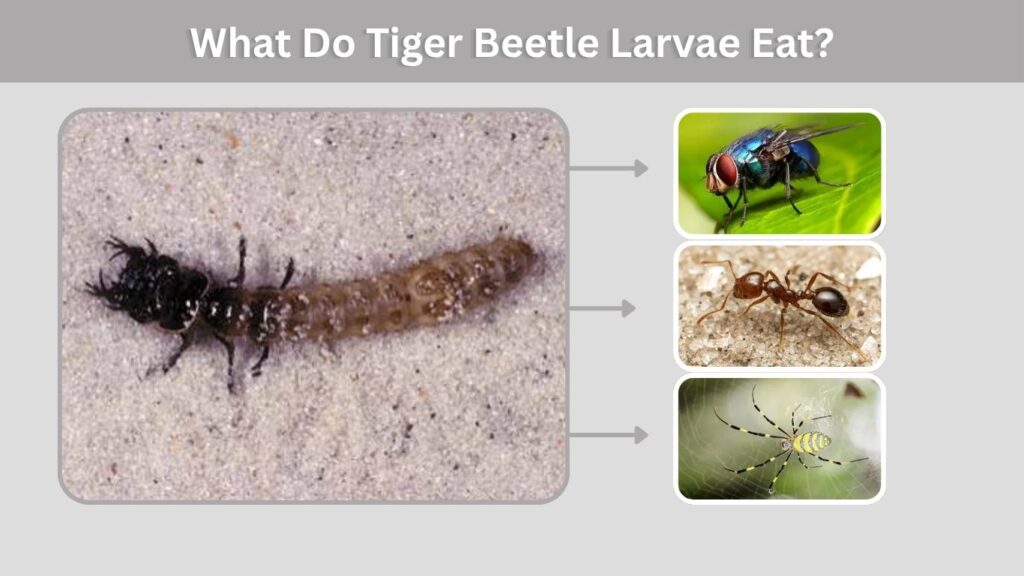
Tiger beetle larvae eat many of the same small animals as adults, especially ants, flies, spiders, and other insects. However, they use an ambush strategy rather than chasing prey.
Each larva lives in a vertical burrow constructed in sand, soil, clay, or mud. Its flattened head helps plug the entrance. When an insect walks nearby, the larva suddenly lunges outward and seizes it.
Hooks on the larva’s abdomen anchor it to the burrow wall, preventing strong prey from pulling it outside. The larva then retreats into the tunnel to feed.
Do Tiger Beetles Eat Plants?
Most tiger beetles are carnivorous and do not noticeably damage healthy plants. They are usually considered beneficial because they consume insects and other small arthropods.
They should not be confused with Japanese beetles, cucumber beetles, or Colorado potato beetles, which commonly feed on leaves and crops. A tiger beetle seen running through a garden is generally hunting rather than eating the plants.
Do Tiger Beetles Drink Water?
Tiger beetles obtain moisture from their prey and surroundings. Species living on beaches, streambanks, salt flats, and wetlands often remain near damp soil where prey is plentiful and dehydration is less severe.
They are not usually observed drinking from large pools like mammals. Moist habitat is particularly important for larvae because their burrows must maintain suitable temperature and humidity.
Are Tiger Beetles Helpful?
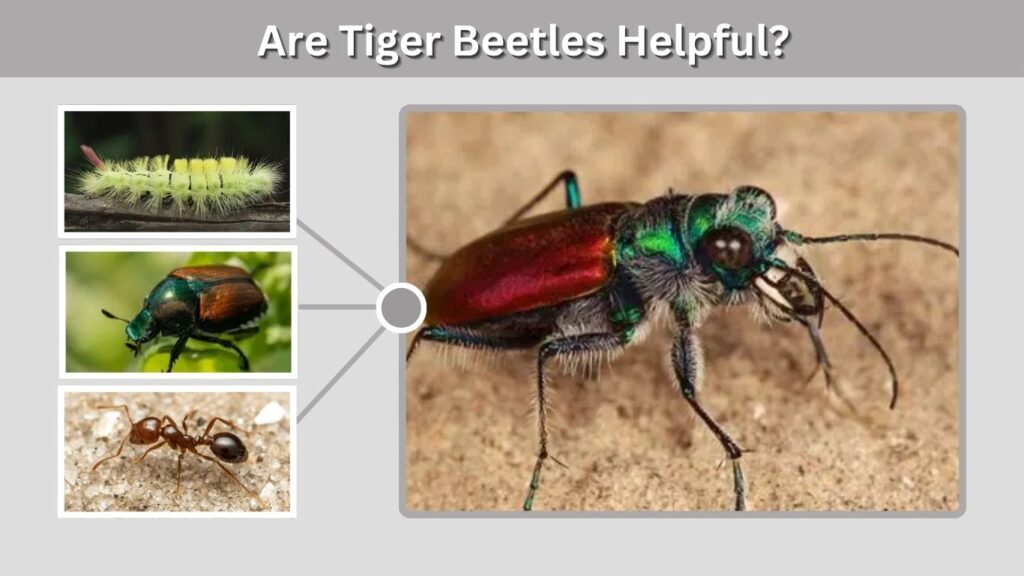
Tiger beetles can help regulate populations of ants, flies, caterpillars, beetles, and other small animals. They are part of the natural food web and also become prey for birds, spiders, robber flies, wasps, and other predators.
Their presence may indicate a relatively open, functioning habitat. However, they are generalist predators, so they consume both pest insects and harmless native species.
FAQs
How often do tiger beetles eat?
Feeding frequency depends on temperature, body size, activity, and prey availability. Active adults may hunt repeatedly during warm, sunny periods. Larvae remain near their burrow openings and feed whenever suitably sized prey comes close enough to capture.
Do tiger beetles eat mosquitoes?
They may catch adult mosquitoes or mosquito-like flies that land or move near the ground. However, tiger beetles do not enter standing water to hunt mosquito larvae, so they are not considered major mosquito-control insects.
Do tiger beetles eat other tiger beetles?
Large individuals may occasionally attack smaller tiger beetles, particularly when food is scarce or individuals meet in crowded habitat. However, ants, flies, spiders, caterpillars, and other available arthropods make up more typical prey.
Can tiger beetles eat animals larger than themselves?
Some adults can overpower prey close to their own size, but they usually select smaller animals that are easier and safer to handle. Large prey may escape, injure the beetle, or pull a larva from its burrow.
What can I feed a captive tiger beetle?
Wild tiger beetles should normally remain in their natural habitat, and protected species must not be collected. In legitimate research settings, suitable live prey may include tiny flies, ants, small crickets, or other appropriately sized insects.