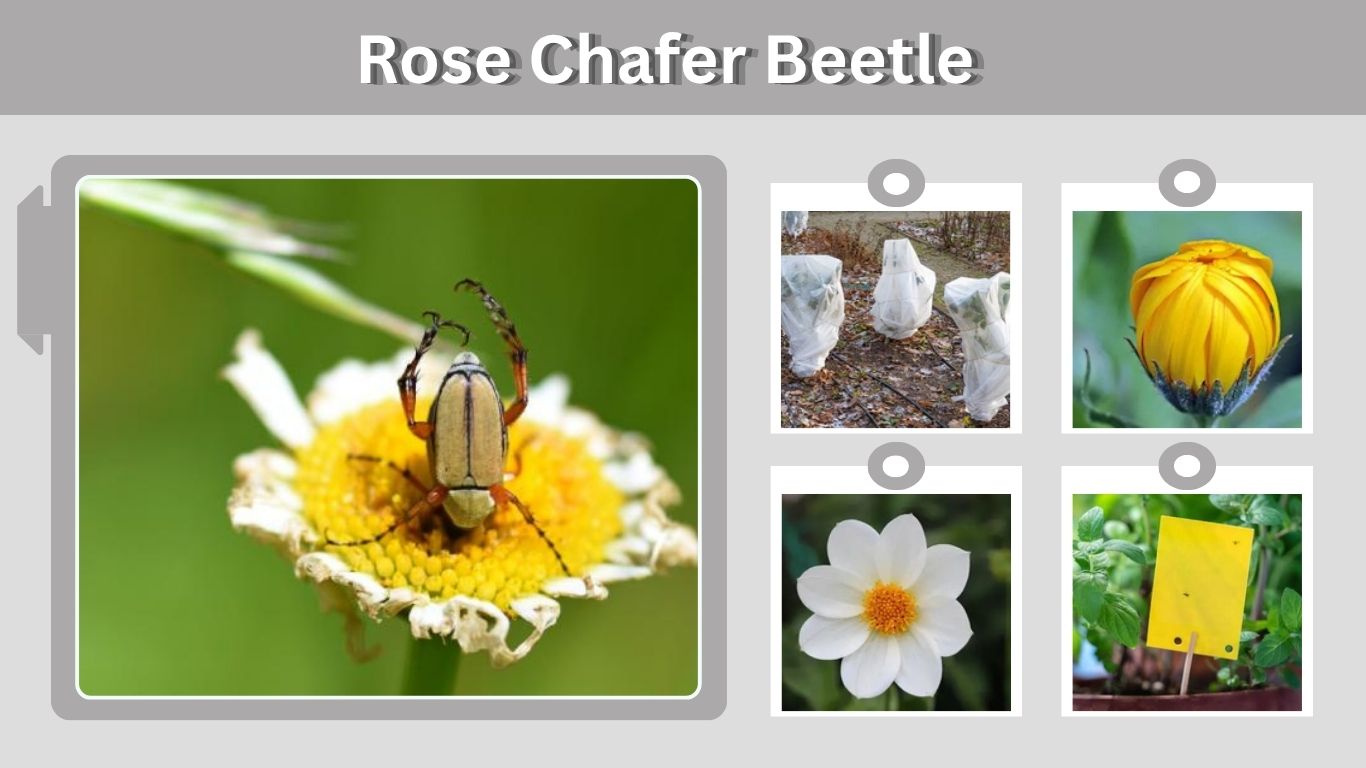
The rose chafer is a scarab beetle commonly found feeding on roses, peonies, grapes, fruit trees, and other garden plants. However, the name can describe two very different insects. In North America, it usually means the tan-colored Macrodactylus subspinosus, a potentially damaging garden pest. In Europe and the UK, “rose chafer” usually refers to the metallic-green Cetonia aurata, whose larvae help recycle decaying plant material. Correct identification is therefore important before attempting control.
What Is a Rose Chafer?
Rose chafers belong to the scarab beetle family, Scarabaeidae. Adult beetles are active mainly during warm weather and are commonly found on flowers, leaves, and developing fruit.
The name most often refers to:
- American rose chafer: Macrodactylus subspinosus
- European green rose chafer: Cetonia aurata
Although both visit flowers, they differ considerably in color, size, geographical range, larval diet, and importance as garden pests.
Rose Chafer Identification
The location and appearance of the beetle provide the best identification clues.
American Rose Chafer
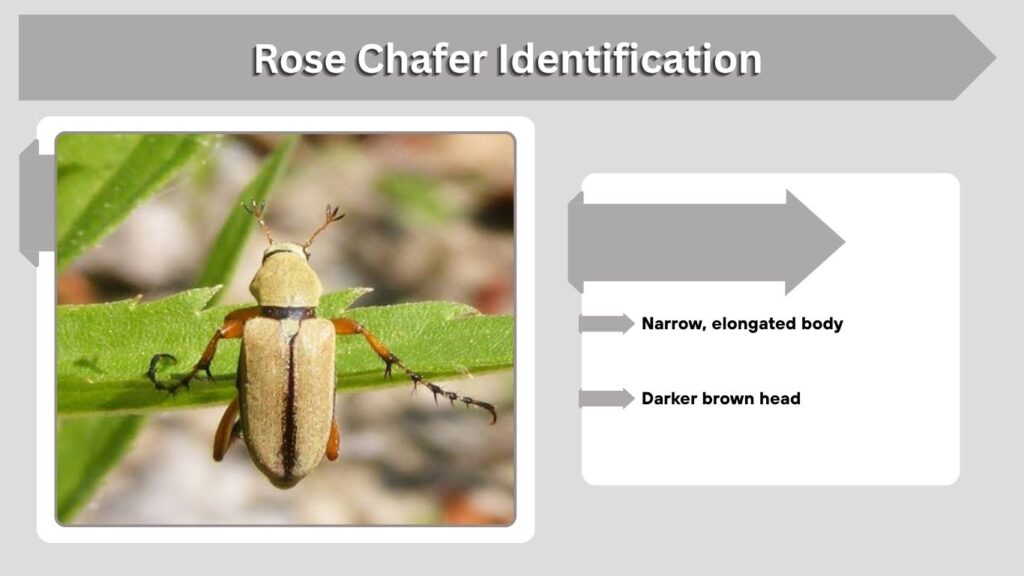
The American rose chafer is a slender beetle measuring approximately 5/16 to nearly 1/2 inch long. Its body is pale green, yellowish-tan, or grayish-brown, while its long legs are reddish-brown or orange and covered with noticeable spines.
Other identifying features include:
- Narrow, elongated body
- Short, fan-like antennae
- Fine yellowish hairs covering the body
- Darker brown head
- Long, spiny legs
- Wasp-like appearance during flight
Adults often gather in groups on blossoms, foliage, and fruit. They are especially common in areas with light, sandy soil.
European Green Rose Chafer
The European rose chafer is larger and more rounded, usually measuring about 2 centimeters long. Its body is bright metallic green, although some individuals may appear bronze, copper, blue-green, violet, or nearly black.
Small irregular white markings may be visible across the hardened wing covers. Unlike most beetles, it can raise its flight wings from beneath the wing covers without opening the covers fully, giving it a distinctive buzzing flight.
| Feature | American rose chafer | European green rose chafer |
| Scientific name | Macrodactylus subspinosus | Cetonia aurata |
| Main range | North America | Europe and the UK |
| Color | Tan or pale green | Metallic green or bronze |
| Body shape | Slender and long-legged | Broad and rounded |
| Adult size | Up to nearly 1/2 inch | Around 3/4 inch |
| Larval food | Grass and weed roots | Decaying organic material |
| Garden role | Often a pest | Usually beneficial or harmless |
What Do Rose Chafers Eat?
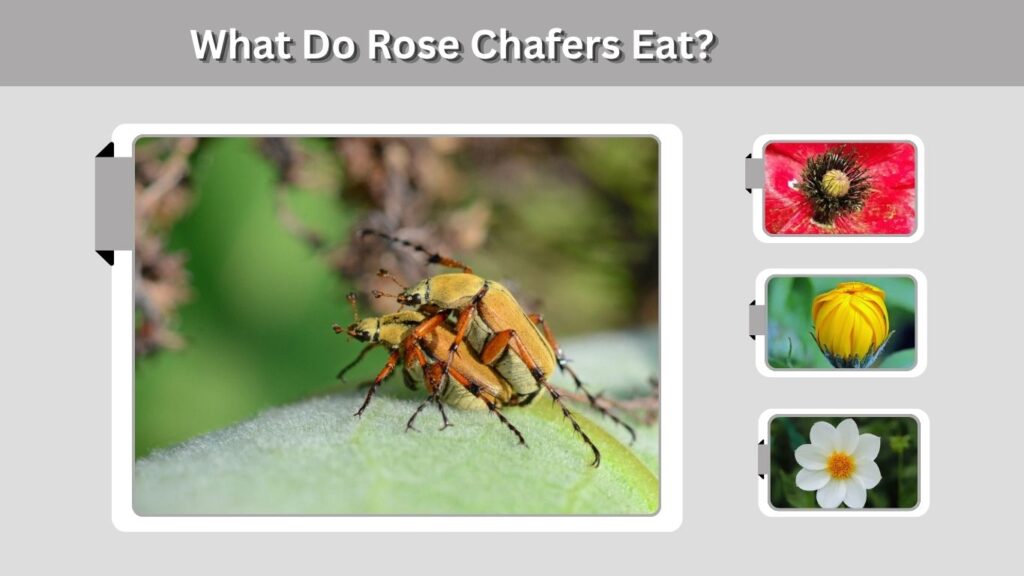
American rose chafers feed on many flowering plants, trees, shrubs, and fruit crops. They are particularly attracted to roses, peonies, dahlias, grapes, raspberries, strawberries, apples, cherries, and birch trees.
Adults consume:
- Flower petals
- Flower buds
- Pollen
- Tender foliage
- Developing fruit
- Soft or damaged fruit
Their feeding can leave large, irregular holes in petals and buds. On leaves, they remove tissue between the major veins, producing a lace-like appearance known as skeletonization.
European green rose chafers feed mainly on pollen, nectar, flowers, tree sap, and occasionally soft fruit. Although adults sometimes nibble flowers, they are generally not considered serious pests. Their larvae feed on dead leaves and decomposing vegetation, helping break organic material down in compost piles and rich garden soil.
Rose Chafer Damage
American rose chafer infestations can appear suddenly, with numerous beetles gathering on a single plant. Their feeding may spoil flowers, reduce fruit quality, and severely skeletonize leaves.
Common signs include:
- Ragged holes through rose petals
- Damaged or partially eaten flower buds
- Leaves with only the larger veins remaining
- Beetles clustered on grapes or berries
- Scarring and holes in developing fruit
- Reduced flowering or fruit formation
Established trees and shrubs can usually tolerate limited feeding, but young plants, flowers, grapes, berries, and heavily infested crops may suffer more noticeable damage.
Rose Chafer Larvae and Grubs
Rose chafer larvae are white or cream-colored grubs with brown heads, three pairs of legs, and curved C-shaped bodies.
American Rose Chafer Larvae
American rose chafer grubs grow to approximately 3/4 inch long. They live underground and feed on the roots of grasses and weeds. Despite this feeding, they are not generally considered important lawn pests.
The grubs are rarely noticed because they remain beneath the soil for most of their development.
Green Rose Chafer Larvae
European rose chafer grubs commonly live in compost heaps, decaying wood, leaf litter, and soil rich in decomposing organic material. They help recycle dead vegetation and normally cause no harm to healthy plants.
These beneficial grubs can easily be confused with root-feeding chafer larvae, so grubs found in compost should not automatically be destroyed.
Rose Chafer Life Cycle
American rose chafers produce one generation each year. Adults emerge from the soil during late May or early June and feed for approximately three to four weeks.
After mating, females deposit eggs in the soil, particularly in sandy, grassy locations. The eggs hatch after about two to three weeks. The young grubs feed on grass and weed roots before moving deeper into the ground to survive winter.
In spring, the mature grubs return closer to the surface, pupate, and emerge as adults.
European rose chafer larvae may spend several years developing in compost, decaying wood, or organic soil. They eventually form pupal chambers and emerge as metallic adults, commonly appearing from spring through summer.
Rose Chafer vs Japanese Beetle
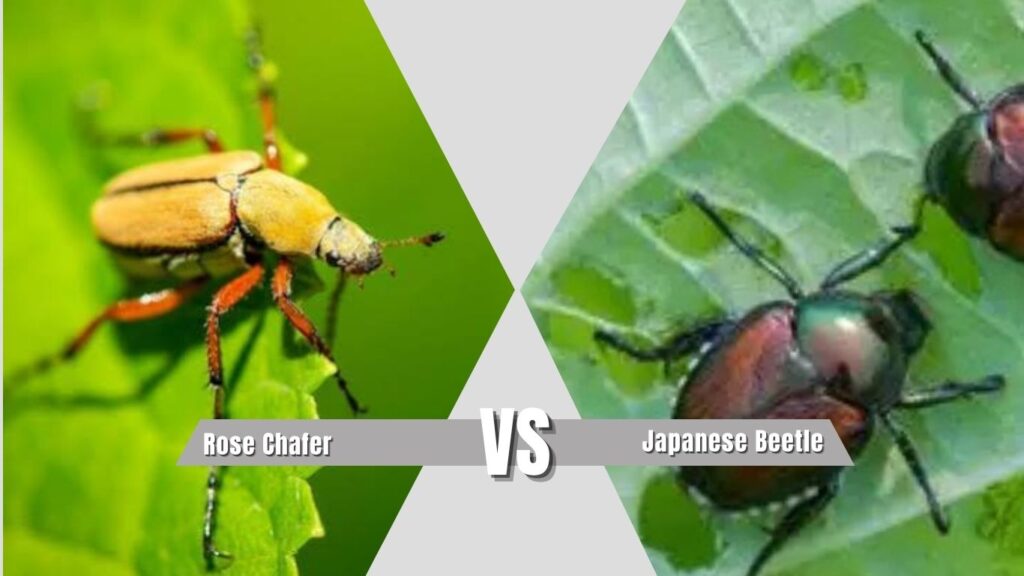
American rose chafers and Japanese beetles can damage many of the same plants, but their appearance and seasonal activity are different.
Rose chafers are slender and tan, with long orange-brown legs. They commonly appear from late May through June. Japanese beetles have shiny green heads, copper-colored wing covers, and distinct white hair patches along the sides and rear of the abdomen. They are most active later, generally from late June through August.
Green European rose chafers can also resemble Japanese beetles, but they are larger, more uniformly green, and lack the Japanese beetle’s rows of white abdominal hair.
Are Rose Chafers Dangerous?
Rose chafers are not aggressive toward people, and plant damage is the primary concern. They do not have stingers and are not considered significant biting pests.
However, the American rose chafer contains a toxin called cantharidin. Eating these beetles can be dangerous or fatal to chickens, ducks, wild birds, and some other small animals because the toxin can affect heart function. Poultry should therefore not be allowed to consume large numbers of American rose chafers.
This warning applies specifically to the American species and should not be automatically applied to the European green rose chafer.
How to Get Rid of Rose Chafers
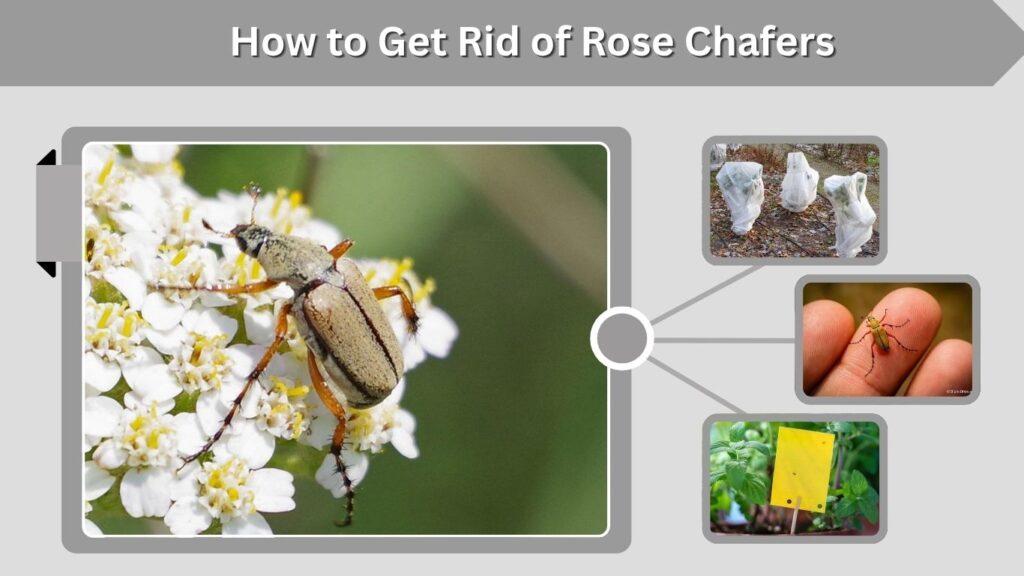
Control should focus on American rose chafers when they are actively damaging plants. European green rose chafers generally do not require control.
1. Handpick the Beetles
Inspect roses, peonies, grapes, and fruit plants regularly from late May onward. Knock the beetles into a container of soapy water. Repeat daily because additional adults may fly into the garden.
2. Protect Valuable Plants
Fine netting, cheesecloth, or floating row covers can protect small plants during the beetles’ short feeding period. Avoid covering flowering crops that require access from bees and other pollinators.
Place barriers before large numbers arrive and remove them after beetle activity declines.
3. Remove Severely Damaged Material
Prune badly damaged flowers and harvest ripe fruit promptly. Removing damaged fruit and blossoms may make plants less attractive and prevent decay from spreading.
4. Be Careful With Rose Chafer Traps
Commercial traps and lures are available, but their effectiveness may be uncertain. Attractive lures can sometimes draw additional beetles into the surrounding area without preventing plant damage. Physical removal and barriers are usually more dependable in small gardens.
5. Use Insecticides Only When Necessary
Large infestations may require a pesticide labeled for rose chafers and the affected plant. Follow all label directions, observe harvest waiting periods on edible crops, and avoid spraying open flowers where pollinators are active. Several treatments may be required because new adults can continue flying into the area.
FAQs
Do rose chafer beetles bite humans?
Rose chafers are not aggressive and are not considered important biting insects. Their chewing mouthparts are used primarily for eating flowers, leaves, pollen, and fruit. A beetle held tightly may scratch with its spiny legs, but it does not normally attack people.
Are rose chafer beetles pests?
American rose chafers can be serious pests when large groups damage flowers, grapes, berries, leaves, and developing fruit. The metallic European rose chafer is generally less damaging, and its larvae are beneficial decomposers in compost and organic soil.
How long do rose chafers live?
Adult American rose chafers usually remain active for about three to four weeks. The complete life cycle takes approximately one year, with most of that time spent underground as a grub. European rose chafer larvae may develop for several years before becoming adults.
Will neem oil control rose chafers?
Neem-based products may discourage limited feeding, but results can vary, especially when numerous adult beetles continuously arrive. Handpicking, protective netting, and frequent plant inspections are generally more practical for small infestations. Any product used should list the plant and intended pest on its label.
Should I kill rose chafer grubs in compost?
Metallic green rose chafer grubs found in compost are beneficial decomposers and normally should be left alone. American rose chafer grubs live mainly in sandy soil and feed on grass or weed roots. Correctly identify the species and habitat before removing any chafer larvae.