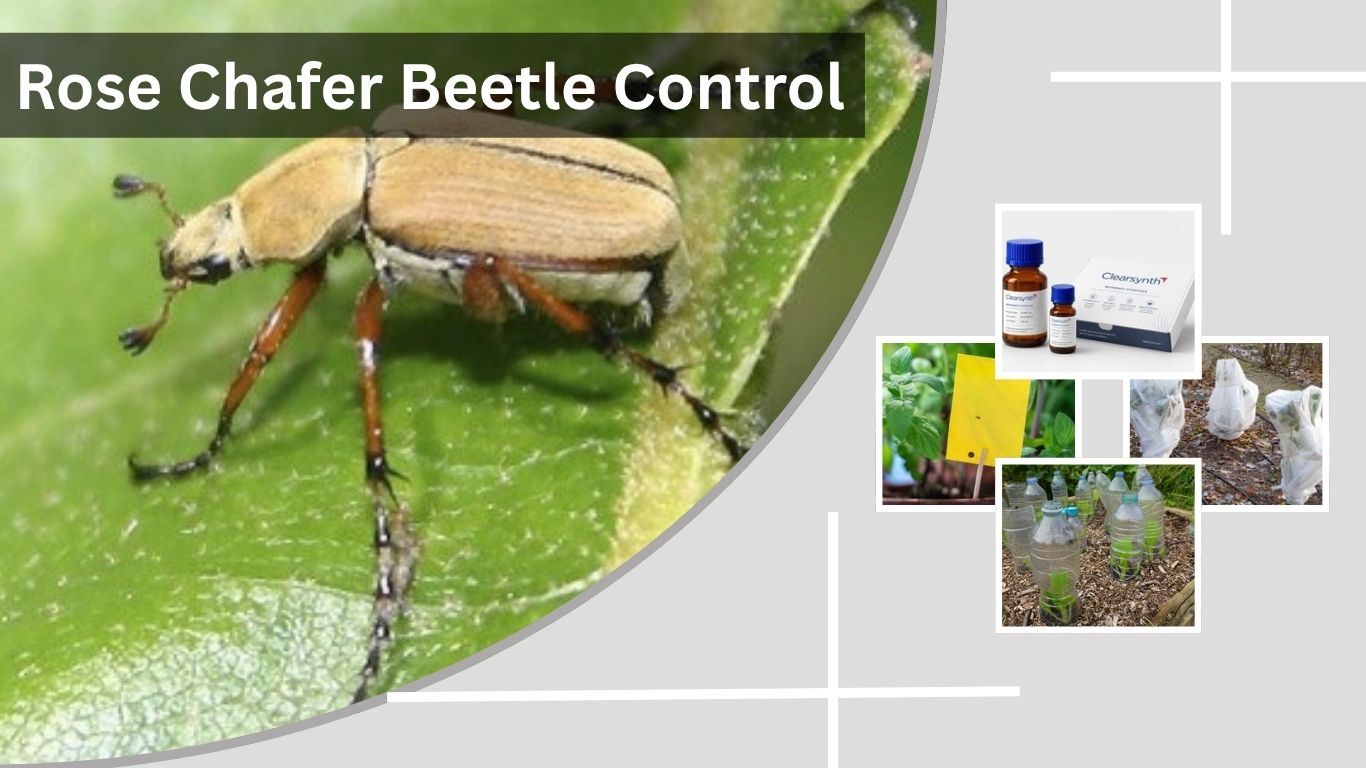
Rose chafer beetles can quickly damage roses, peonies, grapes, berries, fruit trees, and many other garden plants. These tan, long-legged beetles often arrive in groups, chewing irregular holes in flowers and skeletonizing leaves. Effective rose chafer beetle control begins with early monitoring and simple physical methods. Chemical treatment should be reserved for serious infestations, while controlling the underground larvae is rarely necessary in home landscapes.
How to Identify a Rose Chafer Infestation
The American rose chafer, Macrodactylus subspinosus, is a slender scarab beetle measuring approximately 5/16 to 1/2 inch long. It has a pale green, grayish-tan, or light brown body with reddish-brown or orange spiny legs. Adults are especially common in areas with sandy soil.
Rose chafers normally emerge from the ground during late May or early June. They remain active for about three to four weeks, feeding and mating before females lay eggs in the soil. Only one generation develops each year.
Common Signs of Rose Chafer Damage
Look for:
- Large, uneven holes in rose and peony petals
- Flower buds that have been partly eaten
- Leaves with tissue removed between the veins
- Beetles gathered in clusters on plants
- Holes or scars on grapes, raspberries, and strawberries
- Damaged young grape clusters
- Sudden feeding during late spring or early summer
Adults feed on blossoms, foliage, and fruit. Grapes, roses, peonies, cherries, apples, raspberries, strawberries, and birch are among the commonly affected plants.
Best Rose Chafer Control Methods
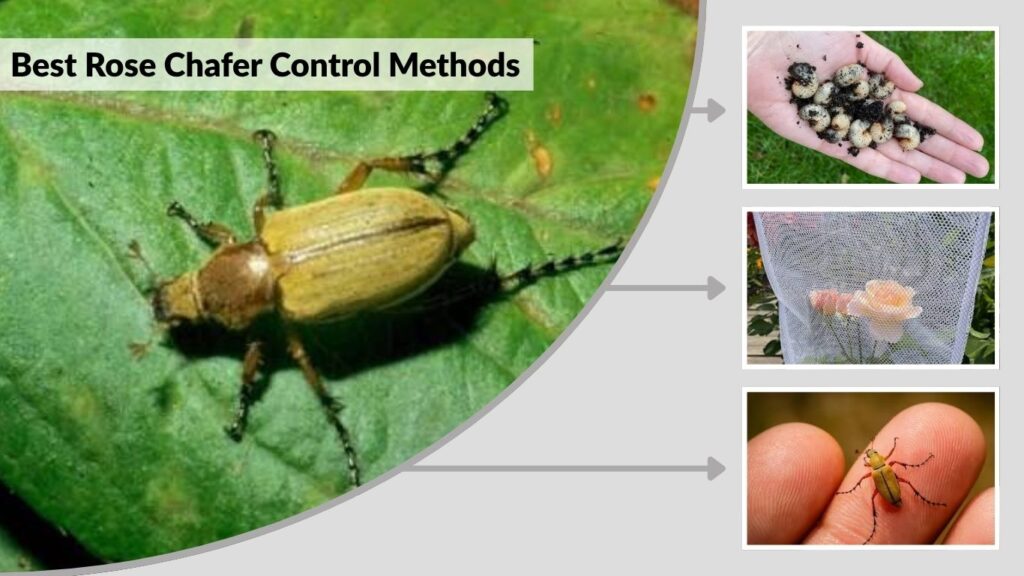
The best control plan depends on the number of beetles, the plants involved, and whether the crop is ornamental or edible.
| Control method | Best used for | Main consideration |
| Handpicking | Small infestations | Must be repeated regularly |
| Protective netting | Valuable flowers and fruit | Remove when pollination is needed |
| Plant monitoring | Early detection | Begin before serious damage appears |
| Habitat management | Vineyards and recurring infestations | Results may take more than one season |
| Insecticides | Heavy, damaging infestations | Product must list the plant and pest |
| Larval treatment | Rarely necessary | Grubs usually do not damage home lawns |
Natural and Organic Rose Chafer Control
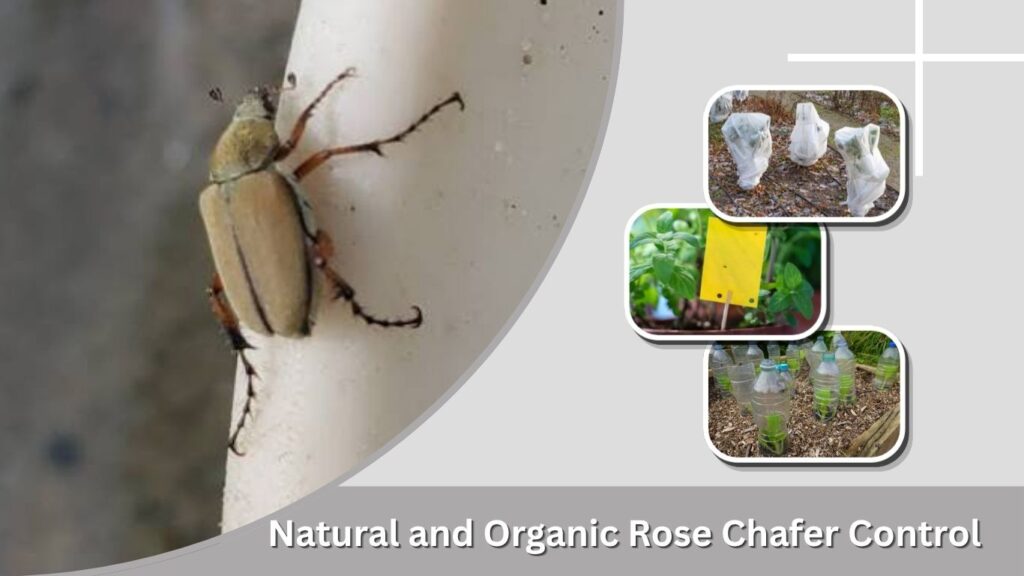
Nonchemical control works best when started as soon as the first adults appear. Waiting until large groups have gathered can make the infestation much harder to manage.
1. Handpick Adult Beetles
Inspect affected plants each morning and knock the beetles into a container of soapy water. Rose chafers may drop from plants when disturbed, so hold the container beneath the flower or leaf before touching them.
Check plants frequently because new adults can fly into the garden from nearby grassy or sandy areas. Hand removal is most practical for roses, small fruit plantings, and isolated garden beds.
Wear gloves when handling them. Rose chafers contain a toxin that can be dangerous if eaten by chickens, birds, dogs, or other small animals. Dispose of collected beetles where pets and poultry cannot reach them.
2. Cover Vulnerable Plants
Cheesecloth, fine insect netting, or floating row covers can prevent adult beetles from reaching valuable plants. Install the barrier when rose chafers first become active and keep it securely closed around the plant.
Covers can remain in place throughout the beetles’ three- to four-week feeding period. However, flowering plants that depend on bees may need to be uncovered during pollination. Small bags can also protect individual flowers or fruit clusters.
3. Monitor Plants Before Damage Becomes Severe
Begin inspecting susceptible plants in late May, particularly where rose chafers appeared in previous years. Check blossoms, young leaves, developing fruit, and the edges of gardens near grassy or sandy ground.
In vineyards, regular scouting is more effective than waiting for visible crop loss. Michigan State University recommends checking previously affected areas about twice weekly during the adult emergence period.
4. Remove the Most Attractive Plant Material
Remove severely damaged flowers and harvest ripe fruit promptly. Although sanitation will not eliminate flying adults, removing injured and overripe fruit can prevent additional spoilage and make inspection easier.
Do not remove healthy foliage simply because a few holes are present. Established plants can generally tolerate limited feeding, while young plants, blossoms, and developing fruit require closer protection.
5. Avoid Placing Traps Near Valuable Plants
Rose chafer traps may capture beetles, but attractive lures can also draw additional adults toward the garden or vineyard. Michigan State University advises using a trap primarily for monitoring and positioning it away from the crop rather than relying on multiple traps for control.
A trap should not replace plant inspections, handpicking, or barriers.
Rose Chafer Larvae and Grub Control
Rose chafer larvae are white, C-shaped grubs with brown heads and visible legs. They hatch in summer and feed mainly on the roots of grasses and weeds before moving deeper underground for winter. In spring, they pupate and emerge as adults.
Is Rose Chafer Larvae Control Necessary?
Treating the larvae is generally unnecessary in home gardens. Although they consume grass and weed roots, extension guidance indicates that rose chafer grubs do not normally damage home lawns or landscape plants. Applying a lawn-wide grub pesticide may therefore provide little benefit.
Do not assume that every white grub is a rose chafer larva. Japanese beetles, European chafers, June beetles, and other scarabs produce similar-looking grubs, and some require close examination for accurate identification.
Reducing Future Breeding Sites
Rose chafers prefer sandy, grassy areas for egg laying. In vineyards with repeated problems, changing nearby grassy areas to an appropriate non-grass ground cover during the egg-laying period may reduce suitable breeding sites. This approach may not be practical in every garden because adults are strong fliers and can arrive from surrounding properties.
Chemical Rose Chafer Control
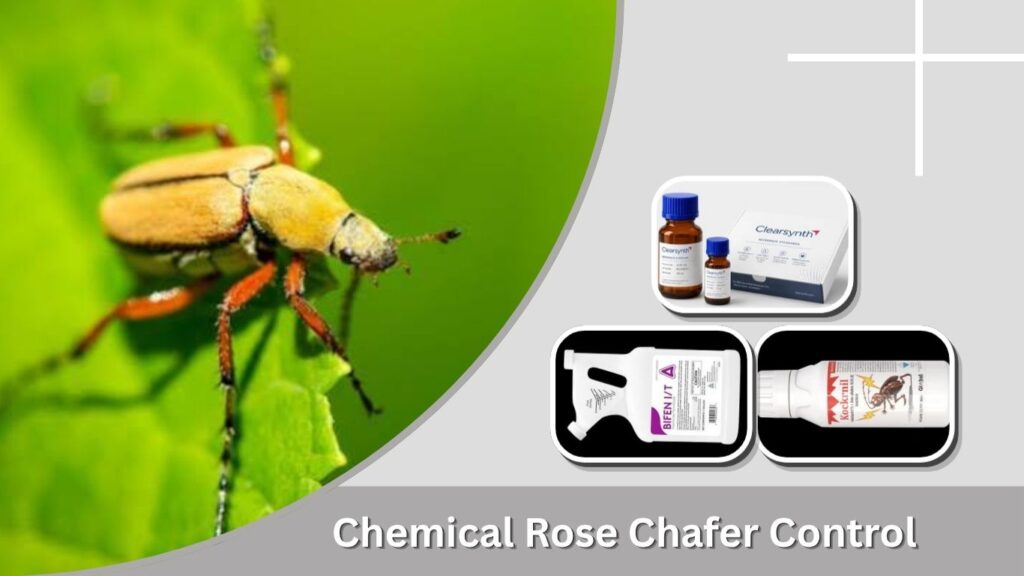
Chemical control may be considered when large numbers of beetles are rapidly damaging flowers, young trees, fruit, or grape clusters and physical removal is no longer practical.
Choosing an Insecticide
Some garden insecticides containing active ingredients such as bifenthrin, cyfluthrin, esfenvalerate, imidacloprid, permethrin, or carbaryl may be labeled for rose chafer control in parts of the United States. Availability, legal uses, and permitted crops vary by location and can change over time.
Before treatment, confirm that the label lists:
- Rose chafer beetles
- The specific plant being treated
- The intended outdoor use
- The correct application rate
- Required protective equipment
- Restrictions involving flowers and pollinators
- The waiting period before harvesting edible crops
Several applications may be needed because additional adults can continue flying into the area. However, repeated calendar spraying without checking beetle numbers can waste pesticide and increase risks to beneficial insects.
Protecting Pollinators and Edible Crops
Rose chafers often feed directly on open flowers, where bees and other pollinators may also be present. Avoid applying broad-spectrum insecticides to blooming plants while pollinators are actively visiting them. Follow every pollinator warning and application restriction printed on the product label.
On grapes, berries, peaches, and other edible plants, observe the preharvest interval. A product approved for ornamental roses may not be approved for use on fruit crops.
Rose Chafer Control in Ontario
Ontario homeowners can use only pesticides that are federally registered, legally classified for use in the province, and permitted under Ontario’s pesticide rules. Home garden options may be limited to certain lower-risk pesticides and biopesticides.
Check the current Health Canada Pest Management Regulatory Agency label database before purchasing a product. The label must list the crop, application site, and intended pest, and the product must be used exactly as directed.
For most Ontario home gardens, handpicking and protective netting are the safest starting points. Commercial vineyard operators should consult the current Ontario Crop Protection Hub or a qualified crop adviser for registered products and crop-specific recommendations.
A Simple Rose Chafer Control Plan
- Begin inspecting susceptible plants in late May.
- Confirm that the insects are rose chafers rather than Japanese beetles.
- Handpick small numbers into soapy water.
- Cover valuable plants during peak adult activity.
- Keep poultry and pets away from collected beetles.
- Avoid placing attractive traps beside the plants being protected.
- Use a properly labeled insecticide only when damage becomes serious.
- Do not treat lawn grubs unless the pest has been accurately identified and treatment is justified.
FAQs
What is the best natural control for rose chafers?
Regular handpicking is the most practical natural method for small infestations. Knock the beetles into soapy water each morning and repeat the process as new adults arrive. Fine netting can protect valuable plants during the short adult feeding season.
Does neem oil kill rose chafer beetles?
Neem products are not consistently recommended as a stand-alone solution for heavy rose chafer infestations. Their effectiveness depends on the formulation and whether rose chafers and the affected plant appear on the label. Physical removal and barriers are usually more dependable for small gardens.
Should I use nematodes for rose chafer grubs?
Larval treatment is rarely needed because rose chafer grubs generally do not damage home lawns or landscape plants. Beneficial nematodes should not be applied unless the grub species has been identified and a product is specifically labeled or supported for that pest.
Can rose chafer traps eliminate an infestation?
Traps may capture adults but can also attract more beetles to the surrounding area. They are better used as monitoring tools away from valuable plants. Handpicking, netting, and targeted treatment usually provide more direct protection.
How long does rose chafer season last?
Adults normally emerge during late May or early June and remain active for approximately three to four weeks. Exact timing varies with climate and location. Monitoring should begin before their usual emergence period, especially in gardens with a history of infestations.