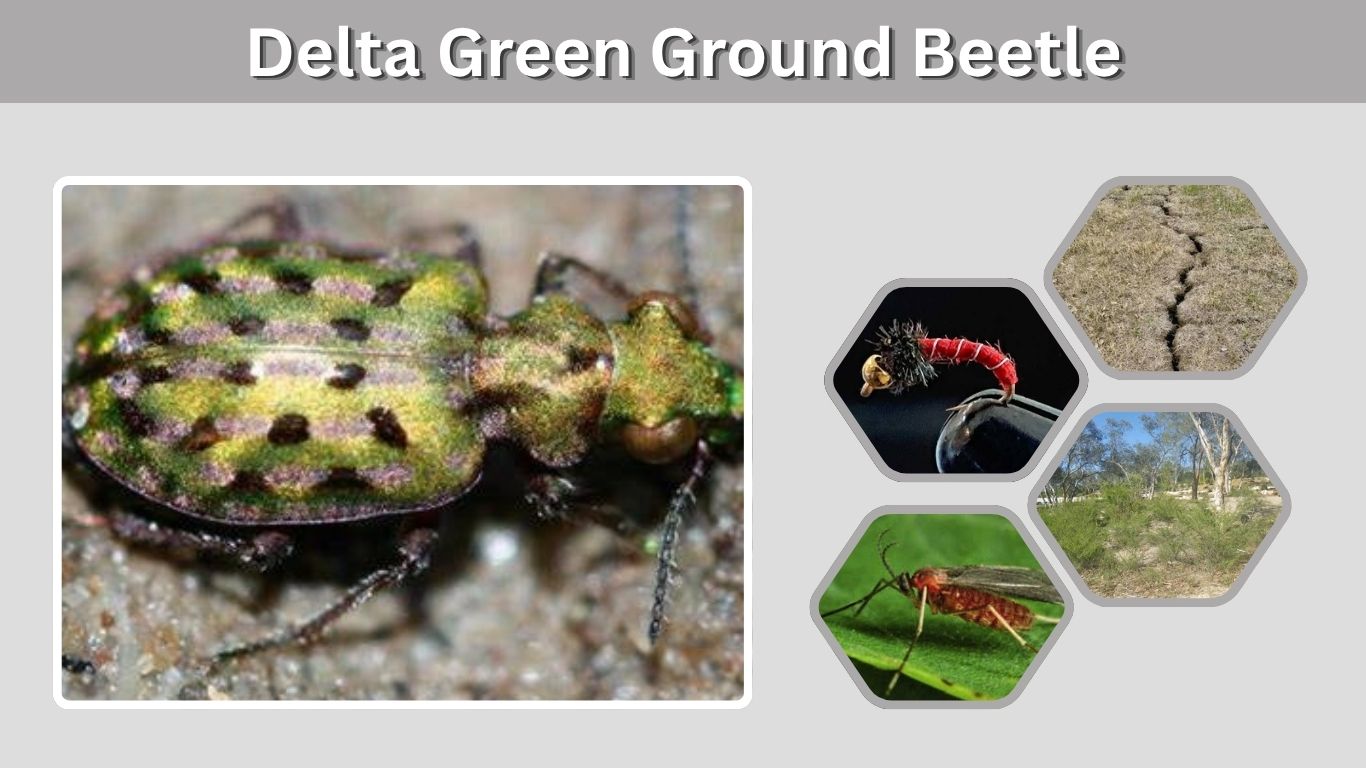
The Delta green ground beetle is a small, brilliantly colored beetle found in an exceptionally limited part of California. Its metallic green body makes it visually striking, but its restricted habitat and uncertain population make it vulnerable. Scientifically known as Elaphrus viridis, this rare insect depends heavily on seasonal wetlands and the moist ground surrounding vernal pools. Although several ground beetles have green or iridescent bodies, the Delta green ground beetle is a distinct protected species with specialized habitat requirements.
Delta Green Ground Beetle Overview
The Delta green ground beetle belongs to the ground beetle family Carabidae and the marsh ground beetle genus Elaphrus. It was scientifically described in 1878 and is considered endemic to California, meaning it naturally occurs nowhere else.
| Feature | Description |
| Common name | Delta green ground beetle |
| Scientific name | Elaphrus viridis |
| Family | Carabidae |
| Average length | About 0.25 inches or 0.6 centimeters |
| Color | Metallic green with bronze markings |
| Diet | Springtails, midges and insect larvae |
| Habitat | Edges of vernal and playa pools |
| Current range | Jepson Prairie region, California |
| Federal status | Threatened |
The species was federally listed as threatened on August 8, 1980. Its population size remains unknown because the beetles are difficult to locate and much of their underground life cycle has not been fully studied.
Delta Green Ground Beetles Identification
Adult Delta green ground beetles are tiny, reflective insects whose colors may change in appearance depending on the lighting and viewing angle. Their compact bodies and long legs help them move across exposed soil near seasonal pools.
Key Identification Features
- Approximately 0.25 inches long
- Brilliant metallic green upper body
- Bronze or brown markings on the wing covers
- Long, slender legs adapted for running
- Large eyes and noticeable jaws
- Hard, slightly sculptured wing covers
- Usually found on moist, exposed soil
Most individuals have green wing covers marked with bronze spots. However, a less-patterned form also occurs in which the beetle appears almost uniformly metallic green. The larvae are rarely observed and are much more difficult to identify.
Delta Green Ground Beetle vs. Other Green Beetles
“Green ground beetle” is a broad description rather than the name of one worldwide species. Numerous ground beetles may appear green, blue-green, bronze or iridescent. Correct identification therefore depends on location, size, body shape and habitat—not color alone.
The Delta green ground beetle is especially distinctive because its confirmed range is limited to the Jepson Prairie area of Solano County. A shiny green beetle found in Australia, Illinois, Iowa, Virginia, Washington, the United Kingdom or another distant location is almost certainly a different species.
Habitat and Geographic Range
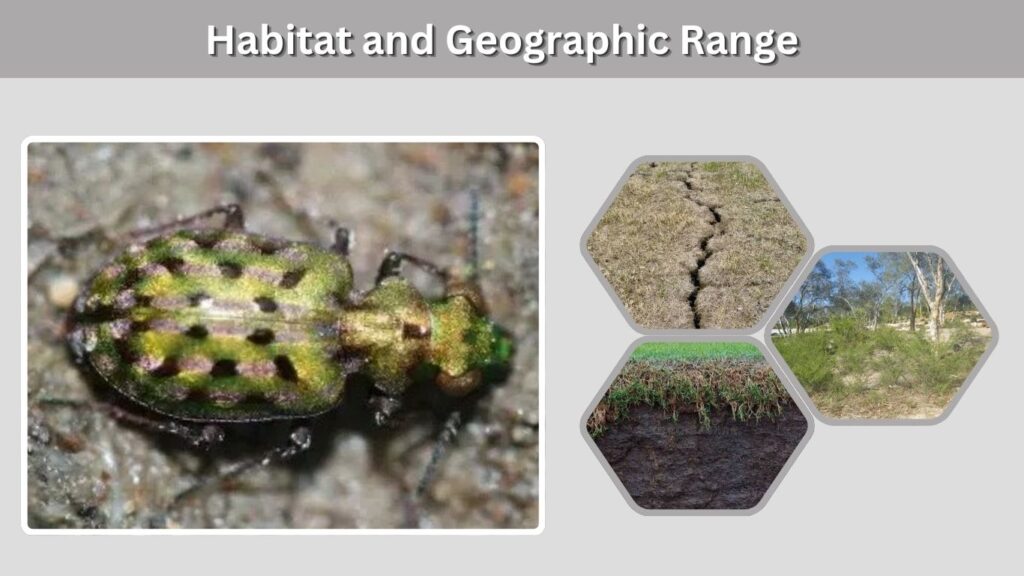
The Delta green ground beetle is currently known only from the Jepson Prairie region of Solano County in Northern California. It occurs around Jepson Prairie and a small number of nearby properties rather than throughout the Sacramento–San Joaquin Delta.
Vernal and Playa Pools
Its habitat consists primarily of the margins of vernal pools and larger seasonal wetlands known as playa pools. These pools fill with winter rain and gradually dry as temperatures rise. The surrounding clay-rich soil develops cracks during dry weather, creating important shelter for the beetle.
Adults are generally associated with:
- Damp soil beside seasonal pools
- Areas of exposed ground
- Low native vegetation
- Cracks in clay soil
- Open prairie with limited plant cover
At Jepson Prairie, adults may forage near Olcott Lake and neighboring playa pools from approximately January through May. They are more likely to become active when conditions are warm, calm and sufficiently moist.
Why Its Habitat Is Unusual
Vernal pools experience two dramatically different seasons. During winter and spring, they contain water and support abundant small invertebrates. In summer and fall, they become dry, hard landscapes crossed by deep soil cracks.
The Delta green ground beetle must survive both conditions. Adults shelter under low vegetation and within soil cracks during the wet season. Researchers believe one or more life stages remain dormant underground during the hottest and driest months.
What Do Delta Green Ground Beetles Eat?
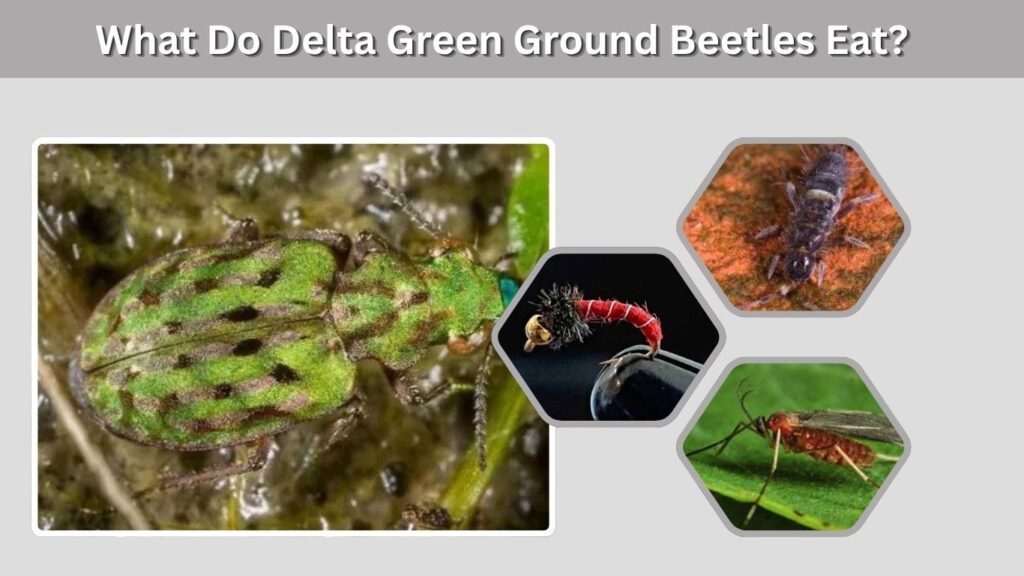
Delta green ground beetles are predators. Instead of feeding primarily on plants, roots or household materials, they hunt small invertebrates around wetland margins.
Main Foods
Their diet is believed to include:
- Springtails – Tiny soil-dwelling arthropods thought to be their most important prey.
- Adult midges – Small flies that commonly occur around wetlands.
- Midge larvae – Soft-bodied larvae developing in or near moist areas.
- Other beetle larvae – Immature beetles small enough to capture.
- Various soft-bodied invertebrates – Other available prey may also be eaten.
Researchers have observed Delta green ground beetles capturing prey in the field, but their complete diet remains poorly documented. Their predatory behavior may help regulate populations of tiny wetland invertebrates.
Delta Green Ground Beetles Behavior and Life Cycle
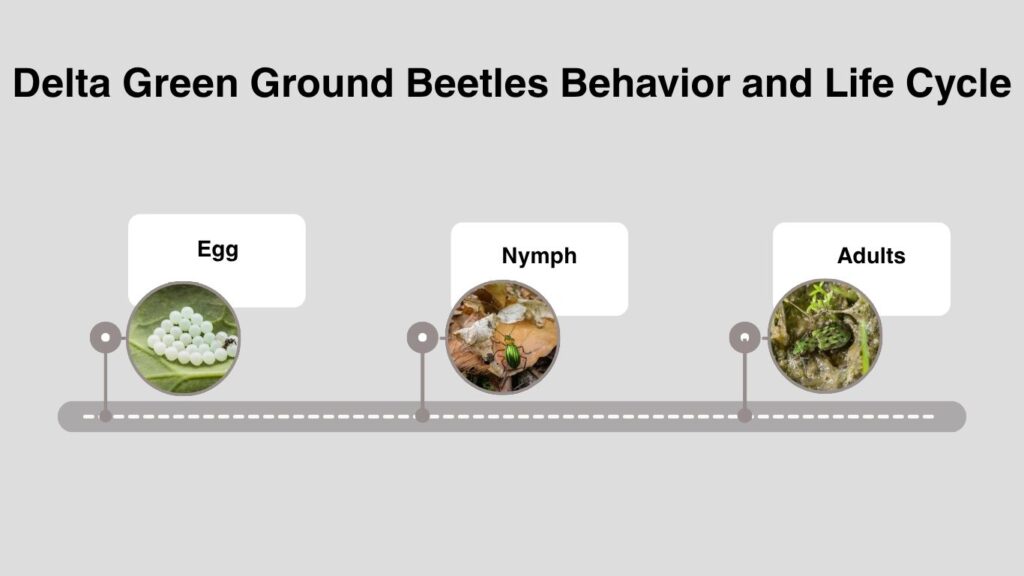
The Delta green ground beetle spends only part of the year visibly active above ground. Its seasonal behavior is closely connected to rainfall, soil moisture and the filling and drying of vernal pools.
Seasonal Activity
Adults are commonly active from winter into spring. They emerge when warmer weather arrives, run across damp or bare soil, search for prey and reproduce. Mating has been observed mainly during February and March at Jepson Prairie.
When conditions become excessively hot and dry, the beetles disappear from the surface. They are believed to enter dormancy, or aestivation, within cracks in the soil. Exactly which developmental stages survive underground remains uncertain.
Reproduction and Development
Females are thought to lay eggs once each year. The eggs hatch into predatory larvae, which later become pupae before transforming into adults.
Researchers believe there is normally one generation annually. However, worn adults found early in the active season suggest that some individuals might survive for at least a year and possibly longer. Much of this life cycle is still hypothetical because the eggs, larvae and pupae are extremely difficult to find in natural soil.
Why Is the Delta Green Ground Beetle Threatened?
The species is federally classified as threatened, although it is sometimes informally described as endangered because of its rarity. Its greatest vulnerability is its extremely restricted distribution.
Major Threats
Habitat conversion: Agricultural development and other land-use changes can destroy seasonal pools, alter drainage patterns and disturb the surrounding soil.
Small geographic range: A drought, fire, pollution event or major habitat disturbance could affect a substantial portion of the known population.
Climate change: Changes in rainfall and increasing dryness may prevent pools from filling properly or cause them to dry too early.
Invasive plants: Dense non-native vegetation can replace the low, open cover and exposed soil the beetles need for hunting and movement.
Limited biological information: Because the total population and underground life stages remain uncertain, conservation progress can be difficult to measure.
Interesting Delta Green Ground Beetle Facts
- It naturally occurs only within a small area of California.
- Its scientific name is Elaphrus viridis.
- “Viridis” refers to its green coloration.
- Adults measure only about one-quarter of an inch.
- Two slightly different adult color forms are known.
- Springtails are believed to be its principal food.
- It spends much of the year hidden underground.
- Its precise population size is unknown.
- It is associated with rare seasonal wetland ecosystems.
- It has been federally protected since 1980.
FAQs
Is the Delta green ground beetle endangered?
It is officially listed as threatened under the U.S. Endangered Species Act rather than endangered. However, its tiny known range, uncertain population and dependence on vulnerable vernal-pool habitat place it at considerable risk of further decline.
Where does the Delta green ground beetle live?
The species is currently known only from the Jepson Prairie region of Solano County, California. It inhabits moist soil, exposed ground and low vegetation around the margins of vernal pools and larger seasonal playa pools.
What do green ground beetles eat?
The Delta green ground beetle hunts small invertebrates, particularly springtails. It has also been observed eating adult midges, midge larvae and unidentified beetle larvae. Other green-colored ground beetle species may have somewhat different diets.
Are Delta green ground beetles harmful?
These beetles are not considered dangerous to people, pets, buildings or garden plants. They are small predators that concentrate on tiny invertebrate prey. Because the species is federally protected and exceptionally rare, it should never be collected or intentionally disturbed.
Can Delta green ground beetles fly?
Their hardened wing covers suggest the typical ground-beetle body structure, but available species accounts emphasize running and ground-level hunting rather than flight. Since many aspects of their behavior remain poorly understood, observations should not be used to assume that every metallic green ground beetle is this species.