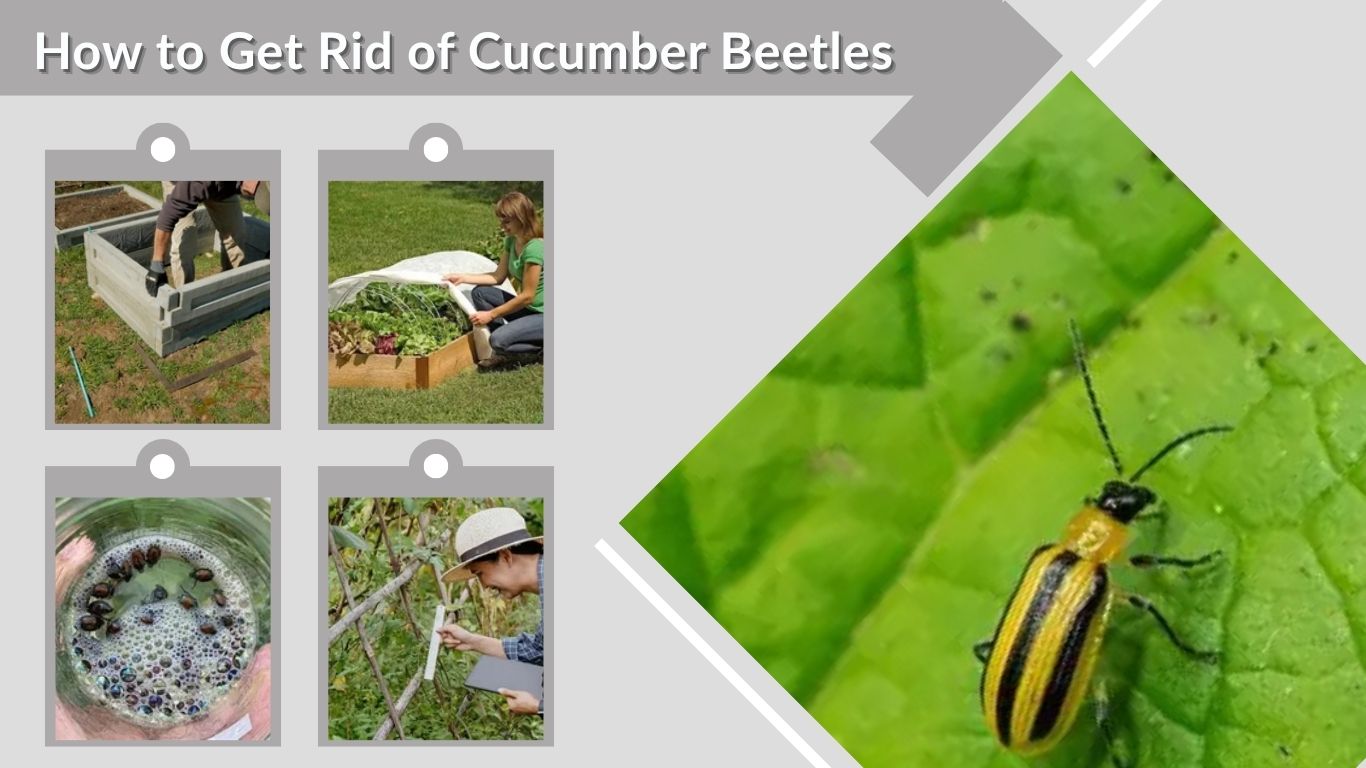
Cucumber beetles can quickly damage cucumbers, squash, pumpkins, melons, gourds, and other garden plants. Adults chew holes in leaves, flowers, stems, and fruit, while their larvae feed beneath the soil. Striped cucumber beetles can also spread bacterial wilt, which may kill an otherwise healthy vine. The best way to eliminate these pests is to act early, protect seedlings, remove adult beetles, reduce breeding sites, and combine natural barriers with carefully selected treatments when necessary.
Identify Cucumber Beetles Before Treating Plants
Correct identification helps you target cucumber beetles without harming beneficial lady beetles. Adults are usually about one-quarter inch long and have yellow or yellow-green bodies. They are frequently found beneath leaves, inside yellow flowers, and around tender stems. Cucumber beetles have long, threadlike antennae, while lady beetles generally have shorter antennae and more rounded bodies.
Striped Cucumber Beetles
Striped cucumber beetles have yellow wing covers marked with three lengthwise black stripes. They primarily attack cucumbers, squash, pumpkins, and melons. Adults feed above ground, while their larvae develop in the soil and feed mainly on cucurbit roots.
These beetles are especially dangerous to cucumbers and muskmelons because they can carry the bacteria responsible for bacterial wilt.
Spotted Cucumber Beetles
Spotted cucumber beetles are yellow or greenish yellow with 12 black spots. Adults feed on many vegetables and flowering plants, while their larvae are commonly associated with the roots of corn, grasses, and other crops.
Striped, spotted, western spotted, western striped, and banded cucumber beetles may occur in different regions, but their garden-management methods are generally similar.
Signs of an Infestation
- Small or irregular holes in leaves
- Damaged flowers and missing petals
- Chewed stems or tender shoots
- Scars and shallow pits on fruit
- Beetles hiding inside yellow blossoms
- Seedlings that grow slowly or collapse
- Leaves that wilt during the day
- Entire vines that suddenly die
Young plants are particularly vulnerable because a relatively small number of beetles can remove much of their foliage.
How to Get Rid of Cucumber Beetles Quickly
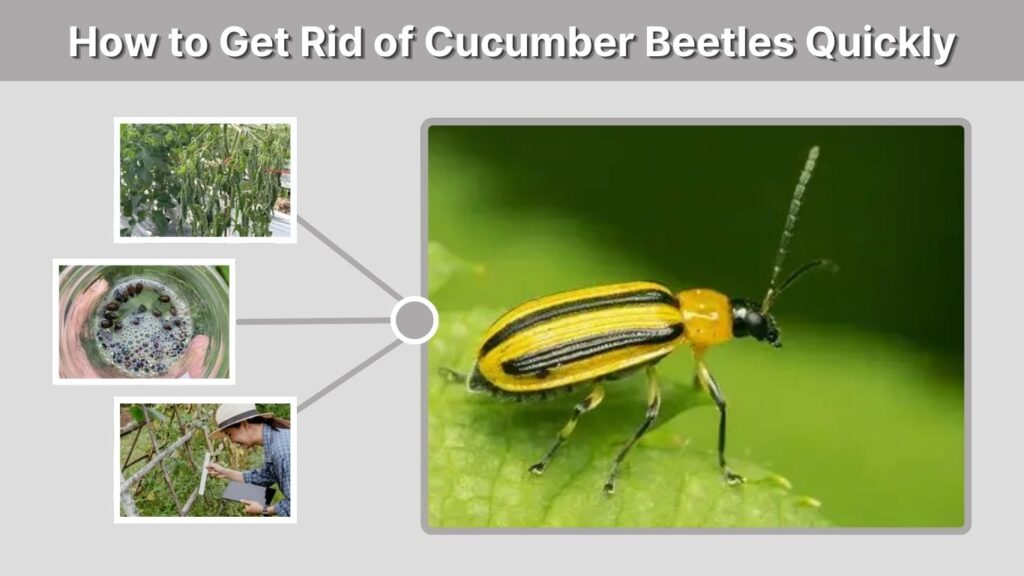
Begin control as soon as beetles or fresh feeding holes appear. Waiting until dozens of insects gather on each plant increases the risk of severe feeding and bacterial wilt. Combining exclusion, physical removal, sanitation, and monitoring is generally more effective than repeatedly applying one spray.
Follow These Immediate Steps
- Inspect both sides of every leaf.
- Check flowers and stems early in the morning.
- Knock beetles into soapy water.
- Cover undamaged seedlings with insect netting.
- Remove plants showing advanced bacterial wilt.
- Clear nearby weeds and abandoned cucurbit vines.
- Monitor plants every two or three days.
- Treat only when physical controls are insufficient.
Handpick or Vacuum Adult Beetles
Inspect plants during the cool morning when beetles are often slower. Hold a container of soapy water beneath the leaf and gently tap the plant. The disturbed beetles may drop into the container.
A small handheld vacuum can also remove beetles from leaves and flowers. Empty the vacuum contents into soapy water immediately. This technique is practical for raised beds and small gardens but requires frequent repetition because new beetles may arrive.
Install Floating Row Covers
Place floating row covers or fine insect netting over seedlings immediately after planting. Secure the edges with soil, boards, stones, or landscape staples so beetles cannot crawl underneath.
Remove the covering when female flowers begin opening so bees can pollinate them. Row covers prevent both pests and pollinators from reaching flowers, although seedless varieties or hand-pollinated plants can sometimes remain covered longer.
Use Traps Carefully
Yellow sticky cards can capture some adults and help reveal when cucumber beetles arrive. However, traps rarely eliminate a garden infestation by themselves.
Cucumber beetles are attracted to yellow, and some growers use sticky tape or lure-based traps above the crop canopy. Place lure traps away from valuable plants because a strong attractant could draw additional beetles toward the growing area.
How to Get Rid of Cucumber Beetles Naturally
Natural control works best when used before beetle numbers become high. Physical barriers and direct removal provide immediate protection without leaving pesticide residues. Organic sprays and deterrents may support these methods, but few natural products provide complete control when adults are already abundant.
Natural Control Methods
- Floating row covers
- Handpicking into soapy water
- Handheld vacuuming
- Yellow sticky traps
- Kaolin-clay particle films
- Managed trap crops
- Removal of weeds and plant debris
- Crop rotation
- Frequent inspection
- Encouragement of natural predators
Apply Kaolin Clay
Kaolin clay covers foliage with a pale mineral film that makes plants less attractive and more difficult for beetles to feed on. It acts mainly as a deterrent rather than a poison.
Apply it before serious feeding begins and maintain coverage as plants produce new growth. Rain and irrigation may wash away the film, making another application necessary. Research-based guidance supports kaolin clay as part of an integrated approach to striped cucumber beetles.
Does Neem Oil Work?
Neem oil may discourage feeding or kill some beetles contacted directly by the wet spray. However, its effect on hard-bodied adults can be inconsistent, particularly during a heavy infestation.
Use only a product labeled for cucumber beetles and the crop being treated. Avoid spraying open flowers or applying it while bees are active. Neem should supplement row covers, hand removal, and sanitation rather than serve as the only control method.
Plant a Trap Crop
Blue Hubbard squash is commonly used as a trap crop because cucumber beetles often find it highly attractive. Plant it around the garden or before the main crop so beetles gather there first.
The trap plants must be monitored and treated or removed before the beetles move to cucumbers and melons. A neglected trap crop may become a breeding and feeding site instead of protecting the garden.
Getting Rid of Eggs and Larvae in Soil
Cucumber beetle eggs, larvae, and pupae are difficult to see because they develop around plant roots and within the soil. Larvae may feed underground for approximately two to six weeks before pupating and emerging as adults. For home gardens, preventing egg-laying and controlling adults is usually more practical than trying to kill every immature beetle underground.
How to Reduce Cucumber Beetle Eggs
Adult females commonly place eggs in soil cracks near suitable host plants. Removing adults before egg-laying reduces the number of larvae that develop later.
Keep the garden free of unnecessary weeds and volunteer cucurbit plants. Avoid leaving heavily infested vines in place after harvest. Cultivating the soil after the growing season may expose some immature insects, although it will not guarantee complete elimination.
How to Control Larvae
Larvae are protected by the soil, making contact sprays ineffective. Beneficial nematodes and fungal biological products are sometimes promoted for soil control, but field results against cucumber beetles have not always been dependable.
Focus on:
- Rotating cucurbits to another location
- Removing infested plant material
- Controlling adults before they lay eggs
- Managing grassy weeds and alternative hosts
- Avoiding continuous cucurbit planting in one bed
- Inspecting new plants as soon as they emerge
Controlling Beetles on Different Garden Plants
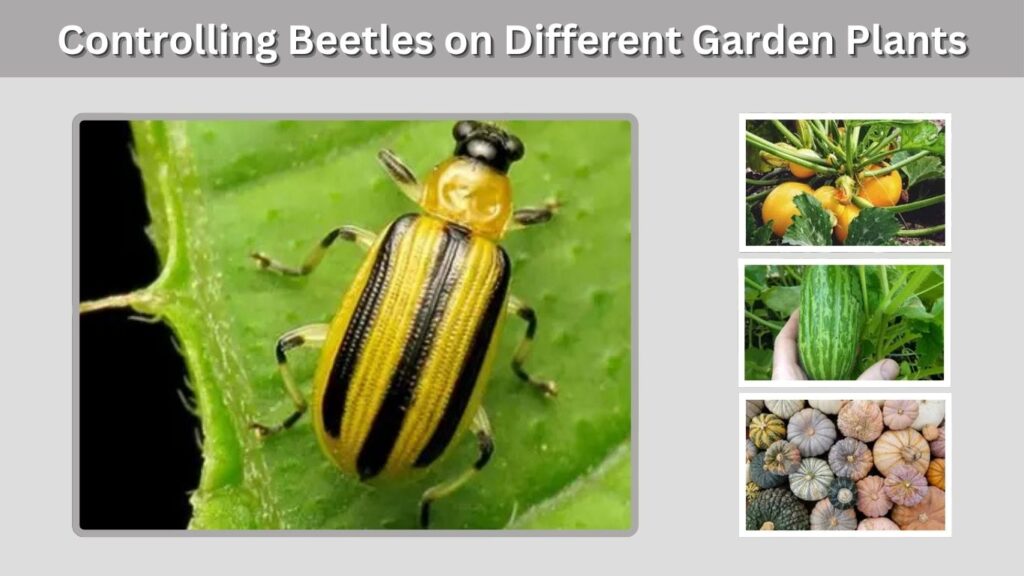
Cucumber beetles do not feed only on cucumber plants. Adults may attack pumpkins, squash, melons, gourds, corn, beans, dahlias, roses, sunflowers, and other flowering plants. Management should prioritize vulnerable cucurbits because feeding damage and bacterial wilt can be much more serious on these crops.
Cucumbers and Melons
Cucumbers and muskmelons are highly susceptible to bacterial wilt. The University of Minnesota recommends considering control at approximately one-half beetle per seedling and one beetle per older plant. Thresholds may vary by region and growing conditions.
Pumpkins and Squash
Established pumpkin and squash plants generally tolerate more leaf feeding than small cucumber seedlings. However, beetles can still destroy flowers, weaken young plants, and scar developing fruit.
Continue inspecting blossoms because adults often hide among the petals. Protect young plants with row covers and remove the covering once pollination is required.
Beetles Found Indoors
Cucumber beetles occasionally enter houses accidentally but do not normally establish indoor infestations. Vacuum or capture individual beetles and check nearby doors, windows, and screens.
Indoor pesticide treatment is usually unnecessary. The source is generally an outdoor garden, field, or flowering plant rather than food or structural materials inside the house.
When to Use an Insecticide
An insecticide may be appropriate when beetle populations exceed locally recommended thresholds, seedlings are losing substantial foliage, or natural methods cannot protect a susceptible crop. Because cucumber beetles often feed inside flowers, careless spraying can expose bees and other pollinators.
Use Pesticides Safely
- Confirm cucumber beetles are listed on the label.
- Confirm the vegetable or flower is an approved crop.
- Follow the stated application rate.
- Observe the preharvest waiting period.
- Avoid spraying open flowers.
- Treat when pollinators are not active.
- Wear the required protective equipment.
- Never exceed the permitted application frequency.
Insecticides may kill beetles but cannot cure bacterial wilt after a plant becomes infected. Beetle prevention and early control remain the most effective ways to limit the disease.
How to Prevent Cucumber Beetles From Returning
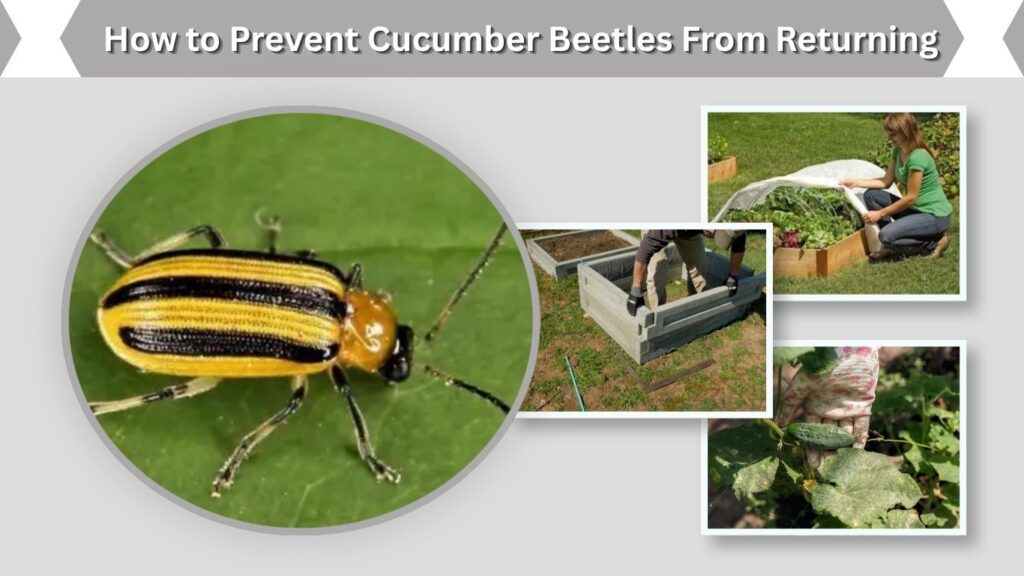
Cucumber beetles cannot always be removed permanently because adults can fly into a garden from neighboring vegetation. Annual prevention is therefore more realistic than a one-time cure. Prepare before seedlings emerge, exclude the first adults, keep plants healthy, and continue monitoring until the vines are well established.
Seasonal Prevention Checklist
- Rotate cucumber-family crops each year.
- Start with healthy, vigorous seedlings.
- Install row covers immediately after planting.
- Seal every opening around the covers.
- Remove nearby weeds and volunteer cucurbits.
- Inspect plants several times each week.
- Remove wilted plants promptly.
- Clear vines and fruit after harvest.
- Manage beetles on trap crops.
- Record when beetles first appear each season.
FAQs
What is the fastest way to get rid of cucumber beetles?
For a small garden, immediately cover unaffected seedlings and remove visible adults by hand or with a handheld vacuum. Repeat inspections every few days. For a large infestation, combine physical removal with a labeled treatment while protecting flowers and pollinators.
Can vinegar kill cucumber beetles?
Strong vinegar can harm or burn plant leaves and is not a dependable cucumber beetle treatment. Avoid spraying homemade vinegar mixtures on cucumbers or other valued plants. Use row covers, hand removal, kaolin clay, traps, or appropriately labeled garden products instead.
Will soapy water kill cucumber beetles?
A container of soapy water kills beetles that are knocked or dropped into it. Spraying homemade dish-soap mixtures directly on plants is riskier because some soaps damage leaves. A labeled insecticidal soap is safer when used exactly as directed.
Can cucumber plants recover after beetle damage?
Healthy, established plants can often recover from light or moderate leaf feeding. Young seedlings may not survive severe defoliation. Plants infected with bacterial wilt generally continue declining because no treatment can remove the bacteria from their vascular system.
Do cucumber beetles return every year?
They may return each growing season. Striped cucumber beetles can overwinter in protected outdoor locations in some regions, while spotted beetles may migrate into northern areas later in the season. Row covers, sanitation, rotation, and early monitoring help reduce repeated damage.