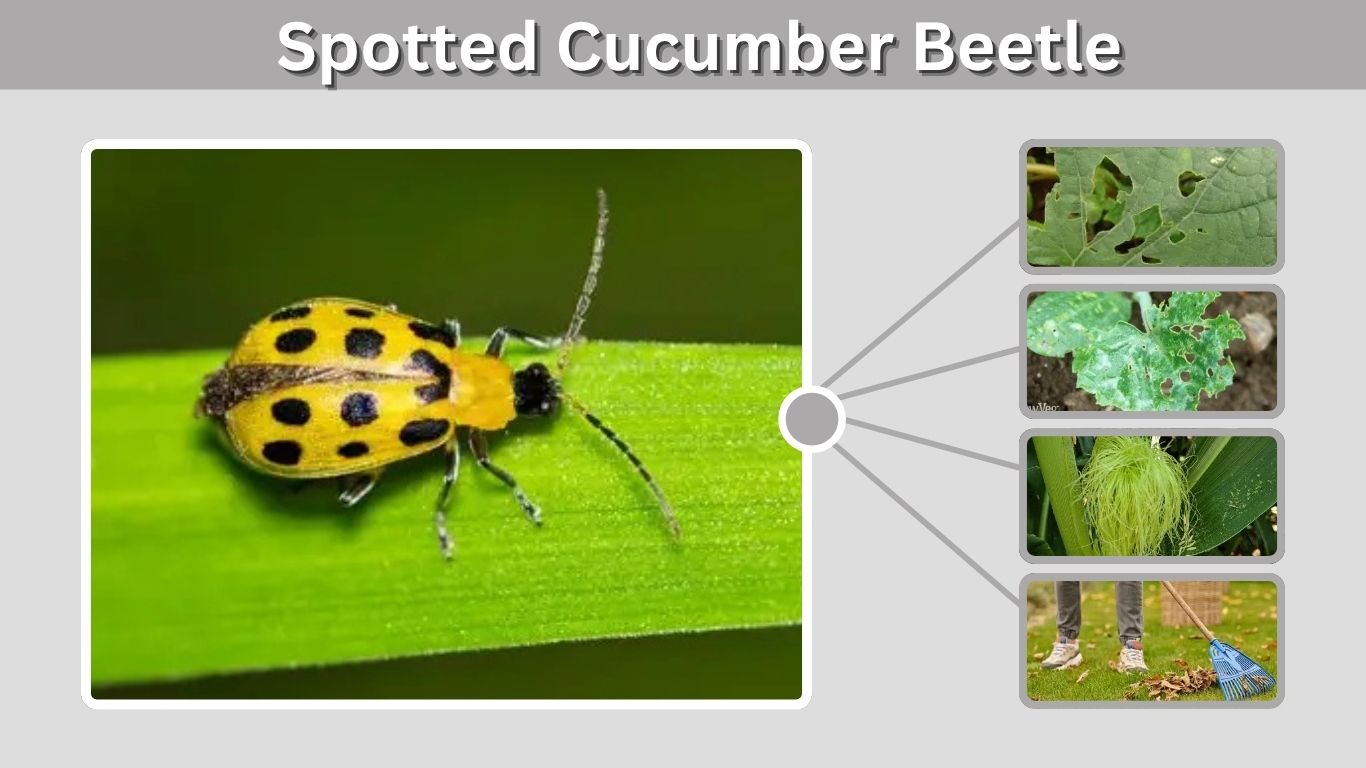
The spotted cucumber beetle is a small yellow-green garden pest recognized by the black spots covering its back. Although its name suggests that it attacks only cucumbers, adults feed on many vegetables, flowers and field crops. Large infestations can damage seedlings, scar fruit and spread plant diseases. Fortunately, these beetles are not considered dangerous to people. Early identification, regular monitoring and a combination of physical and cultural controls can protect vulnerable plants without unnecessary pesticide use.
What Is a Spotted Cucumber Beetle?
The spotted cucumber beetle, Diabrotica undecimpunctata, belongs to the leaf beetle family Chrysomelidae. It is native to North America and is also called the 12-spotted cucumber beetle. Its underground larval form is commonly known as the southern corn rootworm.
Two commonly recognized forms are:
- Eastern spotted cucumber beetle: Diabrotica undecimpunctata howardi
- Western spotted cucumber beetle: Diabrotica undecimpunctata undecimpunctata
The eastern form occurs across much of eastern and central North America, while the western form is primarily found in California, Oregon, Washington, Idaho and nearby western areas.
Spotted Cucumber Beetle Identification
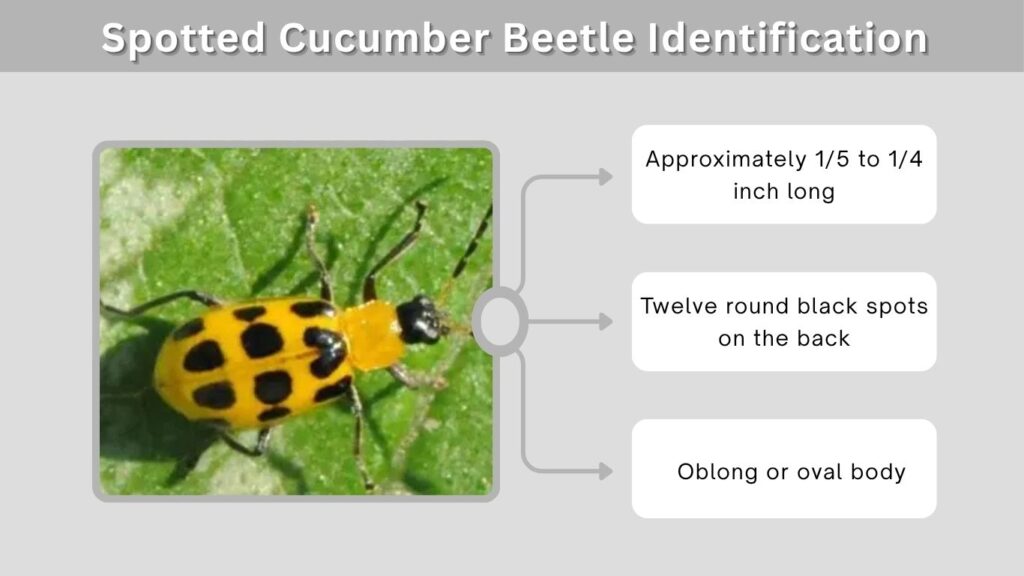
Adult beetles are small, active insects that may fly away when a plant is disturbed. Their bright color and spot pattern make mature adults relatively easy to identify.
Key Identification Features
- Approximately 1/5 to 1/4 inch long
- Yellow or greenish-yellow wing covers
- Twelve round black spots on the back
- Black head, antennae and legs
- Long, thin, threadlike antennae
- Oblong or oval body
- Ability to fly between plants
The larvae are slender, whitish or cream-colored grubs with a brown head and a darker plate near the rear of the body. They remain underground, where they feed on plant roots before pupating in the soil.
Spotted Cucumber Beetle vs. Ladybug
Spotted cucumber beetles are sometimes mistaken for yellow or green ladybugs. However, their body shape and antennae are noticeably different.
| Feature | Spotted cucumber beetle | Ladybug |
| Body shape | Longer and more oval | Rounded and dome-shaped |
| Antennae | Long and threadlike | Short and clubbed |
| Typical color | Yellow-green with black spots | Red, orange, yellow or black |
| Feeding behavior | Eats plant tissue | Many species eat aphids and other pests |
| Garden role | Usually a crop pest | Often beneficial |
UC Integrated Pest Management recommends examining the antennae: cucumber beetles have long antennae, while lady beetles have short, stubby ones.
What Do Spotted Cucumber Beetles Eat?
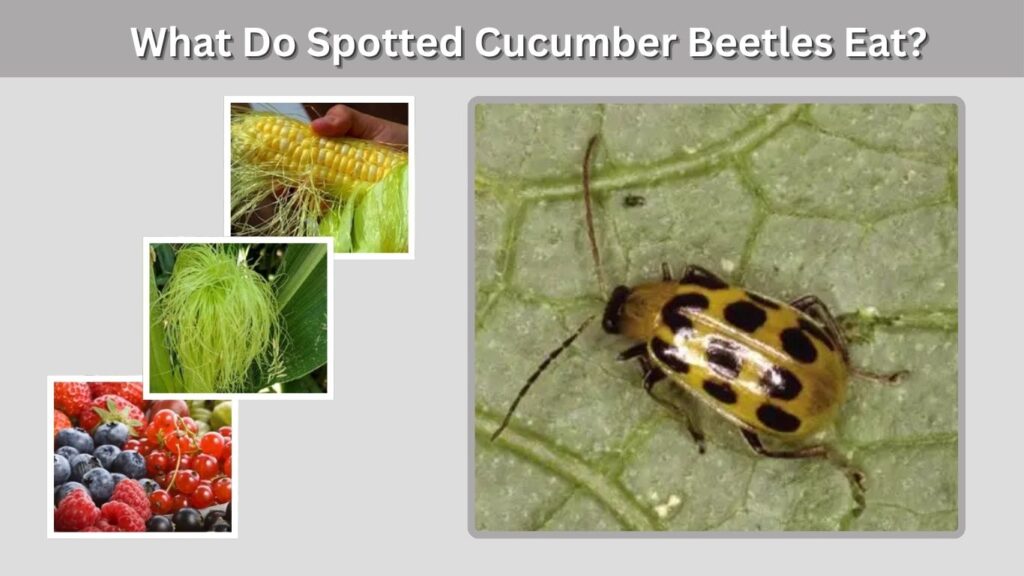
Adults are broad plant feeders. Cucumbers, melons, squash and pumpkins are common targets, but the insects may also appear on beans, corn, eggplant, spinach, roses and numerous flowering plants.
Adult beetles may consume:
- Seedling stems and cotyledons
- Leaves and tender shoots
- Flowers and pollen
- Corn silks
- Developing pods
- Soft fruit surfaces
- Pumpkin, melon and squash rinds
The species has been recorded feeding on more than 100 plants. Its larvae feed mainly on underground roots, especially those of corn, grasses, beans and several field crops.
Spotted Cucumber Beetle Damage
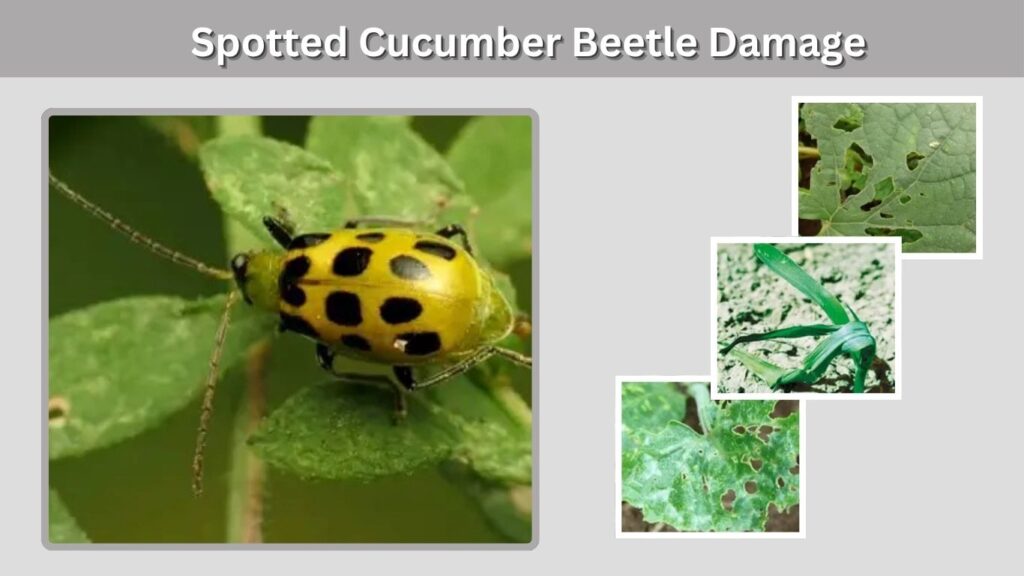
A few beetles on a mature plant may cause only cosmetic damage. However, numerous beetles can severely weaken seedlings and interfere with fruit and flower development.
Common Signs of Damage
- Small, irregular holes in leaves
- Chewed leaf edges
- Damaged blossoms
- Scarred cucumber, melon or squash skin
- Injured stems and young shoots
- Weak or stunted seedlings
- Poor fruit development
- Suddenly wilting cucumber or melon vines
Young plants are especially vulnerable because they have limited foliage. Established squash and pumpkin plants can generally tolerate more leaf loss than newly emerged cucumbers or melons.
Bacterial Wilt
Spotted and striped cucumber beetles can spread the bacterium responsible for bacterial wilt. The pathogen enters through feeding wounds and blocks water movement inside the plant.
An infected vine may wilt during the day, temporarily recover at night and eventually collapse completely. Cucumbers and muskmelons are particularly susceptible. Once bacterial wilt is established, pesticides cannot cure the plant, so controlling beetles before disease transmission is important.
Spotted Cucumber Beetle Life Cycle
The life cycle has four stages: egg, larva, pupa and adult. Females deposit yellow-orange eggs in soil cracks or near the bases of host plants. After hatching, the larvae move through the soil and feed on roots for several weeks.
Mature larvae create earthen cells, pupate underground and later emerge as adult beetles. Development from egg to adult may take approximately 30 to 60 days, depending on temperature and location.
The number of generations varies by region. Northern populations may produce only one generation, while warmer areas may support two or more. Adults can overwinter in protected vegetation and plant debris in mild climates, whereas populations in colder northern areas may migrate from warmer regions each year.
How to Get Rid of Spotted Cucumber Beetles
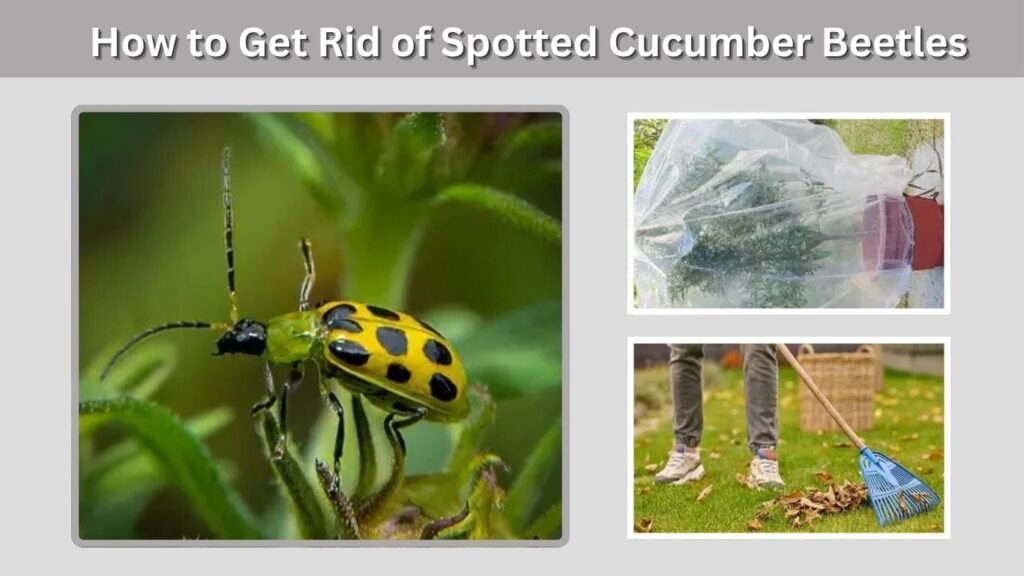
The best control program combines exclusion, monitoring, sanitation and targeted treatment. Begin checking plants as soon as seedlings emerge because early feeding usually causes the most serious damage.
Hand Removal and Monitoring
Inspect the upper and lower sides of leaves, flowers and growing tips. Beetles can be knocked into a container of soapy water or removed with a handheld vacuum reserved for garden use.
Yellow sticky cards may help reveal when adults are present, but they should be considered monitoring tools rather than complete control. Beetles often gather near garden edges and newly emerging plants.
Use Row Covers
Cover young plants with lightweight insect fabric immediately after planting. Secure the edges so beetles cannot crawl underneath. Remove the covering once flowers appear unless you are hand-pollinating, because bees need access to the blossoms.
Excluding beetles during early plant growth is one of the most effective nonchemical methods for protecting vulnerable seedlings.
Keep the Garden Clean
Remove weeds, old vines and crop residue that may provide food or protected overwintering sites. Dispose of severely wilted plants so beetles cannot continue feeding on infected tissue and carry bacteria to healthy plants.
Rotating crops and avoiding cucurbits beside corn may also reduce exposure to root-feeding larvae and migrating adults.
Try a Trap Crop
Blue Hubbard squash is highly attractive to cucumber beetles and can sometimes be planted around the edge of a cucurbit garden. Beetles concentrate on the trap plants, making monitoring and targeted removal easier. The trap crop must be checked frequently so it does not become a breeding site.
Neem Oil and Other Sprays
Neem oil may discourage or suppress exposed beetles when coverage is thorough, but it is unlikely to solve a heavy infestation by itself. Use only a product whose label lists the crop and intended pest.
When stronger control is necessary, choose a pesticide registered for cucumber beetles on edible crops. Apply it exactly as directed, observe the required preharvest interval and avoid treating open flowers when bees are visiting. Using more than the labeled amount can damage plants and create risks for people, pets and beneficial insects.
Are Spotted Cucumber Beetles Dangerous to Humans?
Spotted cucumber beetles are plant-feeding insects and are not considered venomous or poisonous to humans. They do not have a stinger and are not recognized as medically important biting insects. Their main danger is to crops through feeding injury and disease transmission.
Wash harvested vegetables before eating them, particularly when beetles, droppings or pesticide residues are present.
Why Are Spotted Cucumber Beetles in the House?
An adult may accidentally fly through an open door or window, especially when gardens or agricultural fields are nearby. Because its immature stages develop in soil around plant roots, finding one adult indoors usually does not indicate a household infestation.
Vacuum or capture the beetle, inspect nearby houseplants and repair damaged window screens. Indoor insecticide treatment is generally unnecessary for an occasional beetle.
FAQs
Do spotted cucumber beetles bite humans?
Spotted cucumber beetles are not regarded as human-biting insects. They possess chewing mouthparts designed for plant material rather than feeding on blood or skin. A beetle crawling on a person is usually searching for vegetation or attempting to escape.
Are spotted cucumber beetles poisonous?
No. They are not poisonous or venomous to people. However, they can be harmful to vegetables because adults chew foliage, flowers and fruit while potentially spreading bacterial wilt and other plant pathogens.
Do spotted cucumber beetles fly?
Yes. Adults are capable flyers and regularly move between weeds, gardens, cornfields and flowering plants. Their mobility allows them to appear suddenly, even in gardens where cucumber plants were not grown during the previous season.
What kills spotted cucumber beetles naturally?
Hand removal, secured row covers, garden sanitation and trap crops can reduce their numbers without conventional pesticides. Encouraging natural predators may also help, although beneficial insects alone may not control a large population.
Are cucumbers damaged by beetles safe to eat?
Cucumbers with minor surface scars or small feeding marks are usually usable after damaged areas are removed and the fruit is washed. Discard fruit that is rotten, badly damaged, contaminated or treated contrary to a pesticide label.