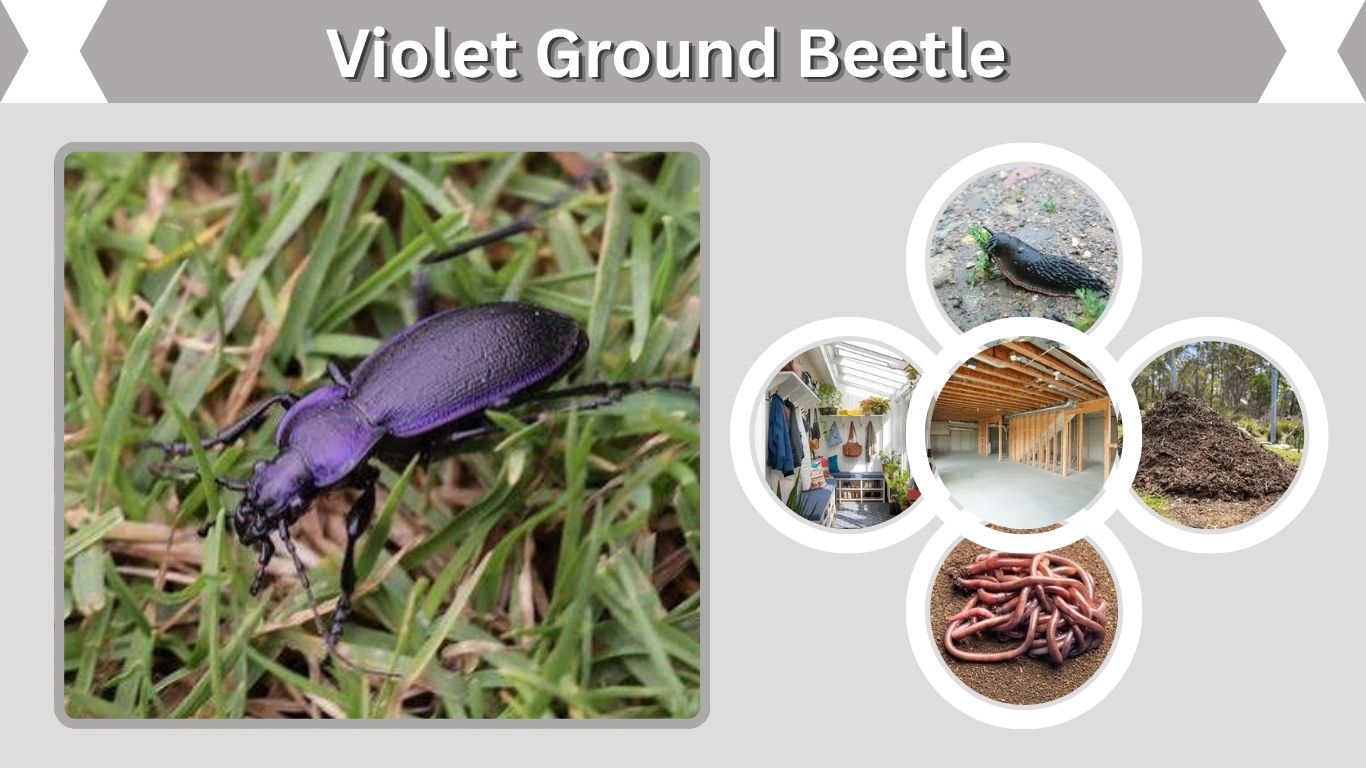
The violet ground beetle is a large, mainly black predatory beetle with metallic violet, blue or greenish edges around its thorax and hardened wing cases. Its scientific name is Carabus violaceus. This nocturnal beetle is widespread across mainland Britain and lives in woodlands, gardens, parkland, grassland and urban habitats. Rather than damaging plants, it hunts slugs, worms, caterpillars and other small invertebrates, making it a valuable garden predator.
Violet Ground Beetle Quick Facts
The violet ground beetle belongs to the ground beetle family Carabidae. Its dark body can appear plain black until light reveals the narrow purple or blue edging that gives the species its common name.
| Feature | Information |
| Scientific name | Carabus violaceus |
| Family | Carabidae |
| Adult size | Approximately 20–30 mm |
| Color | Black with violet, blue or greenish edges |
| Diet | Slugs, snails, worms and insect larvae |
| Activity | Mainly nocturnal |
| Habitat | Woodland, gardens, grassland and parkland |
| Flight | Flightless |
| Human risk | Generally harmless |
| Garden value | Beneficial predator |
What Does a Violet Ground Beetle Look Like?
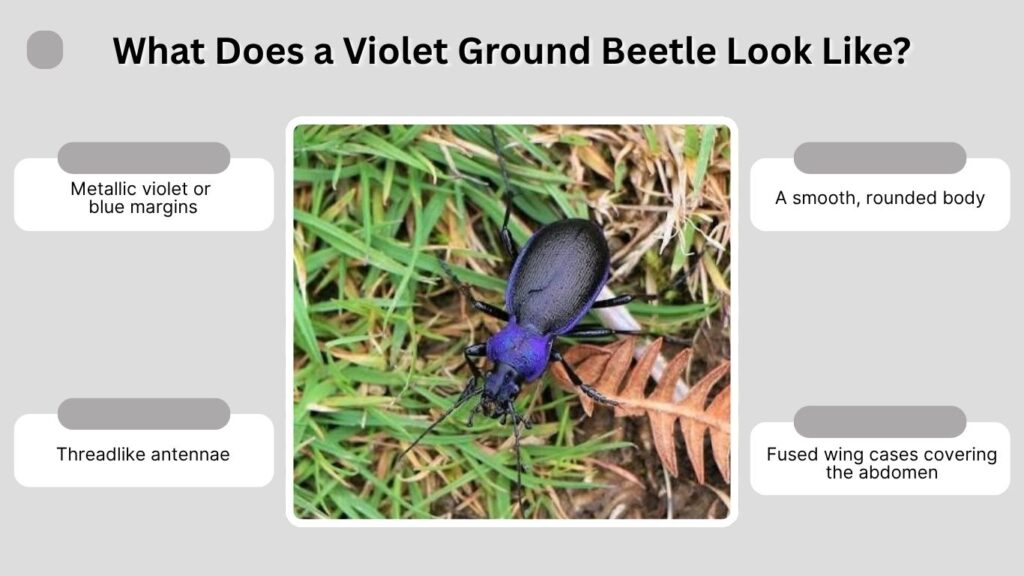
Adult violet ground beetles have long legs, powerful jaws and a broad, convex body adapted for running across soil and leaf litter. Their hardened wing cases are smooth or finely textured and usually have a dull black appearance.
Identification Features
Look for:
- A body measuring about 20–30 millimetres
- Black or very dark-brown coloration
- Metallic violet or blue margins
- Long, slender running legs
- Threadlike antennae
- Clearly visible curved mandibles
- A smooth, rounded body
- Fused wing cases covering the abdomen
The violet color is often strongest along the edges of the pronotum and wing cases. Depending on the light, the edging may appear purple, dark blue or greenish.
Can Violet Ground Beetles Fly?
Violet ground beetles cannot fly because their wing cases are fused. They disperse by walking and use their long legs to chase prey across the ground. Habitat fragmentation can therefore affect their ability to move between suitable woodland and grassland areas.
Violet Ground Beetle vs. Ridged Violet Ground Beetle
The common violet ground beetle is frequently confused with the ridged violet ground beetle, Carabus problematicus. Both are large, dark beetles with purple or blue margins, and close inspection may be required for a reliable identification.
| Feature | Violet ground beetle | Ridged violet ground beetle |
| Scientific name | Carabus violaceus | Carabus problematicus |
| Wing cases | Smoother and almost matt | Strongly ridged and textured |
| Body shape | More rounded and convex | Flatter |
| Typical habitat | Gardens, farmland and meadows | Woodland, grassland and heathland |
| Size | About 20–30 mm | About 20–28 mm |
| Relative abundance | More common | Slightly less common |
The ridged species has obvious grooves, ridges and dimples across its wing cases. It may also show more extensive violet coloring over the thorax.
Where Do Violet Ground Beetles Live?
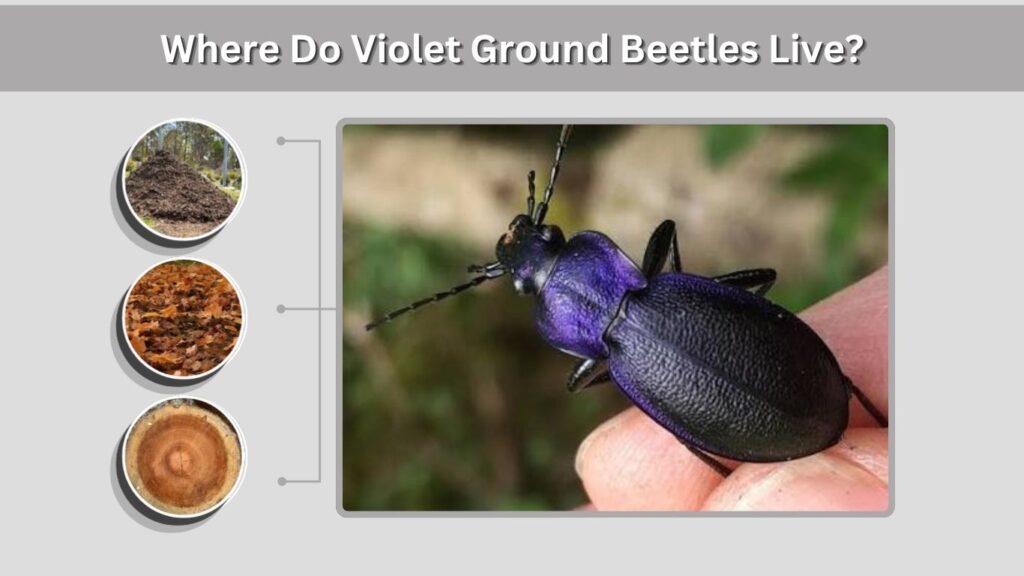
Violet ground beetles occur throughout mainland Britain. They occupy many habitats, including deciduous woodland, moorland, parkland, farmland, overgrown grassland and urban gardens.
Common Hiding Places
During daylight, they commonly shelter:
- Beneath logs
- Under stones
- Inside leaf litter
- Beneath loose bark
- Under plant pots
- Around compost piles
- Within damp garden borders
- Beneath boards and other ground debris
They emerge mainly after dark to search for food. Their activity may increase during mild, damp weather when slugs, worms and insect larvae are abundant.
What Do Violet Ground Beetles Eat?
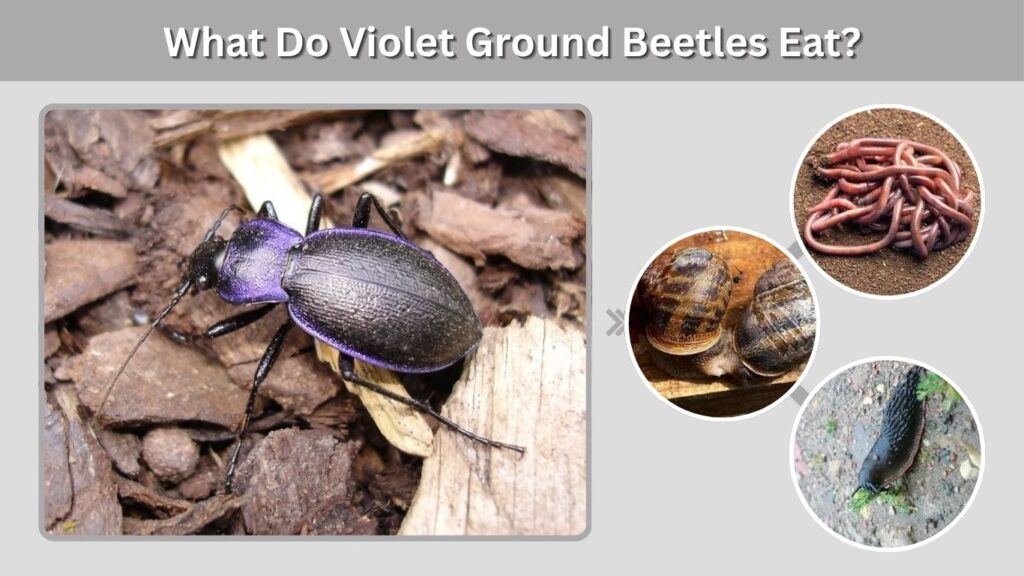
Violet ground beetles are active predators rather than plant feeders. Their long legs allow them to chase prey, while their strong jaws help them capture and break apart soft-bodied animals.
Common Foods
Their diet includes:
- Slugs
- Snails
- Earthworms
- Insect larvae
- Leatherjackets
- Cutworms
- Caterpillars
- Other small invertebrates
This diet makes them useful in gardens and agricultural areas. They naturally reduce populations of several animals that feed on vegetables, flowers and young plants.
The beetle does not normally eat healthy garden plants. Finding one near vegetables, seedlings or flowers generally means it is hunting prey rather than causing the visible plant damage.
Violet Ground Beetle Larvae
The larvae look very different from adult beetles. They are elongated, segmented predators with six legs near the front of the body and strong forward-facing jaws. Their upper surfaces are usually dark brown or black, while the underside may be paler.
Larval Habitat and Diet
Larvae remain mainly in soil, beneath logs or within leaf litter. Like the adults, they hunt other invertebrates and may consume insect eggs, larvae, worms, slugs and other small prey.
Their presence in garden soil is generally beneficial. They do not resemble white scarab grubs and are not known for feeding on grass roots or living plants.
Violet Ground Beetle Life Cycle
The species undergoes complete metamorphosis through four stages:
- Egg
- Larva
- Pupa
- Adult beetle
In Britain, adults commonly breed in autumn. Females deposit eggs individually or in small groups within soil or decaying organic material. The eggs may hatch within one or two weeks.
The larvae continue feeding and developing through winter. They later pupate in soil, beneath logs or behind loose bark during spring. New adults emerge after several weeks, commonly during April and May. Adults may live long enough to overwinter after breeding.
Do Violet Ground Beetles Bite?
Violet ground beetles do not seek out or attack people. However, they have strong mandibles and may pinch the skin when trapped, squeezed or picked up carelessly. Such a pinch may hurt briefly but is not normally considered medically dangerous.
They do not have a stinger and do not feed on human blood. Avoid handling them with bare fingers, particularly around their head and jaws.
Some ground beetles can release an unpleasant-smelling defensive secretion when threatened. This is intended to discourage predators rather than harm people. Washing the hands after handling any beetle is a sensible precaution.
Are Violet Ground Beetles Poisonous?
Violet ground beetles are not considered poisonous household pests. They do not contaminate stored food, destroy clothing, bore into timber or damage the structure of a building. Their main role is hunting other invertebrates outdoors.
Pets should still be discouraged from chewing unfamiliar beetles because defensive secretions may cause an unpleasant taste or temporary mouth irritation.
Why Is a Violet Ground Beetle in My House?
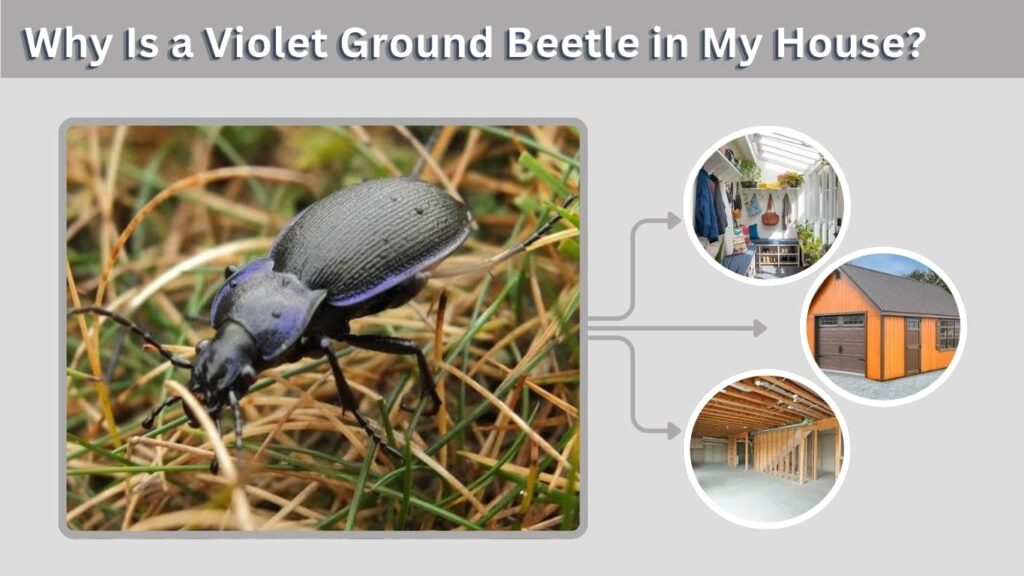
A violet ground beetle may enter accidentally through an open door, ground-level window, foundation crack or gap beneath a door. Nocturnal ground beetles may also approach outdoor lights and wander into nearby buildings.
Indoor sightings are most likely in:
- Basements
- Garages
- Utility rooms
- Porches
- Ground-floor hallways
- Spaces beneath stored boxes
They do not normally reproduce indoors and usually survive for only a short time because houses lack suitable prey and habitat.
How to Remove One
Place a container over the beetle, slide a piece of stiff paper underneath and release it outside beneath vegetation, a log or another sheltered area.
Vacuuming is also possible, but outdoor release preserves a useful predator. Pesticide treatment is unnecessary when only one or two beetles enter.
How to Keep Violet Ground Beetles Outside
Occasional indoor entry can be reduced by:
- Installing door sweeps
- Sealing foundation cracks
- Repairing screens
- Moving firewood away from the house
- Removing boards and debris near walls
- Reducing bright exterior lighting
- Trimming tall grass beside the foundation
These measures prevent accidental entry without killing beetles that help control outdoor pests.
How to Attract Violet Ground Beetles to a Garden
Violet ground beetles benefit from damp, sheltered spaces where they can hide during the day and hunt after dark.
Helpful garden features include:
- Small log piles
- Leaf litter beneath shrubs
- Compost areas
- Stones placed in quiet borders
- Dense ground-level vegetation
- Pesticide-free garden sections
The Royal Horticultural Society recommends wood piles, compost heaps and some retained leaf litter to support predatory ground beetles and other garden wildlife.
FAQs
Is the violet ground beetle rare in the UK?
No. Carabus violaceus is widespread throughout mainland Britain and occurs in woodland, gardens, farmland, grassland and urban areas. It is more common than the similar ridged violet ground beetle.
How large is a violet ground beetle?
Adults usually measure approximately 20–30 millimetres long. Its broad body and long legs make it one of the more noticeable ground beetles found in British gardens and woodland.
What does a violet ground beetle eat?
It hunts slugs, snails, worms, caterpillars and other insect larvae. Both adults and larvae are predators and can help reduce populations of plant-feeding garden pests.
Can violet ground beetles damage a house?
No. They do not damage timber, clothing, stored food or building materials. An individual found inside has normally wandered in accidentally and can be released outdoors.
What is the difference between Carabus violaceus and Carabus problematicus?
Carabus violaceus has smoother, more matt wing cases and a rounded body. Carabus problematicus has rough, strongly ridged wing cases, a flatter shape and more extensive violet coloring.