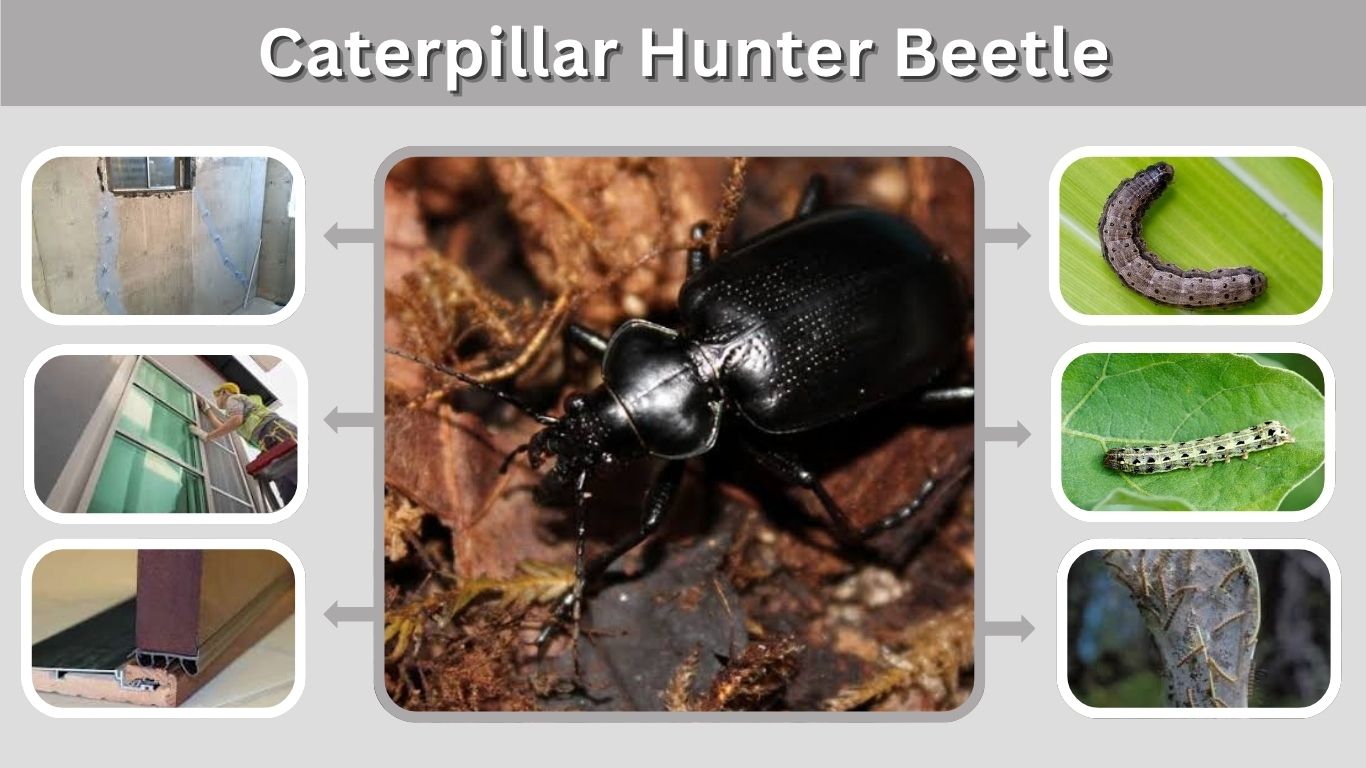
The caterpillar hunter is a large predatory ground beetle known for chasing and eating caterpillars. The name usually describes beetles in the genus Calosoma, including the black caterpillar hunter and the brightly colored fiery searcher. Both adults and larvae are beneficial predators that help control cutworms, armyworms, webworms and other plant-feeding insects. Although their size and strong jaws may appear intimidating, caterpillar hunter beetles do not normally harm people, pets, buildings or plants.
Caterpillar Hunter Beetle Quick Facts
Caterpillar hunters belong to the ground beetle family Carabidae. Unlike many ground beetles that remain on the soil surface, some Calosoma species climb trees and plants while actively searching for caterpillars.
| Feature | Information |
| Scientific genus | Calosoma |
| Family | Carabidae |
| Order | Coleoptera |
| Adult size | About 1–1½ inches, depending on species |
| Color | Black, metallic green, blue, purple or bronze |
| Diet | Caterpillars and other insects |
| Activity | Mainly nocturnal |
| Habitat | Forests, grasslands, fields and gardens |
| Human risk | Generally harmless |
| Garden value | Beneficial insect predator |
What Does a Caterpillar Hunter Look Like?
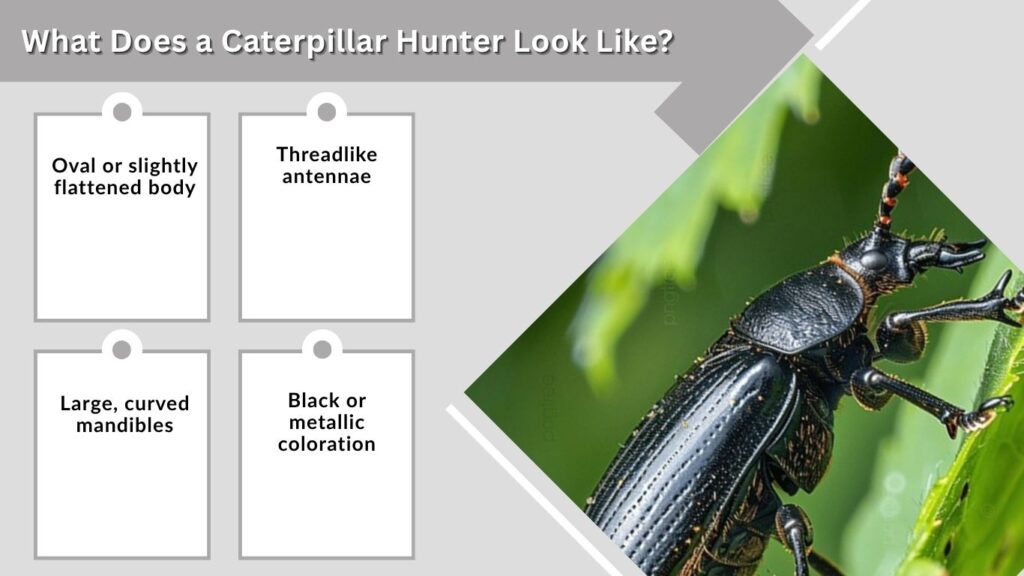
Caterpillar hunter beetles have strong bodies built for running, climbing and overpowering prey. Their heads are narrower than their thoraxes, and their large mandibles are clearly visible.
Identification Features
Common characteristics include:
- A long, oval or slightly flattened body
- Hardened wing covers with grooves or rows of pits
- Long legs adapted for rapid movement
- Threadlike antennae
- Large, curved mandibles
- Black or metallic coloration
- A body significantly larger than most garden ground beetles
- Quick running behavior when disturbed
Their hard front wings, known as elytra, distinguish them from cockroaches. Cockroaches have leathery wings or no functional wings, and the shield behind a cockroach’s head partly conceals it when viewed from above.
Black Caterpillar Hunter Beetle
The black caterpillar hunter, Calosoma sayi, is a large, mostly black ground beetle. Its wing covers have deep lengthwise grooves and rows of reddish, bronze or iridescent pits that become more noticeable under bright light.
Size and Appearance
Adult black caterpillar hunters generally measure around 25–28 millimeters, or approximately one inch, although some specimens may appear slightly larger. Their bodies are glossy black, with strong legs and prominent jaws.
Range and Habitat
The species occurs across much of the eastern and southern United States, extending westward in some areas and south into Mexico, Central America and the Caribbean. It uses deciduous forests, grasslands, agricultural fields, gardens and coastal habitats.
Black caterpillar hunters are frequently active at night. They may appear near porch lights, garages or illuminated walls where moths and other insects have gathered.
Fiery Searcher Caterpillar Hunter
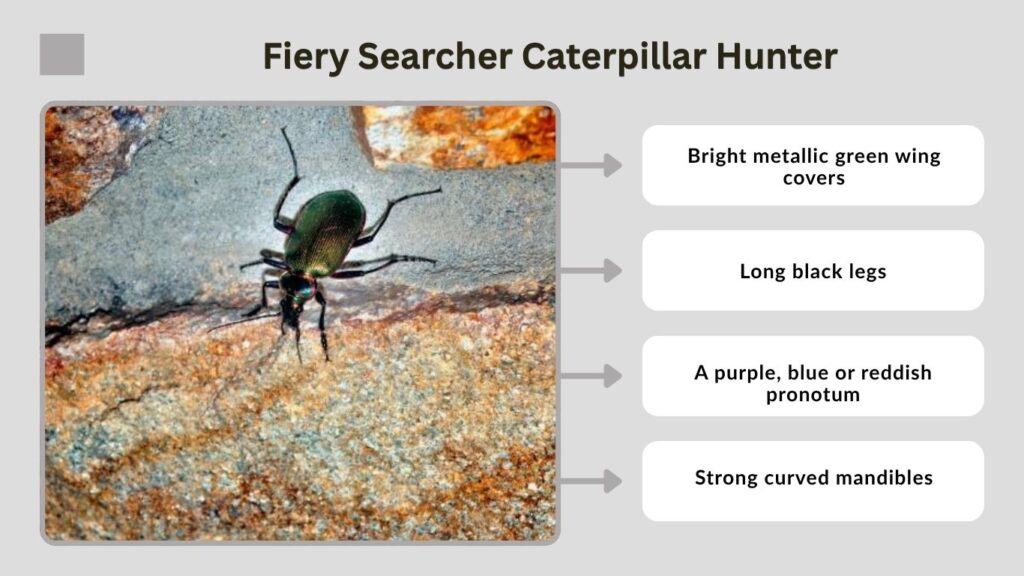
The fiery searcher, Calosoma scrutator, is one of the most colorful caterpillar hunter beetles. It is also called the fiery hunter or searcher beetle.
Identification
A fiery searcher commonly has:
- Bright metallic green wing covers
- Reddish, copper or gold borders around the wings
- A purple, blue or reddish pronotum
- Long black legs
- Strong curved mandibles
- A body measuring about 1–1½ inches
The fiery searcher can release a strong, unpleasant defensive odor when handled or threatened. Adults may live for several years.
Caterpillar Hunter Larva
The larval stage looks very different from the adult beetle. A caterpillar hunter larva is elongated, dark-colored and somewhat flattened, with clearly visible legs and large jaws.
Larva Identification
A typical larva has:
- A segmented black or dark-brown body
- Six developed legs near the head
- Large forward-pointing mandibles
- Hardened plates along its back
- Two small projections near the end of the abdomen
- Fast, active movement
The larva may look fierce, but it is a valuable predator. Ground beetle larvae hunt above and below the soil surface, attacking caterpillars, pupae, grubs and other insects.
What Do Caterpillar Hunter Beetles Eat?
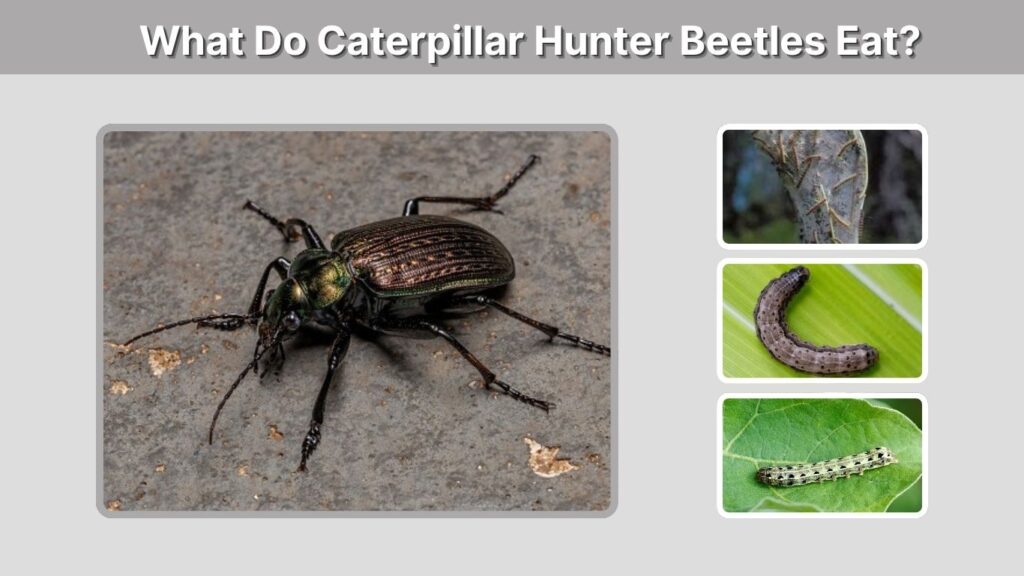
As their name suggests, these beetles specialize in hunting caterpillars. Both adults and larvae consume prey.
Common Prey
Their diet may include:
- Armyworms
- Cutworms
- Webworms
- Tent caterpillars
- Tussock moth caterpillars
- Gypsy moth or spongy moth larvae
- Corn earworms
- Bollworms
- Insect pupae
- Small beetle larvae
- Other soft-bodied insects
Caterpillar hunters may attack larvae on the ground, climb plants to reach feeding caterpillars or capture mature caterpillars as they descend to pupate. One caterpillar hunter species has been reported to consume dozens of large moth larvae during its relatively brief larval feeding stage.
How Does a Caterpillar Hunter Catch Its Prey?
A caterpillar hunter does not build a trap. It actively searches for prey using its movement, vision, antennae and chemical cues.
After locating a caterpillar, the beetle grasps it with its mandibles. Large caterpillars may struggle, twist or release defensive fluids, but the beetle uses its powerful legs to maintain its grip while feeding.
Some caterpillar hunters forage primarily on the ground, while others climb trunks and branches. This ability allows them to attack caterpillars before the pests cause additional leaf damage.
Caterpillar Hunter Life Cycle
Caterpillar hunter beetles undergo complete metamorphosis through four stages:
- Egg
- Larva
- Pupa
- Adult beetle
Females place eggs individually in the soil. After hatching, the predatory larvae search through soil, leaf litter and vegetation for prey. Mature larvae eventually create protected spaces in the ground and pupate before emerging as adults.
Black caterpillar hunter larvae may overwinter in the soil. Adults of some Calosoma species can survive for two or three years, allowing them to feed across several caterpillar seasons.
Do Caterpillar Hunter Beetles Bite?
Caterpillar hunter beetles do not hunt humans and are not aggressive. However, their powerful jaws may pinch the skin when a beetle is trapped, squeezed or handled carelessly.
A defensive pinch may cause temporary pain but is not considered medically significant. Ground beetles do not sting and are not poisonous. Some species also release a foul-smelling chemical when threatened.
Avoid picking one up with bare fingers. Move it using a container and a piece of stiff paper.
Are Caterpillar Hunters Dangerous?
Caterpillar hunters are not dangerous household or garden pests. They do not:
- Eat plants
- Damage wood
- Infest stored food
- Attack clothing
- Reproduce inside homes
- Seek people or pets
They are beneficial outdoors because they consume insects that damage lawns, trees and agricultural crops. Ground beetles help control pests before those insects mature and reproduce.
Why Is a Caterpillar Hunter in My House?
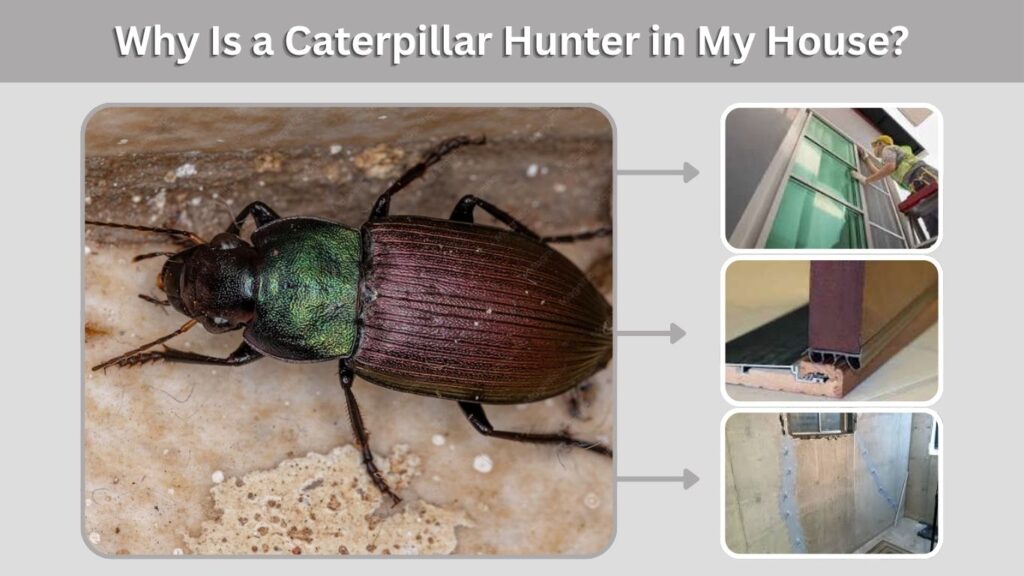
A caterpillar hunter may accidentally enter through an open door, foundation gap or space beneath a garage door. These beetles are active at night and can be attracted to exterior lighting or the insects gathered around lights.
They do not normally establish indoor infestations and usually survive only briefly inside because suitable prey and moisture are limited.
How to Remove It
Place a container over the beetle, slide paper beneath it and release it outside. A vacuum may also be used, although releasing this beneficial predator is preferable.
To prevent additional visitors:
- Install door sweeps
- Repair damaged screens
- Seal foundation openings
- Reduce unnecessary exterior lighting
- Remove boards and debris beside the foundation
- Stack firewood away from the house
Pesticide treatment is rarely necessary for one or two accidental beetles.
Should You Kill Caterpillar Hunter Beetles?
Caterpillar hunter beetles should generally be protected rather than killed. They provide free biological control by consuming caterpillars and other plant pests.
Broad-spectrum insecticides can kill these beneficial predators along with the intended pests. Preserving leaf litter, ground cover and undisturbed shelter away from the house can support local ground beetle populations while reducing their chance of entering indoor spaces.
Caterpillar Hunter Beetle vs. Caterpillar-Hunting Wasp
Caterpillar hunter beetles should not be confused with caterpillar-hunting wasps.
| Feature | Caterpillar hunter beetle | Caterpillar-hunting wasp |
| Insect order | Coleoptera | Hymenoptera |
| Body covering | Hard wing covers | Narrow waist and membranous wings |
| Hunting method | Bites and eats prey | Often stings and paralyzes prey |
| Nesting | Soil-dwelling larvae | Burrows, cavities or constructed nests |
| Human sting risk | Cannot sting | Some species can sting defensively |
| Garden role | Predatory | Predator or parasitoid |
Both can reduce caterpillar populations, but beetles use mandibles rather than a stinger.
FAQs
Is the black caterpillar hunter poisonous?
No. The black caterpillar hunter is not poisonous or venomous. It may pinch if handled, but it is considered a beneficial predator rather than a dangerous insect.
Can caterpillar hunter beetles fly?
Many adult caterpillar hunters have functional wings and can fly, although they are often seen running or climbing. Some are attracted to lights during nighttime flights.
Do caterpillar hunters eat monarch caterpillars?
They are opportunistic predators and may attack caterpillars they can overpower. However, their documented importance is mainly in controlling abundant pests such as armyworms, cutworms and other moth larvae.
Are caterpillar hunter larvae harmful to plants?
No. Their larvae are predators rather than plant feeders. They hunt caterpillars, pupae and other insects in soil, leaf litter and vegetation.
What should I do when I find one in my garden?
Leave it alone and allow it to hunt. Avoid unnecessary insecticide use and provide natural shelter such as leaf litter, logs or stones in areas away from the house.