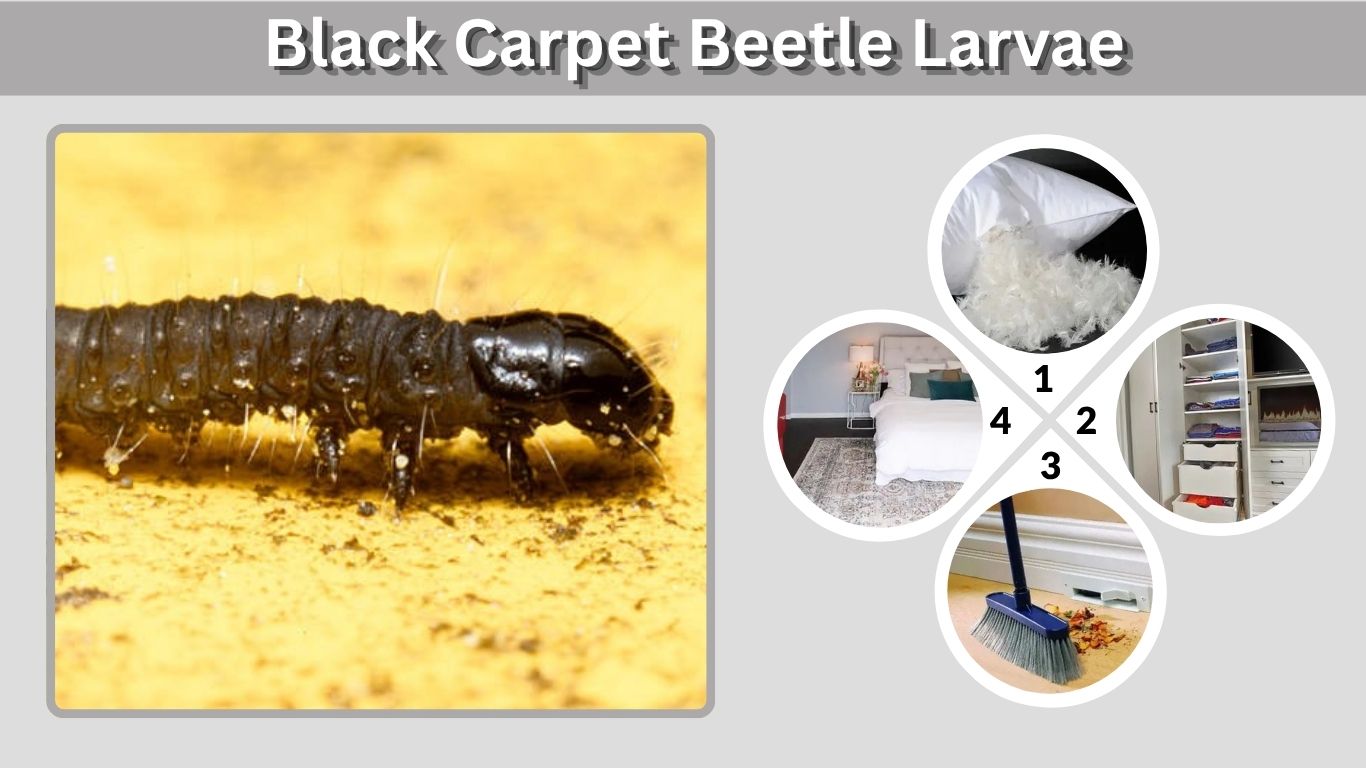
Black carpet beetle larvae are small, brown, bristly pests that can damage wool, silk, fur, feathers, leather, dried foods, and other animal-based materials. Unlike the shiny black adult beetles, the larvae are elongated and often have a distinctive brush of hairs at the rear. They usually remain hidden beneath furniture, inside closets, along carpet edges, or among stored belongings, allowing an infestation to develop unnoticed.
What Are Black Carpet Beetle Larvae?
Black carpet beetle larvae are the immature stage of the black carpet beetle, scientifically known as Attagenus unicolor. This species belongs to the family Dermestidae, a group whose larvae feed on dried animal materials and various stored products.
| Feature | Description |
| Scientific name | Attagenus unicolor |
| Typical color | Golden brown to dark brown |
| Body shape | Long, narrow and tapered |
| Body covering | Short bristles with longer rear hairs |
| Maximum size | Commonly up to about ½ inch |
| Main damage stage | Larva |
| Bite risk | Does not bite |
| Common locations | Closets, carpets, furniture and storage spaces |
The larval stage can last for months and sometimes much longer, depending on temperature, food quality and other indoor conditions. Because larvae may survive on small amounts of hidden organic material, removing the breeding source is essential.
What Do Black Carpet Beetle Larvae Look Like?
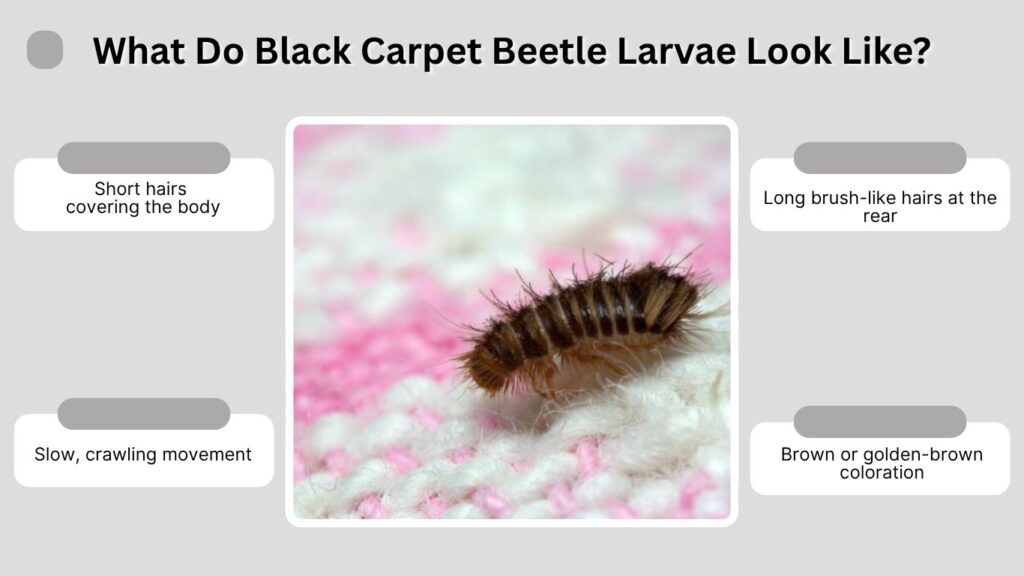
A black carpet beetle larva does not look like the adult beetle. It resembles a tiny, hairy worm with a firm, segmented body. Its color usually ranges from golden brown to reddish or dark brown rather than true black.
Identification Features
Look for these characteristics:
- Elongated or carrot-shaped body
- Brown or golden-brown coloration
- Clearly divided abdominal segments
- Short hairs covering the body
- Long brush-like hairs at the rear
- Six small legs near the head
- Narrower front end and broader rear section
- Slow, crawling movement
Black carpet beetle larvae are generally longer and more slender than the rounder, strongly banded larvae of varied carpet beetles. The rear hair brush is one of their most useful identification features.
Black Rear End or Tail
The dark-looking rear end is often a dense tuft of long brown or golden hairs. These hairs may spread outward when the larva is disturbed, giving it a tail-like appearance.
The hairs are defensive structures rather than a stinger. Larvae cannot sting, and they do not inject venom. However, loose larval hairs may irritate sensitive skin.
Black Carpet Beetle Larvae Size
Young larvae may be only a few millimeters long and can be difficult to notice. Mature larvae may reach approximately 7–12 millimeters, although their exact size depends on food availability and developmental conditions.
Empty shed skins may appear slightly larger or flatter than living larvae. A casing is hollow, dry and usually split along the back, while a living larva has visible movement and a fuller body.
Where Do Black Carpet Beetle Larvae Live?
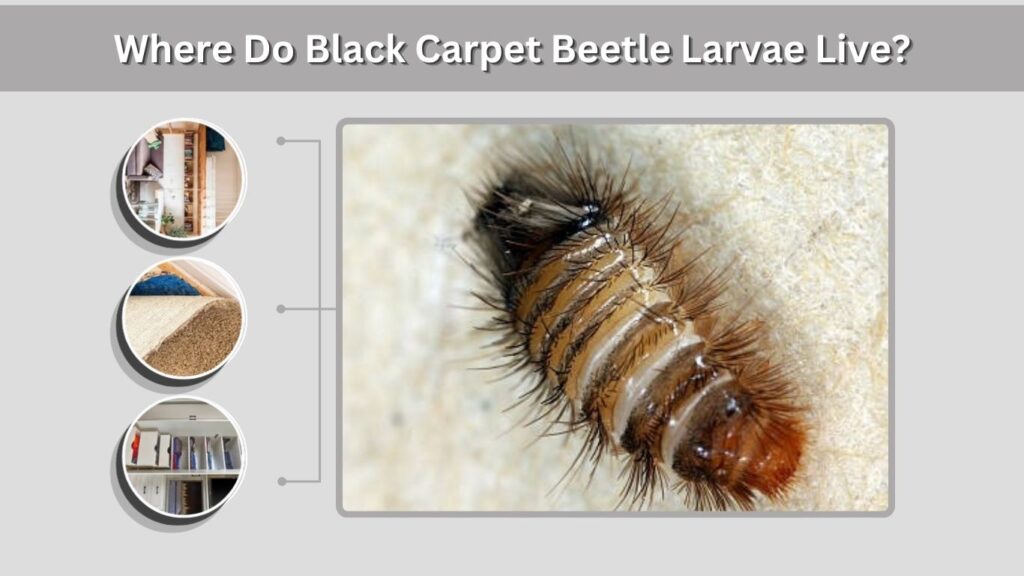
These larvae prefer dark, quiet locations containing suitable food. They avoid exposed, frequently disturbed areas and may hide deep inside stored materials.
Common locations include:
- Beneath carpets and rugs
- Inside closets and drawers
- Under beds, sofas and cabinets
- Along baseboards and floor cracks
- Inside upholstered furniture
- Around heating vents and ducts
- In attics and storage rooms
- Among wool clothing and blankets
- Near dead insects or abandoned animal nests
- Inside dried pet food and stored animal products
Larvae may wander considerable distances when searching for food or a protected place to pupate. Therefore, a larva found on a wall may have originated from a rug, closet, vent or piece of furniture elsewhere in the room.
Black Carpet Beetle Larvae in the House
Adult beetles may fly indoors through open doors, windows and damaged screens. They can also arrive on secondhand furniture, stored clothing, rugs, dried foods or other infested belongings.
A female lays eggs close to materials that newly hatched larvae can eat. Repeated larval sightings usually indicate that a suitable food source is available somewhere inside the building.
Signs of an Infestation
Signs may include:
- Live, hairy larvae in hidden areas
- Empty brown larval skins
- Irregular holes in wool clothing
- Bare or thinning patches on rugs
- Damage to feathers, fur or leather
- Larvae beneath furniture
- Small black adult beetles near windows
- Damage to stored dried products
Finding one adult beetle does not automatically indicate a major infestation. Multiple larvae, shed skins and damaged materials provide stronger evidence of indoor breeding.
Black Carpet Beetle Larvae in Bed
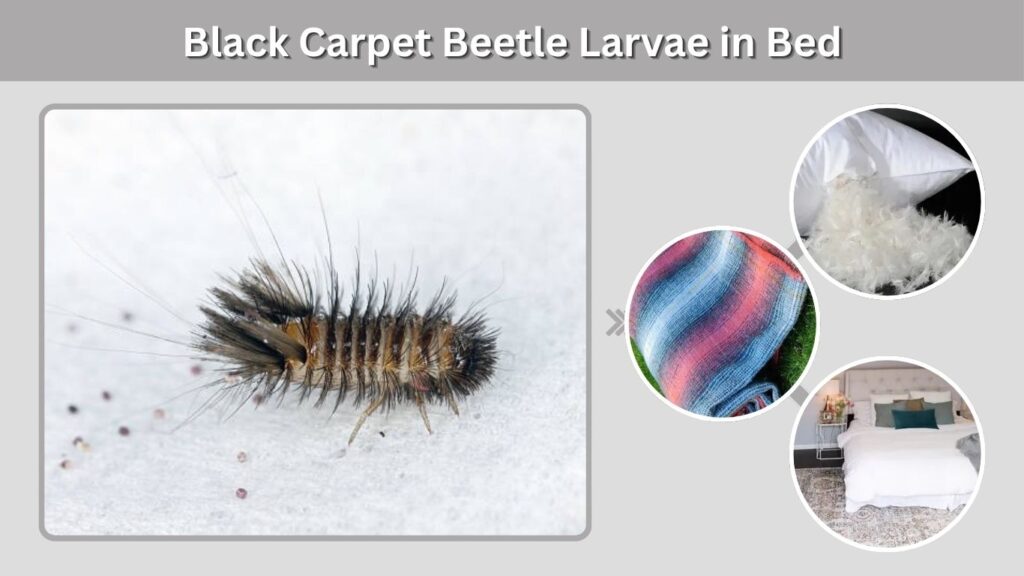
Black carpet beetle larvae do not enter beds to feed on people. They may appear near a mattress because the surrounding area contains hair, lint, feathers, wool blankets or natural-fiber materials.
Remove the bedding and inspect:
- Mattress seams
- The bed frame and headboard
- Carpet beneath the bed
- Feather pillows
- Wool blankets
- Upholstered furniture
- Nearby closets and drawers
Vacuum the mattress seams and bed frame, but also locate the larval food source. The mattress itself may only be a temporary hiding place.
What Do Black Carpet Beetle Larvae Eat?
Black carpet beetle larvae can digest keratin, a protein found in many animal-derived materials. They may feed on:
- Wool
- Fur
- Feathers
- Silk
- Leather
- Felt
- Animal hair
- Dead insects
- Dried meat
- Pet food
- Natural-history specimens
- Soiled natural-fiber fabrics
Cotton and fully synthetic fabrics are not preferred foods. However, larvae may damage blended or stained fabrics containing wool, food residue, perspiration, body oils or other organic materials.
Do Black Carpet Beetle Larvae Bite?
Black carpet beetle larvae do not bite people or pets. They do not drink blood, burrow into skin or live on the human body.
Reports of “black carpet beetle larvae bites” usually involve irritation caused by contact with their fine hairs. These hairs can become trapped in dust, clothing, bedding or upholstery.
Black Carpet Beetle Larvae Rash
Sensitive individuals may experience:
- Small red bumps
- Itching or burning
- Raised patches
- Irritation beneath clothing
- A rash resembling insect bites
A rash alone cannot confirm carpet beetles because many insects, allergies and skin conditions produce similar symptoms. Clean the affected room, wash exposed fabrics and consult a healthcare professional when irritation is severe, persistent or spreading.
Black vs Varied Carpet Beetle Larvae
| Feature | Black Carpet Beetle Larva | Varied Carpet Beetle Larva |
| Shape | Long and tapered | Shorter and broader |
| Color | Golden to dark brown | Alternating light and dark bands |
| Rear hairs | Long tail-like brush | Several distinct rear tufts |
| Mature size | Usually larger | Usually smaller |
| Adult appearance | Elongated and black | Small, round and mottled |
Both types can damage natural-fiber belongings. The same inspection, cleaning and storage principles generally apply, even when the exact species is uncertain.
How to Get Rid of Black Carpet Beetle Larvae
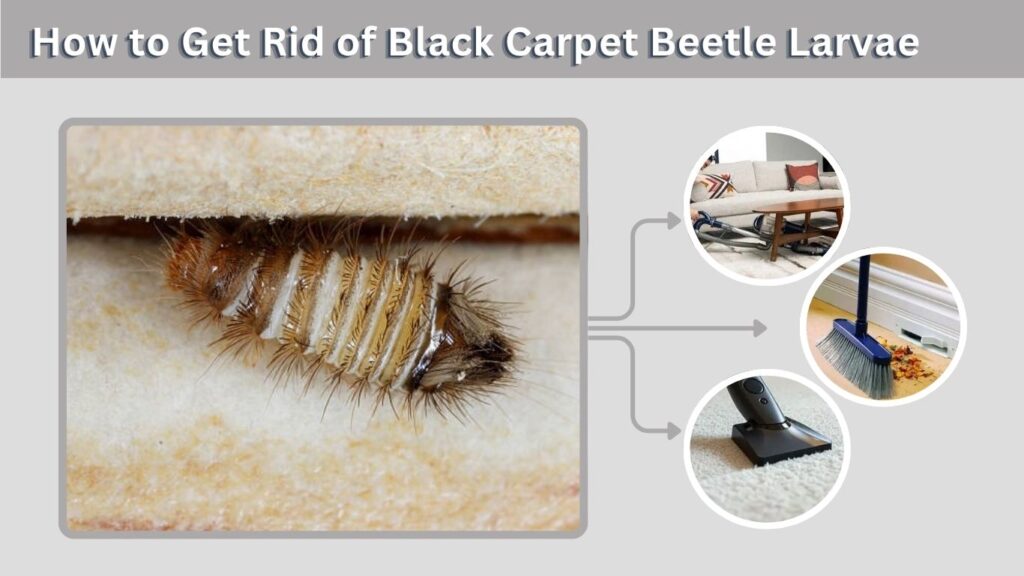
1. Find the Breeding Source
Inspect woolens, rugs, stored foods, furniture, pet areas, vents, attics and spaces beneath heavy objects. Look for damage, larvae and discarded skins.
Seal heavily infested items in bags before discarding them so larvae are not spread through the house.
2. Vacuum Thoroughly
Vacuum carpet edges, baseboards, furniture seams, closets, floor cracks, vents and spaces beneath beds and sofas. Empty the vacuum into a sealed bag and dispose of it outdoors.
Repeat cleaning regularly because eggs and hidden larvae may remain after the first treatment.
3. Treat Infested Belongings
Wash and heat-dry suitable fabrics according to their care labels. Dry-clean delicate wool, silk and valuable clothing. Small appropriate items may also be sealed and deep-frozen long enough for the cold to penetrate completely.
After treatment, place clean materials in airtight containers or insect-resistant garment bags. Sealed storage prevents adults from laying new eggs.
4. Remove Hidden Food
Clean pet hair, lint and dead insects from vents, closets and furniture. Remove abandoned bird or rodent nests when doing so is safe and permitted. Store pet food and vulnerable dried products in tightly sealed containers.
5. Consider Targeted Insecticide
An insecticide may support cleaning when larvae remain inside cracks, carpet edges or inaccessible voids. Use only a product whose current label specifically allows carpet beetle treatment in the intended area.
Do not spray clothing, bedding, mattresses or food-contact surfaces unless the label clearly permits that application. Professional help may be necessary when larvae occur throughout several rooms or originate inside walls or ventilation systems.
FAQs
Are black carpet beetle larvae dangerous?
They are not venomous and do not bite. Their main risks are damage to natural-fiber belongings and possible skin irritation from loose larval hairs. People with persistent unexplained rashes should seek medical advice rather than relying only on pest identification.
Why are black carpet beetle larvae crawling on walls?
Mature larvae often leave their food source to find a protected place to molt or pupate. Inspect the floor, carpet, furniture, vents and closets near the wall because the breeding source is likely located elsewhere.
What kills black carpet beetle larvae?
Vacuuming removes visible larvae immediately. Washing, heated drying, dry cleaning or suitable freezing can treat infested belongings. Lasting control also requires removing food sources, shed skins and hidden larvae from the surrounding area.
Can black carpet beetle larvae live in mattresses?
They may hide around mattress seams or bed frames, but they do not eat people or mattress foam. Their presence usually indicates nearby hair, feathers, wool, lint or another animal-based food source.
How long does removal take?
A minor problem may improve within several weeks of intensive cleaning. A larger infestation can take months because hidden eggs may continue hatching and larvae develop slowly. Continue vacuuming, inspecting and protecting vulnerable belongings after sightings decline.