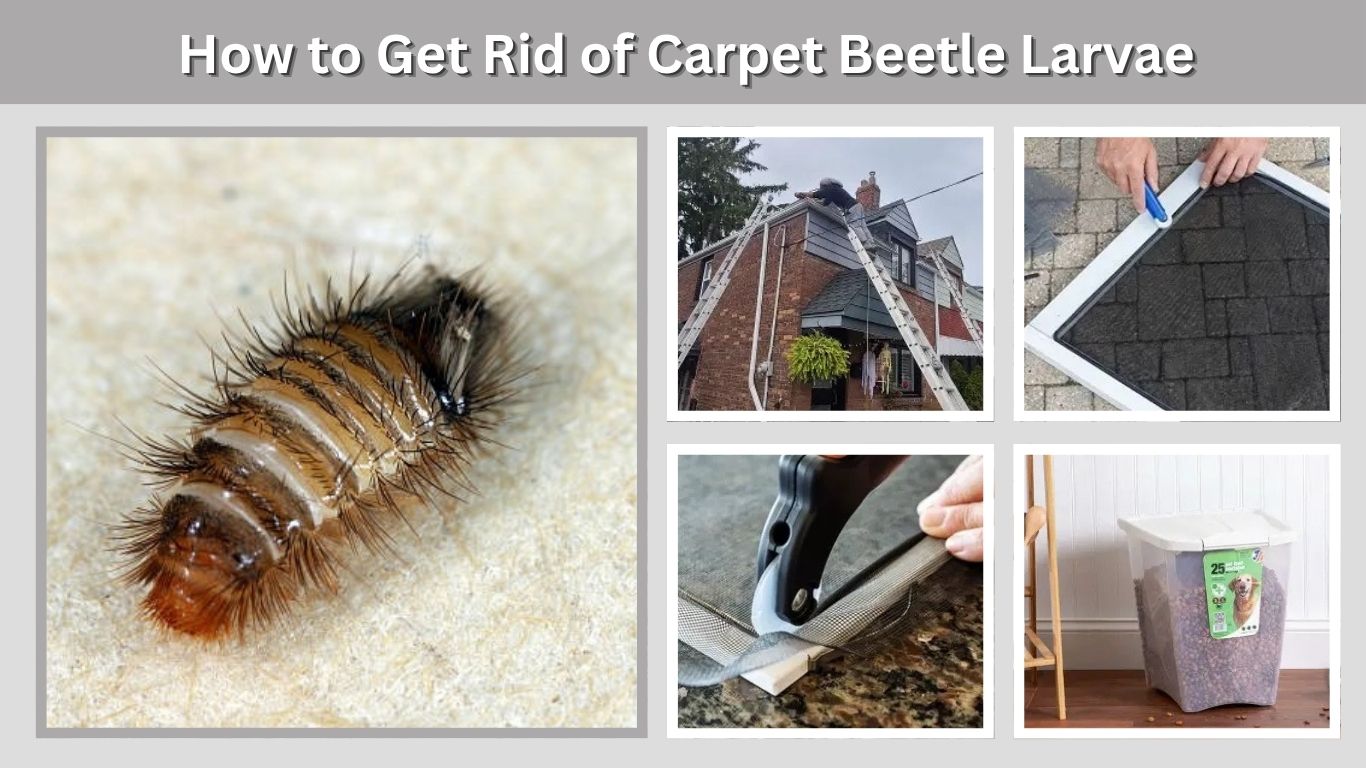
Carpet beetle larvae are small, hairy insects that damage wool, fur, feathers, silk, leather, and other animal-based materials. They also survive on lint, pet hair, dead insects, and food debris hidden beneath furniture or inside vents. Removing visible larvae is not enough—you must find their food source, clean surrounding areas, treat infested belongings, and prevent adult beetles from laying more eggs.
First, Confirm Carpet Beetle Larvae
Carpet beetle larvae usually have elongated, brown or reddish-brown bodies covered with stiff hairs. Depending on the species, they may look carrot-shaped, cigar-shaped, or like tiny fuzzy caterpillars.
Common signs include:
- Living larvae beneath furniture or along carpet edges
- Empty, hairy larval casings
- Irregular holes in wool clothing
- Thin or bare patches on natural-fiber rugs
- Damage to feathers, fur, felt, or upholstery
- Small adult beetles around windows
- Larvae crawling on walls
Larvae repeatedly shed their outer skins while growing, so empty casings are often one of the clearest signs of an active or previous infestation.
Where Carpet Beetle Larvae Usually Hide
Carpet beetle larvae prefer dark, quiet places where food remains undisturbed. A larva seen on a wall may have wandered away from its original feeding site, so inspect the entire surrounding room.
| Location | What to Inspect |
| Carpet edges | Hair, lint, dead insects, and damaged fibers |
| Closets | Wool, silk, fur, felt, and stored blankets |
| Beneath furniture | Dust, pet hair, crumbs, and larval skins |
| Beds | Feather pillows, wool blankets, frames, and nearby carpet |
| Couches | Seams, folds, undersides, and accumulated food debris |
| Vents | Lint, hair, and dead insects |
| Attics | Animal nests, feathers, stored fabrics, and dead insects |
| Cars | Upholstery seams, floor mats, pet hair, and food debris |
Carpet beetle infestations may also originate in old bird or rodent nests, abandoned bee or wasp nests, or collections of dead insects behind walls and around windows.
How to Get Rid of Carpet Beetle Larvae Step by Step
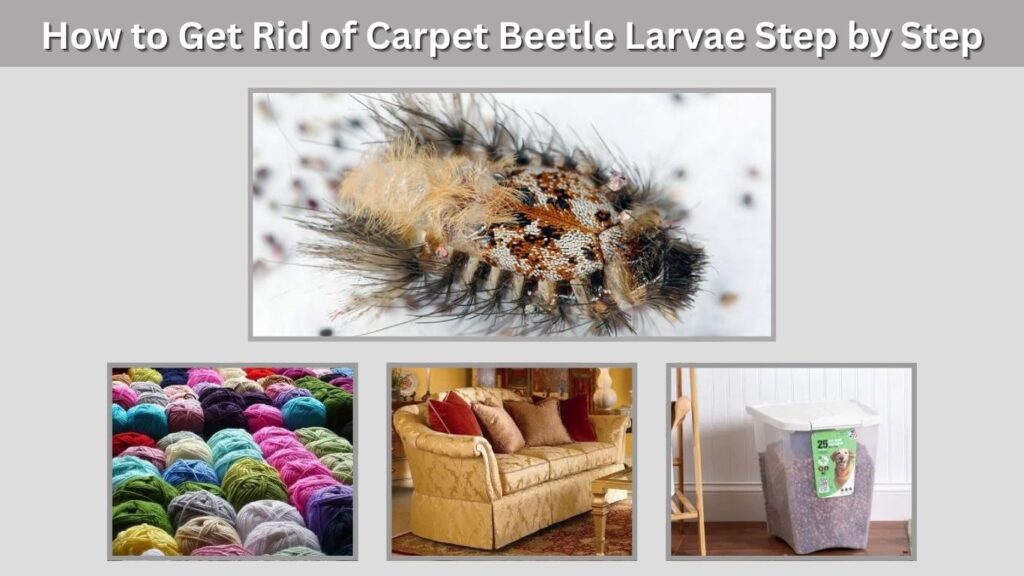
Successful control begins with cleaning and source removal. Insecticide alone rarely solves the problem because larvae can remain protected inside fabrics, furniture, ducts, and other hidden spaces.
1. Locate the Main Food Source
Start where you have found larvae, casings, or damaged materials. Empty nearby drawers, wardrobes, storage boxes, and shelves.
Inspect:
- Wool clothing and yarn
- Rugs and carpet edges
- Feather-filled products
- Fur or leather items
- Upholstered furniture
- Taxidermy and insect collections
- Dried pet food
- Accumulated lint and hair
- Stored natural-fiber decorations
Discard heavily damaged items that cannot be cleaned. Place them in sealed bags before carrying them through the house.
2. Vacuum Thoroughly
Vacuuming physically removes larvae, eggs, casings, hairs, and the debris on which larvae feed.
Concentrate on:
- Baseboards and floor cracks
- Carpet edges
- Beneath beds and couches
- Upholstery seams
- Closets and drawers
- Heating registers and accessible vents
- Window tracks
- Areas where pet hair accumulates
Move furniture rather than vacuuming only exposed flooring. Repeat the process regularly during the following weeks because hidden eggs may continue to hatch.
Empty the vacuum into a sealed bag and dispose of it outside. Carpet beetles collected by a vacuum may continue developing if they remain inside the bag or canister.
3. Wash or Heat-Treat Infested Fabrics
Wash suitable clothing, blankets, curtains, and bedding according to their care labels. Use a heated dryer when the fabric permits it.
Dry cleaning can treat delicate wool, silk, and other valuable materials. Sustained temperatures above approximately 130°F can kill carpet beetle life stages, but thick belongings require enough time for heat to penetrate completely.
Do not place heat-sensitive fabrics in a hot dryer without checking their labels.
4. Freeze Small, Delicate Items
Freezing can treat belongings that cannot be washed or heated. Place the item inside a sealed bag and use a deep freezer capable of maintaining temperatures below 0°F.
Colorado State University Extension advises keeping small items consistently below 0°F for at least three days. Larger or insulated objects may require longer because the centre must become cold enough to kill hidden insects.
5. Store Clean Items Properly
After treatment, place woolens, fur, feathers, and other vulnerable belongings in sealed containers or insect-resistant garment bags.
Do not return cleaned clothing to an untreated closet. Vacuum shelves, corners, cracks, and the floor first. Sealed storage prevents adult beetles from reaching suitable materials and laying new eggs.
How to Remove Larvae from Specific Areas
Carpet Beetle Larvae in Bed or Mattress
Carpet beetle larvae do not feed on people or mattress foam. They may be attracted to hair, lint, feather filling, wool bedding, or natural materials around the bed.
Remove and wash the bedding, vacuum mattress seams, clean the bed frame, and inspect beneath the bed. Pay particular attention to rugs, upholstered headboards, feather pillows, and wool blankets.
Avoid spraying a mattress unless a pesticide label explicitly permits that exact use.
Carpet Beetle Larvae in a Couch
Remove cushions and vacuum every seam, fold, gap, and underside. Check whether the couch contains wool, feathers, animal hair, or natural-fiber stuffing.
Clean beneath the couch and along nearby carpet edges. Professional treatment may be necessary when larvae have penetrated deeply into valuable upholstery that cannot be washed or disassembled.
Carpet Beetle Larvae on Clothes
Separate affected garments from clean clothing. Wash, heat-dry, dry-clean, or freeze them according to the material.
Inspect nearby items even when they show no visible holes. Larvae may remain in folds, pockets, cuffs, or storage containers. Clean the entire wardrobe before returning treated clothes.
Carpet Beetle Larvae on Walls
Larvae crawling up walls are often searching for a place to molt or pupate. Vacuum them, then inspect the baseboard, carpet, furniture, closet, vent, attic, or wall opening nearby.
Spraying the visible larva will not solve the infestation if its original food source remains hidden.
Carpet Beetle Larvae in a Car
Vacuum seats, floor mats, boot or trunk areas, upholstery seams, and spaces beneath the seats. Remove pet hair, food crumbs, blankets, and fabric items stored in the vehicle.
Wash removable mats and inspect wool seat covers or natural-fiber accessories. Regular vacuuming is usually more effective than spraying the entire vehicle.
Carpet Beetle Larvae in Hair
Carpet beetle larvae do not live or reproduce in human hair. One may crawl onto the body accidentally from clothing, bedding, or furniture.
Wash your hair and clothes, then inspect the surrounding room. Continued scalp irritation should be evaluated medically rather than assumed to be caused by carpet beetles.
Can You Get Rid of Them Naturally?
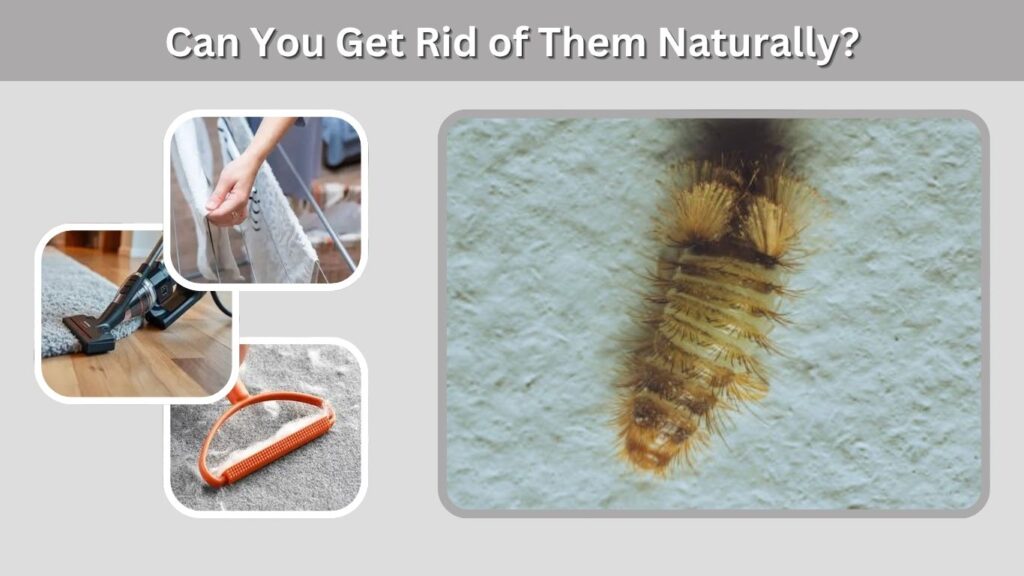
The most reliable non-chemical methods are:
- Detailed vacuuming
- Laundering and heated drying
- Dry cleaning
- Deep freezing suitable items
- Removing lint, hair, nests, and dead insects
- Discarding heavily infested materials
- Sealing cleaned belongings in containers
Household remedies such as vinegar, essential oils, or baking soda should not replace source removal. They are unlikely to reach eggs and larvae hidden inside fabrics, furniture, or structural spaces.
Should You Use Carpet Beetle Insecticide?
Insecticide may supplement cleaning when larvae remain in cracks, carpet edges, baseboards, or inaccessible non-food areas. Choose a product whose current label specifically includes carpet beetles and permits use in the intended location.
Follow every label direction concerning application, ventilation, protective equipment, pets, children, and re-entry. Never apply pesticides to clothing, bedding, mattresses, toys, or food-contact surfaces unless the label specifically permits it.
Insecticide treatment without removing the larval food source is unlikely to provide lasting control. Total-release foggers or “bug bombs” are also considered ineffective for hidden carpet beetle infestations.
How to Prevent Carpet Beetle Larvae from Returning
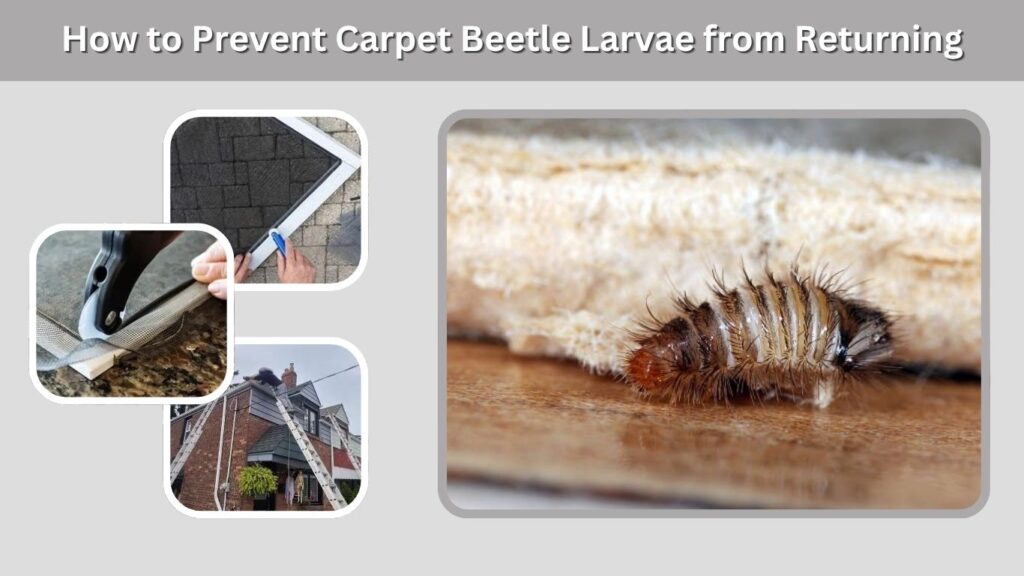
Vacuum areas where lint and pet hair accumulate, clean dead insects from windows, and store vulnerable fabrics in sealed containers. Repair screens and seal openings around windows, doors, eaves, and vents because adult beetles can fly indoors.
Inspect secondhand rugs, furniture, wool clothing, and animal-based decorations before bringing them into the home. Finding one adult beetle does not always indicate an infestation, but repeated larvae, casings, or fabric damage require closer inspection.
FAQs
What kills carpet beetle larvae immediately?
Vacuuming immediately removes visible larvae. Proper heat treatment, dry cleaning, or deep freezing can kill larvae hidden inside suitable belongings. An approved insecticide may kill exposed larvae, but it will not eliminate an infestation unless their food and breeding sources are removed.
How long does it take to get rid of carpet beetle larvae?
A small infestation may improve within several weeks of repeated cleaning. Established infestations can take months to eliminate because eggs and concealed larvae may remain. Continue monitoring, vacuuming, and inspecting vulnerable materials even after sightings decline.
Do carpet beetle larvae bite people?
No. Carpet beetle larvae do not bite or feed on blood. However, their bristly hairs may irritate sensitive skin and produce an itchy rash. Persistent or severe skin symptoms should be assessed by a healthcare professional.
Can carpet beetle larvae survive after vacuuming?
Larvae collected by a vacuum may remain alive inside its bag or canister. Empty the vacuum promptly, seal the debris in a bag, and dispose of it outdoors. Clean reusable canisters according to the manufacturer’s instructions.
When should you call pest control?
Call a professional when larvae continue appearing after repeated cleaning, several rooms are affected, valuable textiles are being damaged, or the breeding source appears to be inside a wall, vent, attic, chimney, or inaccessible piece of furniture.