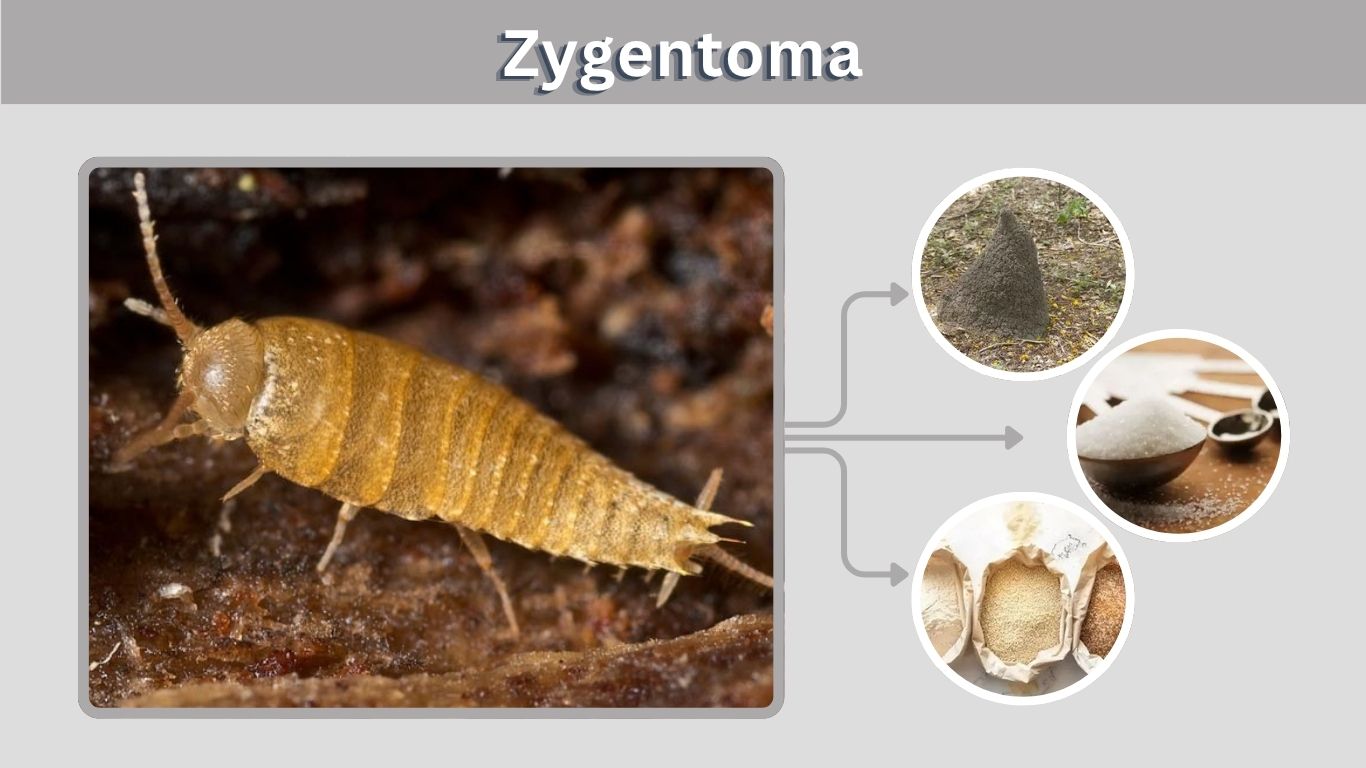
Zygentoma is an order of small, wingless insects that includes silverfish, firebrats, fishmoths, and several less familiar relatives. These insects have flattened bodies, long antennae, and three distinctive tail filaments. Some species live outdoors beneath bark, stones, and leaf litter, while others occupy bathrooms, basements, kitchens, and heated buildings. Although Zygentoma do not bite or spread disease, household species may damage paper, stored foods, wallpaper, and other materials containing starch or protein.
What Is Zygentoma?
Zygentoma is an insect order containing hundreds of species distributed across the world. Its best-known members are the common silverfish and firebrat. They are primitively wingless, meaning their ancestors did not have wings. Older publications sometimes place these insects in Thysanura, but modern classification separates Zygentoma from Archaeognatha, the jumping bristletails.
Zygentoma Classification
The general classification of Zygentoma is:
- Kingdom: Animalia
- Phylum: Arthropoda
- Class: Insecta
- Order: Zygentoma
- Common groups: Silverfish, firebrats and fishmoths
- Important family: Lepismatidae
- Common silverfish: Lepisma saccharinum
- Firebrat: Thermobia domestica
Members of Zygentoma are closely related to winged insects but remain wingless throughout their lives. They undergo simple development, with young insects resembling miniature adults rather than larvae.
Zygentoma Size and Appearance
Most commonly encountered Zygentoma are small enough to hide inside narrow cracks, beneath baseboards, or between sheets of stored paper. Their flattened bodies allow them to move through tiny spaces, while their scales and bristles help protect their soft outer surfaces.
How Big Are Zygentoma?
Zygentoma vary in size depending on the species:
- Most household species are approximately 8–15 millimetres long.
- Common silverfish may reach about 12 millimetres.
- Firebrats are usually similar in size to silverfish.
- Some species elsewhere in the order may range from about 5–30 millimetres.
- Antennae and tail filaments can make an individual appear much longer.
Body measurements normally exclude the antennae and three rear filaments. Juveniles are much smaller but have approximately the same body shape as adults.
Body Shape and Identification
Zygentoma have flattened, elongated bodies that gradually taper toward the rear. Their movement may appear wavy or fish-like, particularly when they run quickly across a floor.
Important identification features include:
- Six legs
- Two long antennae
- Three tail-like filaments
- A flat, tapered body
- No wings
- Small compound eyes or no eyes in some species
- Scales or fine hairs covering the body
- Fast running but no true jumping ability
The two outer tail filaments are called cerci. A third central filament extends between them. This three-tailed appearance is one of the easiest ways to recognize the group.
What Color Are Zygentoma?
Not every Zygentoma species is silver. Their coloration varies according to species, age, scales, habitat, and lighting. Newly hatched individuals are usually pale and develop stronger colors as they grow and molt.
Common Zygentoma Colors
- Metallic silver: Typical of the common silverfish
- Silvery grey: Common among several household species
- Mottled brown and grey: Characteristic of firebrats
- Dark grey: Seen in some long-tailed silverfish
- Cream or pale yellow: Possible in juveniles and underground species
- Nearly white: Found in some eyeless cave- or nest-dwelling species
The metallic appearance of a silverfish comes from small scales covering its body. Firebrats have darker, mottled scales that form irregular bands or patches instead of a smooth silver finish.
Zygentoma Habitat and Distribution
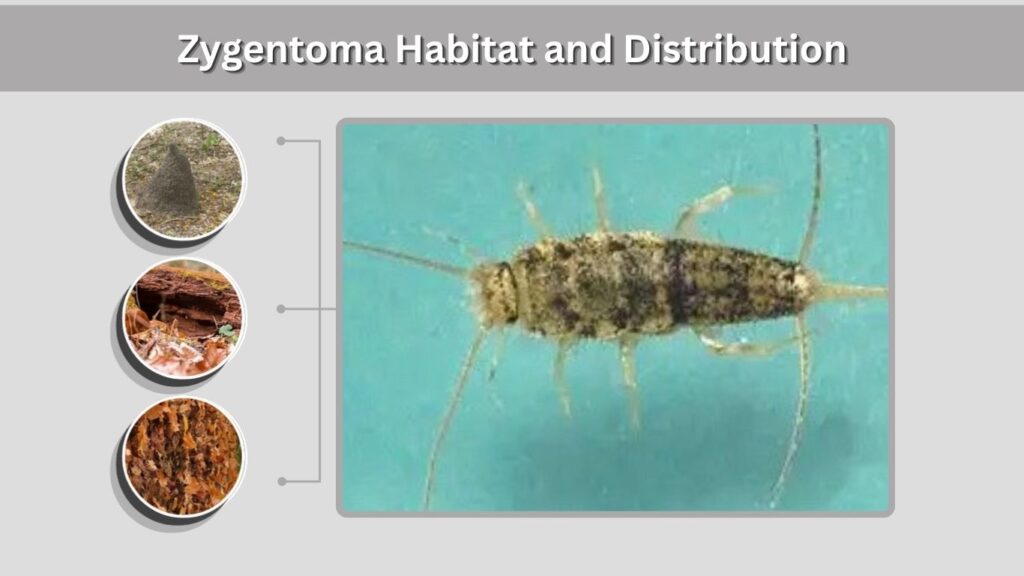
Zygentoma occur worldwide in both natural and human-made environments. Many species require shelter and relatively stable humidity. They avoid bright light and usually remain hidden during the day, becoming more active at night.
Natural Habitats
Wild Zygentoma may live:
- Beneath loose tree bark
- Under stones and logs
- Inside leaf litter
- In soil crevices
- Within caves
- Around decaying vegetation
- In ant or termite nests
- Beneath debris in humid forests
Some species have specialized relationships with ants or termites and live inside their nests. Others occupy caves and have reduced eyes or no visible eyes.
Zygentoma in Houses
Household species generally select dark places that provide food, moisture, warmth, or all three. Silverfish prefer relatively cool, humid areas and are frequently found in bathrooms, basements, kitchens, laundry rooms, attics, and storage spaces.
Firebrats prefer warmer environments, often above 32°C. They may gather near furnaces, boilers, hot-water pipes, commercial ovens, bakeries, and heated roof spaces. Long-tailed silverfish can tolerate somewhat drier rooms and may spread through bedrooms, offices, libraries, and living areas.
What Do Zygentoma Eat?
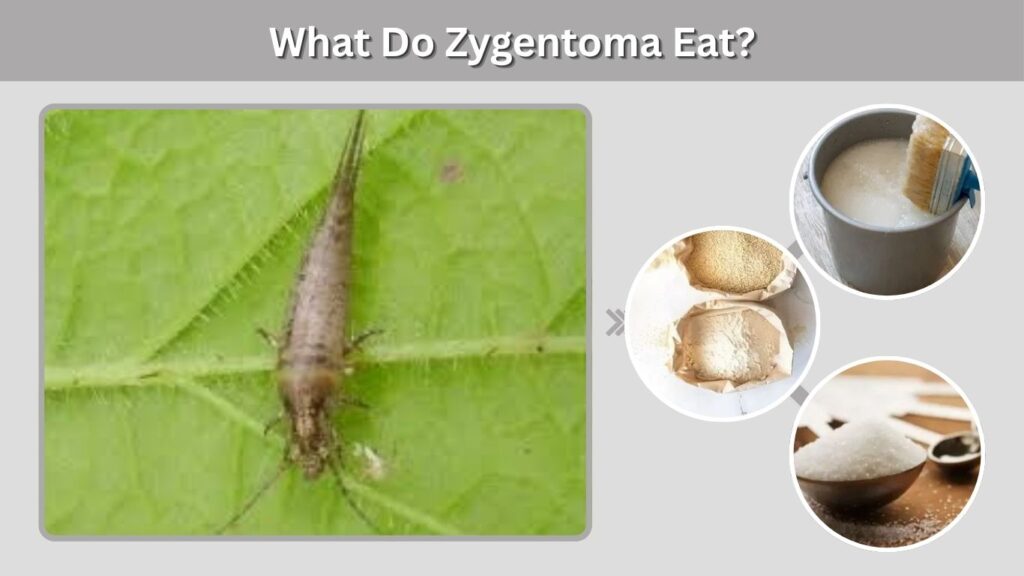
Zygentoma are scavengers with chewing mouthparts. Their diets vary, but many consume carbohydrates, proteins, dead insects, fungi, and decomposing organic material. Household species can survive on surprisingly small quantities of food.
Common Foods
Zygentoma may eat:
- Flour and cereals
- Sugar and starch
- Wallpaper paste
- Bookbinding glue
- Paper and cardboard
- Dried foods
- Dead insects
- Fungi and organic debris
- Protein-rich food residues
- Starch applied to fabrics
- Pet food and crumbs
Silverfish are often blamed for eating only paper and glue, but they may also prefer protein-rich material, including dried meat and dead insects. They do not normally consume clean wool or other pure animal fibres, although stained or starched fabrics may attract them.
Zygentoma Life Cycle
Zygentoma have ametabolous development. They do not pass through caterpillar-like larvae or a pupal stage. Instead, eggs hatch into small nymphs that gradually grow into adults.
Eggs, Nymphs and Adults
A typical life cycle includes:
- Egg: Females place eggs inside cracks, crevices, or protected materials.
- Young nymph: The newly hatched insect is small, pale, and lacks fully developed scales.
- Older nymph: Scales and adult coloration appear after several molts.
- Adult: The mature insect continues molting throughout its life.
Development can take several months or multiple years depending on temperature, humidity, food availability, and species. Silverfish may live for at least two or three years and produce more than 50 offspring. Firebrats can produce larger numbers under favorable conditions.
Common Types of Zygentoma
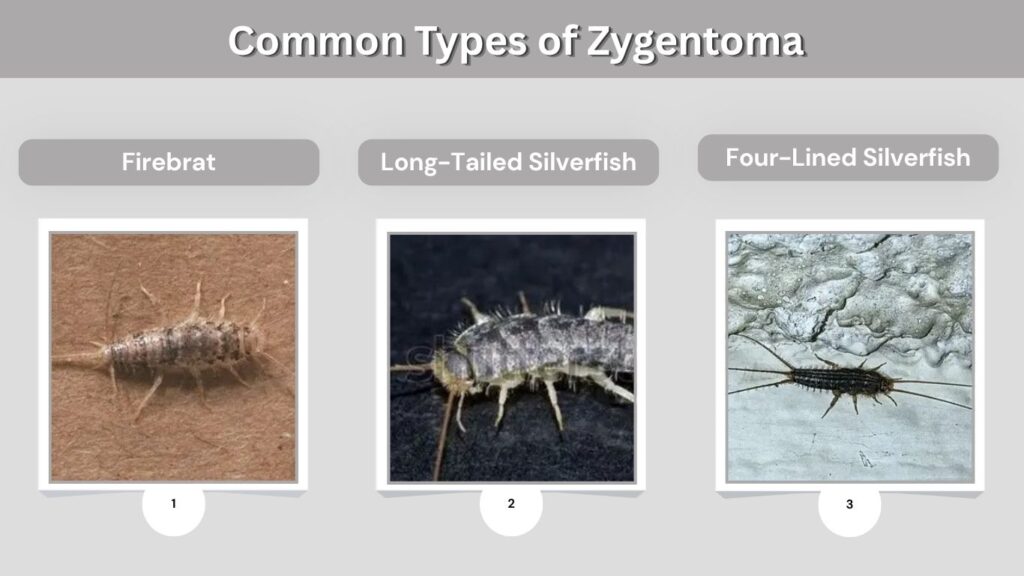
Several Zygentoma species have adapted particularly well to buildings. Correct identification can help determine where they are hiding and whether moisture or excessive heat is supporting the population.
Common Silverfish
The common silverfish, Lepisma saccharinum, has smooth, metallic silver scales and a tapered body. It prefers cool, damp locations such as bathrooms and basements. It may damage paper, wallpaper paste, stored foods, and book bindings.
Firebrat
The firebrat, Thermobia domestica, has mottled brown, grey, and cream markings. It thrives in hot, humid environments near boilers, ovens, furnaces, and heating pipes. Its diet includes flour, stored food, paper products, and other carbohydrate- or protein-rich materials.
Long-Tailed Silverfish
The long-tailed silverfish, Ctenolepisma longicaudatum, is greyish and has particularly long antennae and tail filaments. It tolerates drier conditions than the common silverfish and can spread into rooms that do not seem especially humid.
Four-Lined Silverfish
The four-lined silverfish, Ctenolepisma quadriseriatum, has dark longitudinal markings along its body. It may occur indoors or outside beneath bark, roofing materials, and sheltered debris.
Are Zygentoma Dangerous?
Zygentoma do not sting and are not known to bite people or pets. They are not recognized as disease carriers. Their main concern is property damage rather than health.
Large populations may create irregular holes, surface grazing, stains, scales, or droppings on:
- Books and documents
- Wallpaper
- Cardboard boxes
- Stored cereal products
- Photographs
- Starched fabrics
- Paper labels and packaging
Damage usually develops slowly. A single silverfish in a bathroom does not necessarily indicate a serious infestation, but frequent daytime sightings can suggest a larger hidden population.
How to Control Zygentoma Indoors
Control should focus on reducing the conditions that allow the insects to survive. Treating visible individuals without correcting moisture, heat, food, and hiding places may provide only temporary improvement.
Prevention and Removal
- Repair plumbing, roof, and drainage leaks.
- Use exhaust fans or dehumidifiers in damp rooms.
- Vacuum cracks, baseboards, shelves, and storage spaces.
- Remove unnecessary cardboard and paper piles.
- Store flour, cereal, and pet food in sealed containers.
- Seal gaps around pipes, windows, doors, and baseboards.
- Keep books and documents in dry storage.
- Use sticky traps to locate the most active areas.
- Clean food crumbs and residues beneath appliances.
- Contact a pest professional for a widespread infestation.
Firebrat control may also require locating hot areas around heating systems. Effective management generally combines sanitation, humidity reduction, habitat modification, monitoring, and carefully targeted treatment when necessary.
FAQs
Is Zygentoma the scientific name for silverfish?
Zygentoma is the scientific name of the insect order containing silverfish, firebrats, fishmoths, and related species. The common silverfish is one particular species, scientifically named Lepisma saccharinum.
Can Zygentoma fly or jump?
No. Zygentoma are wingless and cannot fly. They run quickly and may move in a wavy, fish-like manner, but they cannot jump like jumping bristletails in the order Archaeognatha.
Why do silverfish appear in bathrooms?
Bathrooms provide moisture, darkness, warmth, and narrow hiding places. Leaking pipes, poor ventilation, damp cabinets, and gaps around plumbing can make the room especially suitable for silverfish.
Do Zygentoma eat clothes?
They may damage fabrics containing starch, food stains, glue, or plant-based fibres. However, they do not normally feed on clean wool in the same way that clothes moth or carpet beetle larvae do.
Are Zygentoma beneficial?
Outdoor species contribute to decomposition by consuming fungi, detritus, and decaying organic matter. Indoor species offer little practical benefit and may become nuisance pests when suitable food and moisture allow their numbers to increase.