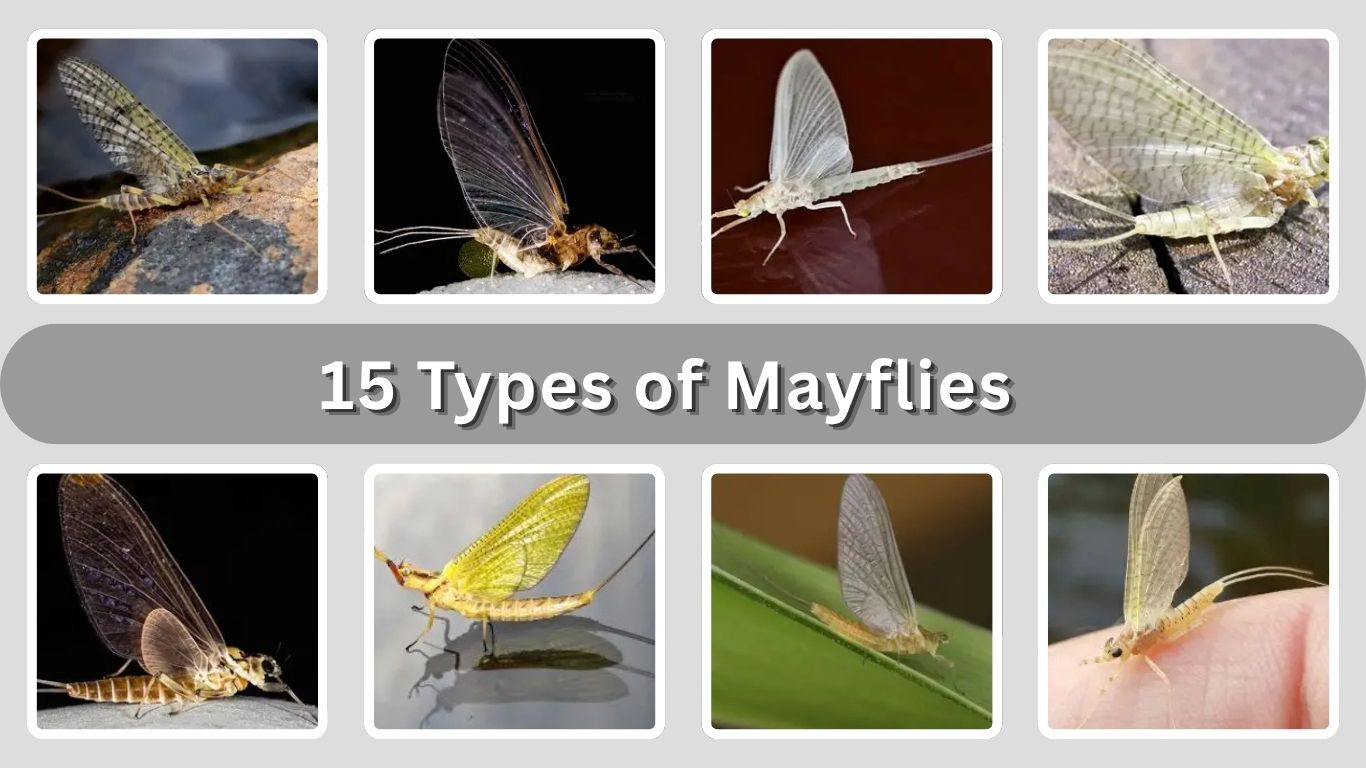
Mayflies are delicate aquatic insects known for their transparent wings, long tails, and remarkably short adult lives. More than 3,000 species occur worldwide, primarily around clean rivers, lakes, ponds, and streams. Although adults may survive for only a few hours or days, their nymphs can live underwater for months or even years. This guide explores 15 types of mayflies, including their identification features, habitats, diets, behaviors, and life cycles.
1. Green Drake Mayfly
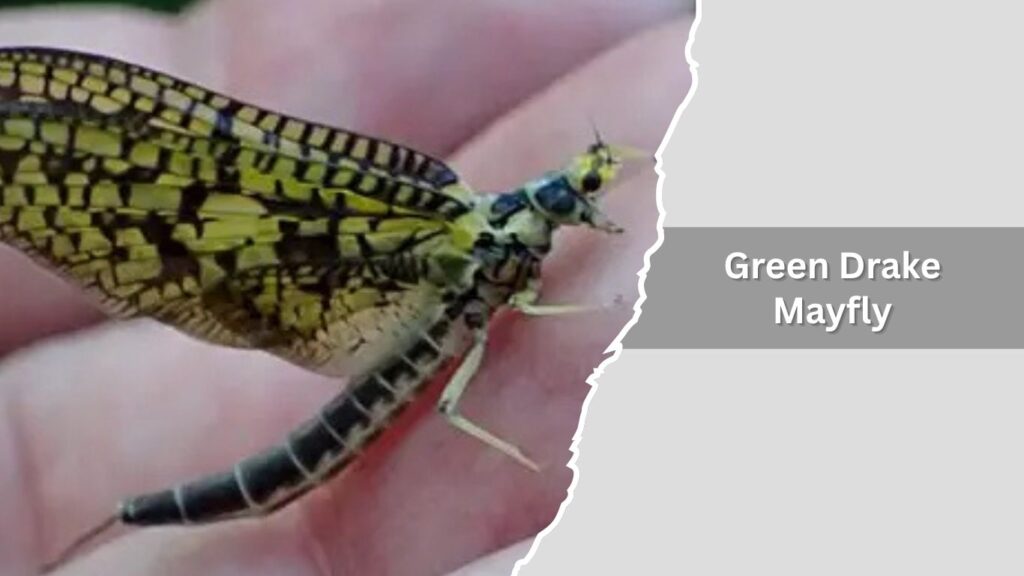
The Green Drake is one of the largest and most recognizable mayflies in North America. The name commonly refers to several large species in the genus Drunella. Their seasonal emergence attracts trout, birds, and other insect-eating animals.
Identification
- Body color: Olive-green to dark brown
- Wing color: Gray or smoky with dark markings
- Adult size: Approximately 15–25 mm
- Tails: Two or three long, slender tails
- Nymph: Flattened body with strong legs
Habitat
Green Drake nymphs inhabit cool, clean rivers and streams with rocky bottoms. They often hide beneath stones, gravel, and submerged vegetation. These mayflies are particularly associated with healthy, oxygen-rich freshwater habitats.
Diet and Behavior
The aquatic nymphs mainly consume algae, plant material, and fine organic particles. Adults do not eat because their mouthparts are reduced. Their short adult lives are devoted to mating and laying eggs.
Life Cycle
Green Drakes undergo incomplete metamorphosis through egg, nymph, subimago, and adult stages. Nymphs may remain underwater for many months before emerging. Adults usually survive for only one or two days.
2. Brown Drake Mayfly
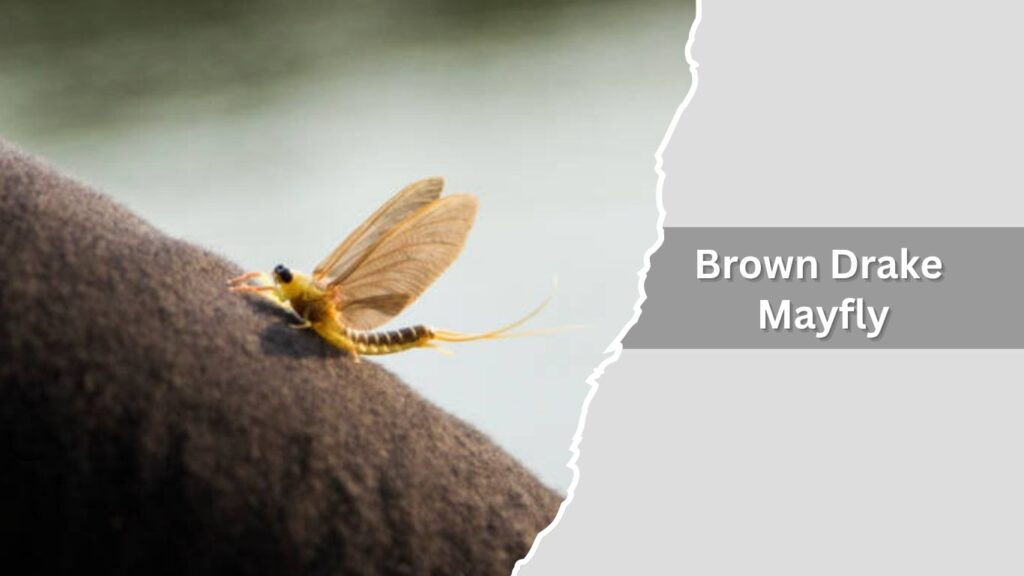
The Brown Drake is a large mayfly known for its dramatic evening emergence. It is commonly associated with Ephemera simulans, a widespread North American species. Large groups may emerge simultaneously during late spring or early summer.
Identification
- Body color: Brown, tan, or cream
- Wings: Transparent with dark brown markings
- Adult size: Approximately 15–25 mm
- Tails: Three long tails
- Nymph: Long-bodied with prominent tusk-like jaws
Habitat
Brown Drake nymphs live in burrows within soft sand, mud, or silt. They are found in slow-moving rivers, lake margins, and gentle stream sections. Clean water and stable sediment are important for their survival.
Diet and Behavior
Nymphs collect fine organic material and algae from the bottom. Adults commonly emerge near sunset and may gather around lights. Males form mating swarms above the water while females enter the swarm to mate.
Life Cycle
After mating, females deposit thousands of eggs on the water. The eggs sink into the sediment and hatch into aquatic nymphs. Adults generally live for less than two days and die shortly after reproduction.
3. Yellow Drake Mayfly
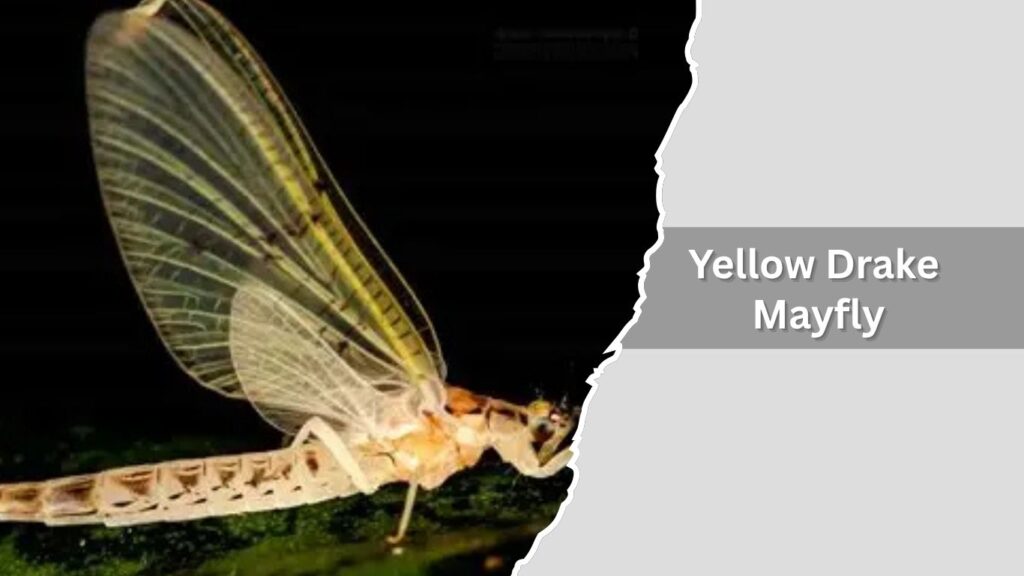
The Yellow Drake is a medium-to-large mayfly often represented by Ephemera varia. It has a pale yellowish body and patterned wings that make it relatively easy to recognize. Adults commonly emerge during warm evenings.
Identification
- Body color: Pale yellow to light brown
- Wings: Clear with dark spots or mottled markings
- Adult size: Approximately 15–22 mm
- Tails: Three long tails
- Nymph: Cylindrical body with digging legs and tusks
Habitat
Yellow Drake nymphs prefer clean streams and rivers with sandy or silty bottoms. They create small burrows where they remain protected from predators and strong currents. Their presence may indicate reasonably good water quality.
Diet and Behavior
The nymphs feed on algae, decaying vegetation, microorganisms, and fine organic particles. Adults have nonfunctional mouthparts and do not feed. They usually remain close to the water where they developed.
Life Cycle
Most of the Yellow Drake’s life is spent underwater as a nymph. When fully developed, it rises to the surface and transforms into a winged subimago. After another molt, the mature adult mates and reproduces before dying.
4. Blue-Winged Olive Mayfly
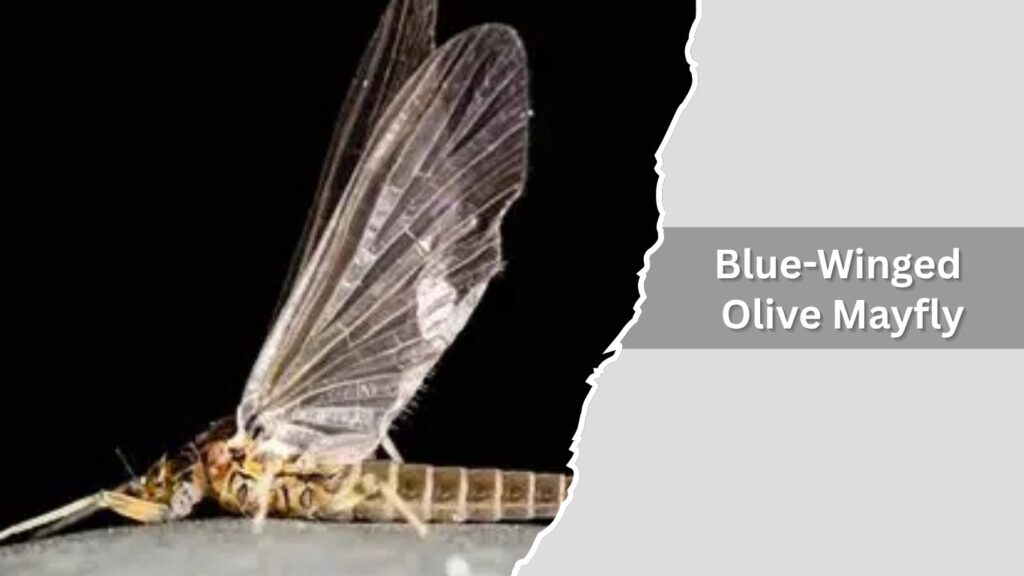
Blue-Winged Olive is a general name used for several small olive-bodied mayflies, particularly those in the family Baetidae. They are among the most common mayflies in streams and may emerge during several seasons of the year.
Identification
- Body color: Olive, brownish-green, or gray
- Wings: Blue-gray or smoky
- Adult size: Approximately 5–12 mm
- Tails: Usually two long tails
- Nymph: Slender, streamlined body
Habitat
Blue-Winged Olive nymphs live in cool streams and rivers with moderate currents. They cling to stones, aquatic plants, and submerged wood. Some species can tolerate a wider range of conditions than larger, more sensitive mayflies.
Diet and Behavior
Nymphs graze on algae and collect tiny pieces of organic material. Their streamlined bodies allow them to swim quickly between rocks. Adults often emerge during cloudy, cool, or lightly rainy weather.
Life Cycle
Blue-Winged Olives may produce more than one generation per year. The nymph develops underwater before swimming toward the surface to emerge. Adults live briefly, form mating swarms, lay eggs, and usually die within a few days.
5. Pale Morning Dun Mayfly
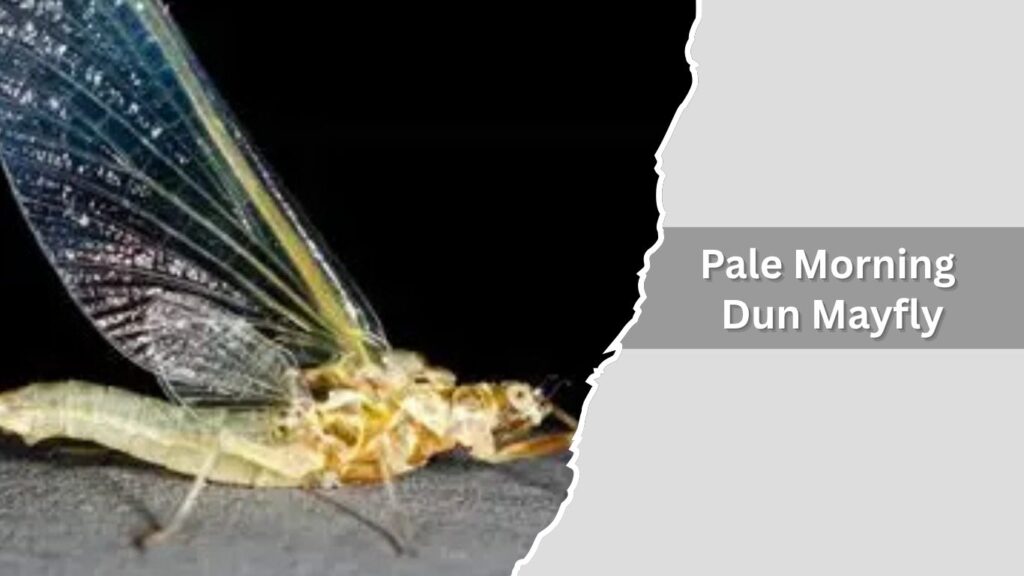
The Pale Morning Dun is a small, light-colored mayfly commonly found in western North American rivers. The name includes several closely related species, especially those in the genus Ephemerella. Adults often emerge from late morning through the afternoon.
Identification
- Body color: Pale yellow, cream, or light olive
- Wings: Light gray to pale blue-gray
- Adult size: Approximately 6–12 mm
- Tails: Two or three slender tails
- Nymph: Compact body with strong legs
Habitat
Pale Morning Dun nymphs live in clean streams and rivers with gravel, rocks, and aquatic vegetation. They prefer cool, well-oxygenated water and are common in productive trout streams.
Diet and Behavior
The nymphs feed on algae, microorganisms, and decaying plant particles. They crawl among stones and vegetation while avoiding fish and predatory insects. Adults do not eat and focus entirely on reproduction.
Life Cycle
Nymphs develop underwater for several months before rising toward the surface. They first become winged subimagos and later molt into mature adults. Females return to the water after mating and release their eggs onto the surface.
6. March Brown Mayfly
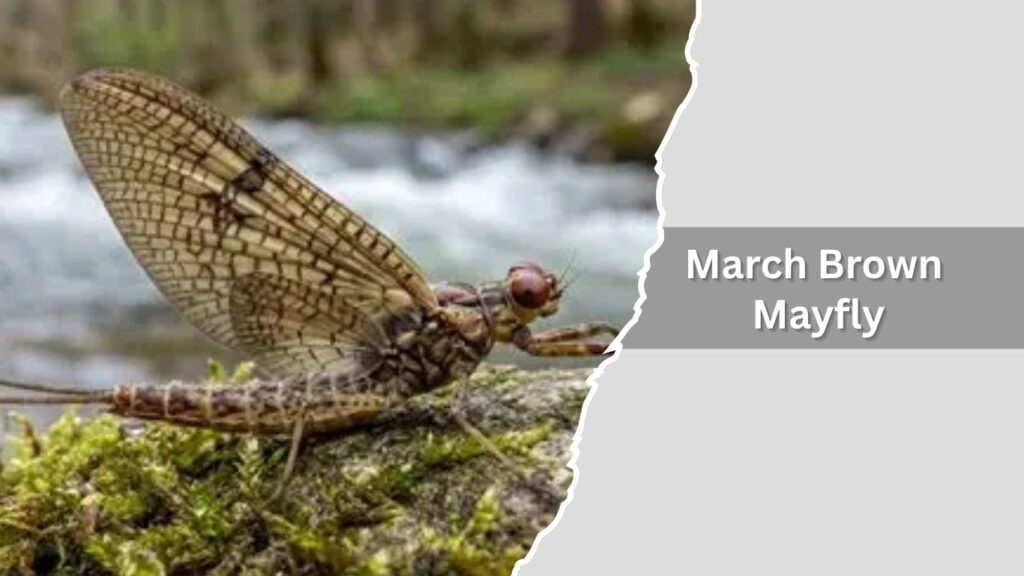
The March Brown is a medium-to-large mayfly commonly associated with Maccaffertium vicarium in North America. Despite its name, it often emerges during April, May, or June, depending on local water temperatures and climate.
Identification
- Body color: Brown, tan, or reddish-brown
- Wings: Transparent with brown mottling
- Adult size: Approximately 10–16 mm
- Tails: Two long tails
- Nymph: Broad, flattened body with strong legs
Habitat
March Brown nymphs inhabit cool, flowing rivers and streams. They usually cling to the undersides of rocks in areas with moderate or fast currents. Their flattened bodies help them resist being swept downstream.
Diet and Behavior
The nymphs graze on algae and collect fine pieces of organic material from rocks. Mature nymphs crawl toward calmer water before emerging. Adults are weak fliers individually but may form noticeable mating swarms near rivers.
Life Cycle
March Browns spend most of their lives as aquatic nymphs. Once mature, they rise to the surface and molt into winged subimagos. Following a final molt, adults mate, deposit eggs, and die within a few days.
7. Light Cahill Mayfly
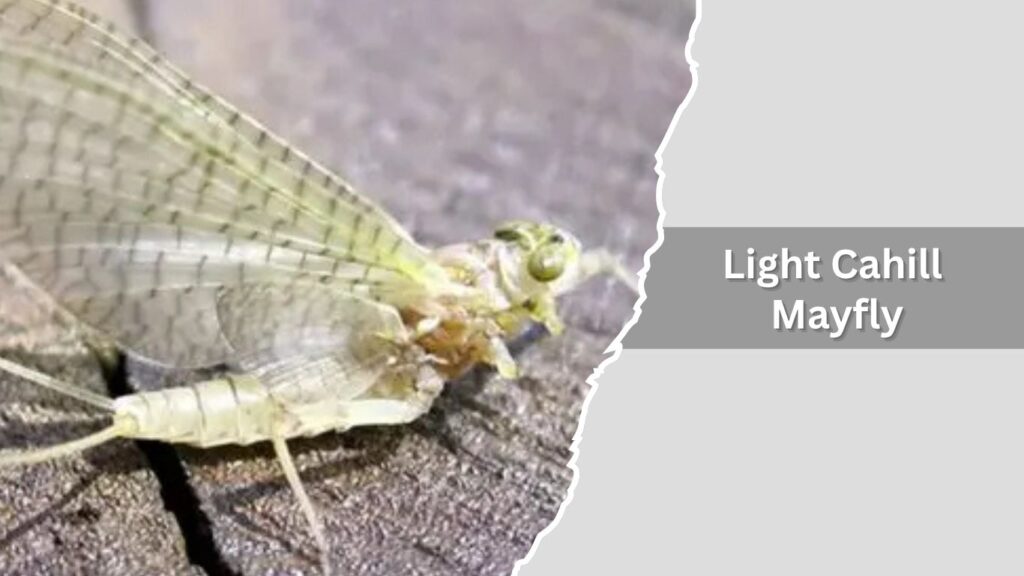
The Light Cahill is a pale-colored mayfly commonly represented by Stenacron interpunctatum. It is named after American angler Theodore Gordon’s fishing fly pattern. Natural adults commonly emerge during warm evenings from late spring through summer.
Identification
- Body color: Cream, pale yellow, or light tan
- Wings: Clear or pale gray
- Adult size: Approximately 8–15 mm
- Tails: Two or three slender tails
- Nymph: Flattened, mottled body
Habitat
Light Cahill nymphs live in clean streams and rivers with rocky bottoms. They prefer areas with moderate currents, where they shelter beneath stones and among submerged plants. Some populations also occur along wave-washed lake shores.
Diet and Behavior
Nymphs scrape algae and collect decaying plant particles from underwater surfaces. Adults frequently emerge during the evening and may be attracted to artificial lights. Like other adult mayflies, they do not bite or feed.
Life Cycle
The eggs develop underwater and hatch into crawling nymphs. After several molts, mature nymphs rise to the surface and transform into subimagos. Adults survive briefly, usually long enough to mate and return their eggs to the water.
8. Cream Cahill Mayfly
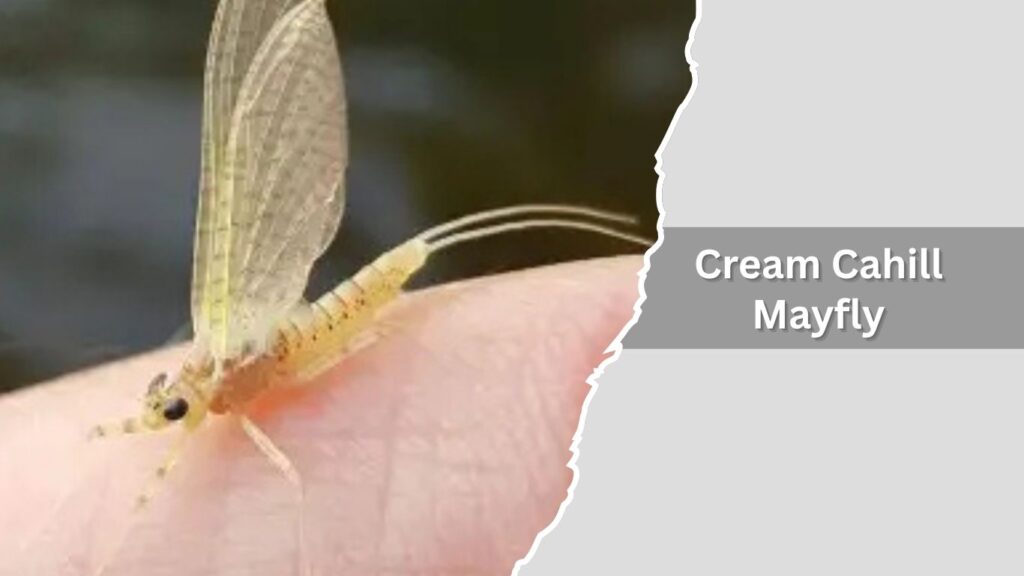
The Cream Cahill is a pale mayfly usually associated with Maccaffertium modestum. It resembles the Light Cahill but is generally identified by its creamy body and subtle markings. Its emergence can continue through much of the warmer season.
Identification
- Body color: Cream, pale tan, or light yellow
- Wings: Transparent to light gray
- Adult size: Approximately 8–14 mm
- Tails: Two long, pale tails
- Nymph: Broad, flattened, and mottled
Habitat
Cream Cahill nymphs inhabit streams and rivers with rocks, gravel, and steady currents. Their flattened shape allows them to cling tightly to underwater surfaces. They are usually found in well-oxygenated freshwater environments.
Diet and Behavior
The aquatic nymphs feed by scraping algae and gathering small organic particles. Adults commonly emerge near dusk, although timing can vary with temperature and weather. Males gather in aerial swarms while females enter to mate.
Life Cycle
Cream Cahills begin as eggs deposited on the water. The nymphs grow underwater through repeated molts before emerging as winged subimagos. After the final molt, mature adults reproduce and typically die within one or two days.
9. Sulphur Mayfly
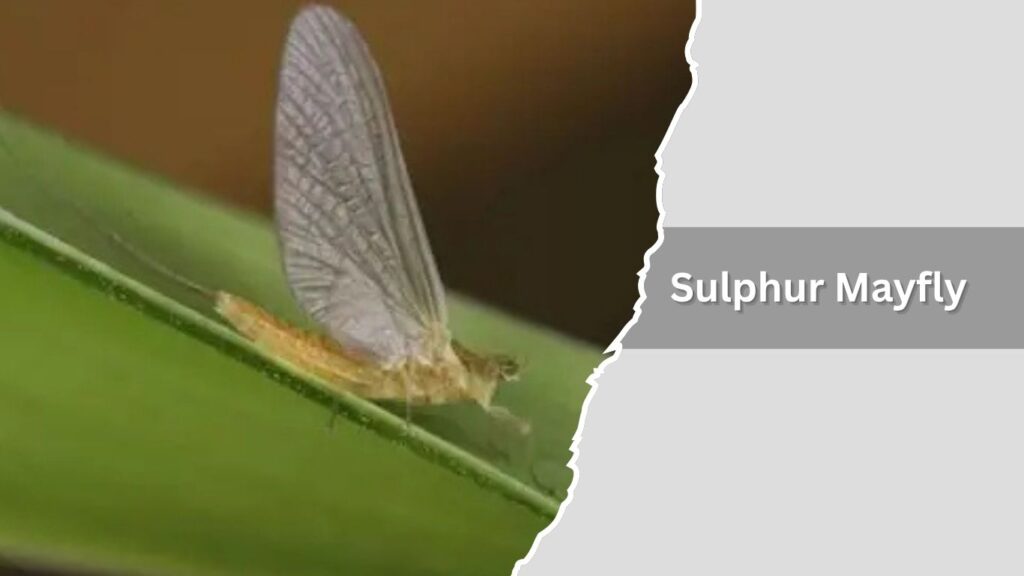
Sulphur Mayflies are small, yellowish mayflies that include species such as Ephemerella invaria and Ephemerella dorothea. Their bright color and large seasonal emergences make them particularly noticeable around rivers in late spring and early summer.
Identification
- Body color: Yellow, orange-yellow, or pale cream
- Wings: Clear to pale gray
- Adult size: Approximately 6–12 mm
- Tails: Two or three pale tails
- Nymph: Compact body with darker markings
Habitat
Sulphur nymphs occur in clean rivers and streams with gravel, rocks, and aquatic vegetation. They prefer cool, oxygen-rich water but may occupy both gentle runs and moderately fast currents.
Diet and Behavior
Nymphs feed on algae, microorganisms, and decomposing plant material. Adults often emerge during the afternoon or evening. Large numbers may gather above the water, creating dense mating swarms that attract fish, birds, and bats.
Life Cycle
Sulphur Mayflies spend several months growing as underwater nymphs. When mature, they swim toward the surface and become subimagos. They later complete a final molt, mate, lay eggs, and die shortly after reproduction.
10. Slate Drake Mayfly
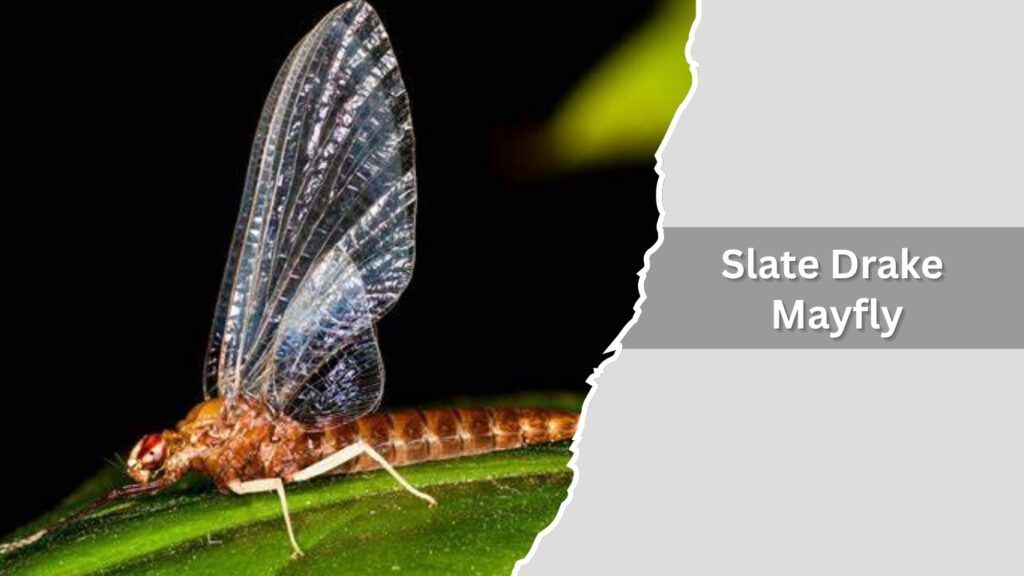
The Slate Drake, commonly identified as Isonychia bicolor, is a dark, streamlined mayfly found in eastern North America. Unlike species with one short emergence, Slate Drakes may appear repeatedly from late spring into autumn.
Identification
- Body color: Dark brown, reddish-brown, or slate-colored
- Wings: Smoky gray to dark slate
- Adult size: Approximately 10–18 mm
- Tails: Two long tails
- Nymph: Streamlined body with pale stripes
Habitat
Slate Drake nymphs live in medium-to-large streams and rivers with moderate or fast currents. They hide around rocks, gravel, submerged wood, and vegetation. Their strong bodies make them capable swimmers.
Diet and Behavior
The nymphs use specialized hairs on their front legs to filter fine food particles from moving water. Mature nymphs often crawl onto rocks or stream banks before emerging. This behavior differs from mayflies that emerge directly on the water’s surface.
Life Cycle
Eggs hatch into aquatic nymphs that develop through numerous molts. When mature, they leave the water and transform into winged subimagos. After their final molt, adults form mating swarms, reproduce, and survive for only a short period.
11. Giant Mayfly
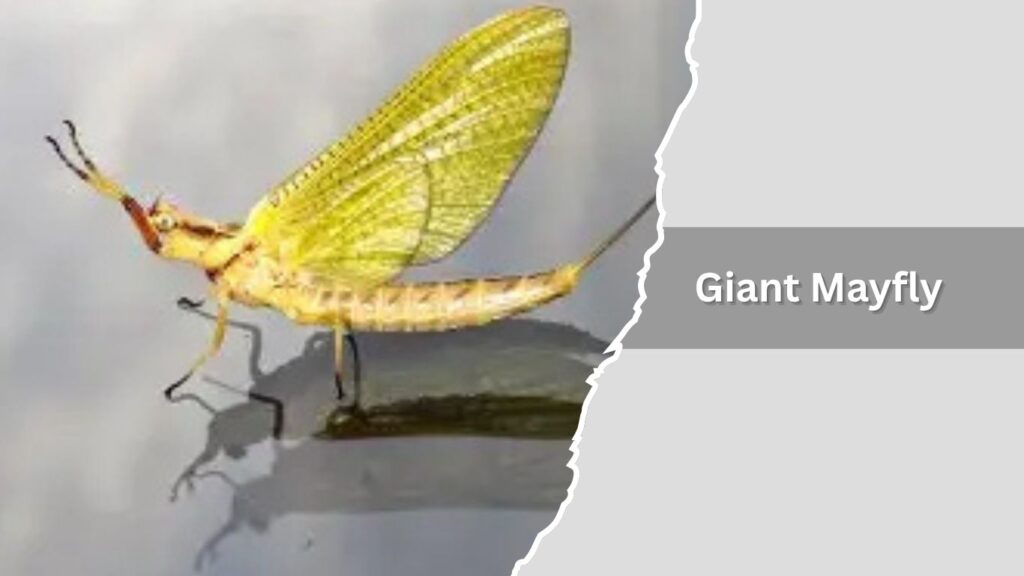
The Giant Mayfly, commonly identified as Hexagenia limbata, is one of North America’s largest mayflies. Its enormous synchronized emergences can cover buildings, roads, boats, and other surfaces near lakes and large rivers. Despite their numbers, these insects are harmless.
Identification
- Body color: Pale yellow, tan, or brown
- Wings: Clear with visible brown veins
- Adult size: Approximately 20–35 mm
- Tails: Two or three extremely long tails
- Nymph: Elongated body with curved tusks
Habitat
Giant Mayfly nymphs live in U-shaped burrows constructed in soft mud or silt. They inhabit lakes, reservoirs, and slow sections of large rivers. The nymphs move water through their burrows using feather-like abdominal gills.
Diet and Behavior
Nymphs consume algae, microorganisms, and decaying organic material collected from the sediment. Adults do not eat. Males form large mating swarms, while females mate and return to the water to release thousands of eggs.
Life Cycle
Giant Mayflies may spend one or two years underwater as nymphs. When mature, they rise together and transform into winged subimagos. Adults generally survive for less than two days after completing their final molt.
12. White Mayfly
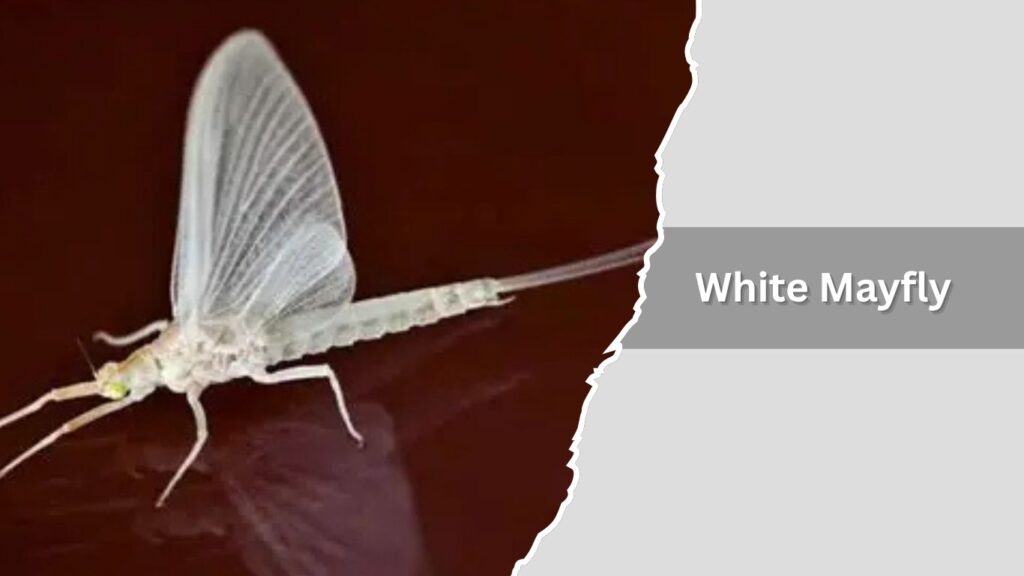
The White Mayfly, scientifically known as Ephoron leukon, is famous for its bright white body and dense summer emergences. Thousands may gather near rivers after sunset, producing a snowstorm-like appearance around bridges and streetlights.
Identification
- Body color: Milky white to pale cream
- Wings: White or translucent
- Adult size: Approximately 10–18 mm
- Tails: Two or three long, white tails
- Nymph: Pale burrowing form with small tusks
Habitat
White Mayfly nymphs inhabit sandy, silty, or muddy areas of rivers and streams. They create burrows within the bottom sediment and prefer waterways with gentle to moderate currents.
Diet and Behavior
The nymphs filter fine organic particles and microorganisms from the surrounding water. Adults emerge mainly during warm summer evenings and are strongly attracted to artificial lighting. They cannot bite, sting, or damage property.
Life Cycle
White Mayflies spend most of the year developing underwater. Mature nymphs emerge in synchronized groups, sometimes numbering in the millions. After mating, females release their eggs into the water, and the adults die shortly afterward.
13. Trico Mayfly
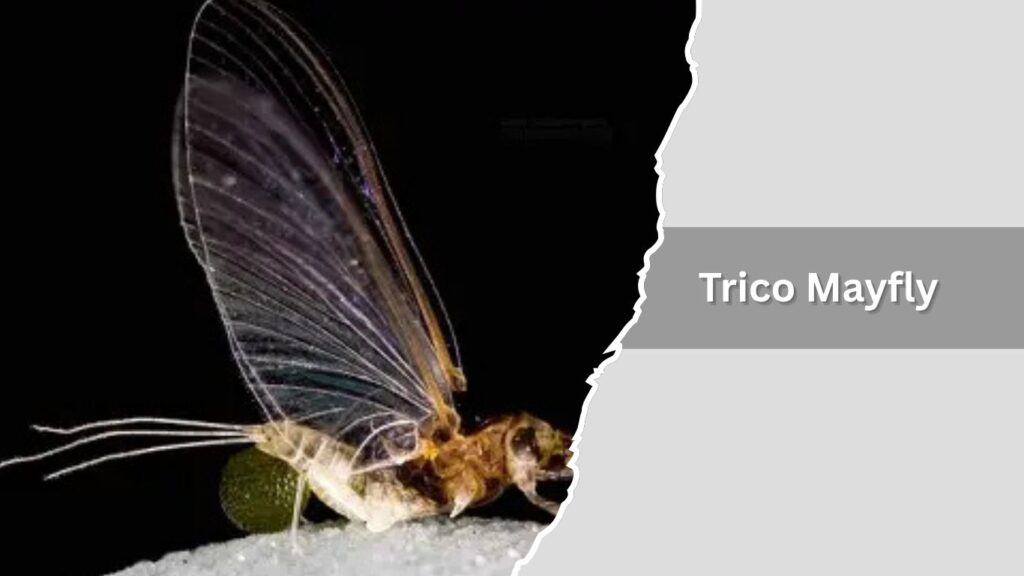
Trico Mayflies are tiny insects belonging mainly to the genus Tricorythodes. They are known for forming dense mating swarms over rivers and streams. Their small size and transparent wings can make individual adults difficult to notice.
Identification
- Body color: Black, dark brown, or olive
- Wings: Clear to pale gray
- Adult size: Approximately 3–6 mm
- Tails: Two or three fine tails
- Nymph: Tiny body with a broad abdomen
Habitat
Trico nymphs inhabit streams and rivers with gravel, stones, vegetation, or fine sediment. They may be found in slow pools, gentle runs, and moderately moving water. Different species occupy slightly different freshwater environments.
Diet and Behavior
The nymphs feed on algae, microorganisms, and tiny particles of decomposing vegetation. Adults commonly form mating swarms during the morning. After mating, large numbers of exhausted adults fall onto the water.
Life Cycle
Tricos may complete more than one generation in a year under favorable conditions. Their aquatic nymphal period is much longer than the adult stage. Mature adults may survive for only several hours after mating and laying eggs.
14. Little Black Quill Mayfly
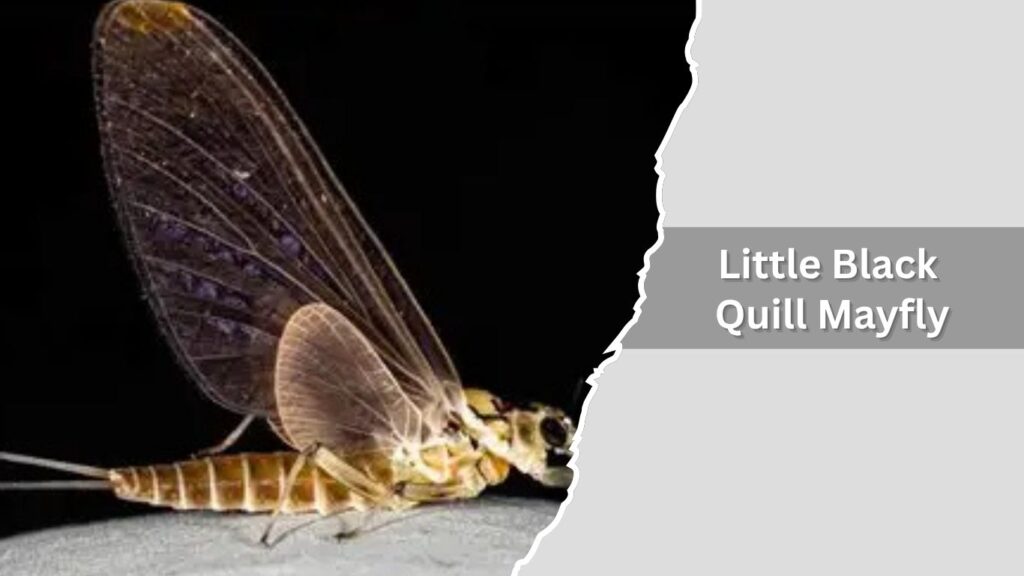
The Little Black Quill is a small, dark mayfly commonly associated with Leptophlebia cupida. It usually emerges during spring and is especially noticeable around cool woodland streams, rivers, ponds, and lake margins.
Identification
- Body color: Dark brown to nearly black
- Wings: Smoky gray or translucent
- Adult size: Approximately 6–10 mm
- Tails: Three slender tails
- Nymph: Slim body with forked abdominal gills
Habitat
Little Black Quill nymphs live in cool freshwater habitats containing leaf litter, submerged plants, woody debris, and rocks. They often prefer slower stream margins and areas where decaying vegetation accumulates.
Diet and Behavior
Nymphs collect fine organic particles and graze on algae growing across submerged surfaces. Adults generally emerge during daylight or around evening, depending on local conditions. Males gather in small swarms near the water to locate females.
Life Cycle
The eggs hatch into aquatic nymphs that develop through repeated molts. Mature nymphs travel toward the surface or shoreline before emerging. Following the subimago stage and final molt, adults reproduce and die within a short period.
15. Gray Fox Mayfly
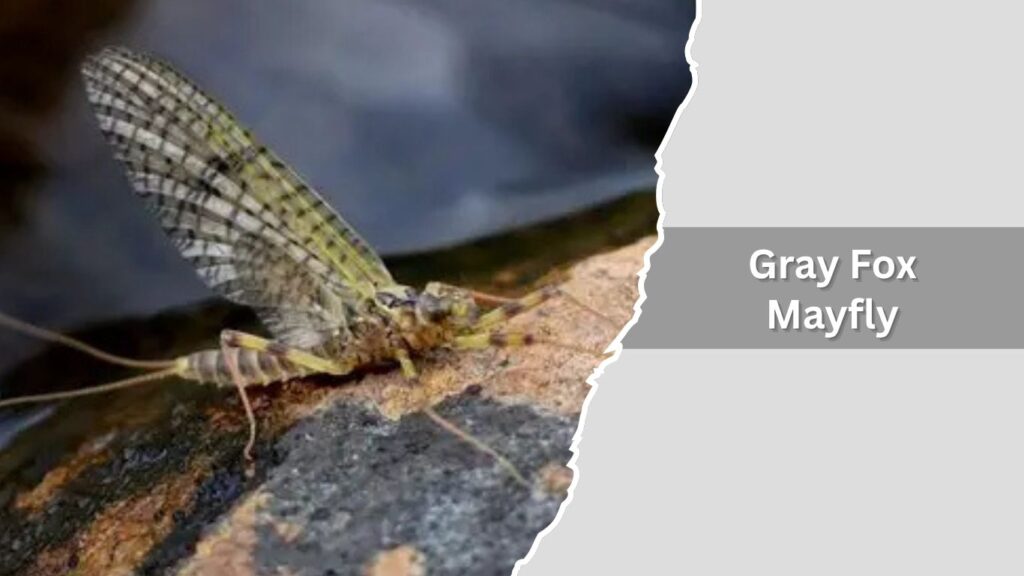
The Gray Fox Mayfly is commonly associated with Maccaffertium mediopunctatum. It is closely related to the March Brown and has a mottled grayish appearance. Adults generally emerge in late spring after many March Brown emergences have started to decline.
Identification
- Body color: Gray, tan, or light brown
- Wings: Transparent with dark mottling
- Adult size: Approximately 9–14 mm
- Tails: Two long tails
- Nymph: Broad, flat body with mottled coloring
Habitat
Gray Fox nymphs inhabit clean streams and rivers with rocky bottoms and moderate currents. They cling closely to stones, where their flat bodies provide protection from fast-moving water and many predators.
Diet and Behavior
The nymphs scrape algae and gather organic particles from underwater rocks. Mature nymphs move toward calmer areas before emerging. Adults form mating swarms near the water and may become active during afternoons or evenings.
Life Cycle
Gray Fox Mayflies spend most of their lives underwater as nymphs. After growing through numerous molts, they emerge as winged subimagos and later molt into mature adults. Their adult lives are brief and focused entirely on mating and egg production.
FAQs
1. How long do mayflies live?
Adult mayflies usually live for only a few hours to several days. However, they spend most of their lives underwater as nymphs, often developing for several months to two years before emerging, mating, laying eggs, and completing their life cycle.
2. Do mayflies bite or sting humans?
Mayflies cannot bite or sting humans. Adult mayflies have reduced, nonfunctional mouthparts and do not eat. Although large swarms can become inconvenient around buildings, roads, and outdoor lights, these delicate insects are harmless to people, pets, and property.
3. Why do mayflies gather around lights?
Adult mayflies are strongly attracted to artificial lights, particularly those near rivers and lakes. Bright lights can disorient them and draw them away from the water. During large emergences, thousands may gather around streetlights, windows, bridges, and illuminated buildings.
4. What do mayflies eat?
Mayfly nymphs generally consume algae, microorganisms, decaying vegetation, and fine organic particles found underwater. Their exact diet varies among species. Adult mayflies typically do not eat because their digestive systems and mouthparts are reduced, and their lives focus entirely on reproduction.
5. Why are mayflies important?
Mayflies are essential parts of freshwater ecosystems. Their nymphs help process algae and decaying organic material, while both nymphs and adults provide food for fish, birds, bats, amphibians, and other insects. Their presence can also indicate clean, oxygen-rich water.