
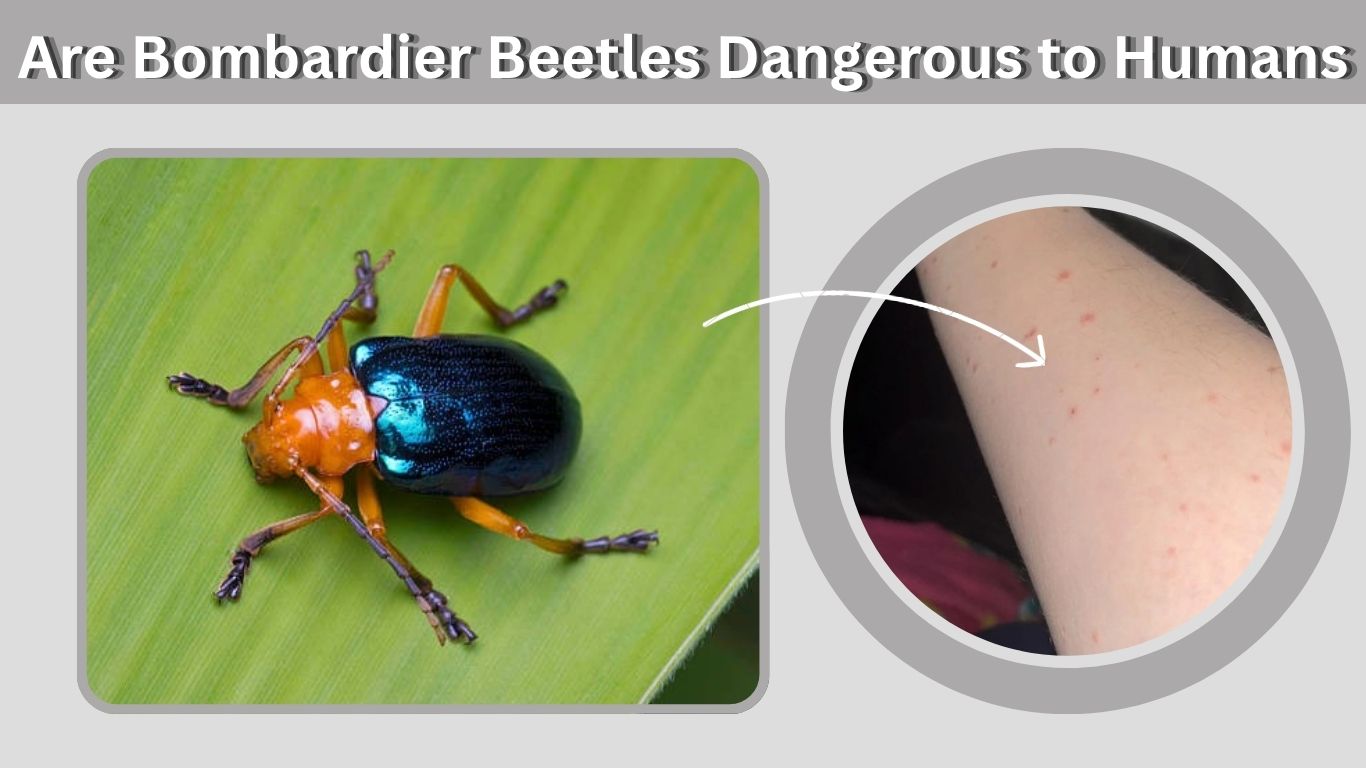
Bombardier beetles are not normally dangerous to humans, but their defensive spray can cause painful skin irritation, temporary staining, minor thermal or chemical burns, and potentially serious eye injury. They do not hunt people, transmit disease, or attack without provocation. Most exposures occur when someone picks up, squeezes, steps on, or otherwise traps a beetle.
How Dangerous Is a Bombardier Beetle?
A bombardier beetle presents little risk when observed without touching it. The insect’s powerful chemical defense is intended for predators such as ants, spiders, frogs, and other animals—not for attacking humans.
Possible Effects on Humans
Contact with its spray may cause:
- Immediate burning or stinging
- Redness and skin irritation
- Yellowish or brown skin staining
- A small thermal or chemical burn
- Contact dermatitis
- Eye pain, redness, and blurred vision
- Rarely, a more serious systemic reaction
The severity depends on the beetle species, how close it is to the skin, where the spray lands, and how quickly the affected area is rinsed. University of Florida guidance confirms that some bombardier beetles can cause discomfort, burns, and contact dermatitis in people.
Do Bombardier Beetles Bite or Sting?
Bombardier beetles do not have stingers. They possess chewing mouthparts and could potentially pinch when restrained, but biting is not their primary defense.
When threatened, the beetle usually turns the end of its abdomen toward the danger and releases its chemical spray. Leaving it alone or gently moving it without direct contact greatly reduces the chance of exposure.
How Does the Bombardier Beetle’s Spray Work?
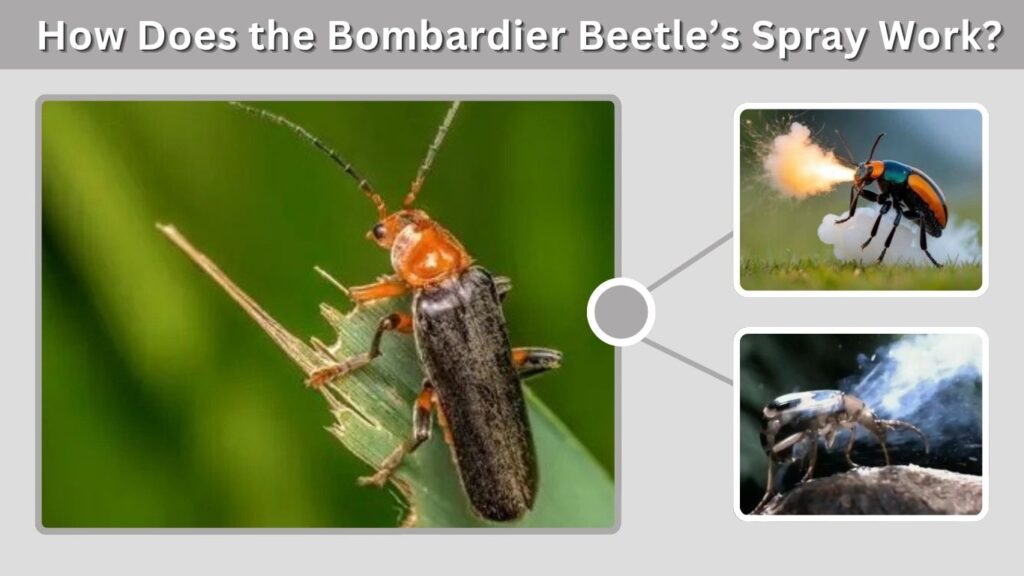
Bombardier beetles belong to the ground beetle family Carabidae. Their common name refers to the popping or explosive sound produced when they discharge their defensive chemicals.
Hot Chemical Reaction
The beetle stores chemical precursors in abdominal reservoirs. When danger appears, the chemicals enter a hardened reaction chamber where enzymes trigger a rapid heat-producing reaction.
This process creates a hot, benzoquinone-rich liquid that is expelled in a powerful pulsating jet. The liquid may approach the boiling point of water inside the beetle, although its temperature can drop quickly after leaving the body.
Irritating Chemicals
Benzoquinones are strongly irritating compounds. The combination of heat, chemical irritation, pressure, odor, and repeated pulses makes the spray highly effective against predators.
The beetle can aim the discharge in different directions by moving the tip of its abdomen. Research has photographed beetles directing the spray toward attackers positioned beside, behind, above, or beneath them.
What Happens If a Bombardier Beetle Sprays You?
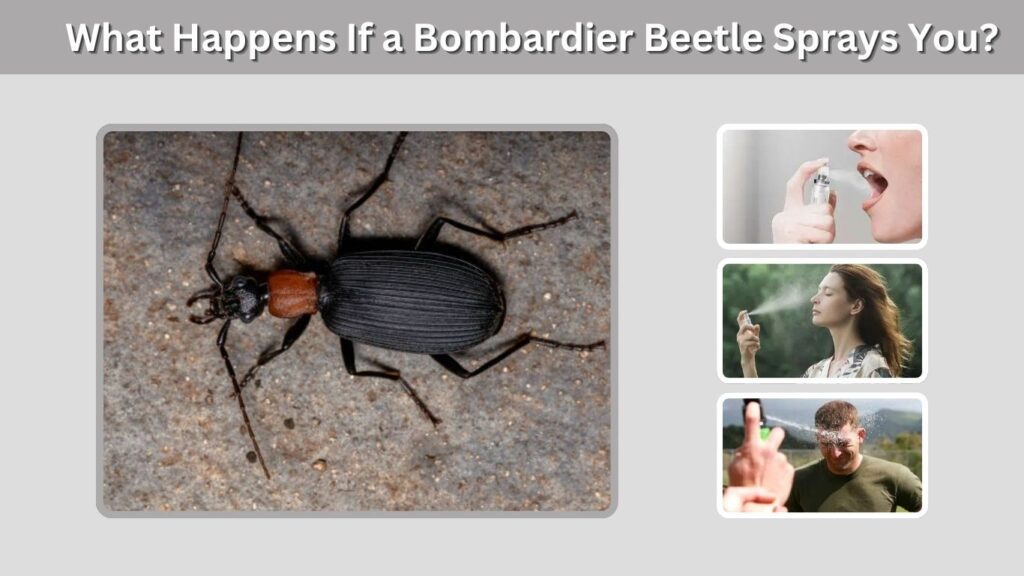
Effects vary depending on whether the spray reaches the skin, eyes, mouth, or respiratory system.
Spray on the Skin
Skin exposure may produce a sharp burning sensation followed by redness or irritation. The benzoquinones can also leave a temporary yellowish-brown stain.
A short, indirect exposure will not necessarily cause a visible burn. However, a close-range discharge against trapped or sensitive skin may produce a more painful reaction. Contact dermatitis has also been documented following exposure to bombardier beetles.
Spray in the Eyes
Eye exposure is the most concerning risk. A published case described corneal chemical injury after a child was sprayed in the eye by a bombardier beetle. The patient recovered with medical treatment, but the case demonstrates that the discharge can damage the eye rather than causing only temporary discomfort.
Possible signs include severe burning, tearing, redness, light sensitivity, blurred vision, and difficulty keeping the eye open.
Breathing the Spray
The odor and fine droplets may irritate the nose or throat, especially when the beetle discharges at close range in an enclosed area. Move into fresh air if coughing, throat irritation, or breathing discomfort develops.
Severe breathing difficulty or facial swelling requires urgent medical attention.
What Should You Do After Being Sprayed?
Respond quickly, particularly when the spray reaches the eyes.
Skin First Aid
Wash the affected skin promptly with plenty of lukewarm running water and mild soap. Remove contaminated clothing and avoid rubbing the area, which may spread the irritating chemicals.
Medical advice is appropriate when pain, swelling, blistering, persistent redness, or a widespread rash develops.
Eye First Aid
Immediately rinse the eye with clean, room-temperature or lukewarm water for at least 15–20 minutes. Remove contact lenses when they can be taken out easily, and do not place ointments, chemicals, or home remedies in the eye.
Chemical eye injuries require prompt assessment when pain, redness, blurred vision, or light sensitivity continues after rinsing. Immediate irrigation is the most important first step and should begin before waiting for professional assistance.
Are False Bombardier Beetles Dangerous?
False bombardier beetles are usually species in the genus Galerita. They resemble true bombardier beetles but lack the same explosive, superheated defense system.
| Feature | True bombardier beetle | False bombardier beetle |
| Common group | Brachinini and related groups | Usually Galerita species |
| Defensive release | Hot, pulsating chemical jet | Noxious chemical secretion |
| Heat | Can be extremely hot | Not expelled through the same explosive system |
| Human risk | Irritation, burns, eye injury | Usually mild irritation if handled |
| Behavior | Primarily defensive | Primarily defensive |
False bombardier beetles are beneficial ground predators that commonly eat caterpillars and other insects. They should still be handled cautiously because ground beetles can release unpleasant defensive chemicals when trapped or disturbed.
How to Handle a Bombardier Beetle Safely
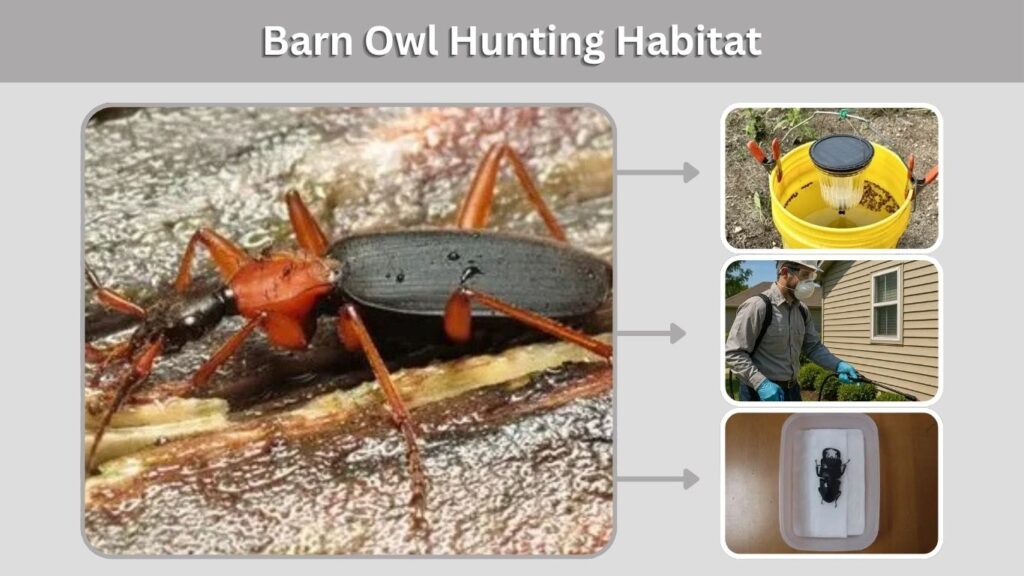
Avoid picking the beetle up with bare fingers. Do not squeeze, crush, poke, or hold it close to your face.
To remove one from a house, place a cup or container over it, slide a stiff piece of paper underneath, and carry it outdoors. Keep the container pointed away from your eyes while moving it.
Bombardier beetles are predators and scavengers rather than household pests. They do not infest food, damage furniture, or reproduce throughout homes. A beetle found indoors has usually entered accidentally.
Are Bombardier Beetles Harmful to Pets?
A curious dog or cat may experience mouth, nose, or eye irritation after biting or pawing at a bombardier beetle. The bitter, irritating spray will usually cause the animal to release the insect.
Rinse exposed skin or fur carefully while preventing the chemical from entering the eyes. Contact a veterinarian when a pet develops persistent drooling, pawing at its face, eye redness, vomiting, swelling, breathing difficulty, or unusual behavior.
FAQs
Can a bombardier beetle kill a human?
There is no reason to consider a normal encounter deadly to a human. Its spray is designed to repel much smaller predators. However, it can burn the skin and injure an eye, so direct exposure should be taken seriously.
Will a bombardier beetle attack you?
No. It usually runs, hides, or flies away. Spraying occurs defensively when the beetle is grabbed, trapped, stepped on, or threatened at close range.
How hot is bombardier beetle spray?
Measurements and experimental studies indicate that the discharge produced by certain species may approach 100°C inside the defensive system. The exact temperature varies, and the droplets begin cooling after being released.
Can the spray permanently damage your eyes?
Permanent damage is not inevitable, but the spray can cause corneal injury. Immediate, prolonged rinsing and prompt medical evaluation improve the chance of a full recovery.
Should you kill a bombardier beetle?
Killing it is usually unnecessary. Bombardier beetles are ground-dwelling predators that may consume other insects. Move the beetle outdoors with a container while keeping your hands and face away from its abdomen.
