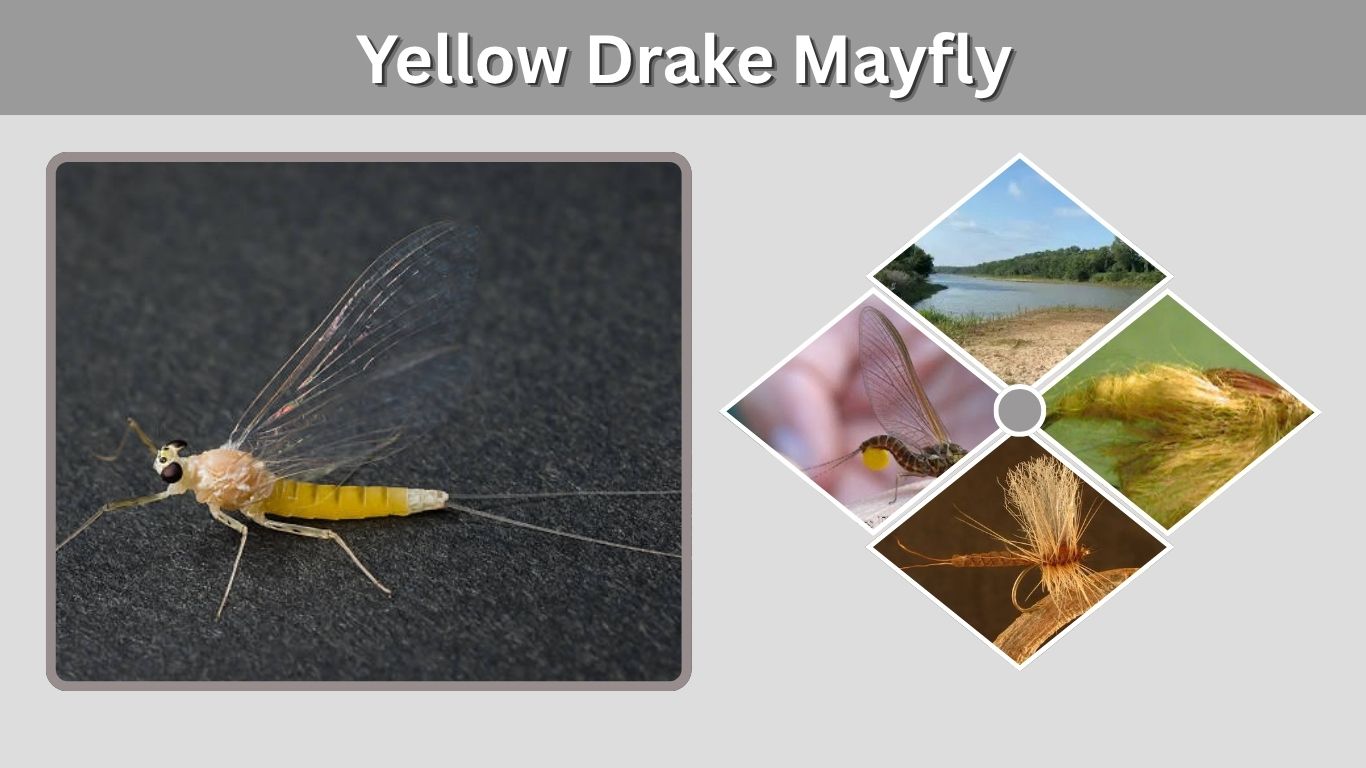
The Yellow Drake is a large North American mayfly known for its pale yellow body, patterned abdomen, and evening emergence. In eastern and central regions, the name usually refers to Ephemera varia. Its burrowing nymphs live in sand, silt, and other soft bottom material before swimming to the surface to emerge. Although Yellow Drake hatches are rarely as concentrated as major Green or Brown Drake hatches, they can continue for several weeks and provide dependable feeding opportunities for trout.
Yellow Drake Mayfly Quick Facts
“Yellow Drake” is primarily an angling name rather than a common name applied consistently throughout North America. Therefore, location must be considered when identifying the insect.
Basic information
| Feature | Description |
| Primary Latin name | Ephemera varia |
| Order | Ephemeroptera |
| Family | Ephemeridae |
| Nymph type | Burrower |
| Adult color | Pale yellow, cream, tan, or yellow-brown |
| Number of tails | Three |
| Common fly size | Approximately sizes 10–12 on long-shank hooks |
| Main habitat | Streams, rivers, and lakes with soft substrates |
| General hatch period | Early to midsummer |
| Adult lifespan | Usually only a few days |
What Is the Yellow Drake’s Latin Name?
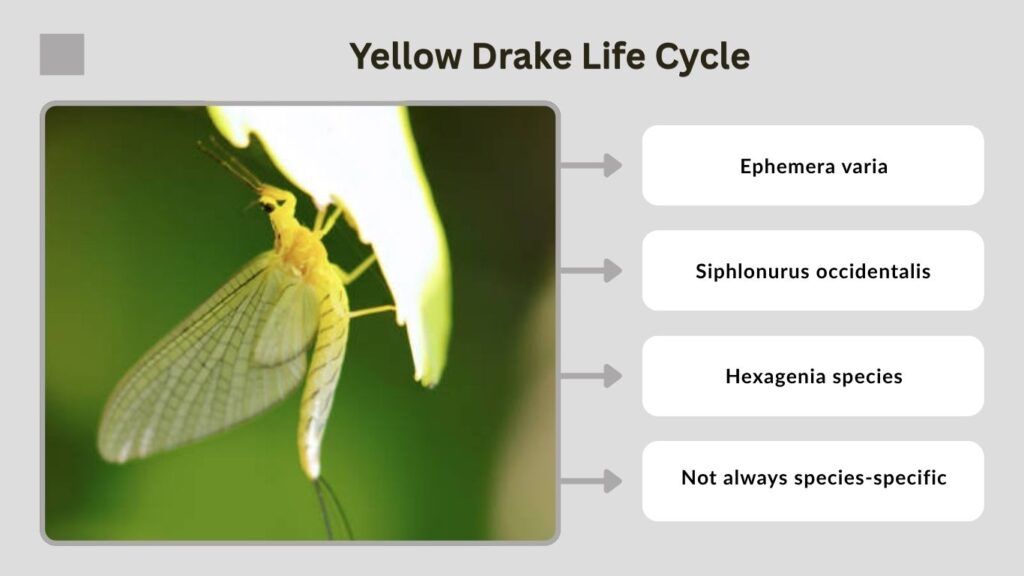
In eastern and central North America, the Yellow Drake mayfly’s accepted Latin name is generally Ephemera varia. It is closely related to the Eastern Green Drake and Brown Drake.
Regional naming differences
The name may describe different insects in different locations:
| Common name | Likely scientific name | Region |
| Eastern Yellow Drake | Ephemera varia | Eastern and central North America |
| Western Yellow Drake | Siphlonurus occidentalis | Parts of western North America |
| Yellow-colored Hex | Hexagenia species | Lakes and slow rivers |
| European Yellow Drake pattern | Not always species-specific | UK and European fly fishing |
Siphlonurus occidentalis may be called either a Western Yellow Drake or Western Gray Drake because adults vary in color. Unlike Ephemera varia, its nymph is adapted for swimming rather than constructing a permanent burrow.
Yellow Drake Identification
The insect’s name comes from the pale yellow or yellowish-cream color of the dun. However, body color can vary with sex, maturity, location, and lighting.
Adult identification
- Large, slender mayfly body
- Pale yellow, cream, or yellow-brown abdomen
- Brown markings across abdominal segments
- Two large, upright forewings
- Two smaller hind wings
- Grey, smoky, or translucent wings
- Three long tails
- Short antennae
- Long front legs, particularly in males
Duns have cloudy wings and a duller body. After molting into mature spinners, their wings become clearer and their bodies may become more brightly colored or glossy.
Male and female differences
Male Yellow Drakes generally have larger eyes and longer front legs for locating and holding females during mating. Females have fuller abdomens containing eggs and may be slightly larger.
The female’s abdomen can become more transparent or appear differently colored as the eggs mature. These variations explain why anglers sometimes assign different common names to males, females, duns, and spinners.
Yellow Drake Mayfly Nymph
The nymph of Ephemera varia is a burrower. It spends most of its aquatic life hidden inside soft sediment.
Nymph identification
- Long, cylindrical body
- Pale tan, yellowish-brown, or cream coloration
- Three tails
- Strong front legs for digging
- Large, feathery abdominal gills
- Darker abdominal markings
- Prominent wing pads before emergence
- Body often imitated on hooks around sizes 8–12
Yellow Drake nymphs closely resemble Brown Drake nymphs. Early in the season, even experienced anglers may have difficulty separating them. As emergence approaches, the mature species develops dark, clearly defined wing pads.
Yellow Drake vs Brown Drake nymph
| Feature | Yellow Drake Nymph | Brown Drake Nymph |
| Scientific name | Ephemera varia | Ephemera simulans |
| Body color | Pale tan or yellowish | Tan to medium brown |
| Nymph type | Burrower | Burrower |
| Preferred substrate | Sand, silt, and fine sediment | Sand, silt, and mud |
| Usual maturity | Later in the season | Generally earlier |
| Visual separation | Difficult before maturity | Difficult before maturity |
After the Brown Drake emergence ends, large burrowing nymphs with dark, developed wing pads are more likely to be Yellow Drakes.
Yellow Drake Mayfly Habitat and Distribution
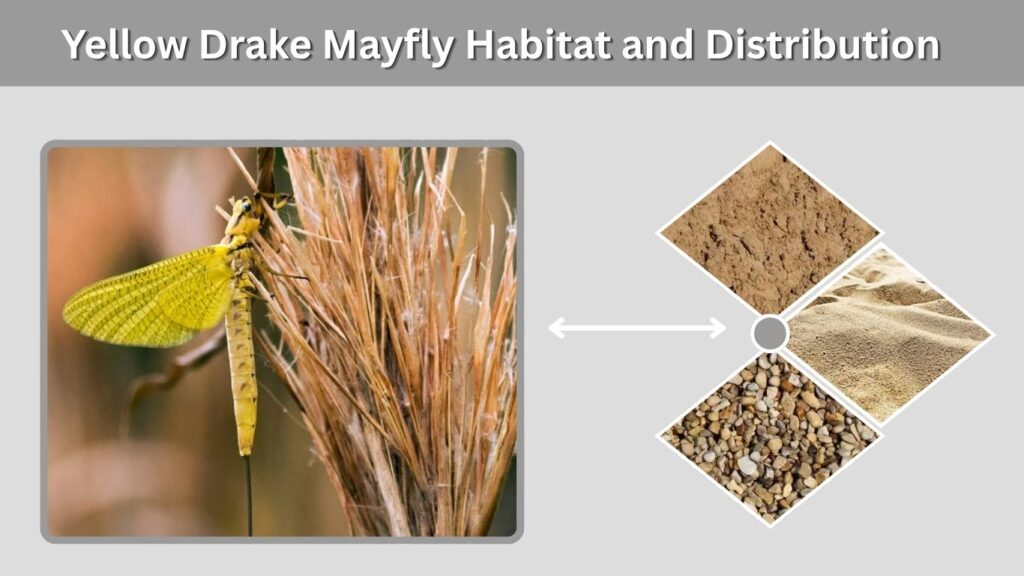
Yellow Drakes require freshwater with suitable sediment and enough dissolved oxygen to support their burrowing nymphs.
Preferred habitat
The species may inhabit:
- Sandy-bottomed rivers
- Silty stream pools
- Slower sections below riffles
- Lakes with fine sediment
- Gradually moving channels
- Backwaters connected to clean rivers
- Limestone and freestone streams
Nymphs construct burrows in the bottom and move their feathery gills to circulate water. This flow supplies oxygen and carries fine organic particles into the burrow.
Water-quality requirements
Many mayflies are sensitive to pollution, excessive sedimentation, chemical contamination, and oxygen depletion. Healthy Yellow Drake populations can therefore suggest that suitable aquatic conditions remain available.
Mayflies are commonly monitored as freshwater indicators because changes in their abundance can reveal environmental stress before the damage becomes visually obvious.
Yellow Drake Mayfly Diet and Ecological Importance
Yellow Drakes connect aquatic and terrestrial food webs. Their nymphs process organic material, while the emerging adults feed numerous predators.
What do Yellow Drake nymphs eat?
Nymphs consume algae, microorganisms, decomposing vegetation, and small organic particles. They collect this material from the sediment and from water moving through their burrows.
Their feeding helps break down organic matter and recycle nutrients within the stream or lake bottom.
Predators
Fish consume ascending nymphs, emergers, duns, and spent spinners. Trout are especially attracted to them because Yellow Drakes are significantly larger than many other summer mayflies.
Birds, bats, spiders, dragonflies, and other insects catch the winged adults. Eggs and small nymphs may be eaten by fish, aquatic insects, and other bottom-dwelling animals.
Yellow Drake Life Cycle
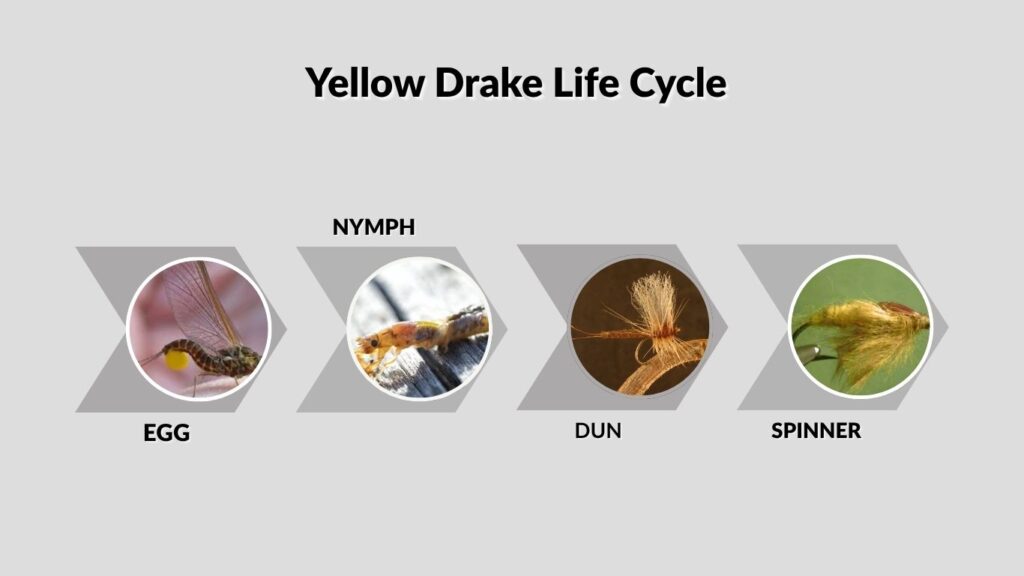
The Yellow Drake passes through egg, nymph, dun, and spinner stages. Most of its life is spent underwater.
Egg and nymph stages
After mating, females deposit their eggs on the water. The eggs sink into suitable bottom habitat and eventually hatch.
Young nymphs burrow into the sediment, where they feed and molt repeatedly. Depending on local conditions, the aquatic stage may continue for a year or longer.
Dun stage
When ready to emerge, the mature nymph leaves its burrow and swims toward the surface. The nymphal skin splits, releasing a winged subadult known as a dun or subimago.
The dun rests on the surface while its wings expand. Because Yellow Drakes are large and sometimes slow to leave the water, this stage can be especially vulnerable to feeding trout.
Spinner stage
The dun flies to nearby vegetation and molts into a sexually mature spinner. Adults form mating swarms, usually near the river or lake.
Females then return to deposit eggs. Spent adults fall onto the surface with their wings extended horizontally. Trout may feed selectively on these low-floating spinners while ignoring upright duns.
Yellow Drake Mayfly Hatch
The Yellow Drake usually emerges after the main Green and Brown Drake hatches. Its emergence may be less concentrated but can last much longer.
When do Yellow Drakes hatch?
Yellow Drakes generally begin appearing during early or midsummer. Initial activity may overlap with the end of Brown or Green Drake hatches.
Sporadic emergence can continue for several weeks or, under suitable conditions, two months. Hatch timing depends on latitude, elevation, water temperature, streamflow, weather, and the development of the local population.
What time does the hatch occur?
Most activity occurs during late afternoon, evening, or dusk. Overcast skies may encourage earlier emergence, while hot sunny weather can delay it until the light fades.
The spinner fall often occurs around dusk or after dark. Duns and spinners may appear simultaneously, so anglers should examine the insects on the water before selecting a pattern.
Signs of a Yellow Drake hatch
- Mature nymphs with dark wing pads
- Large nymphs moving through shallow water
- Empty nymphal skins near the shoreline
- Pale yellow duns riding the surface
- Evening swarms above vegetation
- Trout making slow, deliberate rises
- Spent adults lying flat on the water
Yellow Drake Mayfly Matches
Anglers should carry nymph, emerger, dun, cripple, and spinner patterns. A single upright dry fly will not represent every stage trout may encounter.
Best matching patterns
| Stage | Recommended pattern |
| Nymph | Yellow Drake Nymph or Marabou Drake Nymph |
| Emerger | Yellow Drake Emerger or Soft-Hackle Drake |
| Dun | Yellow Drake Comparadun or Parachute Drake |
| Cripple | Burnt-Wing Yellow Drake or Drake Cripple |
| Spinner | Spent-Wing Yellow Drake |
A hook around size 10–12 with a longer shank commonly matches the natural insect. However, local specimens should determine the final size.
Color selection
Effective combinations include pale yellow, cream, tan, brown, and light olive. Use grey, smoky, or lightly mottled material for the wings.
Exact color is less important than creating the correct body length, wing height, tails, and surface profile. Trout often respond first to size and silhouette.
How to Tie a Yellow Drake Mayfly
A parachute or Comparadun pattern provides visibility and a natural low-riding profile. An extended body can reproduce the mayfly’s long abdomen without requiring an excessively large hook.
Materials
- Hook: Size 10–12, long-shank dry-fly hook
- Thread: Pale yellow or tan
- Tail: Three cream or brown fibers
- Abdomen: Pale yellow dubbing or foam
- Rib: Fine brown thread
- Wing: Grey synthetic fiber, CDC, or deer hair
- Thorax: Tan or yellow-brown dubbing
- Hackle: Ginger, brown, or mixed grizzly
Tying steps
Form a slender yellow abdomen with three separated tails. Add a fine brown rib to reproduce the segmented markings. Secure an upright grey wing and build a slightly thicker thorax behind the hook eye.
Wrap enough hackle to support the fly without creating excessive bulk. Apply a small amount of floatant before fishing, concentrating it on the hackle and wing rather than saturating the entire body.
Burnt-Wing Yellow Drake
The Burnt-Wing Yellow Drake uses dark or mottled upright wings to imitate a dun, emerger, or cripple whose wings have not fully opened.
Its uneven profile can be more effective than a perfectly proportioned dry fly when trout concentrate on vulnerable insects struggling in the surface film.
Fishing the Yellow Drake Hatch
Successful fishing depends on identifying where the natural insects are within the water column.
Before emergence
Fish a weighted nymph near sandy or silty bottom areas. As evening approaches, switch to a lighter nymph or emerger and allow it to rise toward the surface near the end of the drift.
During the hatch
Use an emerger or cripple when trout create bulges without clearly breaking the surface. Change to a Comparadun, parachute, or fan-wing pattern when fish begin taking upright duns.
During the spinner fall
Select a spent-wing pattern when adults lie flat on the surface. Use a drag-free presentation and a pattern with a visible wing or post, particularly when fishing in fading evening light.
FAQs
These answers address common questions about Yellow Drake identification, Latin names, hatch timing, and fly selection.
What is the Yellow Drake mayfly’s Latin name?
The eastern North American Yellow Drake is generally Ephemera varia. However, the regional name may also describe Siphlonurus occidentalis in western areas or simply refer to a yellow-colored fishing pattern. Location and insect structure are essential for accurate identification.
Do Yellow Drake mayflies bite?
No. Adult Yellow Drakes do not bite or sting. Their mouthparts are nonfunctional, and they do not feed during their brief winged life. Aquatic nymphs are also harmless to people and use their strong front legs for constructing burrows.
When does the Yellow Drake hatch occur?
Yellow Drakes usually emerge during early to midsummer, often after Green and Brown Drake hatches. Activity commonly occurs during the evening or near dusk. Unlike some highly concentrated drake hatches, Yellow Drake emergence may continue sporadically for several weeks.
What is the best Yellow Drake fly pattern?
Use a Yellow Drake Nymph before emergence, an emerger or Burnt-Wing Drake during the transition, a Comparadun or parachute for duns, and a spent-wing spinner after mating. Match the size and surface position of the natural insect before focusing on exact color.
How can I distinguish Yellow and Brown Drake nymphs?
The nymphs look extremely similar because both are large burrowers. Brown Drakes generally mature and hatch earlier. After the Brown Drake hatch ends, remaining large nymphs with dark, developed wing pads are more likely Yellow Drakes, but microscopic examination provides greater certainty.