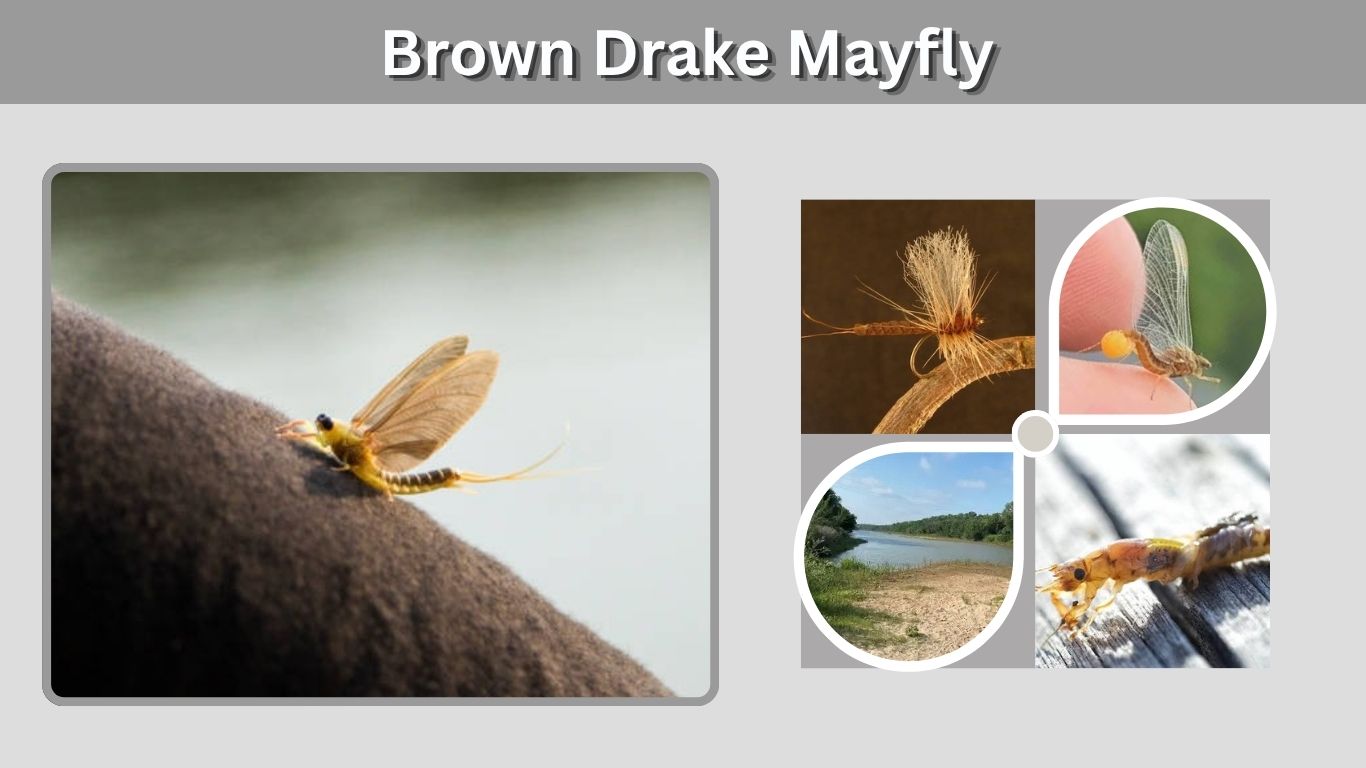
The Brown Drake mayfly is a large North American aquatic insect best known for producing brief but spectacular hatches. Usually identified as Ephemera simulans, it spends most of its life as a burrowing nymph in the sandy or silty bottoms of lakes, rivers, and slow stream sections. During late spring or early summer, mature nymphs rise to the surface and transform into winged adults. This emergence provides trout and other fish with an abundant but short-lived source of food.
Brown Drake Mayfly Quick Facts
Brown Drakes are members of the burrowing mayfly family Ephemeridae. Their large size and concentrated emergence make them important to both freshwater ecosystems and fly fishing.
Basic information
| Feature | Description |
| Common name | Brown Drake |
| Scientific name | Ephemera simulans |
| Order | Ephemeroptera |
| Family | Ephemeridae |
| Nymph type | Burrower |
| Nymph habitat | Sand, silt, mud, and fine gravel |
| Adult size | Approximately 1–1.5 inches |
| Common hook size | Usually sizes 8–12 |
| Main hatch period | Late spring to early summer |
| Common hatch time | Evening, dusk, or after dark |
| Adult lifespan | Usually only a few days |
Brown Drake Mayfly Identification
Despite its name, the Brown Drake may display tan, cream, yellowish-brown, olive, and dark brown coloration. Location and body structure are more useful than color alone.
Adult identification
- Large, elongated mayfly body
- Brown or yellowish-brown abdomen
- Dark markings along the abdomen
- Two large, upright forewings
- Two smaller hind wings
- Three long tails
- Short antennae
- Wings that appear cloudy in the dun stage
- Clearer wings in the mature spinner stage
Like other mayflies, Brown Drakes hold their wings vertically while resting. They cannot fold their wings flat over the abdomen like many caddisflies, stoneflies, and true flies.
Male vs female Brown Drake
Male Brown Drakes generally have larger eyes that help them locate females during mating flights. Their front legs may also appear longer. Females usually have fuller abdomens because they carry eggs.
These differences are easiest to observe in mature adults. Sexing a newly emerged dun or an aquatic nymph can be considerably more difficult.
Brown Drake Mayfly Nymph
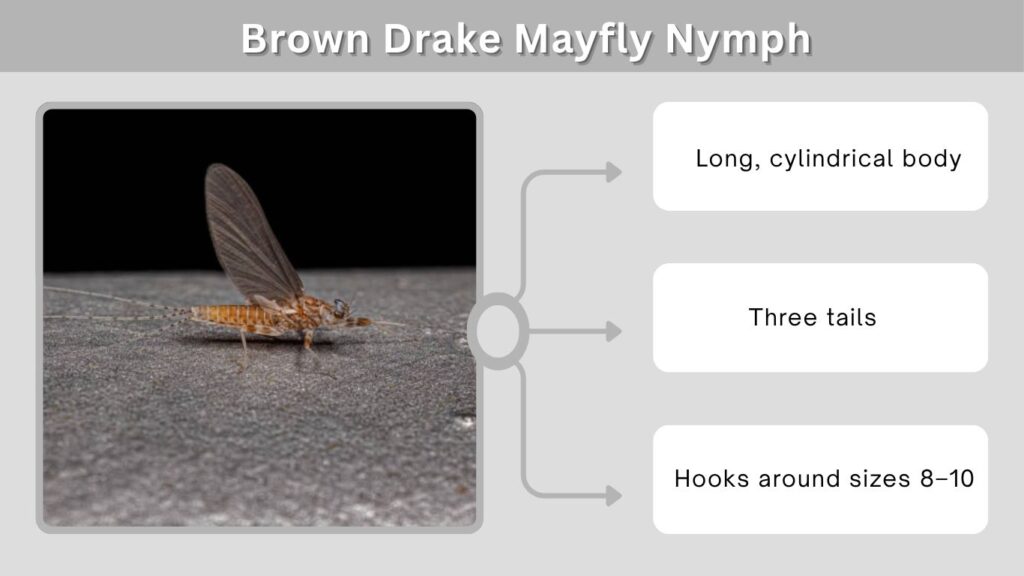
Brown Drake nymphs live almost entirely below the surface, where they construct burrows in soft bottom material.
Nymph identification
- Long, cylindrical body
- Three tails
- Pale tan, yellowish, or brown coloration
- Darker markings across the abdomen
- Large, feathery abdominal gills
- Strong front legs adapted for digging
- Prominent dark wing pads near maturity
- Body commonly imitated on hooks around sizes 8–10
The front legs help the nymph dig through sand and silt. Its feathery gills circulate oxygenated water through the burrow while also helping the insect collect fine organic food particles.
Where do the nymphs live?
Brown Drake nymphs inhabit the soft sediments of lakes, ponds, rivers, and slower stream sections. NatureServe describes Ephemera simulans as occurring in lakes, rivers, and streams where the larvae burrow into the substrate.
They are most abundant where sediment is fine enough for digging but still receives adequate oxygen. Completely compacted, polluted, or oxygen-poor mud may not support healthy populations.
What do Brown Drake nymphs eat?
Nymphs consume fine organic matter, microorganisms, algae, and decomposing plant particles. Water moving through their burrows supplies both oxygen and suspended food.
They may remain hidden for one or two years, depending on water temperature, food availability, location, and local life-cycle patterns. Because they remain underground, they are normally less available to fish until the hatch approaches.
Brown Drake Mayfly Habitat and Distribution
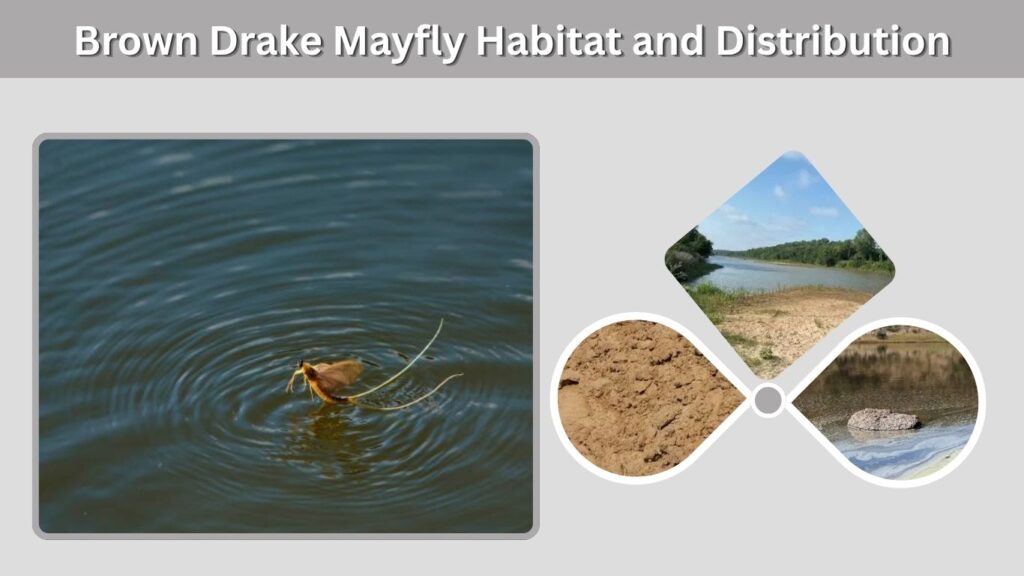
Brown Drakes occur across large areas of North America, including portions of the United States and Canada.
Preferred habitat
Suitable habitat includes:
- Sandy-bottomed trout streams
- Silty river margins
- Slow pools and backwaters
- Lakes with fine sediment
- Soft areas below faster riffles
- Gradually moving river channels
- Clean, oxygenated freshwater
These mayflies can inhabit both flowing and still water. Sediment type and water depth strongly influence where the nymphs establish burrows.
Importance to water quality
Burrowing mayflies can be sensitive to pollution, oxygen depletion, and contaminated sediment. Their presence is therefore useful when studying freshwater ecosystem health.
A USGS study of Lake Superior examined Brown Drakes and other burrowing mayflies as environmental indicators because their populations respond to sediment and water-quality conditions.
Brown Drake Mayfly Life Cycle
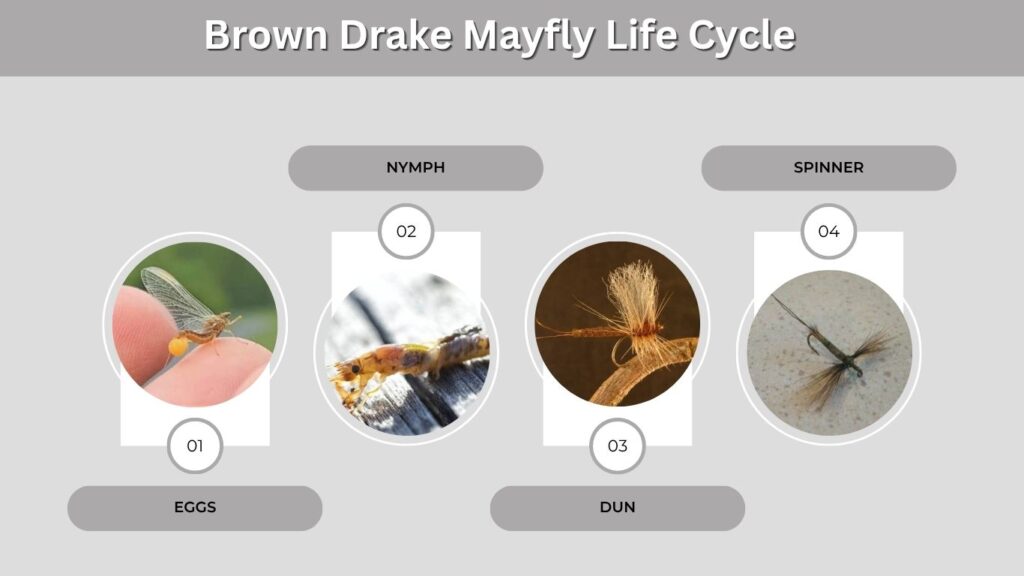
The Brown Drake passes through four main stages: egg, nymph, dun, and spinner. Mayflies are unique because the winged dun molts once more before becoming a mature adult.
Egg stage
After mating, females fly over the water and deposit their eggs. The eggs sink toward the bottom and settle within suitable sediment.
Development time varies with temperature and other environmental conditions. Once the eggs hatch, the young nymphs begin constructing small burrows.
Aquatic nymph stage
The nymph feeds and molts repeatedly as it grows. Most of its life is spent inside the stream or lake bottom. As emergence approaches, the wing pads darken and the nymph becomes more active.
Mature nymphs leave their burrows and swim toward the surface. This sudden movement makes them available to fish after a long period of relative protection.
Dun stage
At the surface, the nymphal skin splits and releases a winged subadult known as a dun or subimago. The dun has cloudy wings and must remain on the water briefly while its wings expand and become strong enough for flight.
Brown Drake duns can struggle for an extended period, especially during cool or damp weather. Fish frequently target them while they drift helplessly on the surface.
Spinner stage
The dun flies to nearby vegetation and molts into a sexually mature spinner. Its body becomes slimmer, and its wings become clearer.
Males and females gather in mating swarms, frequently around dusk. Females return to the water to lay eggs, after which the adults die. Dead or dying spinners may cover the surface during a concentrated spinner fall.
Brown Drake Mayfly Hatch
The Brown Drake hatch is famous for producing intense surface-feeding activity. However, it can be difficult to predict and may last only a few days in a particular location.
When do Brown Drakes hatch?
Brown Drakes generally emerge during late spring or early summer. In many northern streams, the main hatch occurs during June. Warmer regions may experience it earlier, while colder lakes or high-elevation waters may have later activity.
Water temperature, latitude, weather, streamflow, and sediment conditions influence the exact date. Local observation is more dependable than a general hatch calendar.
What time do they hatch?
Most Brown Drake activity occurs during the evening, around dusk, or after dark. Overcast weather may encourage an earlier emergence.
A typical sequence begins with nymphs leaving the bottom. Emergers then struggle in or just below the surface film, followed by drifting duns. Spinner falls may overlap with the emergence, requiring anglers to determine which stage the fish are eating.
Signs of an approaching hatch
- Large nymphs appearing in shallow water
- Dark wing pads on mature nymphs
- Empty nymphal skins along the shoreline
- Birds gathering over the water
- Trout feeding below the surface near dusk
- Duns resting on slow water
- Adult swarms appearing above trees or banks
Brown Drake Mayfly Patterns
Anglers should carry patterns for every life stage. Trout may ignore a dun imitation when the majority of insects are still emerging or have already become spent spinners.
Recommended patterns
| Life stage | Useful fly patterns |
| Nymph | Brown Drake Nymph, Wiggle Nymph, Marabou Nymph |
| Emerger | Brown Drake Emerger, Soft-Hackle Drake |
| Dun | Brown Drake Comparadun, Parachute Brown Drake |
| Spinner | Spent-Wing Brown Drake, Brown Drake Spinner |
| Cripple | Brown Drake Cripple or Stillborn Drake |
Natural patterns typically combine tan, brown, cream, yellow, and dark olive. Exact coloration varies among locations, so matching the insect’s size, silhouette, profile, and position in the water is especially important.
How to Tie a Brown Drake Mayfly
A simple extended-body dun provides the large silhouette of the natural insect while remaining lightweight enough to float.
Brown Drake dun materials
- Hook: Dry-fly hook, size 8–12
- Thread: Brown or tan
- Tail: Three brown or cream fibers
- Body: Tan or yellow-brown dubbing
- Rib: Fine brown thread or floss
- Wing: Grey synthetic fiber, deer hair, or CDC
- Hackle: Brown, grizzly, or mixed brown-grizzly
- Optional: Foam extended body
Tying process
Create a slender extended abdomen with three separated tails. Add dark segmentation to reproduce the natural abdominal markings. Secure an upright grey wing near the front of the hook, then form a slightly thicker thorax.
Wrap enough hackle to support the large fly without making it unnaturally bulky. Finish with a small head and apply a light coating of floatant before fishing.
Brown Drake nymph pattern
Use a curved nymph hook, weighted underbody, tan abdomen, dark segmentation, broad thorax, and soft fibers representing the feathery gills. Marabou or soft hen fibers create movement during the retrieve.
The finished nymph should look long, flexible, and slightly bulky rather than flat. Fish it close to sandy or silty bottoms before the hatch, then higher in the water as emergence begins.
How to Fish the Brown Drake Hatch
Presentation should follow the insects’ changing position in the water column.
Before the hatch
Fish a weighted nymph close to the bottom along the edges of soft currents. Short, controlled drifts can imitate a nymph leaving its burrow.
As dusk approaches, use an unweighted nymph or emerger higher in the water. Allowing the pattern to rise at the end of the drift can imitate an ascending insect.
During the emergence
Use an emerger or cripple pattern when trout produce bulges, flashes, or rises that do not fully break the surface. Switch to a Comparadun or parachute pattern when fish begin taking upright duns.
Large flies can create heavy drag. Use a longer leader, soft presentation, and reach cast to achieve a natural drift.
During the spinner fall
If trout begin making gentle, steady rises, inspect the water for adults lying flat with outstretched wings. Replace the upright dun with a low-floating spent-wing spinner.
Because the spinner fall may happen near darkness, use patterns with a visible wing post while keeping the body and wings low against the surface.
Brown Drake vs Green Drake vs Hex Mayfly
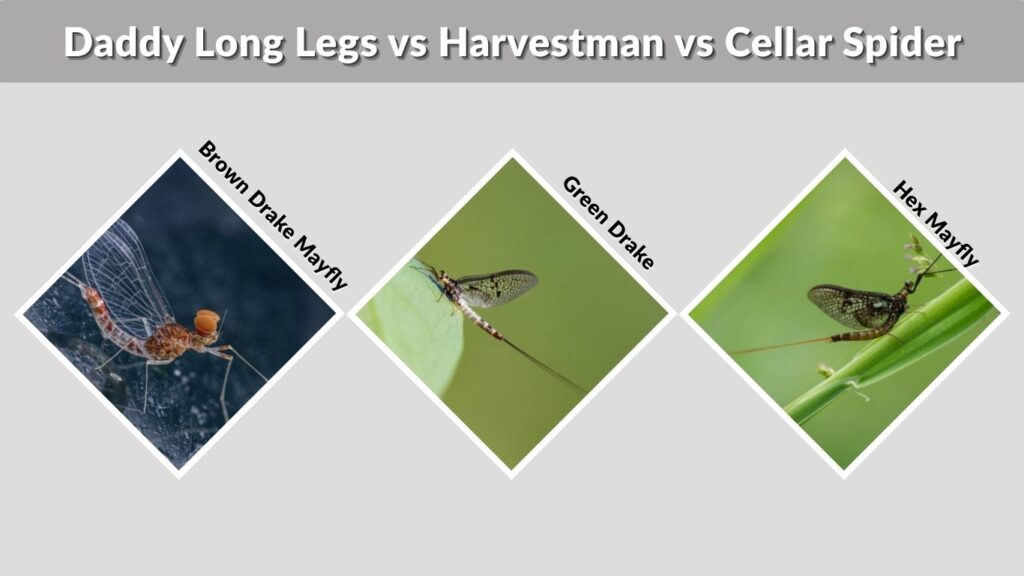
All three are large mayflies, but their species, colors, and hatch timing differ.
Key differences
| Mayfly | Typical identity | Main distinction |
| Brown Drake | Ephemera simulans | Brown-patterned burrowing mayfly |
| Eastern Green Drake | Ephemera guttulata | Larger pale body with greenish or yellow tones |
| Hex mayfly | Hexagenia species | Often more yellow and associated with major lake hatches |
Common names vary regionally, and Brown Drake can occasionally refer to another species. Examining the natural insect and consulting a local identification guide provides more accuracy than relying on color alone.
FAQs
These answers cover common questions about Brown Drake identification, hatches, and fly selection.
Do Brown Drake mayflies bite?
No. Adult Brown Drakes do not bite, sting, or attack people. Their mouthparts are nonfunctional, and they do not eat during the winged stage. Aquatic nymphs are also harmless and use their digging legs to construct burrows rather than defend themselves.
How long do Brown Drakes live?
Brown Drakes may spend one or two years underwater as nymphs, depending on location and environmental conditions. The winged dun and spinner stages usually last only a few days. Adults focus entirely on molting, mating, depositing eggs, and completing the reproductive cycle.
What is the best Brown Drake fly pattern?
The best pattern depends on the stage being eaten. Use a weighted nymph before emergence, a soft-hackle or cripple during the transition, a Comparadun for floating duns, and a spent-wing spinner when adults return to lay eggs and die.
When is the Brown Drake hatch?
The hatch generally occurs during late spring or early summer, frequently in June across northern regions. Most activity happens around dusk or after dark. Exact dates vary by latitude, elevation, water temperature, streamflow, weather, and the development of the local nymph population.
Why is my Brown Drake dry fly sinking?
Large Drake patterns absorb water easily. Dry the fly thoroughly, apply a small amount of floatant, and remove slime after catching a fish. A lighter hook, foam body, buoyant wing material, balanced hackle, and drag-free presentation will also improve flotation.