
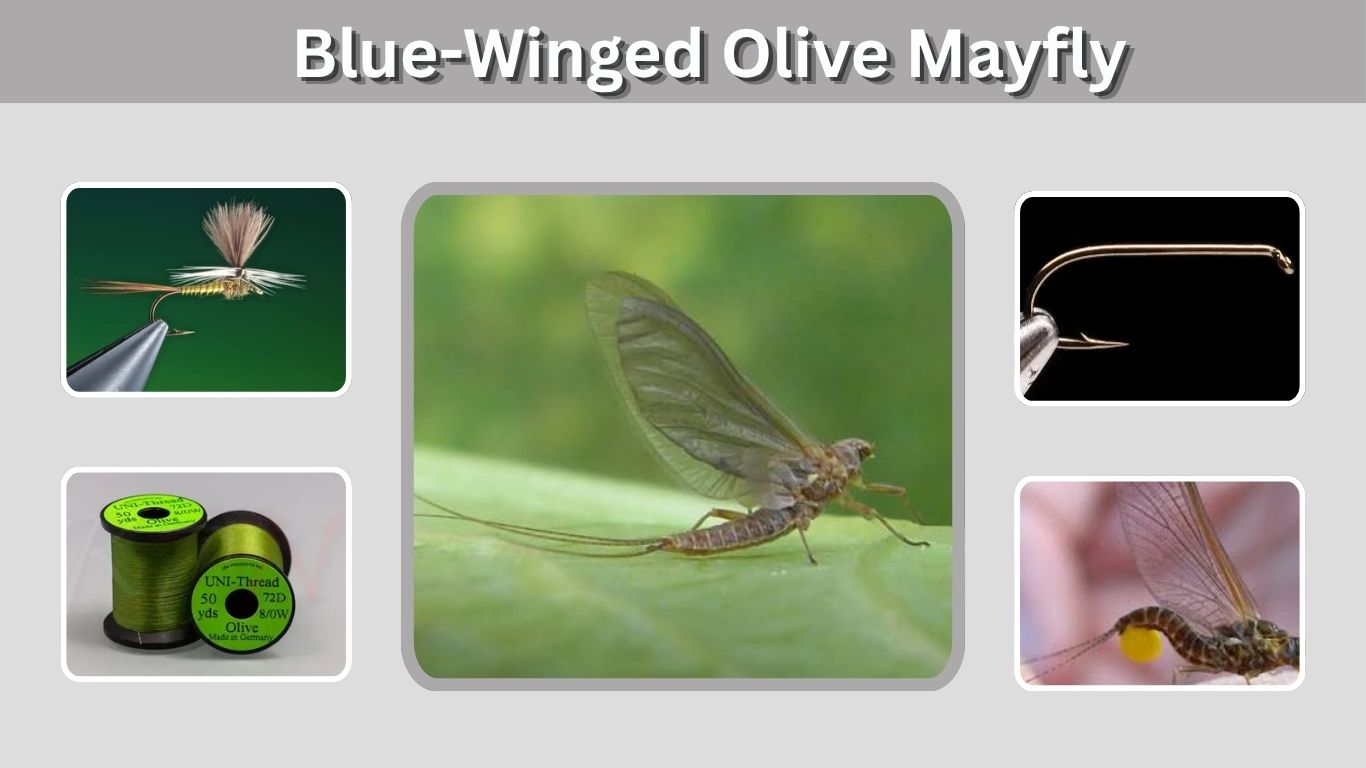
The Blue-Winged Olive mayfly, commonly abbreviated as BWO, is one of the most important aquatic insects for trout anglers. Rather than identifying a single species, the name describes several small olive-bodied mayflies with blue-grey wings. In North America, most BWOs belong to the family Baetidae, especially the genus Baetis. Their small size, widespread distribution, and repeated spring and autumn hatches make Blue-Winged Olives a dependable food source for trout throughout much of the year.
Blue-Winged Olive Quick Facts
Blue-Winged Olives can be difficult to identify precisely because numerous related species are grouped under the same angling name.
Basic information
| Feature | Description |
| Common name | Blue-Winged Olive or BWO |
| Main North American genus | Baetis |
| Family | Baetidae |
| Order | Ephemeroptera |
| Nymph type | Swimmer |
| Adult body | Olive, brown-olive, or grey-olive |
| Dun wings | Blue-grey, slate, or smoky |
| Common hook sizes | Approximately 16–24 |
| Main hatch seasons | Spring and autumn |
| Favorable weather | Cool, cloudy, humid, or rainy |
| Adult lifespan | Usually one or two days |
Is Blue-Winged Olive One Species?
The Blue-Winged Olive is an angling category covering numerous small mayflies with similar colors, life cycles, and fishing characteristics.
North American Blue-Winged Olives
Most North American anglers associate BWOs with species in the genus Baetis. Other genera within Baetidae may also receive the same name, including Acentrella, Diphetor, and related groups.
A few mayflies outside Baetidae are occasionally called BWOs when they produce olive-bodied duns with grey-blue wings. Therefore, a photograph or adult color alone may not provide a precise scientific identification.
British Blue-Winged Olive
In Britain and parts of Europe, “Blue-Winged Olive” traditionally refers to Serratella ignita. It belongs to the family Ephemerellidae rather than Baetidae.
The European insect and North American BWOs share similar fishing names and general colors but differ in taxonomy, body structure, and nymph behavior.
What is a Little Blue-Winged Olive?
Little Blue-Winged Olive usually describes the smallest BWO species, commonly represented on hooks from sizes 20–26. These tiny mayflies may belong to Baetis, Acentrella, or other closely related genera.
They often emerge in cool weather when few larger aquatic insects are active. Trout may feed selectively on them despite their extremely small size.
Blue-Winged Olive Identification
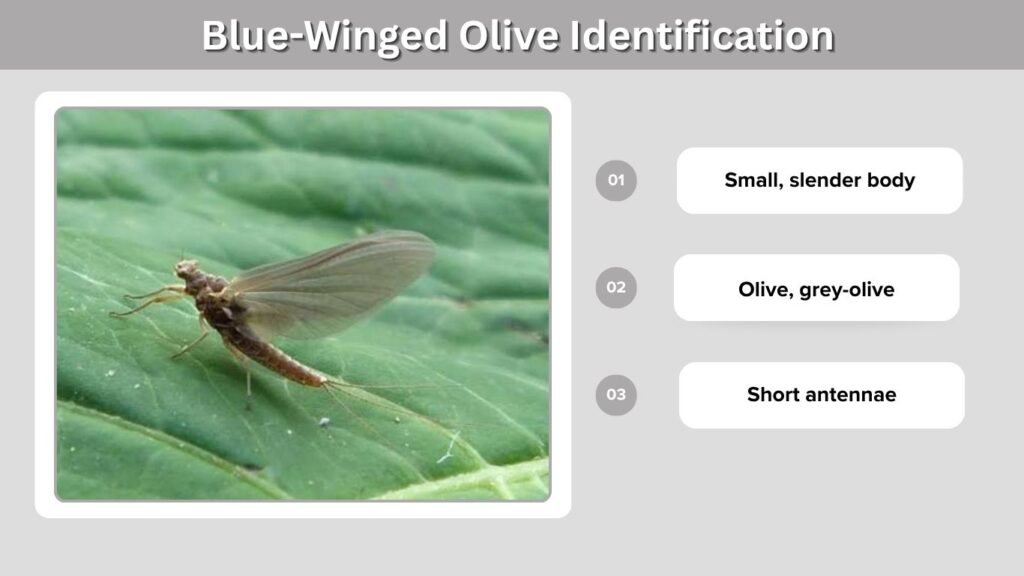
Body color varies from pale olive to dark brownish-olive. The blue in the name refers to the slate or blue-grey appearance of the dun’s wings rather than a bright blue body.
Adult identification
- Small, slender body
- Olive, grey-olive, or brown-olive abdomen
- Two upright forewings
- Very small or absent hind wings in some species
- Blue-grey or smoky wings during the dun stage
- Two or three thin tails
- Short antennae
- Large eyes, particularly in males
- Wings held vertically while resting
Newly emerged duns have dull, cloudy wings covered with microscopic hairs. Mature spinners have clearer, more transparent wings and may develop rusty-brown or darker bodies.
Dun vs spinner
| Feature | BWO Dun | BWO Spinner |
| Life stage | Sexually immature winged stage | Mature reproductive adult |
| Wings | Cloudy blue-grey or slate | Clear and transparent |
| Body | Olive or brown-olive | Frequently darker or rusty |
| Position | Upright on the surface | Wings spread flat when spent |
| Best imitation | BWO Dun or Sparkle Dun | Rusty or BWO Spinner |
Blue-Winged Olive Nymph
BWO nymphs are streamlined swimmers that live around rocks, gravel, vegetation, submerged wood, and other structures.
Nymph identification
- Slender, tapered body
- Olive, brown, or dark grey coloration
- Long antennae
- Plate-like gills along the abdomen
- Two or three tails, depending on the species
- Dark wing pads near maturity
- Legs positioned for swimming and crawling
- Quick movement in short bursts
Unlike burrowing Drake nymphs, BWO nymphs remain relatively exposed. They frequently move between rocks and vegetation or become dislodged into the current, making them available to trout throughout the year.
Where do BWO nymphs live?
Blue-Winged Olive nymphs occupy many freshwater environments, including:
- Cold trout streams
- Medium and large rivers
- Spring creeks
- Rocky riffles
- Gravel runs
- Submerged aquatic vegetation
- Tailwaters
- Slow margins near faster currents
Some species tolerate environmental changes better than highly sensitive mayflies. However, water temperature, oxygen, pollution, and substrate still influence their distribution.
What do the nymphs eat?
BWO nymphs feed primarily on algae, diatoms, microorganisms, and fine organic material collected from rocks, plants, and the stream bottom.
While feeding or moving, nymphs may enter the current and drift downstream. Trout recognize this behavior and regularly consume them even when no visible hatch is occurring.
Blue-Winged Olive Life Cycle
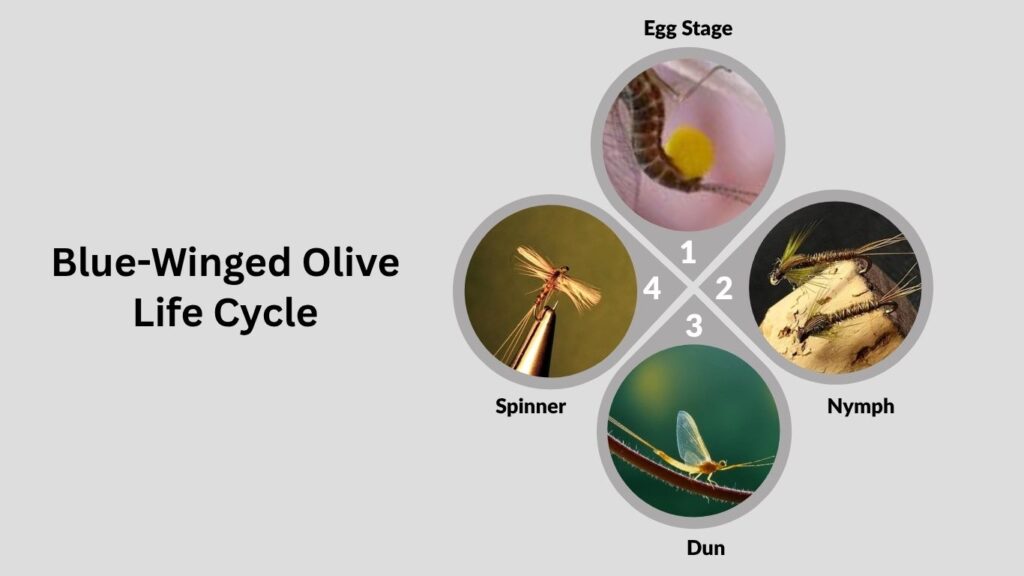
Blue-Winged Olives pass through egg, nymph, dun, and spinner stages. Some species produce multiple generations within one year, creating repeated hatches.
Egg stage
After mating, female spinners return to the water and deposit their eggs. Depending on the species, a female may touch the water repeatedly, crawl beneath the surface, or release eggs while flying above it.
The eggs attach to rocks, plants, wood, or other submerged surfaces. Development time depends mainly on species and water temperature.
Nymph stage
After hatching, the nymph feeds and molts repeatedly. Most of the insect’s life is spent underwater.
As maturity approaches, the wing pads darken, the body becomes fully developed, and the nymph moves into areas suitable for emergence. Increased drifting activity can produce excellent subsurface feeding before the duns appear.
Dun stage
The mature nymph rises through the water and breaks through the surface film. Its skin splits, releasing the winged dun or subimago.
The dun must remain on the surface while its wings expand and dry. Cool, damp weather can slow this process, leaving the insect exposed to trout for longer periods.
Spinner stage
After leaving the water, the dun molts into a sexually mature spinner. Adults gather in mating swarms, after which females return to lay their eggs.
Spent spinners fall onto the water with their transparent wings spread flat. Their low profile can make them difficult for anglers to see, even when trout feed heavily upon them.
Blue-Winged Olive Hatch
BWO hatches are especially valuable because they occur during cool periods when relatively few other mayflies emerge.
When do BWOs hatch?
Major hatches generally occur in spring and autumn, but local species may emerge during winter or summer. Tailwaters with stable temperatures can produce BWO activity during much of the year.
Hatch timing differs among rivers. Water temperature, weather, latitude, elevation, streamflow, and local species determine when emergence begins.
Best weather for a BWO hatch
Cool, cloudy, humid, rainy, or lightly snowy weather often creates the strongest surface activity. Low light encourages nymph movement, while humidity prevents dun wings from drying quickly.
On bright, warm days, duns may leave the surface rapidly. Trout may still feed, but the most productive activity could remain beneath the surface.
What time do BWOs hatch?
BWO emergence commonly occurs from late morning through afternoon. During cold weather, the warmest part of the day may produce the greatest activity.
Autumn hatches sometimes begin around midday, while spring timing can vary with daily temperature. Anglers should watch the water rather than relying on one exact clock time.
Blue-Winged Olive Mayfly Patterns
A complete BWO fly selection should represent the nymph, emerger, dun, cripple, and spinner stages.
Recommended matches
| Stage | Effective patterns |
| Nymph | Pheasant Tail, Juju Baetis, WD-40 |
| Emerger | RS2, Barr’s Emerger, CDC BWO Emerger |
| Dun | Parachute BWO, BWO Comparadun |
| Cripple | BWO Sparkle Dun or Foam-Post Emerger |
| Spinner | Rusty Spinner or BWO Spent-Wing Spinner |
Carry several sizes between 16 and 24. Little BWOs may require size 24 or 26 patterns, while larger spring insects can sometimes be matched with size 14 or 16 flies.
Selecting the correct color
Useful body colors include olive, dark olive, grey-olive, brown-olive, and rusty brown. Wings are commonly represented with blue-dun, medium-dun, or grey material.
Size, silhouette, and position in the water are generally more important than selecting an exact olive shade. Examine natural insects from the water’s surface rather than relying only on a hatch chart.
How to Tie a Blue-Winged Olive Pattern
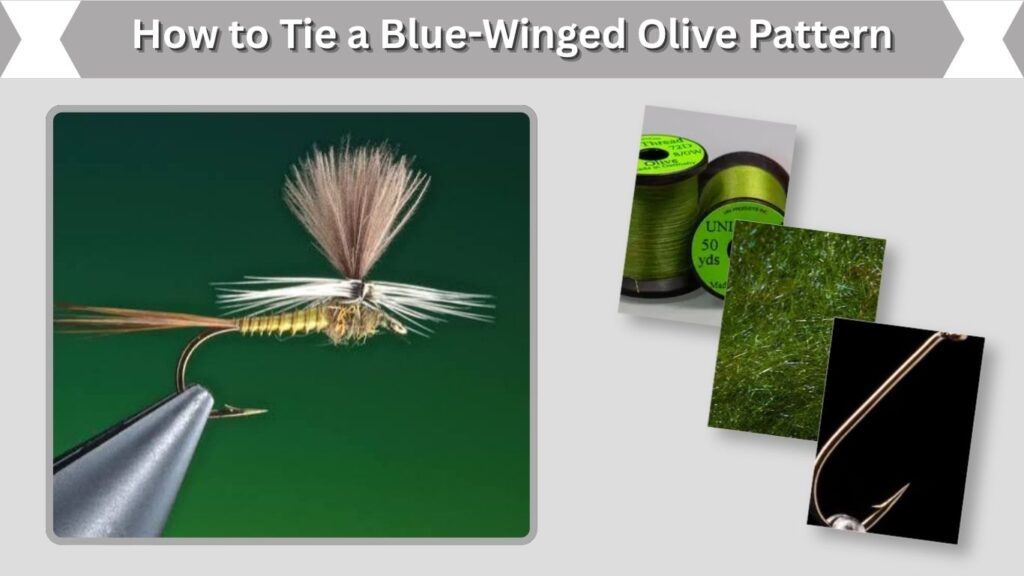
A parachute BWO is visible, stable, and suitable for moderate currents. A Comparadun or Sparkle Dun rides lower and may work better on smooth water.
Materials
- Hook: Standard dry-fly hook, size 16–24
- Thread: Olive or brown
- Tail: Two or three blue-dun fibers
- Abdomen: Fine olive dubbing
- Rib: Optional fine brown thread
- Wing post: Grey synthetic fiber or calf body hair
- Thorax: Dark olive or brown dubbing
- Hackle: Blue dun
Tying process
Attach two or three fine tail fibers and build a slender, tapered olive abdomen. Avoid excessive dubbing because the natural insect has a narrow body.
Secure the wing post, form a slightly thicker thorax, and wrap blue-dun hackle horizontally around the post. Finish with a small head. The completed pattern should rest low while the wing remains visible above the surface.
Tying a Little BWO
For hooks smaller than size 20, reduce materials rather than simply shortening a standard pattern. Use fewer tail fibers, a thinner thread, sparse dubbing, and one small wing.
An oversized wing or excessive hackle can make a tiny fly look unnatural and cause leader twisting.
How to Fish a BWO Hatch
The correct method depends on whether trout are eating drifting nymphs, ascending emergers, upright duns, or spent spinners.
Before the hatch
Fish a small Pheasant Tail, WD-40, or Juju Baetis close to the bottom. Focus on riffle edges, seams, gravel runs, and slower water below faster currents.
As the hatch approaches, raise the nymph higher in the water column. A small emerger behind a heavier nymph can cover both depths.
During emergence
Use an RS2, Barr’s Emerger, or CDC emerger when trout create bulges or flashes without showing their mouths. These rise forms usually indicate subsurface feeding.
Switch to a Parachute BWO, Comparadun, or Sparkle Dun when fish begin taking insects directly from the surface.
During a spinner fall
Look for gentle rises and clear-winged adults lying flat on the water. Use a small Rusty Spinner or spent-wing BWO with a drag-free presentation.
Fine tippet and a longer leader can improve presentation, but they should remain strong enough to land fish quickly and safely.
Blue-Winged Olive vs Other Small Mayflies
BWOs are commonly confused with Pale Morning Duns, Sulphurs, and other small olive mayflies.
Key differences
| Mayfly group | Typical body | Typical wings | Common season |
| Blue-Winged Olive | Olive to brown-olive | Slate or blue-grey | Spring and autumn |
| Pale Morning Dun | Pale yellow or cream | Light grey | Late spring and summer |
| Sulphur | Yellow to orange | Pale grey | Spring and early summer |
| Trico | Dark or pale body | Clear wings | Summer and early autumn |
Color is variable, so hook size, timing, tail number, wing structure, and local distribution should also be considered.
FAQs
These answers address common questions about BWO identification, life cycle, hatch timing, and fly patterns.
What does BWO mean in fly fishing?
BWO means Blue-Winged Olive. It is an angling term covering several small olive-bodied mayflies with slate or blue-grey wings. In North America, many belong to the family Baetidae, particularly the genus Baetis, rather than one individual species.
How big is a Blue-Winged Olive mayfly?
Most BWOs are small and commonly matched with hooks from sizes 16–24. Little Blue-Winged Olives may require size 24 or 26 flies. Natural size varies by species, season, and location, so anglers should examine insects present on the water.
When is the best BWO hatch?
The strongest BWO hatches commonly occur during spring and autumn on cool, cloudy, or rainy days. Activity often develops from late morning through afternoon. However, stable tailwaters and regions with several BWO species may produce hatches during almost any season.
What is the best Blue-Winged Olive fly pattern?
No single pattern matches every stage. A Pheasant Tail or Juju Baetis represents the nymph, an RS2 or Barr’s Emerger covers emergence, a Parachute BWO imitates the dun, and a Rusty Spinner matches spent adults after mating.
Do Blue-Winged Olive mayflies bite?
No. Adult BWOs do not bite or sting people, and their mouthparts are nonfunctional. They live only long enough to mature, mate, and deposit eggs. Their aquatic nymphs are also harmless and feed primarily on algae and fine organic material.
