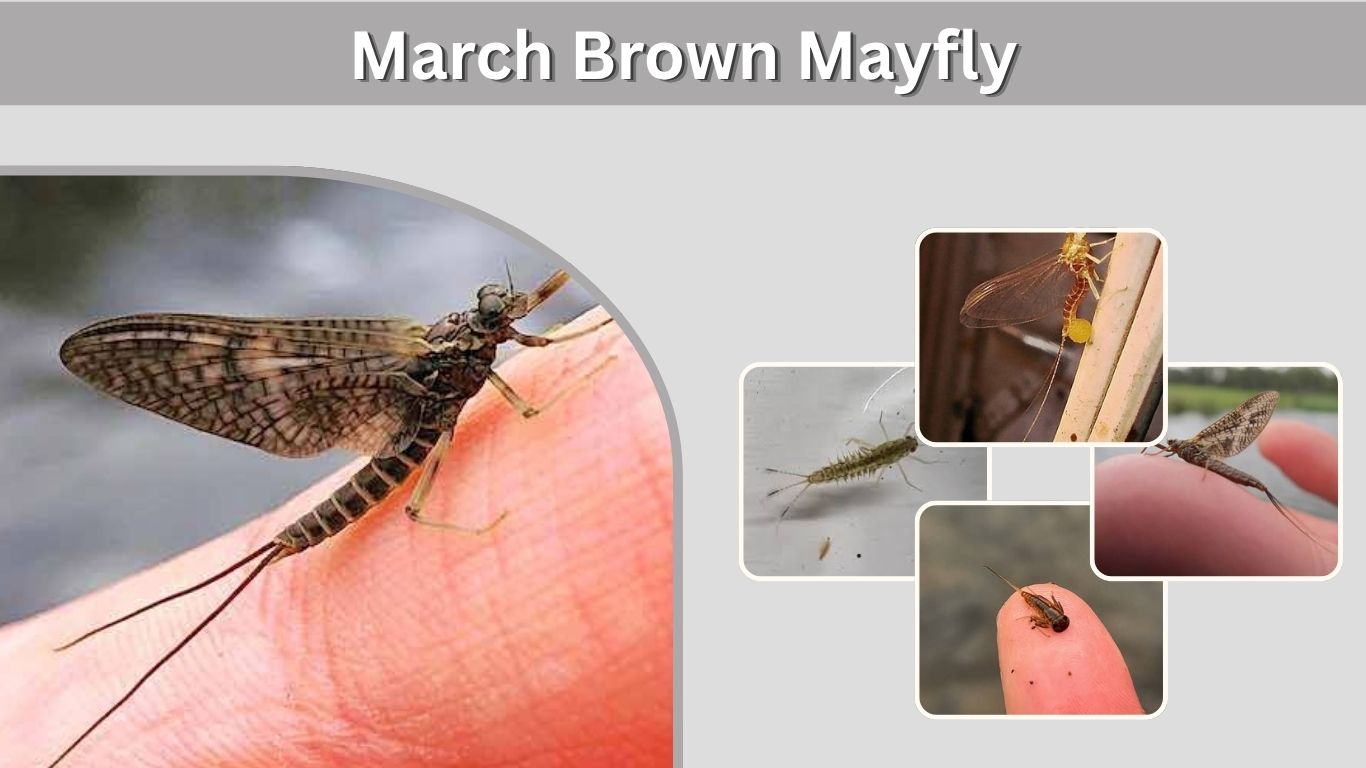
The March brown mayfly is a large, brown-toned aquatic insect best known for producing an important seasonal trout hatch. Anglers value it because its nymphs, emerging duns, and adult spinners provide substantial meals for fish.
However, “March brown” is a common fishing name rather than one universal species. In eastern North America, it usually refers to Maccaffertium vicarium. In western North America, the name commonly describes Rhithrogena morrisoni. Their appearance and behavior are similar, but their geographic ranges and emergence periods differ.
March Brown Mayfly Quick Facts
| Feature | Eastern March brown | Western March brown |
| Scientific name | Maccaffertium vicarium | Rhithrogena morrisoni |
| Former eastern name | Stenonema vicarium | Not applicable |
| Family | Heptageniidae | Heptageniidae |
| Main range | Eastern and Midwestern North America | Western North America |
| Typical hatch period | Mainly spring to early summer | Late winter to early spring |
| Nymph type | Flat-bodied clinger | Flat-bodied clinger |
| Common fly sizes | Approximately 10–14 | Approximately 12–16 |
The exact size and hatch date vary with location, stream temperature, elevation, and weather.
What Is a March Brown Mayfly?
March browns are members of the mayfly order Ephemeroptera and the flat-headed mayfly family Heptageniidae. Like other mayflies, they spend most of their lives underwater as nymphs and only a brief period as winged adults.
The common name can cause confusion. The Eastern March brown is generally Maccaffertium vicarium, although older fishing books often call it Stenonema vicarium. The Western March brown is commonly Rhithrogena morrisoni. Britain and parts of Europe use the same common name for other mayflies, particularly Rhithrogena germanica.
March Brown Mayfly Identification
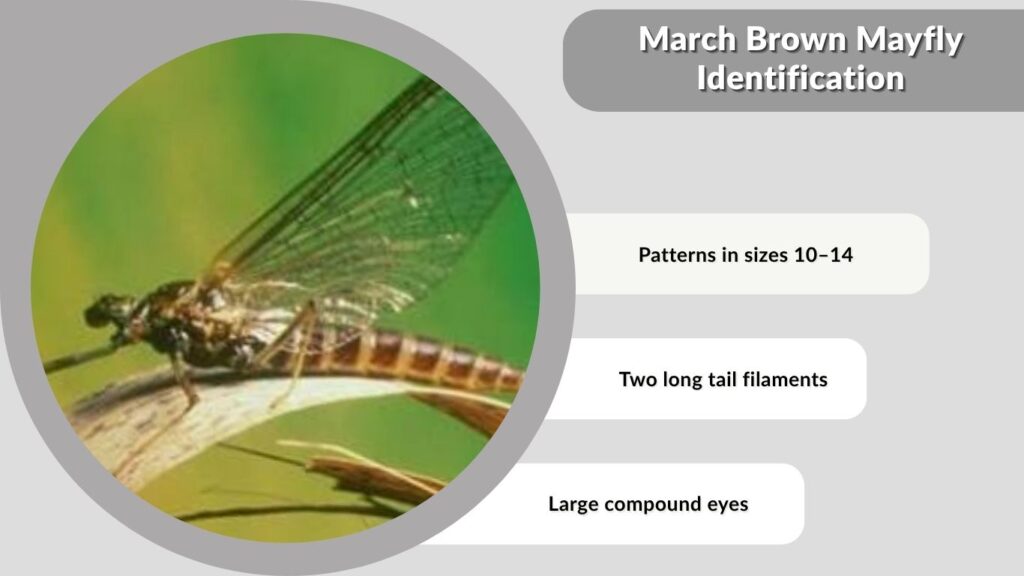
March browns are relatively large mayflies with earthy colors that help them blend into rocks and stream-bottom debris.
Adult Identification
Adult March browns usually have mottled wings held upright above the body while resting. Their bodies range from tan and reddish brown to dark chocolate brown.
Common identification characteristics include:
- A body generally matched by fly patterns in sizes 10–14
- Brown, tan, or reddish abdominal coloration
- Dark bands or markings across the abdomen
- Broad, transparent wings with brown mottling
- Two long tail filaments
- Large compound eyes
- Long front legs, especially on males
The newly emerged adult is called a dun or subimago. Duns usually have duller bodies and cloudy, heavily patterned wings. After molting again, they become mature spinners with shinier bodies and clearer wings.
March Brown Mayfly Size
The Eastern March brown is considered a large mayfly by trout-stream standards. Anglers commonly imitate it with hooks in sizes 10 or 12, although smaller size 14 patterns may be useful where the natural insects are smaller.
Western March browns are often slightly smaller and may be represented with sizes 12–16. Local insects should always guide the final pattern size because water temperature and regional conditions can affect their growth.
March Brown Mayfly Nymph
The March brown nymph is a flat-bodied clinger adapted to living in flowing water. Its wide head, flattened body, and strong legs allow it to hold onto rocks where currents would carry away less specialized insects.
Nymph Identification
A March brown nymph generally has:
- A broad, flattened head
- A wide brown or amber body
- Dark bands or spots along the abdomen
- Strong legs extending to the sides
- Plate-like gills along the abdomen
- Two long tails
- A length commonly imitated with size 10–14 hooks
The nymph’s shape reduces resistance from moving water. It can press against stones and crawl through cracks while feeding and avoiding predators.
Habitat and Diet
March brown nymphs generally inhabit clean, well-oxygenated rivers and streams. They are especially associated with rocky riffles, runs, and moderately fast currents.
They graze on algae, diatoms, and decomposing organic material attached to underwater surfaces. They may also consume tiny pieces of plant material carried by the current.
The presence of mayfly nymphs often suggests reasonably good water quality because many species are sensitive to severe pollution and low oxygen.
Eastern March Brown Mayfly
The Eastern March brown, Maccaffertium vicarium, occurs across parts of eastern and central North America. It is one of the larger spring mayflies encountered by trout anglers.
Despite its name, it usually does not hatch during March across much of its range. In many eastern waters, emergence occurs from May into June. Southern populations may emerge earlier, while populations in northern or colder streams may appear later.
Eastern March browns frequently emerge sporadically rather than producing one extremely concentrated hatch. Individual insects may appear from midmorning through the afternoon over several weeks, giving trout repeated opportunities to feed.
Western March Brown Mayfly
The Western March brown, Rhithrogena morrisoni, is an important early-season mayfly in western North America. It typically lives in cool streams with rocky bottoms and strong currents.
Western March browns can begin emerging during late winter or early spring, sometimes while the water remains cold. Their hatch may overlap with small blue-winged olive mayflies. Mottled brown wings and an early emergence period help distinguish the duns from several later species.
Hatch dates differ considerably by elevation and climate. Lower rivers may produce March browns early in the season, while colder mountain waters may not see them until later.
March Brown Life Cycle
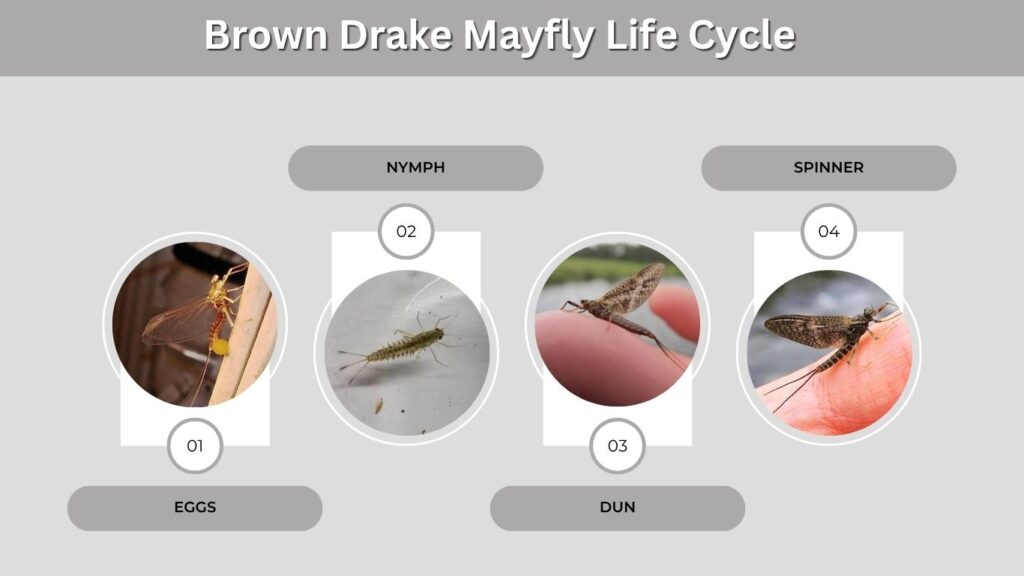
The March brown progresses through four important stages: egg, nymph, dun, and spinner.
Egg Stage
After mating, female spinners deposit their eggs on or in the water. The eggs sink and settle among stones and gravel.
Nymph Stage
The aquatic nymph stage accounts for most of the insect’s life. Nymphs grow through repeated molts while living beneath and between rocks.
As emergence approaches, mature nymphs become darker and more active. They leave protected locations and move toward areas where they can reach the surface.
Dun Stage
The nymph rises through the water and breaks through its outer skin. A winged dun emerges and floats briefly while its wings become functional.
This is a dangerous stage because the insect is exposed and cannot immediately fly. Trout often feed heavily on nymphs, emergers, and struggling duns.
Spinner Stage
The dun flies to nearby vegetation and molts one final time into a sexually mature spinner. Adult mayflies do not have functional feeding mouthparts and live only long enough to mate and reproduce.
After mating, spent spinners fall onto the water with their wings spread flat. Trout may feed selectively on these motionless adults.
March Brown Mayfly Fly Patterns
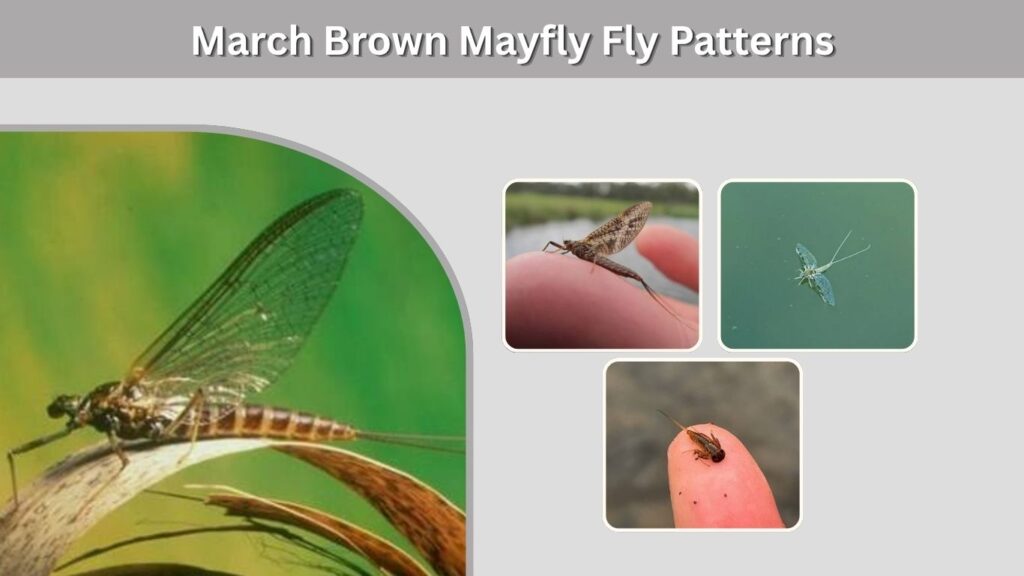
Anglers use different artificial flies to imitate each stage of the March brown hatch.
March Brown Nymph Pattern
A March brown nymph pattern should have a broad profile and brown, amber, or dark-olive coloration. Popular choices include:
- March Brown Nymph
- Hare’s Ear Nymph
- Pheasant Tail Nymph
- Dark stone-style nymph
- Soft-hackle nymph
- Weighted clinger nymph
Sizes 10–14 generally cover Eastern March browns, while sizes 12–16 may suit many Western March browns.
Fish the nymph close to the rocky bottom before the hatch. As emergence approaches, allow the fly to rise naturally through the water column.
March Brown Emerger Pattern
Emerger patterns represent insects trapped within or escaping from their nymphal skins. Useful designs have a trailing shuck, curved body, and partially developed wing.
A size 10 March brown emerger is often used for the large Eastern species. Brown, tan, amber, and gray materials create a convincing profile.
March Brown Dun Pattern
A March brown dun is a dry fly with an upright wing and brown body. Common styles include:
- Traditional March Brown dry fly
- Comparadun
- Parachute March Brown
- CDC March Brown
- Sparkle Dun
- Hair-wing dun
A high-floating dry fly works well in broken riffles, while a low-riding Comparadun or CDC pattern may be better on smooth water.
March Brown Spinner Pattern
Spinner patterns imitate mature adults returning to the stream to lay eggs. They should have clear or lightly mottled wings extending flat from each side.
Fish spinner patterns during calm mornings or evenings when adults gather over the water. A low-floating rusty-brown spinner can be effective when trout ignore upright duns.
How to Fish a March Brown Hatch
Begin with a weighted nymph before visible surface activity starts. Focus on riffles, seams, pocket water, and the lower ends of fast runs.
When trout begin feeding just below the surface, change to an emerger or unweighted nymph. Once upright duns become visible, use a dry fly that matches the natural insect’s size and general color.
March brown hatches may be scattered, so trout do not always rise continuously. Watch for individual fish feeding near current seams, behind rocks, or along slower margins.
FAQs
Do March brown mayflies hatch in March?
Western March browns may emerge during March or even earlier in mild areas. Eastern March browns commonly hatch later, often from May through June. The timing depends on geography, elevation, weather, and water temperature.
What is the Latin name of the March brown mayfly?
The Eastern March brown is Maccaffertium vicarium, formerly called Stenonema vicarium. The Western March brown is Rhithrogena morrisoni. In Europe, “March brown” may refer to Rhithrogena germanica.
How many tails does a March brown mayfly have?
March brown nymphs and adults normally have two long tail filaments. This feature can help separate them from mayfly groups that commonly have three tails.
Are March brown mayflies harmful?
No. March brown mayflies do not bite, sting, transmit diseases, or damage homes. They are harmless aquatic insects and an important food source for trout and other wildlife.
What is the best March brown fly pattern?
The best pattern depends on the life stage being eaten. Use a brown nymph before the hatch, an emerger as insects rise, a Comparadun or parachute pattern for duns, and a low-floating spinner after mating flights.