
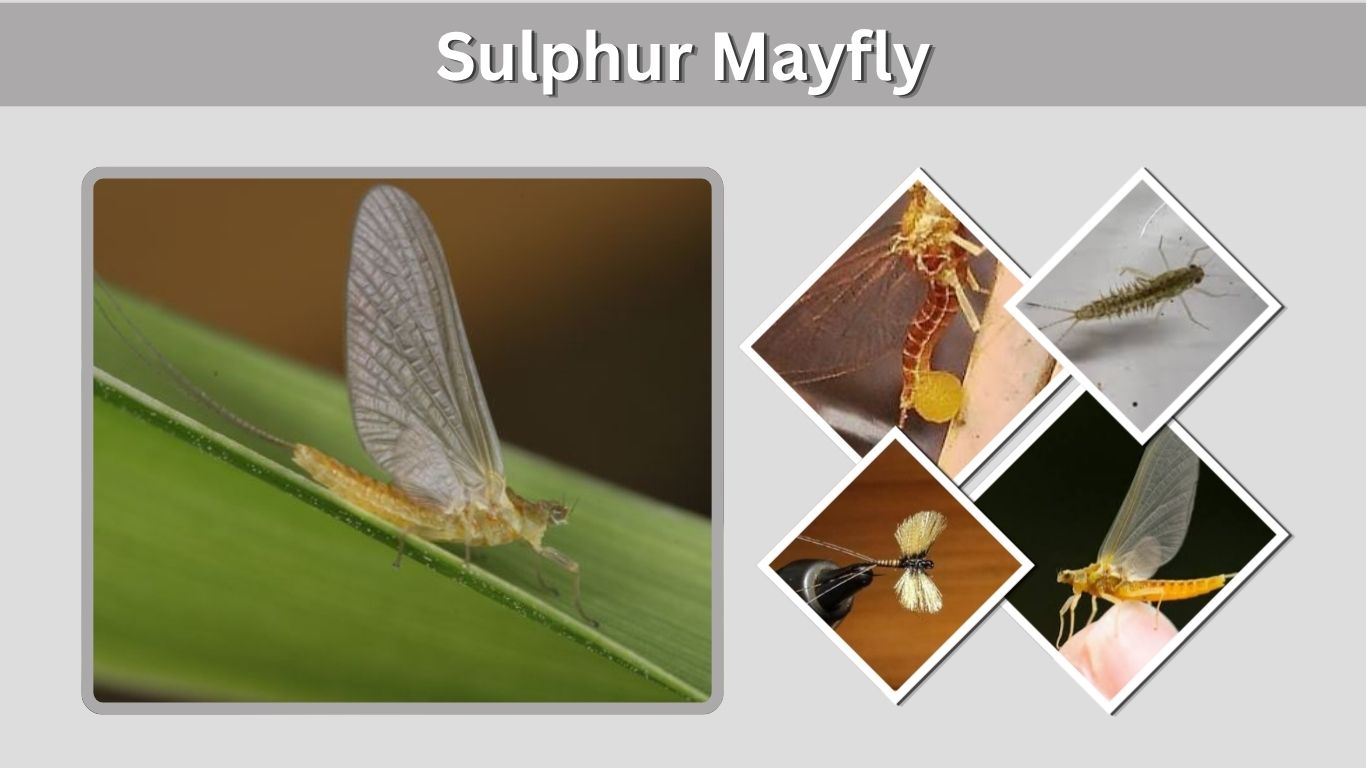
The sulphur mayfly is a small yellow-orange mayfly known for producing some of the most exciting spring and early-summer trout hatches in eastern North America. During a strong hatch, hundreds of pale insects may rise from a stream as trout feed on nymphs, emergers, duns, and spent adults.
“Sulphur mayfly” is a fishing name rather than the name of one species. It usually refers to Ephemerella invaria and the smaller Ephemerella dorothea, although similar mayflies may receive the same name in different regions. Both belong to the family Ephemerellidae, commonly known as spiny crawler mayflies.
Sulphur Mayfly Quick Facts
| Feature | Description |
| Common name | Sulphur or sulfur mayfly |
| Main species | Ephemerella invaria and Ephemerella dorothea |
| Family | Ephemerellidae |
| Adult color | Pale yellow, cream, orange, or yellow-green |
| Nymph type | Spiny crawler |
| Common fly sizes | Approximately 14–20 |
| Main habitat | Cool, clean rivers and streams |
| Typical hatch | Late spring through early summer |
| Main life stages | Egg, nymph, dun, and spinner |
Exact size, color, and emergence timing depend on the species, location, weather, and water temperature.
What Is a Sulphur Mayfly?
Sulphurs are delicate mayflies with pale yellow or orange bodies. The common name comes from their sulfur-yellow coloration rather than any connection to the chemical element.
The two species most often associated with the eastern sulphur hatch are:
- Ephemerella invaria: The larger and generally earlier sulphur
- Ephemerella dorothea: A smaller species that often emerges later
Ephemerella invaria is widely recognized as the main Eastern sulphur. E. dorothea is also a valid species and frequently contributes to later, smaller hatches.
Anglers sometimes use “little sulphur” for E. dorothea. Local names can overlap, so examining the natural insects is more reliable than depending entirely on a hatch chart.
Sulphur Mayfly Identification
Sulphurs can be confused with pale morning duns, light Cahills, yellow sallies, and several other light-colored aquatic insects.
Adult Identification
A newly emerged sulphur mayfly is called a dun. Typical characteristics include:
- Pale yellow, cream, or orange abdomen
- Upright wings while resting
- Cloudy gray, cream, or pale-yellow wings
- Two or three slender tail filaments
- Six delicate legs
- Large eyes, especially on males
- Body commonly matched with hooks from size 14 to 20
Female E. invaria duns may have particularly pale yellow bodies. One documented female measured about eight millimeters long, although size varies among individuals and populations.
Sulphur Dun vs Spinner
The dun is the first winged stage. Its wings generally appear cloudy or slightly opaque, and its body may look dull yellow or orange.
After leaving the water, the dun molts into a sexually mature spinner. Spinners usually have clearer wings, longer tails, and shinier bodies. After mating and egg-laying, they may fall flat on the water as spent spinners.
Sulphur Mayfly Nymph
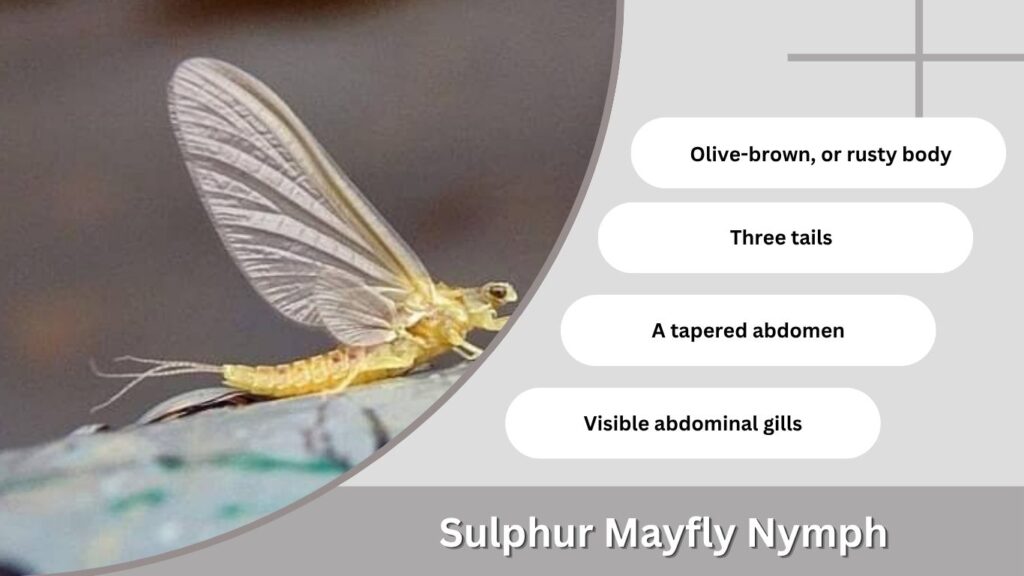
Sulphur nymphs live underwater for most of their lives. They belong to the spiny crawler group and have relatively sturdy bodies adapted for crawling across gravel, stones, plants, and organic debris.
Nymph Identification
A sulphur mayfly nymph usually has:
- A brown, olive-brown, or rusty body
- Three tails
- A tapered abdomen
- Strong legs extending from the sides
- Visible abdominal gills
- Small spines or projections along parts of the body
- Dark markings or bands on the abdomen and legs
Spiny crawler nymphs are generally poor swimmers. Instead of moving continuously through open water, they usually cling to plants, stones, and other underwater surfaces.
Nymph Habitat and Diet
Sulphur nymphs commonly occupy riffles, runs, and other areas with flowing, oxygenated water. Gravel, small rocks, aquatic vegetation, and submerged debris provide feeding and hiding places.
They consume small particles of decaying vegetation, algae, biofilm, and other organic material. Their sensitivity to severe changes in water chemistry also makes mayflies useful organisms in stream-quality assessments.
Sulphur Mayfly Life Cycle
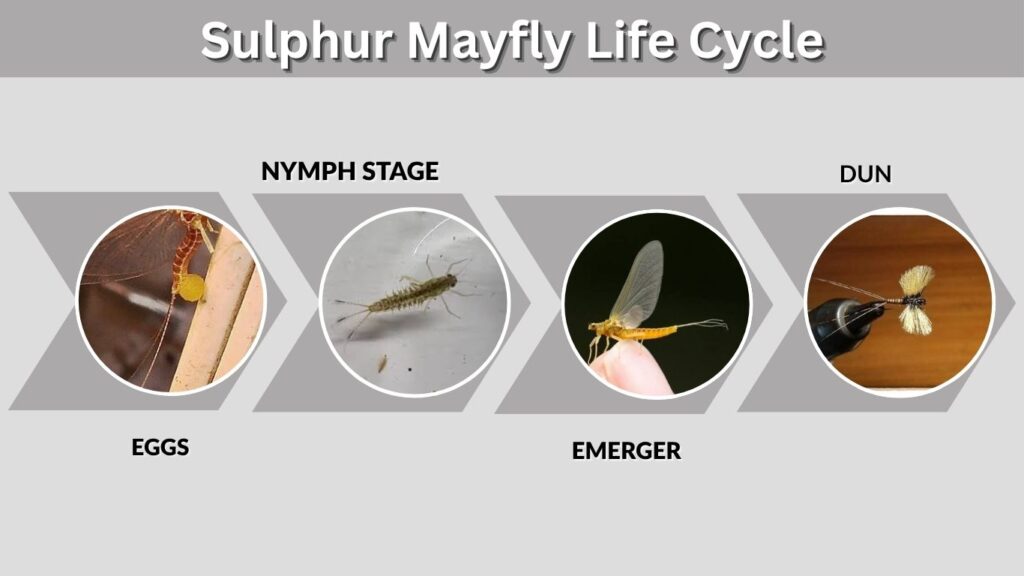
Sulphurs pass through egg, nymph, dun, and spinner stages. They do not have a pupal stage.
Egg Stage
After mating, females return to the stream and release their eggs. The eggs sink and settle among gravel, vegetation, and bottom debris.
Nymph Stage
The eggs hatch into aquatic nymphs. The nymphs feed and grow through repeated molts while remaining underwater.
As the hatch approaches, mature nymphs become more active. They leave protected areas and move into currents, where trout often feed on them before any adult insects appear.
Emerger and Dun Stages
A mature nymph rises toward the surface and begins breaking free from its nymphal skin. During this transition, it is known as an emerger.
The insect then becomes a winged but sexually immature dun, also called a subimago. Mayflies are unusual because they have this extra winged stage before becoming fully mature adults.
Spinner Stage
The dun flies to nearby vegetation and molts one final time into a spinner. Male and female spinners gather above or near the stream to mate.
Females return to deposit eggs, after which many adults fall onto the water. Trout may feed heavily on spent spinners because they remain motionless and cannot escape.
When Do Sulphur Mayflies Hatch?
Sulphur hatches generally occur from late spring into early summer, although regional differences can be considerable.
In Pennsylvania, E. invaria may begin emerging in early May. Hatches often peak later in May or early June in the Catskills and may occur around mid-June in colder northern areas.
The smaller E. dorothea often appears after E. invaria and can extend sulphur fishing into summer. Hatches commonly begin in the afternoon or evening, especially as the season advances.
Cloudy, humid weather may produce a longer hatch because newly emerged insects take more time to dry their wings. Hot, bright conditions can shorten surface activity.
Sulphur Mayfly Fly Patterns
A successful sulphur fly does not need to copy every anatomical detail. Size, profile, color, and position in the water are usually more important.
Sulphur Nymph Patterns
Before visible surface activity, anglers commonly use:
- Pheasant Tail Nymph
- Hare’s Ear Nymph
- Sulphur Nymph
- Ephemerella Nymph
- Bead-head Pheasant Tail
- Soft-hackle Pheasant Tail
Brown or olive nymphs in sizes 14–18 generally provide useful imitations. Patterns should be fished near the bottom through riffles and current seams.
Sulphur Emerger Patterns
Trout sometimes focus on insects trapped just beneath the surface rather than fully emerged duns. Effective options include:
- Sulphur CDC Emerger
- Sparkle Emerger
- Soft-hackle Sulphur
- Floating Nymph
- Klinkhamer-style Emerger
- Comparadun Emerger
A trailing shuck helps imitate the nymphal skin being left behind.
Sulphur Dun Patterns
Common dry-fly choices include:
- Sulphur Comparadun
- Parachute Sulphur
- CDC Sulphur Dun
- Sulphur Sparkle Dun
- Traditional Sulphur Dry Fly
- Light Cahill
Larger E. invaria may be matched with sizes 14–16, while smaller E. dorothea may require sizes 16–20. Carrying several sizes is useful because both species can emerge from the same stream. Sulphur patterns are commonly recommended across approximately sizes 14–18, with local variation.
Sulphur Spinner Patterns
Use a low-floating spinner when mature adults return to the water. Pale yellow, orange, or rusty bodies with outstretched clear wings create a convincing silhouette.
Spinner falls often occur near dusk, although weather and local conditions influence the timing.
Sulphur Mayfly vs Caddisfly
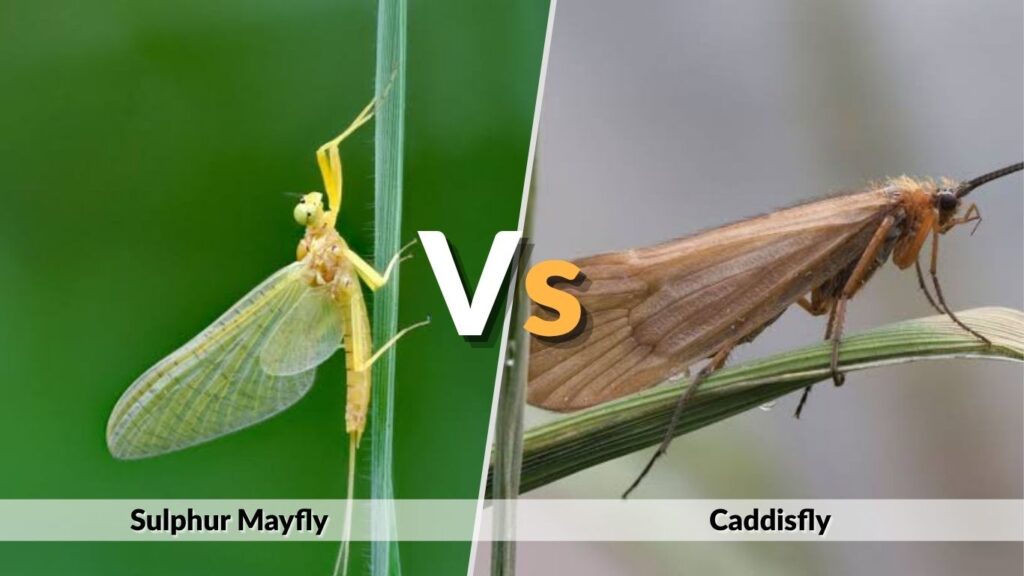
Sulphur mayflies and caddisflies are different insects.
A sulphur dun normally rests with its wings held upright, while an adult caddisfly folds its hairy wings over its body like a small roof. Mayflies also have long tails, whereas caddisflies do not.
Their underwater stages differ as well. A sulphur has a mayfly nymph with visible abdominal gills and three tails. A caddisfly has a soft-bodied larva that may build a protective case or shelter.
Are Western Sulphur Mayflies Different?
“Western sulphur” is not always a precise scientific name. Western anglers may apply it to small yellow Ephemerella species or to insects also called pale morning duns.
For example, Ephemerella excrucians is a western spiny crawler mayfly, but regional fishing names vary. Matching the insects present on a particular river is more dependable than assuming all western yellow mayflies are the same species.
FAQs
What does a sulphur dun mayfly look like?
A sulphur dun usually has a pale yellow, cream, yellow-green, or orange body. Its slightly cloudy wings are held upright above the abdomen, and long tail filaments extend from the rear. Most are relatively small and delicate.
What size is a sulphur mayfly?
Sulphur fly patterns commonly range from sizes 14 to 20. Ephemerella invaria is usually the larger sulphur, while E. dorothea is generally smaller. Actual size varies among streams and geographic regions.
Where are sulphur mayflies found?
Sulphurs are best known from cool rivers and streams across eastern and central North America. Related yellow mayflies also occur in western regions, although they may belong to different species and receive different local names.
Are sulphur mayflies harmful?
No. Adult sulphur mayflies do not bite, sting, damage buildings, or spread human diseases. They are valuable members of freshwater food webs and provide food for trout, birds, bats, and other wildlife.
What is the best sulphur mayfly pattern?
A Pheasant Tail works well before the hatch, a CDC or soft-hackle emerger is useful during emergence, and a Comparadun or Parachute Sulphur imitates the dun. A flat-wing spinner is often best during the evening egg-laying period.
