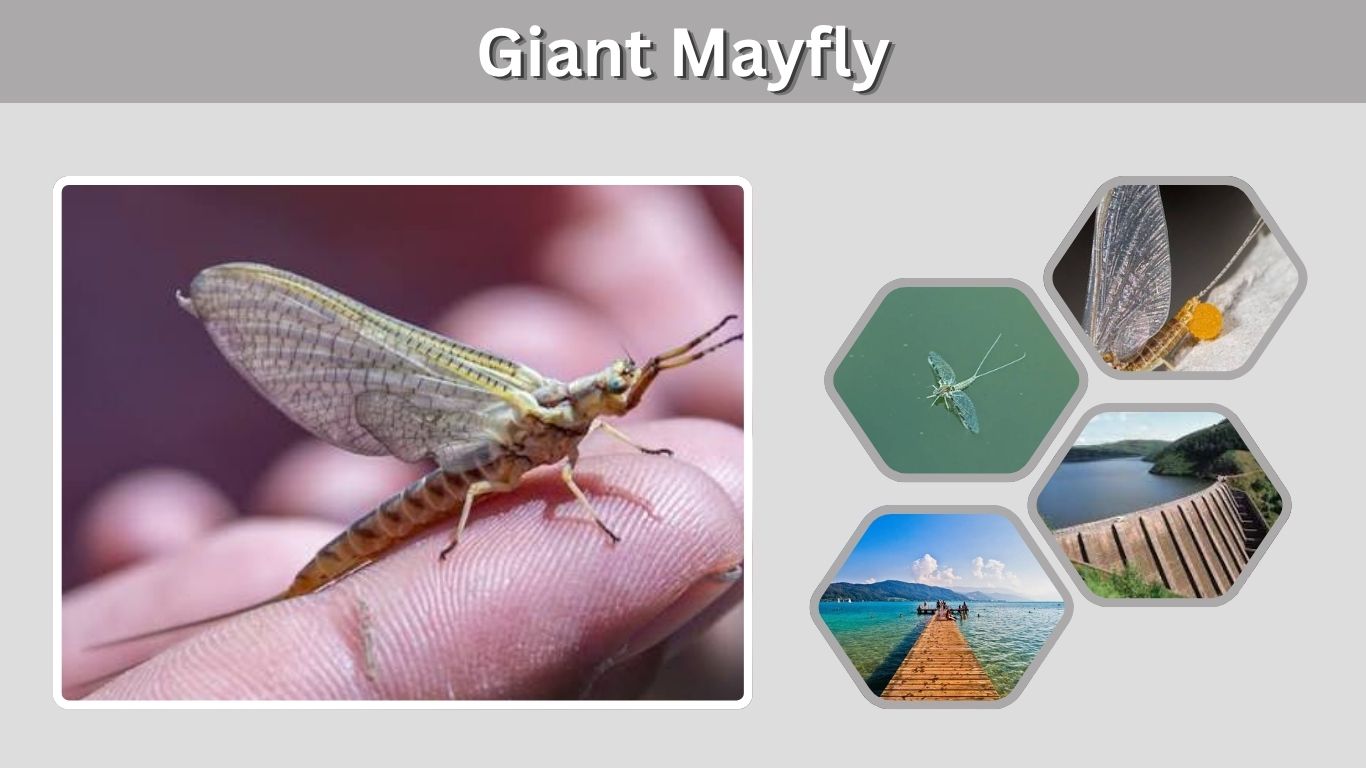
The giant mayfly is a large aquatic insect known for its delicate wings, long tails, and spectacular mass emergences. In North America, the name usually refers to the giant burrowing mayfly, Hexagenia limbata. Anglers commonly call it the “Hex,” golden mayfly, or Michigan mayfly.
The term may also describe Europe’s giant Tisza mayfly, Palingenia longicauda. Although these insects look similar, they are different species with different geographic ranges and life cycles.
Giant Mayfly Quick Facts
| Feature | North American giant mayfly |
| Scientific name | Hexagenia limbata |
| Other names | Giant burrowing mayfly, Hex, golden mayfly |
| Order | Ephemeroptera |
| Family | Ephemeridae |
| Adult body length | Up to about 1.2 inches |
| Nymph length | Up to about 1.2 inches |
| Adult lifespan | No more than about two days |
| Nymph lifespan | Approximately four months to two years |
| Habitat | Lakes, rivers, streams, and soft-bottomed freshwater |
| Diet | Organic particles during the nymph stage |
| Danger to humans | Harmless; does not bite or sting |
What Is a Giant Mayfly?
The North American giant mayfly, Hexagenia limbata, is one of the continent’s most widespread and recognizable mayflies. It belongs to a group called burrowing mayflies because its aquatic nymphs construct tunnels in sand, mud, and other soft sediments.
It spends nearly its entire life underwater. The familiar winged adult represents only the final reproductive stage and lives for a remarkably brief period.
“Giant mayfly” is not a universal name for a single insect. Several large mayflies may receive the label, including Hexagenia bilineata in North America and Palingenia longicauda in Europe.
Giant Mayfly Identification
Adult giant mayflies have slender bodies, large triangular wings, extremely long tails, and prominent compound eyes. Their overall appearance is delicate despite their comparatively large size.
Identification Features
- Yellow, golden, tan, or light-brown body
- One large pair of clear forewings
- A much smaller pair of hindwings
- Two long tail filaments as adults
- Wings held together upright above the body
- Long front legs, especially in males
- Large eyes that are more noticeable in males
- Soft body without a stinger or defensive jaws
The first winged stage, called the subimago or dun, has slightly cloudy wings covered with microscopic hairs. After another molt, it becomes a reproductive adult, or spinner, with clearer wings and longer legs and tails.
How Big Is a Giant Mayfly?
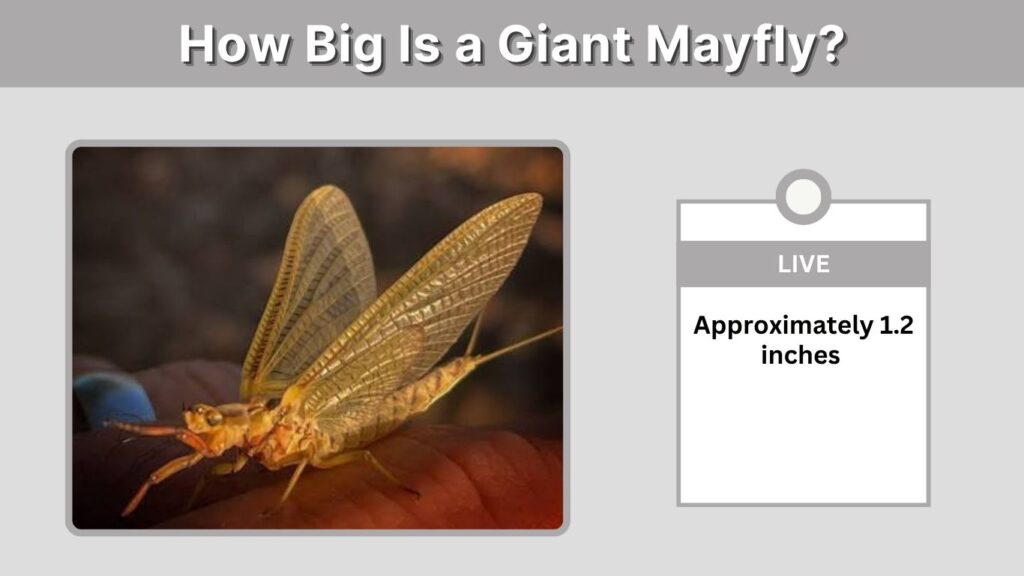
Adult Hexagenia limbata may reach approximately 1.2 inches in body length. Its two tails can add another 1.2 inches, making the insect appear much longer than its body measurement alone suggests.
Females generally have larger bodies, while males tend to have longer front legs and tails. Giant mayflies are noticeably larger than many common stream mayflies, which is why anglers use unusually large artificial flies to imitate them.
European Giant Mayfly Size
The European giant mayfly, Palingenia longicauda, is larger when its long tails are included. Its body may measure around 1.3–1.6 inches, while the complete insect can approach four inches from head to tail.
It is considered Europe’s largest mayfly and is best known for its synchronized emergence along the Tisza River and nearby waterways.
Giant Mayfly Nymph
The giant mayfly nymph, sometimes called a larva or naiad, lives underwater in a burrow. It has a long, cylindrical body that differs from the flattened appearance of mayflies living beneath fast-water rocks.
Nymph Identification
- Brown, tan, or yellowish body
- Large curved tusks near the mouth
- Three tail filaments
- Dark wing pads in mature nymphs
- Feathery gills along the abdomen
- Strong legs suitable for digging
- Body length reaching approximately one inch or more
The tusks help the nymph dig through sediment. It creates a U-shaped tunnel with two openings and moves its body and gills to circulate oxygen-rich water through the burrow.
Habitat and Diet
Giant mayfly nymphs live in the soft bottoms of freshwater lakes, large rivers, slow streams, and backwaters. Suitable habitat generally includes sand, silt, mud, or fine sediment in which the insects can burrow.
Water moving through the tunnel carries microscopic organic particles. The nymph collects and consumes this material while extracting oxygen through its gills.
Because the nymphs are sensitive to severe pollution and low oxygen, healthy populations can indicate suitable water quality. The return of Hexagenia to parts of Lake Erie followed improvements in pollution control and aquatic conditions.
Giant Mayfly Life Cycle
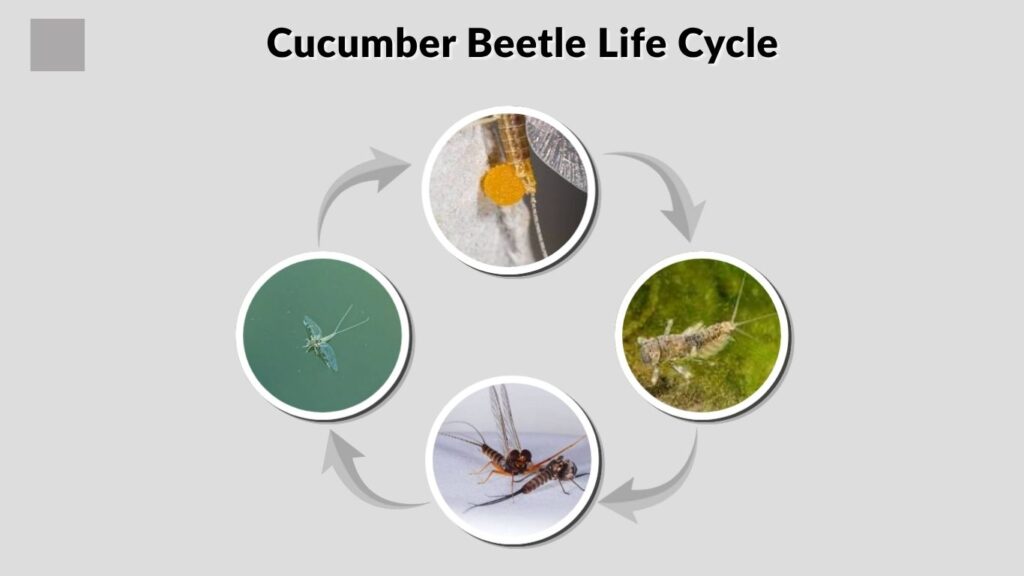
The giant mayfly passes through egg, nymph, dun, and spinner stages. It does not have a pupal stage like butterflies, beetles, or flies.
Eggs
After mating, females fly over the water and release thousands of eggs. A female Hexagenia limbata can produce an average of roughly 4,000 eggs, with some producing as many as 8,000.
The eggs sink to the bottom, where they remain among sand or sediment before hatching.
Aquatic Nymph
Newly hatched nymphs are about one millimeter long. They quickly enter the sediment and begin constructing burrows.
Depending on climate and water temperature, the nymph stage may last from approximately four months to two years. Research on a cold-water population in the St. Marys River found a two-year life cycle, with one group reaching adulthood each season.
Dun
When fully developed, the nymph leaves its burrow and swims toward the surface. Its skin splits, allowing a winged dun to emerge.
The dun usually flies toward shoreline vegetation, where it rests before completing its final molt.
Spinner
After the final molt, the insect becomes a reproductive spinner. Large groups gather in the air around sunset, where mating takes place.
Females then return to the water to deposit their eggs. Adult Hexagenia limbata cannot eat because its mouthparts are poorly developed. The entire adult stage lasts no more than about two days.
When Does the Giant Mayfly Hatch?
In northern regions, the main giant mayfly hatch usually occurs during summer. Exact timing depends on the location, water temperature, weather, and species.
Mass emergence often begins around sunset. Thousands or even millions of nymphs may rise during the same period, producing clouds of adults around rivers and lakes.
Southern populations may emerge over a longer season, while colder northern populations tend to produce more concentrated seasonal hatches. Artificial lights near bridges, roads, buildings, and waterfronts can attract enormous numbers of newly emerged adults.
Why Do Giant Mayflies Form Huge Swarms?
Synchronized emergence increases the likelihood that short-lived adults will find mates. Since they have only hours or days to reproduce, emerging together provides an important advantage.
These swarms may become large enough to appear on weather radar. Dead mayflies can accumulate on roads, creating slippery driving conditions and occasionally forcing authorities to close or clear affected areas.
Although inconvenient, large hatches are usually a positive ecological sign. They transfer nutrients from aquatic habitats to birds, bats, spiders, and other land animals while providing an abundant food source for fish.
Do Giant Mayflies Bite?
Giant mayflies do not bite or sting people. Adults lack functional feeding mouthparts and cannot consume blood, plants, clothing, wood, or stored food.
The aquatic nymph has mouthparts for collecting organic particles, but it is not adapted to attack humans. Neither life stage is venomous or poisonous.
Large swarms can still create temporary problems by reducing visibility, covering surfaces, entering buildings, and forming slippery piles near outdoor lights.
Giant Mayfly Habitat and Distribution
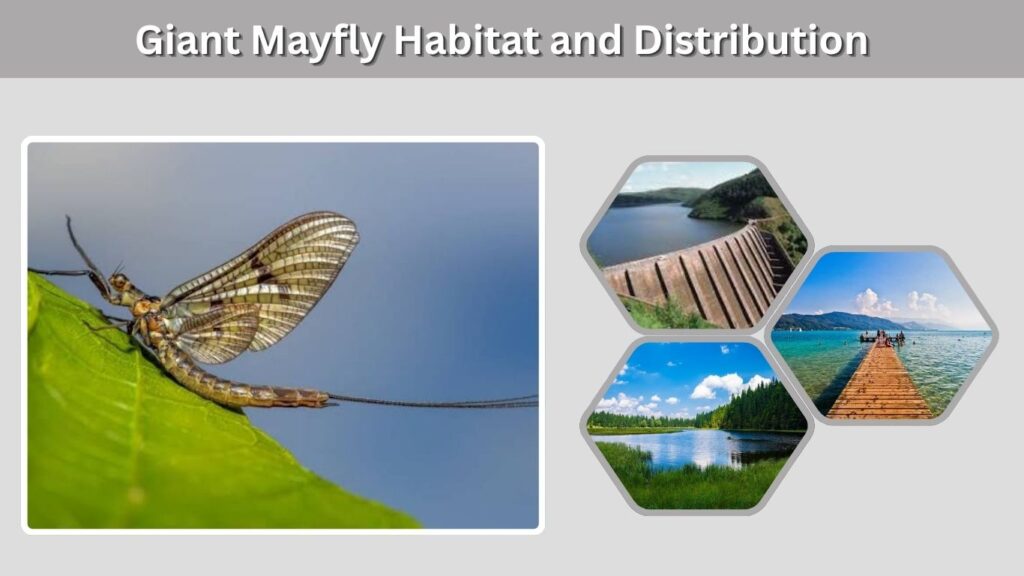
Hexagenia limbata inhabits freshwater environments across much of North America. It is associated with lakes, rivers, reservoirs, and streams containing suitable soft sediment.
The nymphs require enough dissolved oxygen to survive inside their burrows. Oxygen depletion, polluted sediment, and major changes to the lake or river bottom can cause populations to decline.
Their recovery in western Lake Erie has been closely connected with improved environmental conditions, which is why scientists frequently use burrowing mayflies to help assess freshwater health.
European and Hungarian Giant Mayfly
Europe’s best-known giant mayfly is Palingenia longicauda, commonly called the Tisza mayfly or long-tailed mayfly.
Its nymphs live in U-shaped tunnels dug into steep clay riverbanks for about three years. In early summer, large numbers emerge almost simultaneously, producing the natural event known as the “blooming of the Tisza.”
Adults survive for only a few hours, during which they mate and lay eggs. The species and its habitat have been legally protected in Hungary since 1993, although pollution and river alteration remain important concerns.
Fly Fishing During a Giant Mayfly Hatch
Giant mayflies are extremely important to freshwater fish. Trout, bass, walleye, panfish, and other species may feed heavily on the nymphs, emerging duns, and adults.
Anglers generally use different patterns throughout the hatch:
- Burrowing nymph: Fished close to soft lake or river bottoms before emergence.
- Emerger: Used when mature nymphs begin rising through the water.
- Hex dun: A large yellow or cream dry fly imitating the first winged stage.
- Spinner: Represents mature or dying adults resting on the surface.
Patterns are commonly tied on large hooks, often around sizes 6–10, although anglers should match the insects found on the specific water.
FAQs
How long does a giant mayfly live?
The complete life cycle can last several months to two years in Hexagenia limbata. Almost all of this time is spent underwater as a nymph. Once winged, the adult generally survives for no more than about two days.
Are giant mayflies dangerous?
No. Giant mayflies are harmless to humans and pets. They cannot bite, sting, inject venom, or spread known human diseases. Their greatest danger occurs when massive numbers collect on roads and create slippery driving conditions.
What is the scientific name of the giant mayfly?
In North America, giant mayfly usually refers to Hexagenia limbata. Europe’s giant Tisza mayfly is Palingenia longicauda. The common name may occasionally be applied to other exceptionally large species.
Why are giant mayflies attracted to lights?
Like many night-flying aquatic insects, adults can become disoriented by artificial lighting. Bright lights near rivers, lakes, roads, and bridges may attract thousands of individuals away from the water.
What do giant mayfly nymphs eat?
The nymphs consume tiny particles of decaying plant material and other organic matter carried through their underwater burrows. Their body and gill movements circulate water, supplying both food particles and oxygen.