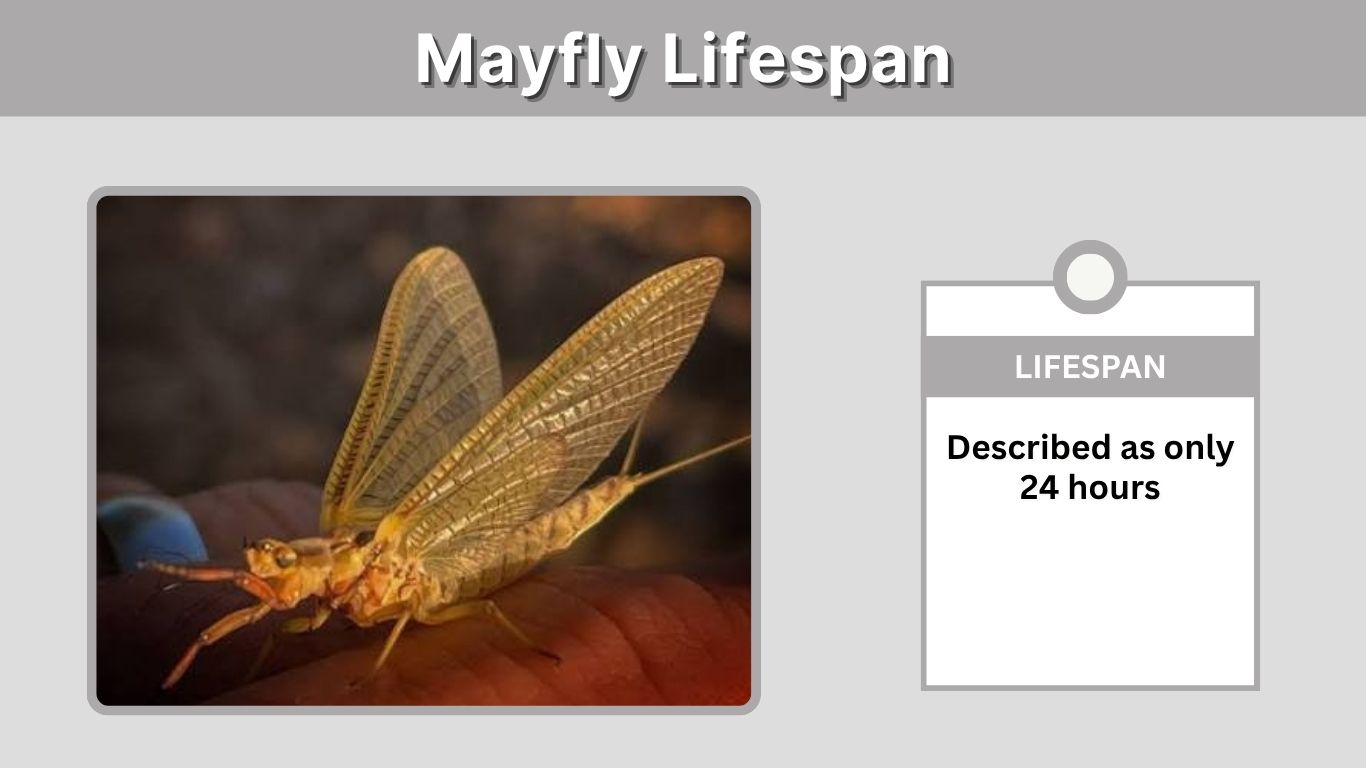
The mayfly lifespan is often described as only 24 hours, but that statement refers mainly to the insect’s final winged stage. A mayfly usually spends most of its life underwater as a developing nymph, where it may survive for several months or even years. After leaving the water, the winged adult typically lives from a few hours to a few days—just long enough to mate and lay eggs. One extraordinary species has an adult female stage lasting about five minutes, but this is an extreme exception rather than the average lifespan of every mayfly.
What Is the Average Lifespan of a Mayfly?
A mayfly’s complete lifespan may range from several weeks to multiple years, depending on its species, water temperature, habitat, and seasonal conditions. Most of that time is spent in freshwater as an aquatic nymph.
The familiar flying stage is extremely brief. Adults of many species survive for about one or two days, although some live only minutes or hours and others may remain alive for several days.
| Life stage | Approximate duration |
| Egg | Days to months |
| Aquatic nymph | Several weeks to two or more years |
| Subimago | A few minutes to about 48 hours |
| Mature adult | Minutes to several days |
| Complete lifespan | Several weeks to multiple years |
The duration cannot be reduced to one number because mayflies include thousands of species adapted to rivers, streams, lakes, ponds, and other freshwater environments.
Mayfly Life Cycle and Lifespan
Mayflies undergo incomplete metamorphosis, but their development includes an unusual extra winged stage. Their life cycle consists of the egg, aquatic nymph, subimago, and mature imago.
Egg Stage
Female mayflies usually release their eggs onto or into freshwater after mating. Some scatter eggs across the water, while others dip the tip of their abdomen into the surface or place eggs on submerged objects.
Depending on the species and environmental conditions, the eggs may hatch within days or remain dormant for months. Delayed hatching helps some mayflies survive unfavorable temperatures, drought, or seasonal changes.
Nymph Stage
The aquatic nymph stage accounts for most of a mayfly’s total lifespan. Mayfly nymphs are also called naiads and can be recognized by their abdominal gills and two or three long tail filaments.
Many species spend approximately one year underwater, but development can take only a few weeks in fast-growing species or two to four years in slower species and colder habitats. During this period, a nymph may molt between 10 and 50 times.
Nymphs live beneath stones, in vegetation, within mud, or inside burrows in sandy riverbeds. Most consume algae, microorganisms, and decaying organic material, although some species are predators.
Subimago Stage
A mature nymph rises toward the water’s surface and molts into a winged form known as a subimago. Anglers commonly call this stage a “dun.”
Mayflies are unique among living insects because this winged subimago molts one more time before becoming the sexually mature adult, or imago. The subimago may last from only a few minutes to approximately 48 hours, depending on the species.
The subimago usually has cloudy wings and a duller body than the final adult. It often rests on shoreline vegetation before completing its last molt.
Mature Adult Stage
The final adult, sometimes called a “spinner” by anglers, is primarily adapted for reproduction. Most adult mayflies have reduced or nonfunctional mouthparts and do not feed.
Males commonly gather in swarms over water or nearby landmarks. Females enter these swarms to mate and then return to the water to deposit their eggs. After completing reproduction, both sexes die.
Do Mayflies Really Live for Only 24 Hours?
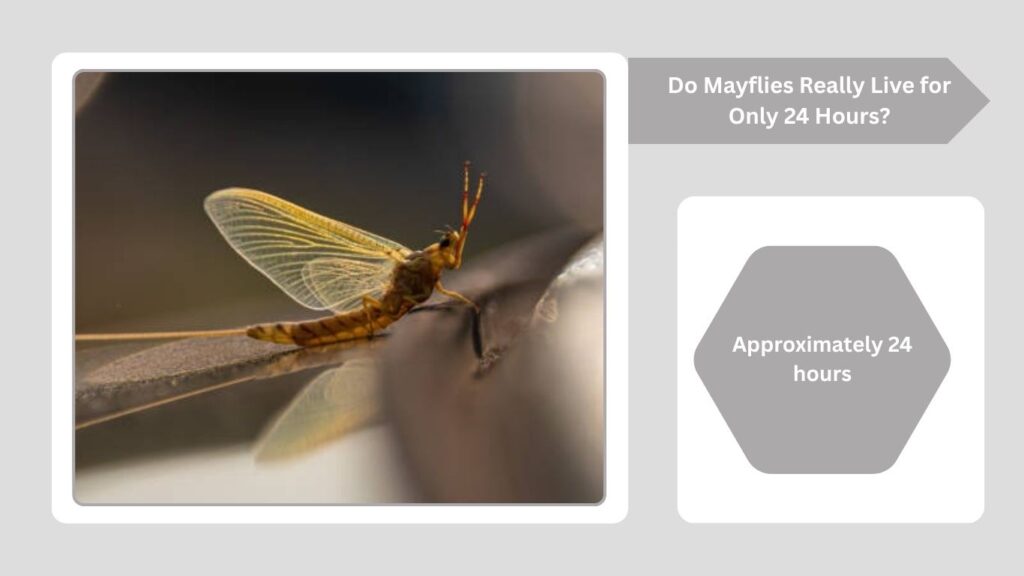
Some mayflies do live for approximately 24 hours as mature adults, but this is not a universal rule. The adult stage may last from minutes to several days.
More importantly, describing a mayfly as a “one-day insect” ignores its much longer underwater development. A mayfly that spends a year as a nymph and one day as an adult has a total lifespan of approximately one year—not just 24 hours. Mississippi State University Extension notes that most mayflies have roughly annual life cycles, with some species taking several years to reach adulthood.
The one-day description remains popular because people usually notice mayflies only when enormous groups of winged adults emerge around rivers, lakes, bridges, and lights.
Which Mayfly Lives for Only Five Minutes?
The famous “five-minute mayfly” is the female American sand-burrowing mayfly, Dolania americana. This uncommon species occurs in clean, sandy rivers in parts of the southeastern United States.
A female may remain in the subimago form and survive for up to approximately five minutes. During that brief period, a male must find and mate with her before she deposits her eggs and dies. Males can survive for around 30 minutes after reaching their final adult stage.
However, even Dolania americana does not have a total lifespan of five minutes. Its immature stage develops underwater for roughly a year before the remarkably brief reproductive stage begins.
Some dark-bodied females may disperse and survive longer than the commonly quoted five-minute form, showing that lifespan can vary even within this single species.
Adult Mayfly Lifespan
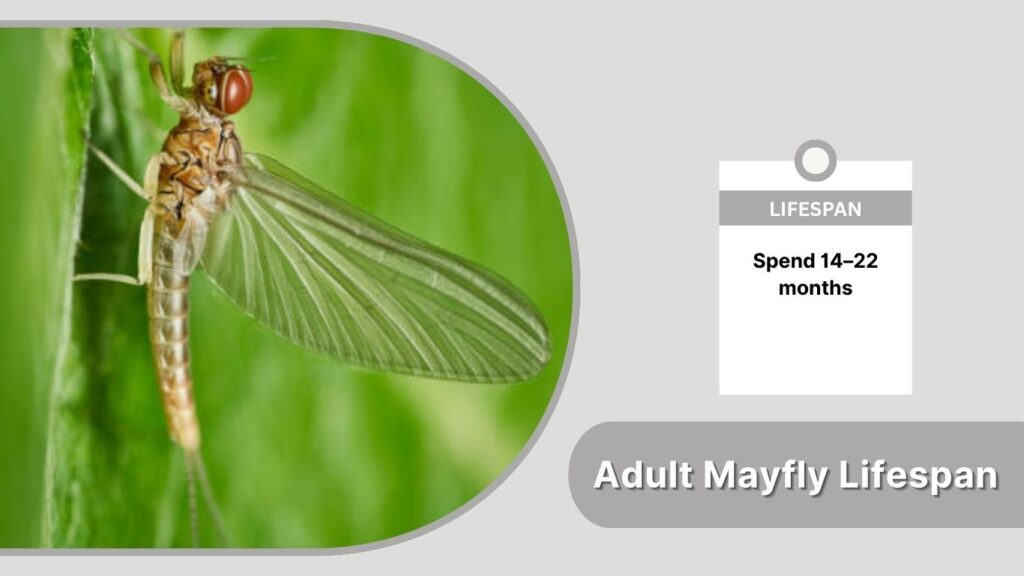
The adult mayfly lifespan commonly ranges from several hours to about two days. Certain species can live longer under favorable conditions.
For example, giant mayflies such as Hexagenia limbata generally spend 14–22 months as nymphs. Their subimago stage may last 24–48 hours, followed by a mature adult stage of approximately one or two days. Individual females have survived for as long as eight days under protected laboratory conditions.
Laboratory studies of northern Michigan mayflies recorded adult life expectancies ranging from approximately 1.5 to 2.6 days. Protected laboratory insects may live longer than wild individuals exposed to predators, wind, waves, and changing weather.
Male vs. Female Mayfly Lifespan
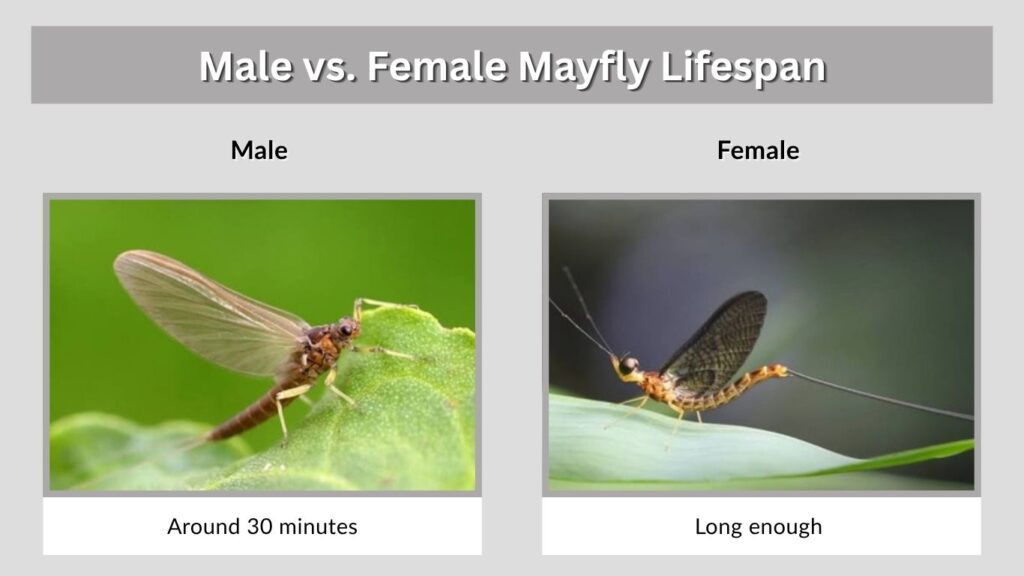
There is no single rule stating that male or female mayflies always live longer. The difference depends on the species.
Male mayflies generally use their brief adult stage to join mating swarms and locate females. Females must survive long enough to mate and return their eggs to the water.
In Dolania americana, females may live for only five minutes, while males can remain active for around 30 minutes. In other species, females may outlive males because they need additional time to disperse and lay eggs. Therefore, sex-based lifespan comparisons should always identify the particular species involved.
Why Is the Adult Mayfly Lifespan So Short?
Adult mayflies have one main purpose: reproduction. Their digestive systems and mouthparts are greatly reduced, so most cannot eat and depend on energy stored during the aquatic nymph stage.
Their synchronized emergence allows large numbers of adults to become available for mating at the same time. Emerging together may also overwhelm fish, birds, bats, and other predators, allowing at least part of the population to reproduce successfully.
Once mating and egg-laying are complete, adults have no further reproductive role. Their bodies are not designed for long-term feeding, growth, or survival on land.
What Affects a Mayfly’s Lifespan?
Several conditions influence how quickly a mayfly develops and how long it survives.
Species
Some species complete their entire development in a few weeks, while others require several years. Species is therefore one of the strongest influences on lifespan.
Water Temperature
Warm water can accelerate egg and nymph development, while colder water often slows growth. However, the exact response differs among species.
Food and Oxygen
Nymphs require suitable food and dissolved oxygen. Many species are sensitive to organic pollution, which is why mayfly communities are commonly used when assessing freshwater quality.
Weather
Wind, waves, rain, and temperature can affect emerging and adult mayflies. Rough water may drown insects during emergence, while strong winds can disrupt mating swarms or carry adults away from suitable egg-laying areas.
Predators
Fish, birds, bats, dragonflies, spiders, and other animals consume mayfly nymphs and adults. Many individuals die before reaching the maximum lifespan possible for their species.
How Long Do Mayflies Live in a House?
A mayfly that enters a house will normally survive only for the remainder of its naturally brief adult stage—often several hours or a day or two.
Mayflies cannot establish a household infestation because their eggs and nymphs require freshwater. Adults may gather around homes near lakes or rivers because they are attracted to artificial lights. They can enter through open windows, doors, or damaged screens but do not reproduce in furniture, drains, carpets, or stored food.
Turn off unnecessary outdoor lights during a major emergence, close curtains, repair screens, and vacuum dead insects when necessary.
FAQs
What is the average lifespan of a mayfly?
The complete lifespan is commonly several months to a few years because most development occurs underwater. The winged adult stage usually lasts from several hours to one or two days, although exact duration varies by species.
Do all mayflies die after one day?
No. Some adults die within minutes or hours, many survive around one or two days, and a few species can live for several days. Their aquatic nymph stage lasts much longer.
What mayfly has the shortest adult lifespan?
The female American sand-burrowing mayfly, Dolania americana, is famous for an adult stage lasting approximately five minutes. Males of the same species may survive around 30 minutes.
Why can’t adult mayflies eat?
Most adult mayflies have vestigial, nonfunctional mouthparts. They rely on energy accumulated during the aquatic nymph stage and use their brief winged lives mainly for mating and laying eggs.
How long do giant mayflies live?
Giant mayflies may require approximately two years to complete their full life cycle. After emerging, their subimago stage generally lasts one or two days, followed by an adult stage of roughly one or two more days.