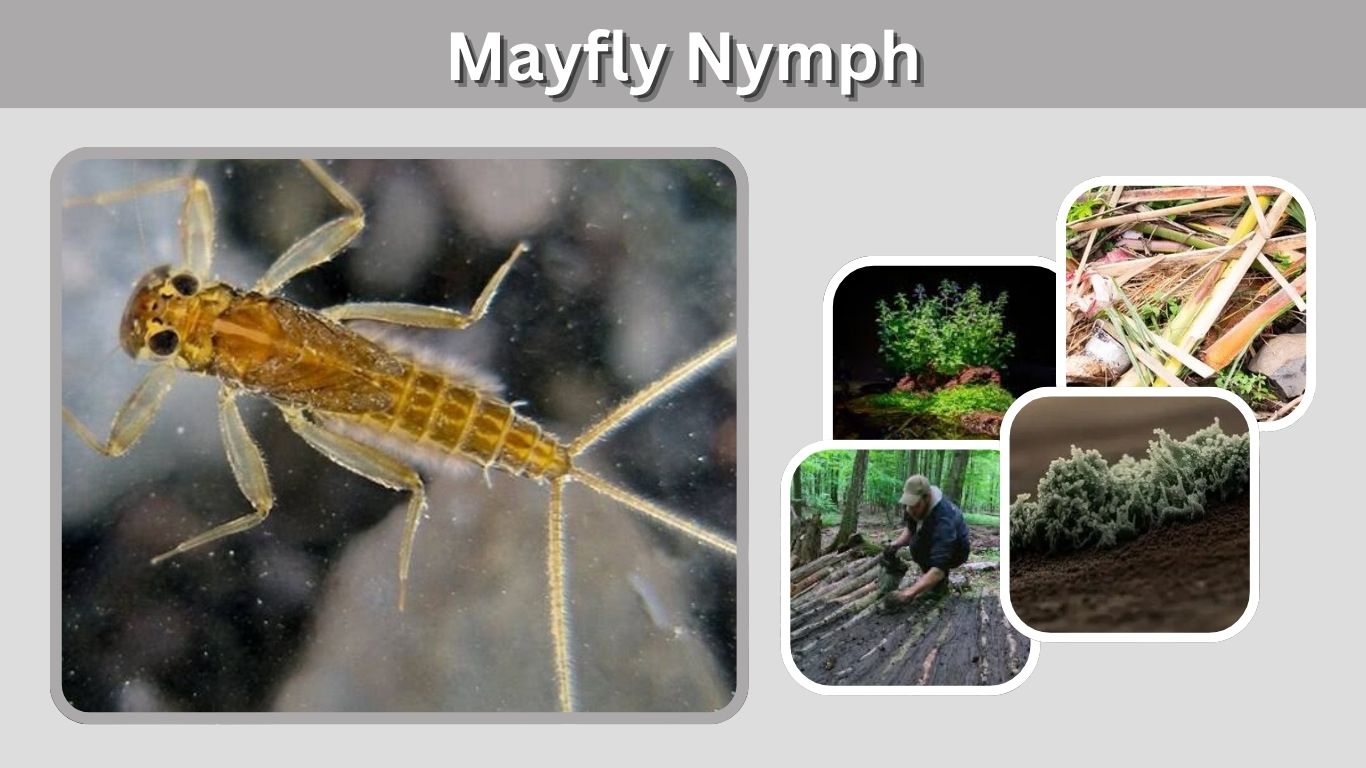
A mayfly nymph is the aquatic, immature stage of a mayfly. It lives beneath the surface of streams, rivers, ponds, and lakes, where it feeds, grows, and molts before emerging as a winged adult. Mayfly nymphs are recognized by their abdominal gills and usually two or three slender tails. They are also important food for fish and useful indicators of freshwater ecosystem health.
What Is a Mayfly Nymph?
Mayflies belong to the insect order Ephemeroptera. Their life cycle involves egg, nymph, subimago, and adult stages, without a pupal stage. The immature aquatic form may be called either a nymph or a naiad; “mayfly larva” is sometimes used informally, but nymph is the more accurate term.
The nymph stage accounts for most of the mayfly’s life. A nymph may spend roughly one year underwater, although development can range from a few months to two years or longer depending on the species, climate, and water temperature. One studied Hexagenia limbata population had a two-year life cycle.
| Feature | Description |
| Scientific order | Ephemeroptera |
| Life stage | Aquatic immature insect |
| Typical body length | About 2–35 mm |
| Number of legs | Six |
| Tails | Usually three; some have two |
| Gills | Along the sides or top of the abdomen |
| Habitat | Freshwater |
| Main food | Algae and organic debris |
What Does a Mayfly Nymph Look Like?
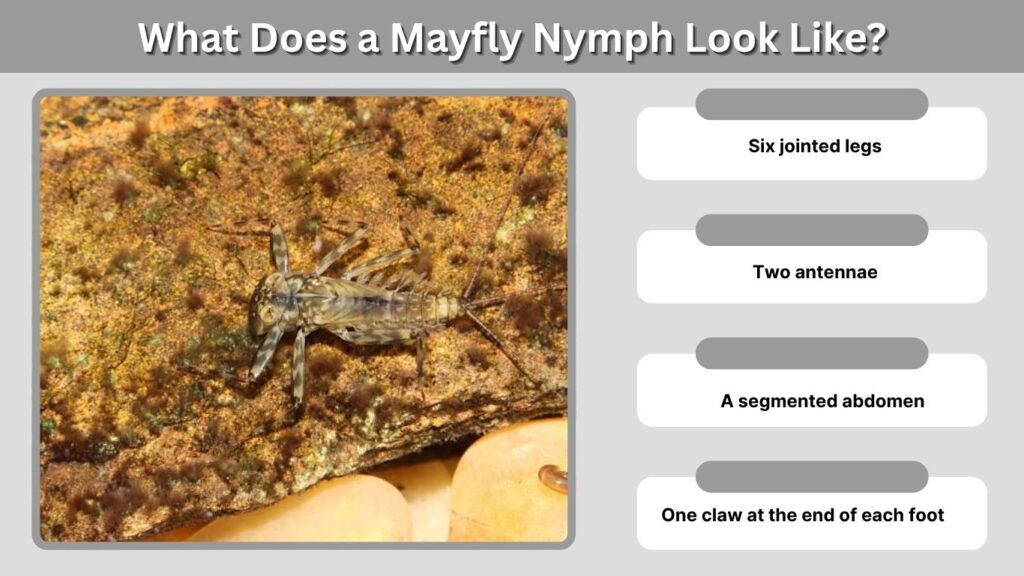
Mayfly nymphs have elongated or flattened segmented bodies. Their appearance varies because different species are adapted for swimming, crawling, clinging to rocks, or burrowing into sediment.
Identification Features
- Six jointed legs
- Two antennae
- Two or three slender tail filaments
- Plate-like or feathery abdominal gills
- A segmented abdomen
- Developing wing pads on older nymphs
- One claw at the end of each foot
- Brown, tan, olive, yellow, or mottled coloration
Most mayfly nymphs have three tails, although some species appear to have only two. Their abdominal gills may look like small leaves, plates, feathers, or branching filaments. Body length, excluding the tails, can range from approximately 2 to 35 millimeters.
Where Do Mayfly Nymphs Live?
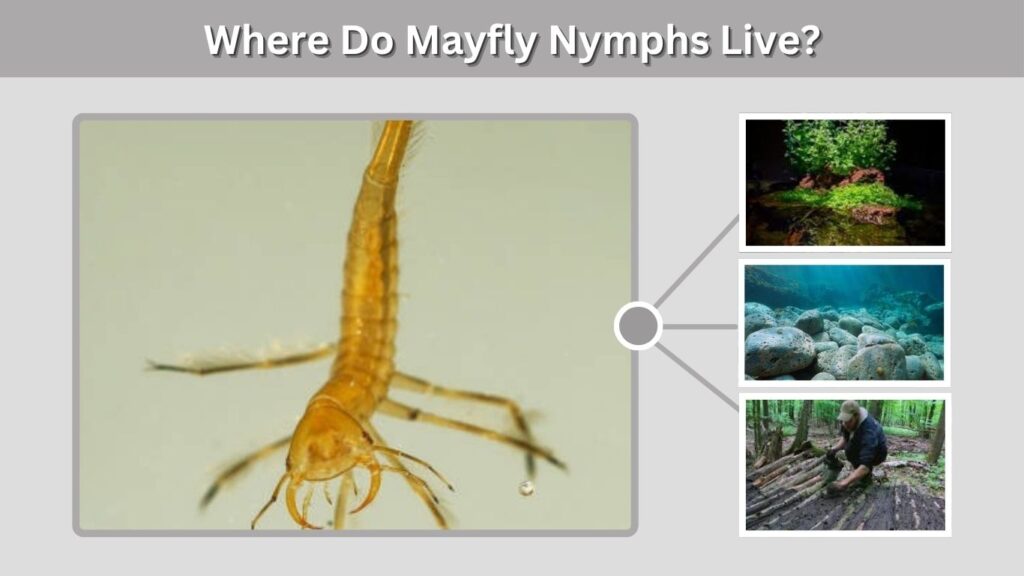
Mayfly nymphs live only in freshwater. Most species inhabit streams and rivers, but others develop in well-oxygenated ponds, wetlands, and lakes. They may cling to submerged rocks, crawl among aquatic plants, hide beneath logs, or burrow into sand and mud.
Their preferred habitat depends on body shape. Flattened species can hold tightly to rocks in swift currents, while streamlined species swim through pools and slower water. Burrowing mayflies, including Hexagenia, create tunnels in soft lake or river sediment.
Many mayfly species require relatively clean, oxygenated water. Because aquatic macroinvertebrates spend long periods in one area and differ in pollution tolerance, scientists examine their communities when evaluating waterbody health. However, the presence of one mayfly does not automatically prove that the water is completely unpolluted.
Four Types of Mayfly Nymphs
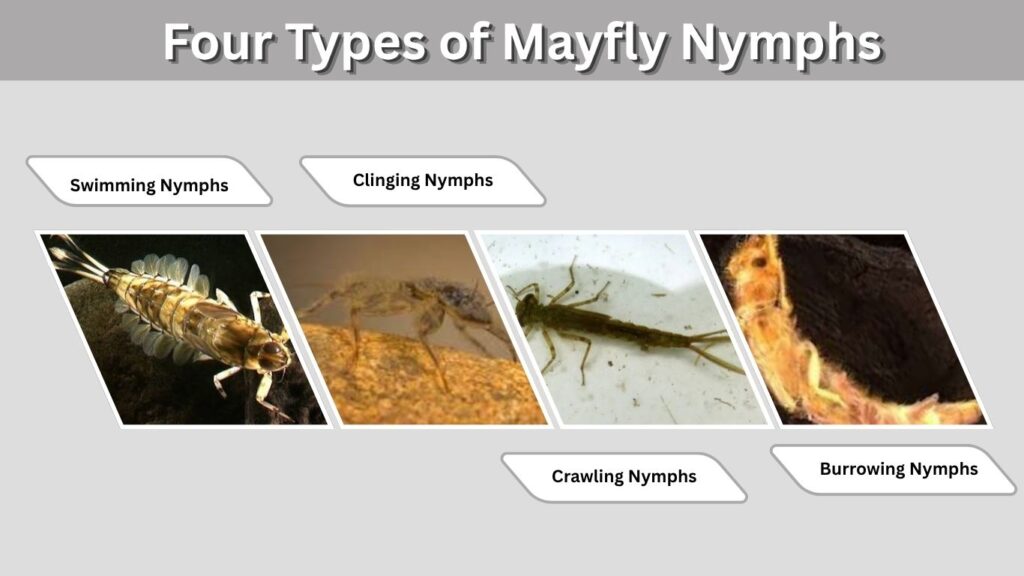
Mayfly nymphs are commonly grouped into four broad categories based on body shape, habitat, and movement.
Swimming Nymphs
Swimming nymphs have slender, streamlined bodies that move through water with fish-like abdominal movements. Small minnow mayflies in the family Baetidae are familiar examples. They occur in streams, rivers, and some still waters.
Clinging Nymphs
Clingers have broad, flattened bodies and strong legs that help them remain attached to rocks in fast currents. Their low profile reduces the force of water pushing against them.
Crawling Nymphs
Crawlers have moderately flattened or rounded bodies and move over plants, stones, debris, and the bottom. They are often found in areas with moderate currents or among submerged vegetation.
Burrowing Nymphs
Burrowers have elongated bodies and enlarged front legs or tusk-like structures for digging. They construct tunnels in sand, silt, or mud and circulate water through their burrows to obtain oxygen.
What Do Mayfly Nymphs Eat?
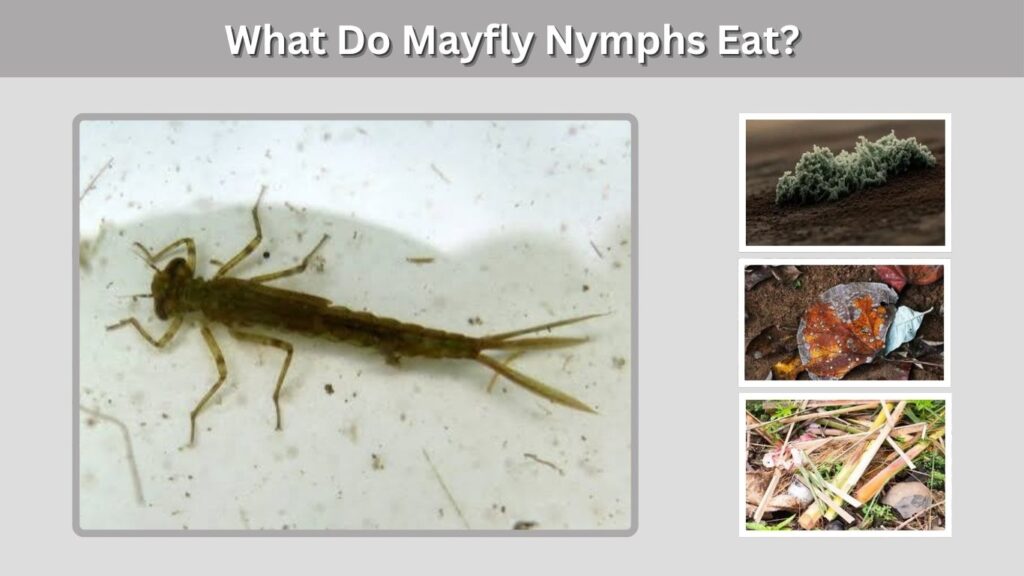
Most mayfly nymphs feed on algae, microscopic plant material, and decaying organic particles. Some scrape algae from rocks, while others gather fine debris from sediment or filter suspended particles from moving water. A smaller number of species are predators that consume other tiny aquatic animals.
Common foods include:
- Algae and diatoms
- Decaying leaves
- Fine organic debris
- Microscopic plant particles
- Bacteria and fungi associated with detritus
- Tiny invertebrates, in predatory species
By consuming material too small for many larger animals and then becoming prey themselves, mayfly nymphs transfer energy through freshwater food webs.
Mayfly Nymph Gills and Adaptations
Mayfly nymphs breathe primarily through external gills positioned along the abdomen. The gills absorb dissolved oxygen from the surrounding water. Some species rhythmically move their gills to improve water circulation and oxygen exchange.
Other useful adaptations include flattened bodies for resisting strong currents, digging legs for constructing burrows, streamlined bodies for swimming, and claws that grip rocks or plants. Their colors often blend with stones, mud, algae, and dead leaves, helping them avoid predators.
Mayfly Nymph Life Cycle
A female adult mayfly deposits her eggs in or on the water. After hatching, the young nymph feeds and molts repeatedly as its body grows. Older nymphs develop visible dark wing pads behind the thorax.
When development is complete, the nymph leaves the bottom or rises toward the surface. It sheds its aquatic exoskeleton and emerges as a winged subimago, called a dun by fly anglers. The subimago later molts once more into the sexually mature adult, or spinner. Mayflies are unusual because this final molt occurs after the insect has developed functional wings.
Adult life is extremely brief compared with the nymph stage. Adults focus primarily on mating and egg laying, completing the cycle.
Mayfly Nymphs and Fly Fishing
Mayfly nymphs are major prey for trout and many other freshwater fish. Fish commonly feed on them near the bottom, when nymphs drift in currents, and when mature nymphs rise before emergence. Large synchronized hatches can trigger intense feeding activity.
Artificial nymph flies imitate their size, segmented bodies, tails, legs, and natural colors. Popular general imitations include the Pheasant Tail Nymph and Hare’s Ear Nymph. The Pheasant Tail is especially useful because it can suggest numerous mayfly species.
For better results, anglers should match the natural insects’ approximate size and color. Clinger and crawler patterns are generally presented near the bottom, while swimming nymph patterns may be retrieved gently through slower water.
Mayfly Nymph vs. Stonefly Nymph
| Feature | Mayfly Nymph | Stonefly Nymph |
| Tails | Usually three, sometimes two | Two |
| Gills | Along the abdomen | Commonly around the thorax or leg bases |
| Foot claws | One per foot | Two per foot |
| Body | Slender or flattened | Usually robust and flattened |
| Habitat | Streams, rivers, ponds, and lakes | Mainly cool, flowing water |
The tail count offers a quick clue, but it is not perfect because some mayflies have two visible tails. Abdominal gills and one claw per foot provide stronger confirmation.
Mayfly Nymph vs. Damselfly Nymph
Damselfly nymphs are predators with extendable lower jaws used to seize prey. They normally have three broad, leaf-shaped gills at the end of the abdomen. Mayfly nymphs instead have hair-like tails and multiple gills along the abdomen.
Damselfly nymphs are also generally larger and more strongly built. Mayfly nymphs mostly scrape or gather plant-based food, although a few species are predatory.
What Eats Mayfly Nymphs?
Mayfly nymphs are eaten by trout, bass, minnows, sculpins, aquatic birds, amphibians, crayfish, dragonfly nymphs, predatory stoneflies, and other aquatic animals. Their abundance and nutritional value make them an important connection between microscopic food sources and larger predators.
FAQs
Do mayfly nymphs bite people?
Mayfly nymphs do not sting and are not considered dangerous to people. Most scrape algae or gather organic debris. Even predatory species are too small and specialized for hunting tiny aquatic prey to present a meaningful threat to humans.
How long do mayfly nymphs live?
Many spend approximately one year underwater, but the duration varies widely. Some species complete development within several months, while cold-water or large burrowing species may remain nymphs for two years or longer before emerging.
Are mayfly nymphs good for a pond?
They are beneficial parts of freshwater ecosystems. They process algae and organic material and provide food for fish and other wildlife. A diverse mayfly population may also suggest suitable oxygen levels and relatively healthy habitat conditions.
Do mayfly nymphs have two or three tails?
Most have three slender tail filaments, but certain species have only two or possess a very small central filament that is difficult to see. Check for abdominal gills and one claw per foot rather than relying only on tail number.
What is the best mayfly nymph fly pattern?
The Pheasant Tail Nymph is one of the most versatile choices because its slim, segmented body can imitate many mayfly nymphs. The best pattern still depends on the local insect’s size, color, habitat, and movement.