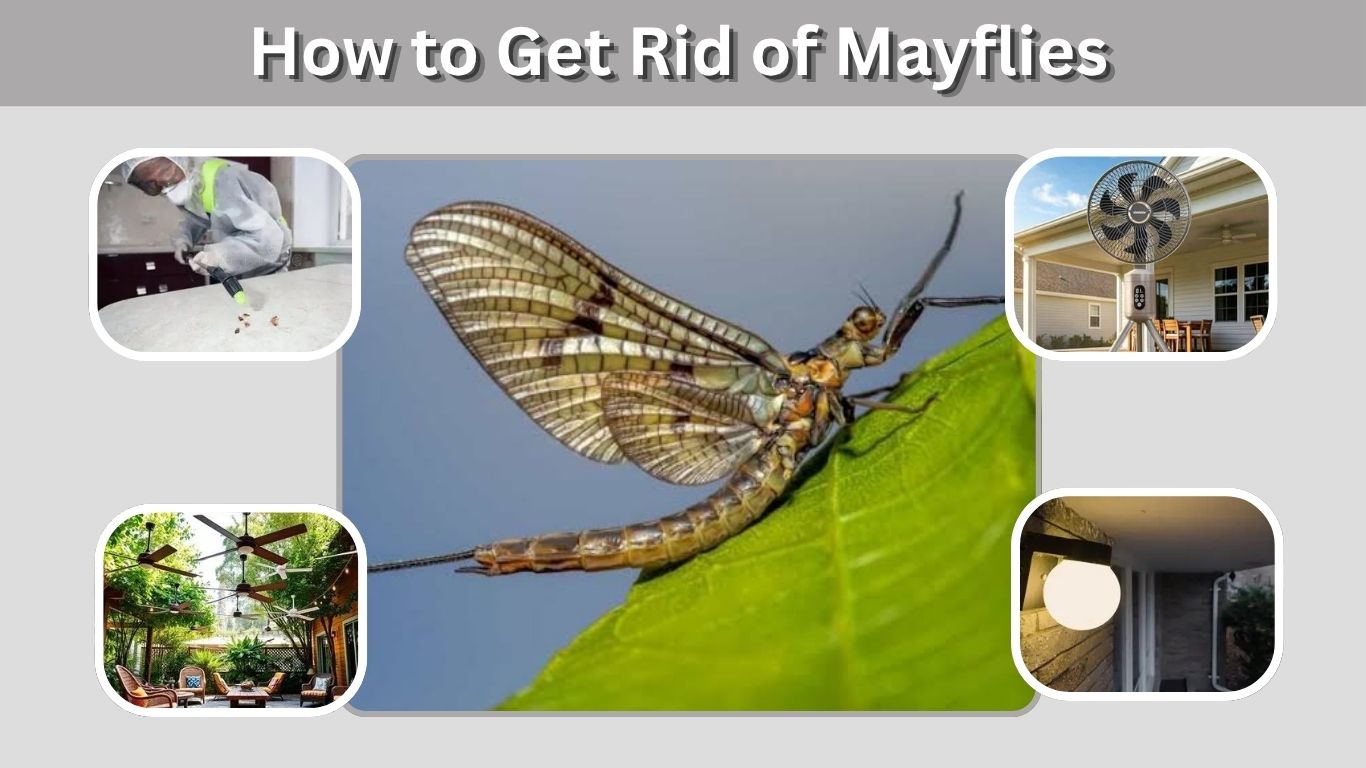
Mayflies can suddenly appear in large numbers around homes, yards, windows, porches, and lakeside properties. Although they may look alarming, adult mayflies do not bite, sting, damage buildings, or reproduce indoors. They are aquatic insects that develop in ponds, lakes, rivers, and streams before emerging as winged adults. Most problems occur because mayflies are strongly attracted to outdoor lights and reflective surfaces. You usually cannot eliminate mayflies from nearby water, but you can reduce how many gather around your property. The best approach combines light management, physical removal, window sealing, yard cleanup, and short-term natural control methods.
Why Are Mayflies Around Your House?
Mayflies spend most of their lives underwater as immature nymphs. When conditions are suitable, large numbers may emerge from nearby water at approximately the same time.
Adult mayflies then fly toward bright lights, pale walls, windows, and shiny surfaces. Homes near lakes, rivers, ponds, wetlands, and streams experience the heaviest activity.
Nearby Water Sources
Mayfly nymphs develop in freshwater. A property may receive large numbers of adults when located near:
- Lakes
- Rivers
- Streams
- Ponds
- Reservoirs
- Wetlands
- Drainage channels
The insects are not usually breeding in the yard or house. They are emerging from water and temporarily gathering around the property.
Outdoor Lighting
Bright white, blue, and ultraviolet-rich lights can attract mayflies from a considerable distance. Porch lights, security lights, garage lights, and illuminated windows may become gathering points.
Reducing unnecessary lighting is often more effective than spraying the insects after they arrive.
Seasonal Emergence
Mayfly activity is usually temporary. Depending on the species and climate, emergence may occur during spring, summer, or early fall.
Large swarms may last for only a few nights, although smaller numbers can continue appearing throughout the warm season.
How to Get Rid of Mayflies in the House
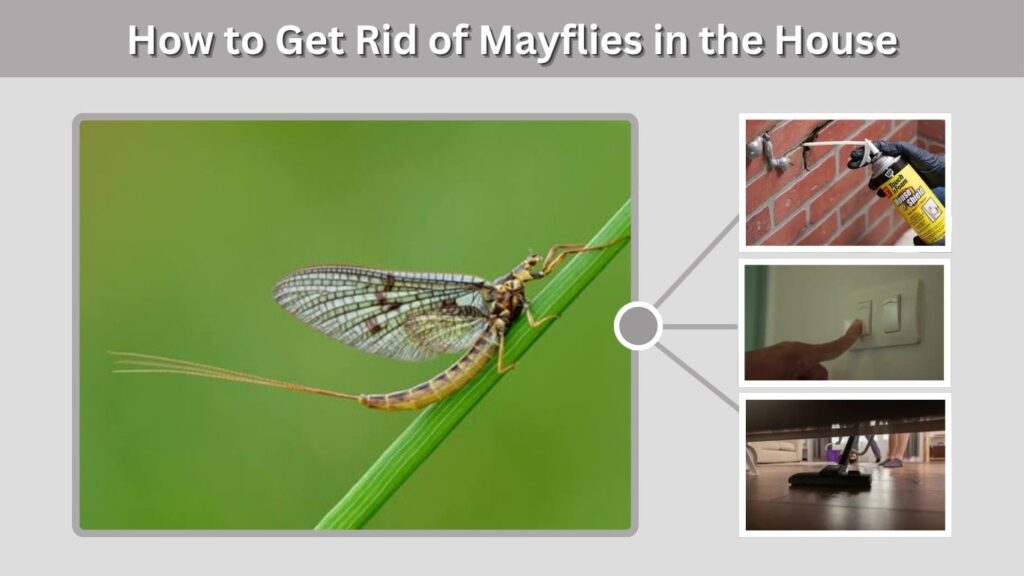
Mayflies do not establish indoor colonies. Those found inside have usually entered through open doors, damaged screens, or gaps around windows.
Turn Off Nearby Lights
Switch off porch lights, garage lights, and bright indoor lights near windows. Close blinds or curtains after dark to prevent indoor lighting from attracting mayflies toward the glass.
Use only the minimum lighting needed during peak emergence periods.
Vacuum the Mayflies
A vacuum is one of the fastest ways to remove mayflies from walls, ceilings, curtains, and floors. Use a hose attachment to collect them without crushing their delicate bodies.
Empty the vacuum outdoors afterward. Dead mayflies can produce an unpleasant smell when large numbers accumulate indoors.
Use a Container for Individual Insects
Place a cup or container over a resting mayfly and slide a piece of paper underneath. Carry it outside and release it away from doors and windows.
This method is useful when only a few insects have entered.
Seal Entry Points
Inspect the home for openings through which mayflies can enter.
Check:
- Window screens
- Door sweeps
- Weather stripping
- Window-frame gaps
- Attic vents
- Exhaust vents
- Openings around pipes and cables
Repair torn screens and seal small cracks. Keep doors closed as much as possible during evening swarms.
How to Get Rid of Mayflies Outside
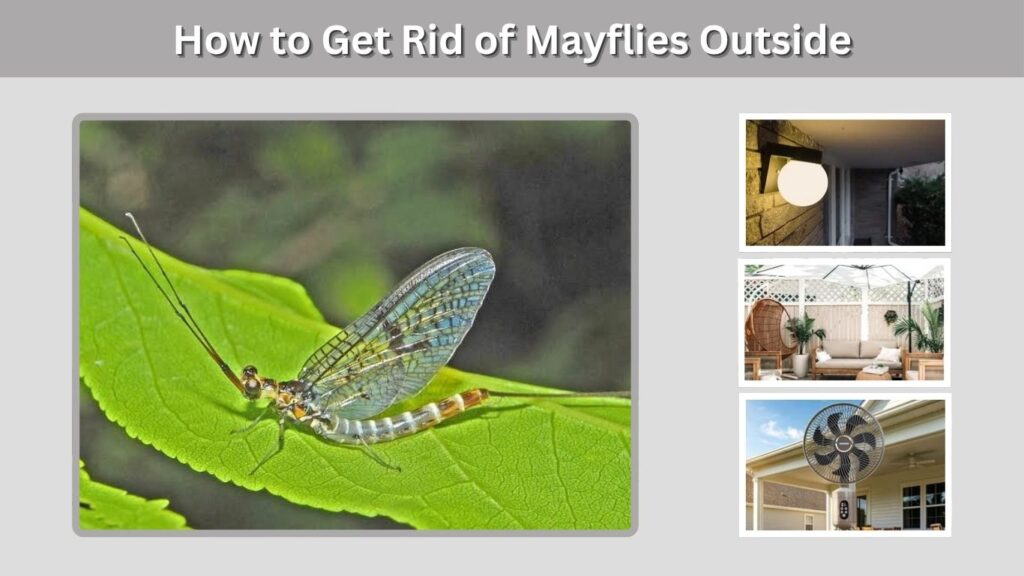
Completely removing outdoor mayflies is usually impossible when a lake, river, or stream is nearby. The goal should be to make the property less attractive and manage temporary accumulations.
Change Outdoor Lighting
Replace bright white bulbs with warm-colored bulbs. Yellow or amber lights are generally less attractive to many flying insects than cool white or blue-toned lighting.
Motion-activated lights are also useful because they remain off when nobody is outside.
Position necessary lights so they shine downward rather than outward toward nearby water.
Move Lights Away From Entrances
When security lighting is required, place it away from doors, patios, and frequently used areas. A light positioned farther from the building may draw insects away from the entrance.
Avoid installing bright lights directly above doors or beside open windows.
Remove Dead Mayflies
Sweep or vacuum dead insects from decks, patios, driveways, sidewalks, and window ledges. Large accumulations may become slippery and may develop an unpleasant odor as they decompose.
Use a shop vacuum for heavy outdoor buildup. Dispose of the insects in a sealed trash bag or add small amounts to an outdoor compost system.
Use Outdoor Fans
Mayflies are relatively weak fliers. A strong fan can make it difficult for them to land around patios, porches, and seating areas.
Position the fan so air moves across the occupied space. Fans do not eliminate the insects, but they can provide immediate relief during evening activity.
How to Get Rid of Mayflies Naturally
Natural control focuses on reducing attraction and physically removing the insects rather than using pesticides.
Reduce Nighttime Light
Turning off unnecessary lights is the most important natural control method. Close curtains and blinds so indoor light does not shine through windows.
Use warm, low-intensity lighting when outdoor illumination is necessary.
Spray Them With Water
A strong stream from a garden hose can remove mayflies from siding, fences, bushes, and other outdoor surfaces.
Avoid spraying delicate plants with excessive pressure. Water removal provides temporary relief but does not prevent more insects from arriving.
Use a Soap-and-Water Spray Carefully
A small amount of dish soap mixed with water may kill mayflies through direct contact. However, this treatment should be limited to small numbers on washable outdoor surfaces.
Test the mixture before spraying painted materials or plants. Do not allow soapy water to enter ponds, streams, storm drains, or other aquatic environments.
Encourage Natural Predators
Fish, birds, bats, dragonflies, frogs, and other animals feed on mayflies. Maintaining a wildlife-friendly landscape can support natural predators.
Avoid broad pesticide treatments that may harm beneficial insects and animals. Predators may reduce some mayflies, but they will not prevent large seasonal emergences.
How to Get Rid of Mayflies in the Yard
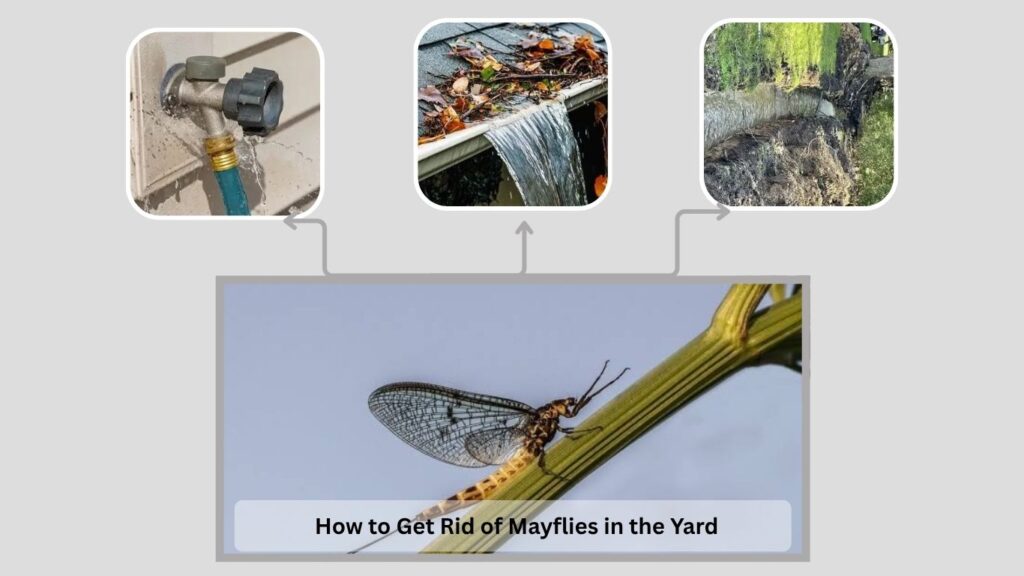
Mayflies do not normally breed in ordinary lawns or garden soil. Yard treatments therefore provide limited results unless the insects are resting on vegetation.
Reduce Moisture Problems
Although nearby freshwater is the main source, fixing unnecessary moisture can make the yard less attractive to other flying insects that may be mistaken for mayflies.
Correct:
- Leaking outdoor faucets
- Clogged gutters
- Poor drainage
- Standing water in containers
- Overwatered lawn areas
Removing standing water will not control mayflies emerging from a lake or river, but it can reduce mosquitoes and other pests.
Keep the Yard Clean
Remove piles of dead insects, leaves, and organic debris from patios and foundations. Trim dense vegetation around doors and windows to improve airflow and reduce resting sites.
Clean outdoor furniture before using it during a mayfly emergence.
Protect Outdoor Gatherings
Hold evening activities away from bright lights and water-facing areas. Use fans around tables and seating spaces.
Screened porches provide the most reliable protection during heavy seasonal swarms.
How to Control Mayflies at a Lake House
Lakefront properties may experience extremely large mayfly emergences. Since the insects originate in the lake, household treatments cannot eliminate the population.
Create a Dark Zone Around the House
Turn off decorative, landscape, and security lights that are not essential. Close curtains before sunset and use warm interior lighting.
Lights on docks and boats should also be reduced when safe and practical.
Direct Insects Away From Living Areas
Place a light away from doors and patios to draw mayflies toward a less-used part of the property. This method works best when other nearby lights are switched off.
The light should not interfere with neighbors, navigation, or wildlife.
Prepare for Short-Term Accumulations
Keep a broom, leaf blower, or shop vacuum available. Clean walkways regularly because crushed mayflies can create slippery surfaces.
Heavy swarms are inconvenient, but adult mayflies usually disappear naturally after a brief period.
How to Remove Mayflies From Windows
Mayflies frequently gather on windows because they are attracted to indoor light and reflections.
Clean the Windows
Vacuum or gently brush resting mayflies from screens and window frames. Wash away dead insects before they stain painted surfaces or attract scavenging pests.
Avoid crushing them directly against glass or screens.
Repair Window Screens
Replace torn mesh and confirm that screens fit tightly inside their frames. Check for gaps around window air conditioners and ventilation units.
Close windows before turning on indoor lights at night.
Reduce Reflections
Closing curtains or blinds reduces both light and reflection. Exterior shades may also make large windows less attractive during peak activity.
Should You Use Pesticides for Mayflies?
Pesticides are rarely the best solution. Adult mayflies live briefly, do not reproduce inside homes, and may be replaced quickly by additional insects emerging from nearby water.
Spraying may kill insects resting on a surface, but it does not address the aquatic source. Repeated outdoor applications can also harm pollinators, predators, and aquatic organisms.
Never apply insecticides directly to lakes, rivers, ponds, streams, or shorelines unless the product is specifically approved for that use and applied by an authorized professional.
How to Prevent Future Mayfly Problems
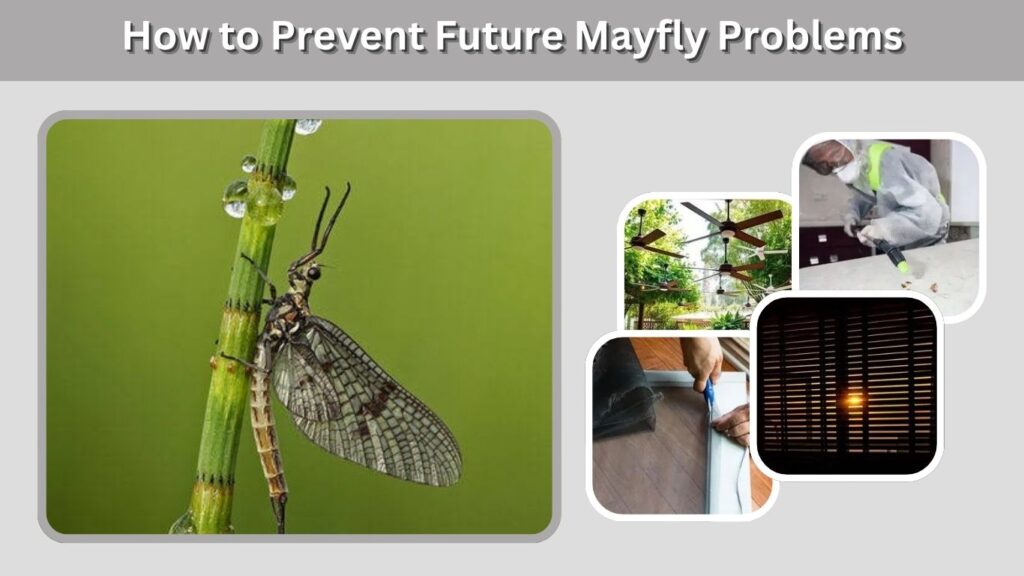
Mayfly activity cannot always be prevented near freshwater, but several changes can reduce future problems:
- Use amber or warm outdoor bulbs
- Install motion-activated lighting
- Turn off unnecessary lights after dark
- Close blinds before sunset
- Repair screens and door seals
- Keep exterior doors closed
- Move lighting away from entrances
- Clean dead insects promptly
- Use fans on patios and porches
- Plan outdoor activities before peak evening activity
These measures are most effective when started before the seasonal emergence begins.
FAQs
How long will mayflies stay around my house?
Individual adult mayflies generally live for a very short period, often only a day or two. However, new adults may continue emerging from nearby water for several days or weeks, making the overall problem appear to last longer.
Do mayflies bite people?
Mayflies do not bite or sting. Adult mayflies have reduced mouthparts and do not feed in the same way as mosquitoes or biting flies. Their main adult purpose is to mate and lay eggs.
Why are mayflies suddenly inside my house?
Mayflies enter through open doors, damaged screens, vents, and gaps around windows. Bright indoor lights attract them, especially when large numbers are emerging from nearby water after sunset.
Will vinegar get rid of mayflies?
Vinegar traps are designed mainly for fruit flies and are not especially effective against mayflies. Turning off lights, sealing entrances, vacuuming adults, and using fans provide better results.
Can mayflies damage plants or the house?
Adult mayflies do not normally damage plants, furniture, food, clothing, or building materials. Their greatest impact is the mess caused by large numbers of dead insects accumulating around windows, walls, decks, and walkways.