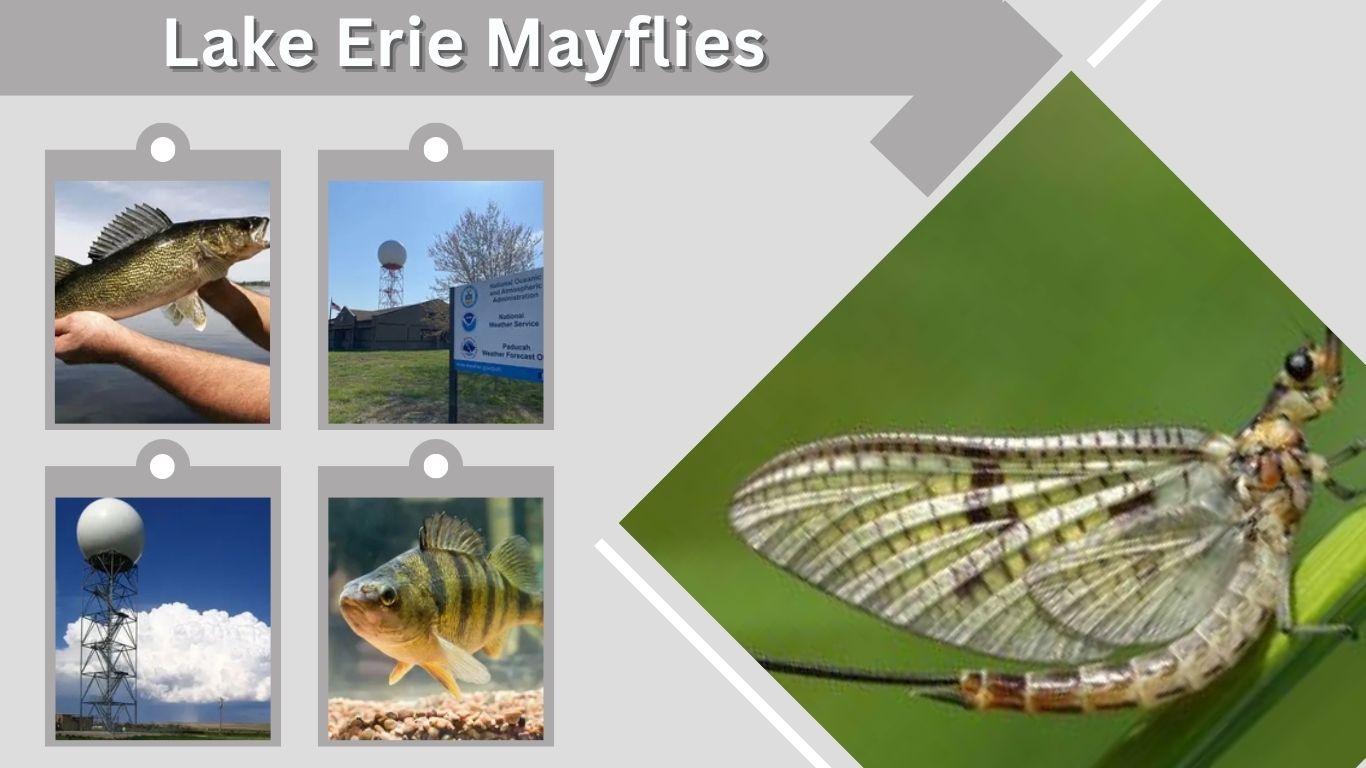
Lake Erie mayflies are famous for forming enormous seasonal swarms along the shorelines of Ohio, Michigan, Pennsylvania, New York, and Ontario. Although these insects can cover buildings, vehicles, roads, and docks, they do not bite, sting, or damage property. Most belong to the burrowing mayfly genus Hexagenia and spend nearly their entire lives underwater. Their appearance is more than a seasonal nuisance: Lake Erie mayfly populations are an important part of the food web and can provide valuable information about conditions on the lake bottom.
What Are Lake Erie Mayflies?
Lake Erie mayflies are aquatic insects belonging to the order Ephemeroptera. The large burrowing mayflies associated with the lake’s famous hatches mainly belong to the genus Hexagenia. Their immature stages live in soft sediment, while the delicate winged adults survive only long enough to reproduce.
What They Look Like
Adult Lake Erie mayflies generally have:
- Long, slender bodies
- Two large, clear front wings
- Much smaller hindwings
- Two or three long tails
- Short antennae
- Large eyes
- Pale brown, gray, yellow, or olive coloring
Their wings are usually held upright over the body while resting. This posture, combined with their long tails, makes them easy to separate from mosquitoes, midges, and ordinary flies.
Burrowing Mayfly Nymphs
Young mayflies, commonly called nymphs or naiads, live inside U-shaped burrows in soft lake-bottom sediment. They move water through these burrows with their gills, obtaining oxygen while collecting organic particles for food.
The underwater stage lasts far longer than the adult stage. Depending on environmental conditions and species, burrowing mayflies may remain as nymphs for about one or two years before emerging.
When Do Mayflies Hatch on Lake Erie?
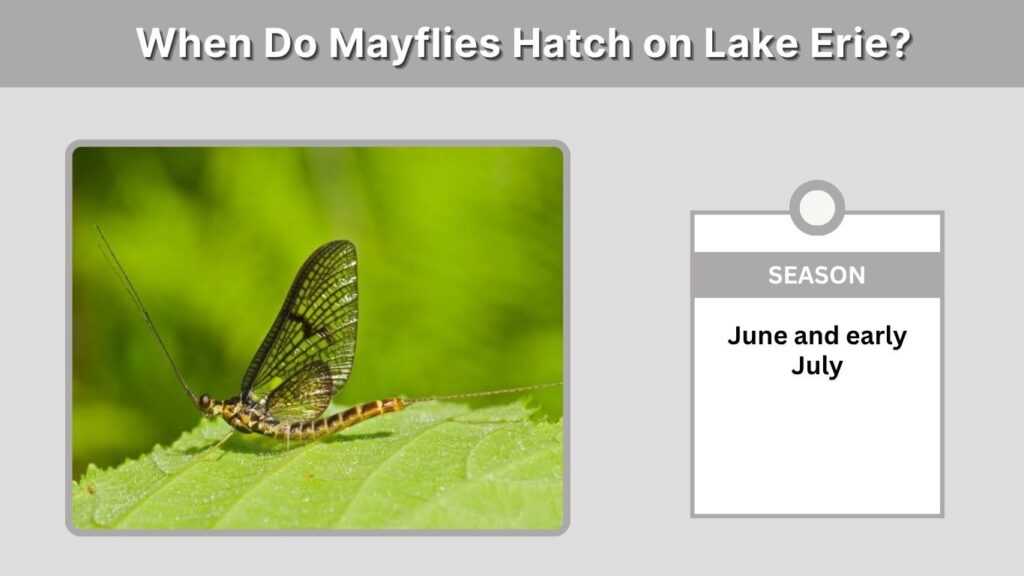
The main Lake Erie mayfly hatch generally occurs during early summer. However, there is no fixed annual date because development depends on water temperature, spring weather, wind, oxygen conditions, and the maturity of the nymph population.
Typical Mayfly Season
Large emergences are most commonly noticed during June and early July, particularly in the shallow western basin. Smaller or more localized hatches may occur later during summer.
Warm spring conditions can bring the hatch earlier, while a cool spring can delay it. Emergence may begin on one part of the lake before becoming noticeable elsewhere.
The insects commonly emerge after sunset. Nymphs rise from the sediment, swim toward the surface, shed their aquatic skin, and become winged subadults. They later molt once more into reproductive adults.
Is There a Specific Hatch Temperature?
Water temperature helps control development, but the hatch does not always begin at one exact temperature. The insects respond to accumulated warmth and broader environmental conditions rather than a single universal threshold.
Reports often associate major emergence with water approaching the upper 60s Fahrenheit, but yearly timing can still vary between locations and lake basins. Wind direction also determines whether newly emerged adults remain over the water or are pushed into shoreline communities.
Why Do Lake Erie Mayflies Form Huge Swarms?
The insects emerge in large numbers because synchronized reproduction improves the chance that short-lived adults will find mates. A large, coordinated hatch can also overwhelm predators, allowing some individuals to reproduce successfully.
Their Brief Adult Life
Adult mayflies live for only a short period, often a day or two. They do not establish nests, infest houses, or remain active throughout the year.
Their adult life is devoted mainly to:
- Finding a mate
- Mating in the air
- Returning to the water
- Laying eggs
After reproduction, the adults die. The eggs sink into the water, hatch, and begin another long underwater developmental period.
Why They Cover Shoreline Communities
Mayflies are attracted to artificial lights and reflective surfaces. Large numbers may gather around:
- Streetlights
- Gas stations
- Hotels and restaurants
- Porch lights
- Marinas
- Illuminated boats
- Bridges
- Windows and pale walls
Mayflies are relatively weak fliers, so wind can transport huge clouds toward communities on either side of the lake. NOAA educational material notes that they commonly gather near bright lights after leaving the water.
Can Lake Erie Mayflies Appear on Weather Radar?
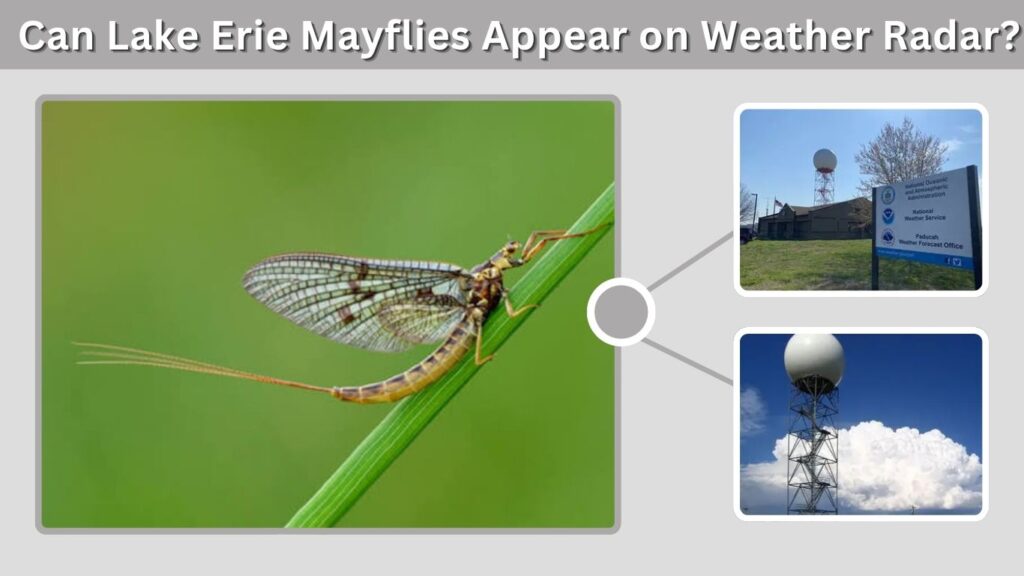
Yes. Extremely dense swarms can reflect enough radar energy to appear on weather radar. The resulting pattern may resemble light precipitation spreading outward from the lake, even though no rain is falling.
Radar has been used by researchers to estimate the size and movement of large mayfly emergences. A published study used radar observations to examine burrowing mayfly abundance in western Lake Erie and reported a substantial decline during the years covered by the analysis.
How to Track a Hatch
People looking for current activity can check:
- National Weather Service radar
- Local weather reports
- Lake Erie research organizations
- Marina and charter-fishing reports
- Shoreline community updates
- Recent photographs and social-media observations
Radar does not provide a dedicated mayfly forecast. It is most useful when a major nighttime swarm creates an unusual biological return over the lake.
Are Mayflies a Sign of a Healthy Lake?
The return of burrowing mayflies to western Lake Erie has been widely regarded as evidence of improvement from the severely degraded conditions that caused them to disappear during the mid-1900s.
Their Disappearance and Return
Burrowing mayflies were once abundant in western Lake Erie. By the 1950s, degraded sediment, pollution, eutrophication, and poor oxygen conditions had virtually eliminated them from much of the western basin.
They began recolonizing parts of the basin decades later. Researchers connected their recovery partly to improvements in water and sediment conditions following pollution-abatement programs.
Mayflies Do Not Mean Every Problem Is Solved
A large hatch is encouraging, but it does not prove that every part of Lake Erie has perfect water quality. The western basin continues to experience excessive nutrients and harmful algal blooms, while oxygen depletion can affect organisms living on or inside lake-bottom sediment.
Mayflies are therefore best understood as one biological indicator among many. Their abundance, distribution, and long-term population trends are more informative than a single large swarm.
Why Lake Erie Mayflies Are Important
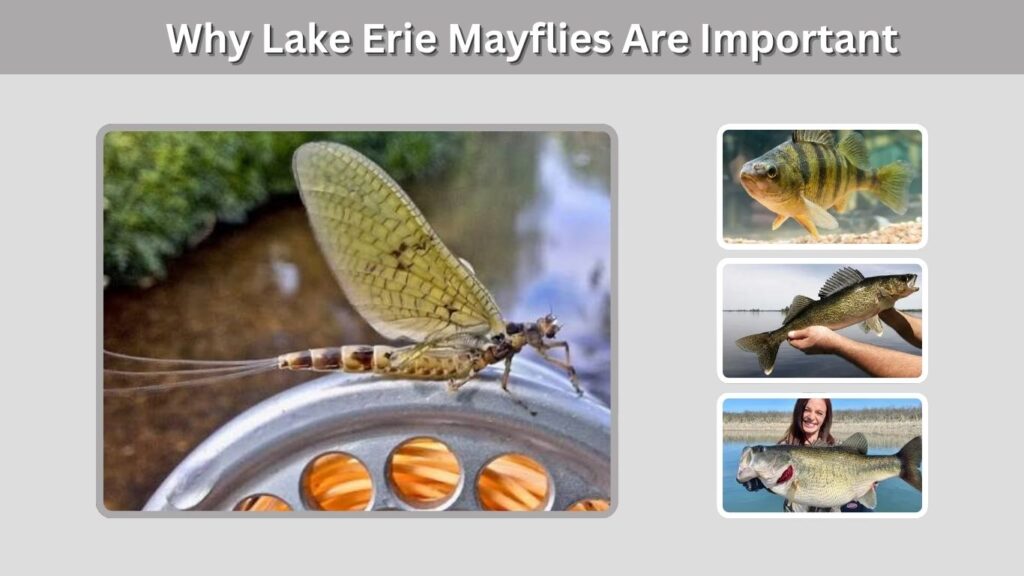
Although shoreline residents may consider them messy, mayflies perform valuable ecological functions.
Food for Fish and Wildlife
Mayfly nymphs and adults provide food for:
- Walleye
- Yellow perch
- Bass
- Other fish
- Birds
- Bats
- Spiders
- Dragonflies
- Frogs
Their emergence transfers nutrients from the aquatic environment to land, where birds and other animals consume the adults.
Importance for Fishing
A large mayfly hatch can temporarily change fishing conditions. Fish may feed heavily on rising nymphs and emerging adults, becoming less interested in ordinary bait or lures.
Anglers may respond by using presentations that resemble mayfly nymphs or by fishing near the bottom before the hatch begins. Once fish become filled with natural food, catching them may become more difficult despite intense feeding activity.
Lake Flies vs. Mayflies
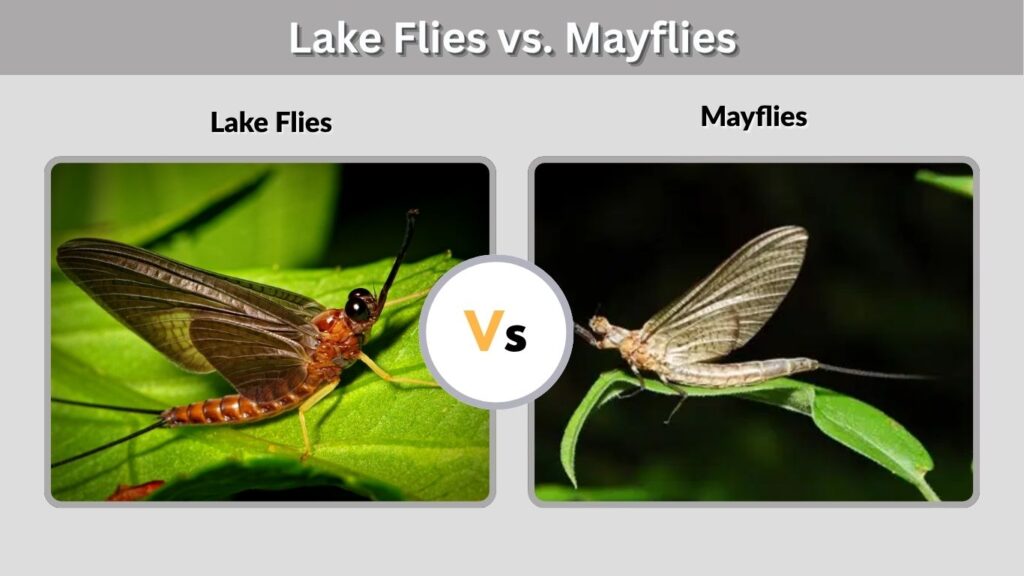
The name “lake fly” can cause confusion because it is used differently between regions. In some places, mayflies are locally called lakeflies. In others, “lake flies” refers to non-biting midges.
| Feature | Mayfly | Non-biting midge |
| Wings at rest | Usually held upright | Usually folded along body |
| Tail filaments | Two or three | None |
| Antennae | Short | Often longer or feathery |
| Body | Long and tapered | Mosquito-like |
| Classification | Ephemeroptera | True fly, Diptera |
Mayflies and midges both have aquatic immature stages and can create large lakeside swarms, but they are different insects.
How to Manage Mayflies at Lake Erie
It is not practical or environmentally appropriate to eliminate mayflies from Lake Erie. Property owners can instead reduce the number gathering around buildings.
Turn off unnecessary exterior lights during major hatches and close curtains before dark. Replace bright white bulbs with warmer lighting where outdoor illumination is necessary.
Keep windows and doors screened, seal gaps around frames, and use fans around patios. Sweep or vacuum dead insects promptly because heavy accumulations can smell unpleasant and make walkways slippery.
Avoid spraying the lake, shoreline, or large outdoor areas with pesticides. Mayflies are temporary, beneficial to wildlife, and likely to disappear naturally after the emergence passes.
FAQs
How long does the Lake Erie mayfly hatch last?
The heaviest activity may last only a few nights, but separate groups can continue emerging for several weeks. Weather, water temperature, location, wind, and species all affect the length and intensity of the season.
Do Lake Erie mayflies bite?
No. Adult mayflies do not bite or sting people or pets. They are harmless and do not damage buildings, food, clothing, gardens, or furniture.
Why are Lake Erie mayflies attracted to lights?
Artificial lighting can interfere with the insects’ natural orientation after they emerge. Bright white and ultraviolet-rich lights can attract enormous numbers toward streets, buildings, boats, and waterfront businesses.
Are mayfly numbers the same every year?
No. Population size and visible shoreline activity can change substantially between years. Nymph survival, bottom oxygen, water temperature, storms, wind direction, pollution, and the timing of emergence all affect how large the hatch appears.
Can mayflies hatch inside a Lake Erie home?
No. Their immature stages require an aquatic environment and develop in lake sediment. Mayflies found inside a house entered accidentally through doors, windows, screens, or other openings.