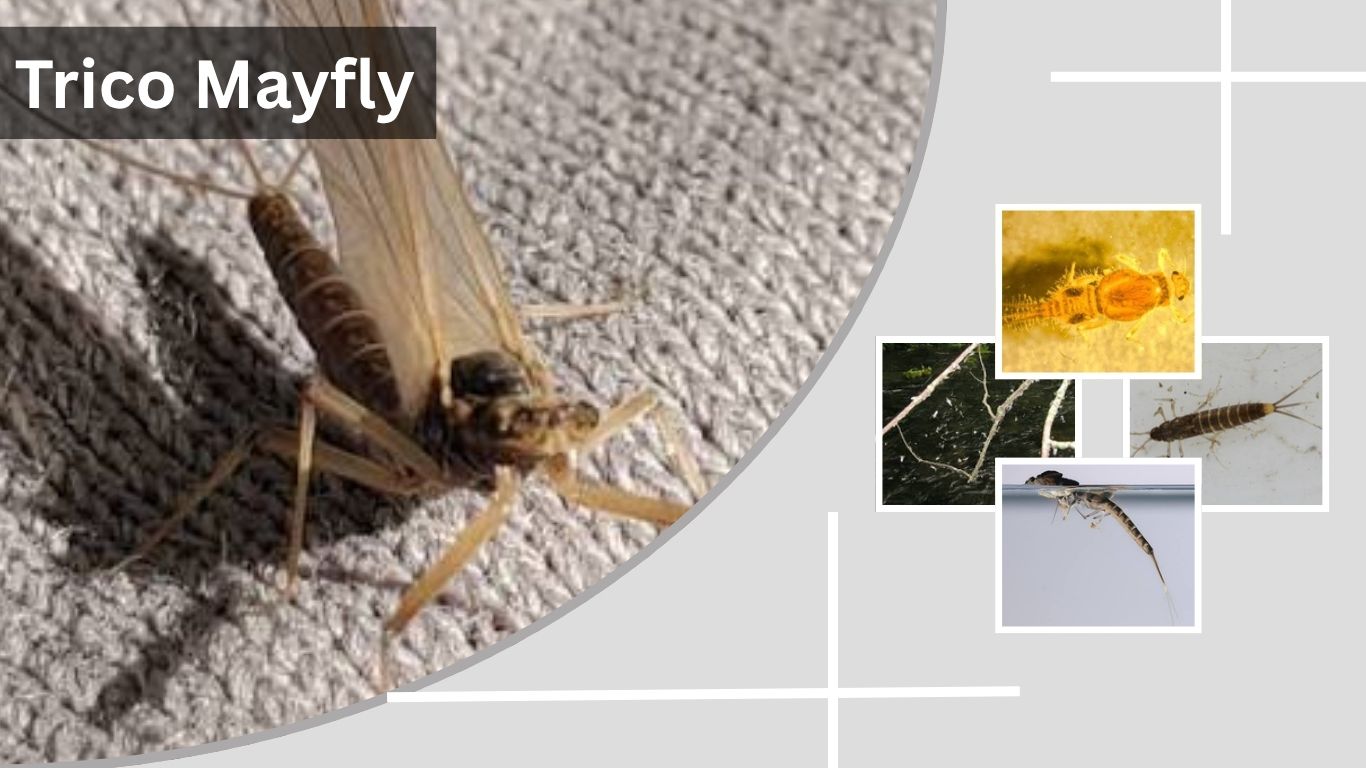
The Trico mayfly is a tiny aquatic insect famous for producing dense morning hatches and spinner falls on trout streams. “Trico” generally refers to mayflies in the genus Tricorythodes, part of the family Leptohyphidae. Although each insect is extremely small, thousands may emerge or fall onto the water together, causing trout to feed actively at the surface. Understanding the nymph, dun, and spinner stages helps anglers choose the correct fly pattern and presentation.
Trico Mayfly Quick Facts
| Feature | Description |
| Common name | Trico mayfly |
| Main genus | Tricorythodes |
| Family | Leptohyphidae |
| Insect order | Ephemeroptera |
| Typical imitation size | Hooks 20–26 |
| Nymph type | Small crawler, sprawler, or clinger |
| Main food | Fine organic matter, algae, and biofilm |
| Important adult stages | Dun and spinner |
| Typical activity | Early morning or evening, depending on sex and species |
| Best-known fishing event | Morning spinner fall |
The U.S. Fish and Wildlife Service places Tricorythodes in the mayfly family Leptohyphidae. North American identification resources describe approximately 13 species and note that their small size often requires fly imitations tied on hooks around sizes 22–26.
What Is a Trico Mayfly?
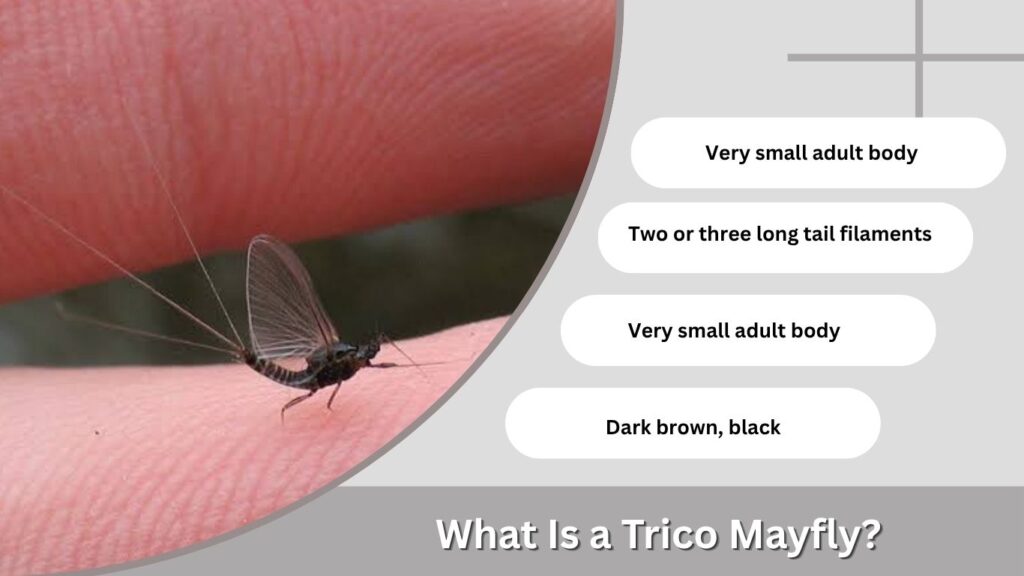
Tricos are among the smallest mayflies commonly imitated by fly anglers. Adult mayflies are recognized by their upright wings, slender bodies, and long tail filaments. Fly Fishers International notes that some Tricos measure only about 3 millimeters, making them much smaller than many familiar mayfly species.
The genus is widespread in the Americas and contains numerous species with slightly different colors, emergence periods, and habitat preferences. Consequently, the exact appearance and timing of a Trico hatch can differ between rivers.
Trico Identification
- Very small adult body
- Two or three long tail filaments
- Upright wings during the dun stage
- Clearer wings during the spinner stage
- Dark brown, black, olive, or cream body
- Compact nymph with a broad abdomen
- Plate-like gills covering other abdominal gills
- Small size requiring close examination
Color is less dependable than size, wing position, and hatch behavior. Different Trico species and sexes may appear black, brown, pale cream, olive, or dark green.
Trico Mayfly Life Cycle
Like other mayflies, Tricos pass through egg, aquatic nymph, subadult dun, and adult spinner stages. Most of the insect’s life is spent underwater as a nymph, while the winged adult period is comparatively brief.
Egg Stage
After mating, female spinners return to the water and release their eggs. The eggs sink and develop among sediment, vegetation, rocks, and other underwater surfaces.
The exact development period depends on species, water temperature, and local conditions. Once the eggs hatch, the young insects begin their aquatic nymph stage.
Trico Mayfly Nymph
Trico nymphs are small, stout-bodied mayflies that live near the bottom. They may sprawl over fine sediment or cling to stable surfaces in streams and shallow lake margins.
Their diet consists mainly of tiny pieces of organic matter. They may also scrape algae, diatoms, and biofilm from submerged surfaces.
Nymph Identification
- Small and compact body
- Three tails in most specimens
- One claw at the end of each leg
- Broad abdominal segments
- Gill cover on the second abdominal segment
- Brown, olive, tan, or mottled coloration
- Adapted for crawling or clinging near the bottom
The enlarged gill plates on the second abdominal segment cover and protect the remaining gills from sediment. The nymph can move its gills to increase water flow and oxygen absorption.
Emerger Stage
When mature, the nymph rises toward the surface and splits its outer skin. The emerging insect may become trapped just beneath or within the surface film, making this stage especially vulnerable to feeding trout.
A small emerger pattern can be more effective than a high-floating dry fly when fish are taking insects immediately below the surface.
Trico Dun Mayfly
The newly emerged winged mayfly is called a dun or subimago. It has upright, relatively opaque wings and must leave the water before transforming into the final adult stage.
Male Tricos often emerge during the evening, night, or very early morning. Females commonly emerge later in the morning, although timing varies among species, seasons, and waterways.
Trico Spinner
After leaving the water, the dun molts once more and becomes a sexually mature spinner. Spinner wings are clearer and more glass-like than dun wings.
Adults gather in mating swarms above the water. After mating and egg laying, exhausted or dead insects fall onto the surface with their wings spread flat. This event is known as a spinner fall.
When Do Trico Mayflies Hatch?
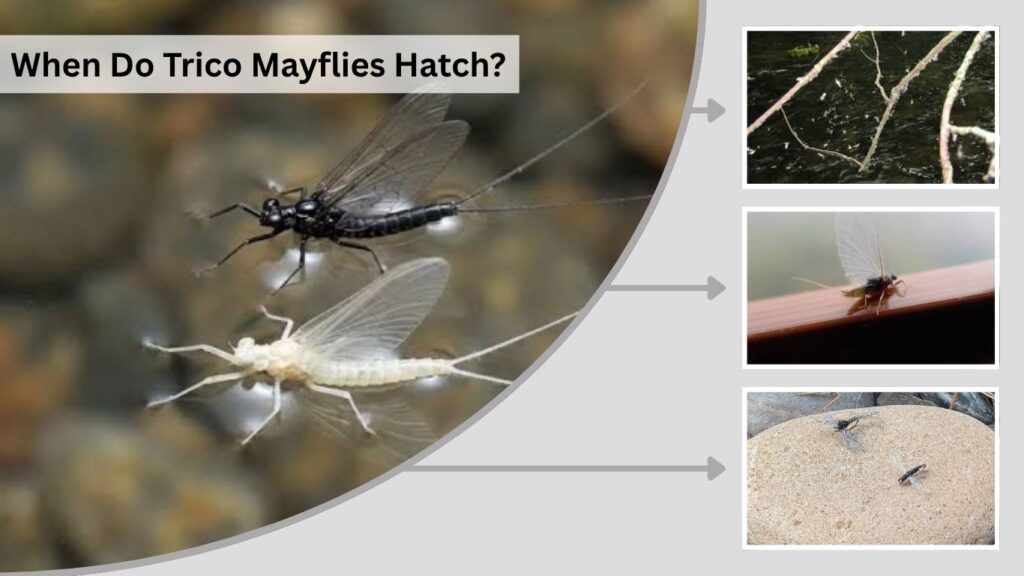
Trico hatches are commonly associated with summer and early fall, although the season may begin earlier or continue later on certain waters. The timing is influenced by latitude, elevation, weather, water temperature, and the Trico species present.
The most productive activity frequently occurs in the morning. Male duns may have emerged during the previous evening or overnight, while female duns emerge after daylight. Mating swarms and spinner falls often follow later in the morning.
Typical Morning Sequence
- Male duns emerge during the previous evening or night.
- Female duns begin emerging in the morning.
- Adults form mating swarms above the water.
- Spent males and females fall onto the surface.
- Trout feed on concentrated groups of dead or dying spinners.
Cool weather can delay the hatch and spinner fall. Warm mornings may cause activity to begin and finish earlier. Wind may scatter the tiny insects or push them toward sheltered banks and slow-water areas.
Why Are Tricos Important to Trout?
A single Trico provides very little food, but a spinner fall may place thousands of insects on a small section of water. Trout can feed efficiently by holding in a steady position and taking one insect after another.
During heavy activity, fish may become highly selective. Fly Fishers International describes “matching the hatch” as choosing an imitation that matches the size, shape, color, and behavior of the insects fish are currently eating.
Trout may ignore a fly that is too large, rides too high, or drags unnaturally across the current.
Best Trico Mayfly Patterns
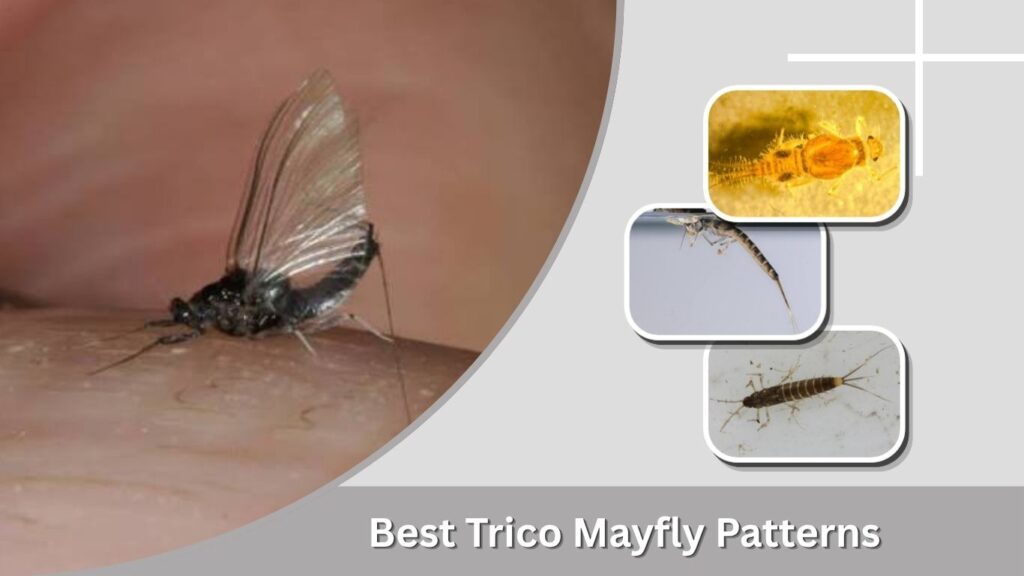
An angler may need several patterns because trout can switch between nymphs, emergers, duns, and spent spinners.
Trico Nymph
A Trico nymph pattern should be small, slim, and dark or olive. Fish it below the surface before visible adult activity begins.
Useful choices include:
- Trico nymph
- Small pheasant-tail nymph
- Dark mayfly nymph
- Micro bead-head nymph
Trico Emerger
An emerger imitates a mayfly struggling in or immediately beneath the surface film. Sparse patterns usually match these tiny insects better than heavily dressed flies.
Common choices include:
- Trico emerger
- Small RS2-style emerger
- CDC emerger
- Floating nymph pattern
Trico Dun
Use a dun pattern when upright-winged insects are emerging and trout are taking them before they fly away.
Effective patterns include:
- Trico dun
- Parachute Trico
- CDC Trico dun
- Small sparkle dun
Parachute patterns are useful because the visible post helps anglers track a very small fly on the water. Parachute and traditional hackled patterns are widely used for imitating mayfly duns.
Trico Spinner
The spinner is usually the most important Trico pattern. It should have a thin body and flat, outstretched wings that imitate a spent adult lying in the surface film.
Popular patterns include:
- Trico spinner
- Spent-wing Trico
- Poly-wing spinner
- Parachute spinner
- Sunken Trico spinner
Sizes generally range from approximately 20 to 26, although local insects should determine the final choice.
How to Fish a Trico Hatch
Arrive Early
Reach the water before the main surface activity. This provides time to observe nymph movement, emerging duns, mating swarms, and the beginning of the spinner fall.
Watch the Rise Form
A splashy rise may indicate fish taking emerging duns, while a quiet sip commonly suggests feeding on insects lying in the surface film. Select a pattern that matches where the fish are feeding.
Use a Drag-Free Drift
Trico spinners are normally helpless on the surface. An artificial fly moving sideways or faster than the current will appear unnatural.
Use careful line control and position yourself so the fly reaches the fish before the leader or fly line creates drag.
Use a Visible Indicator Fly
Tiny Trico patterns can be nearly impossible to see. One strategy is to place a larger, visible dry fly ahead of the Trico and watch the water near the larger pattern. Orvis recommends a visible indicator fly as a practical way to detect takes on a tiny Trico imitation.
Try a Sunken Spinner
Not every dead spinner remains on the surface. Some sink slightly below it. When trout stop accepting floating patterns, a lightly sunken spinner can imitate insects just beneath the film.
FAQs
What does “Trico” mean in fly fishing?
“Trico” usually refers to tiny mayflies in the genus Tricorythodes. Anglers use the term for the natural insects, their hatches, and artificial flies designed to imitate them.
What size are Trico mayflies?
They are among the smallest mayflies encountered by anglers. Artificial patterns are commonly tied on hooks from approximately size 20 to 26, with some species requiring sizes 22–26.
What is a Trico spinner fall?
A spinner fall occurs when adult Tricos finish mating and fall onto the water with their wings spread flat. Large numbers of spent insects can trigger concentrated surface feeding by trout.
What color is a Trico mayfly?
Tricos may be black, brown, olive, cream, or dark green. Male and female insects may also differ in color, so anglers should examine the natural insects present on the water.
What is the best fly for a Trico hatch?
A spent-wing Trico spinner is often the most important pattern during the main morning feeding period. Trico nymphs, emergers, and dun patterns are useful before the spinner fall begins.