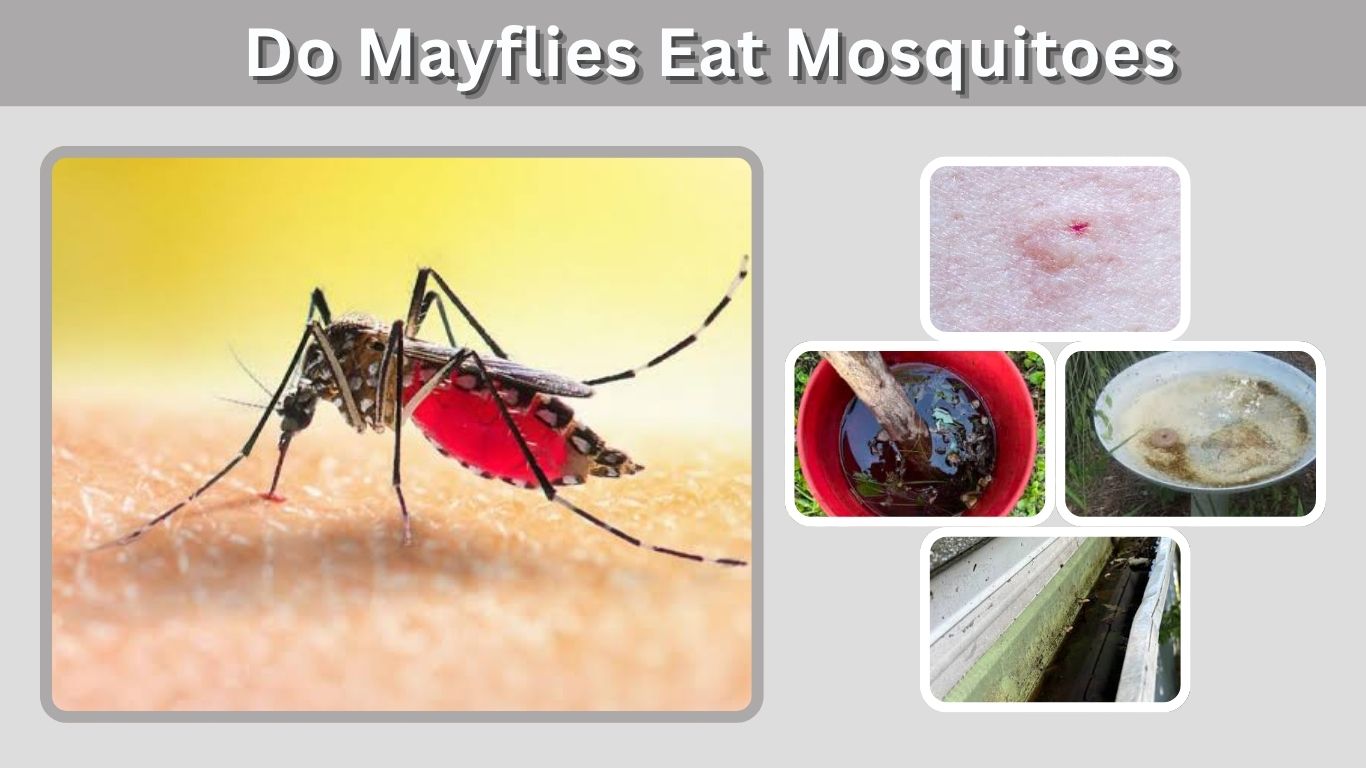
Mayflies do not normally eat mosquitoes or control mosquito populations. Adult mayflies cannot eat because they lack functional mouthparts, while their aquatic nymphs generally consume algae, decaying plant material, and organic debris. Mayflies and mosquitoes may emerge near the same ponds, lakes, and rivers, but they are separate insects with very different appearances, diets, and behaviors. The large insect sometimes called a “mosquito hawk” is usually a crane fly—not a mayfly—and it does not hunt mosquitoes either.
Do Mayflies Eat Mosquitoes?
No. Mayflies are not mosquito predators during either their aquatic or winged life stages.
Adult mayflies live primarily to mate and lay eggs. Their mouthparts are reduced and nonfunctional, so they cannot capture adult mosquitoes, consume mosquito larvae, or feed on anything else. Mississippi State University’s insect guide identifies mayfly immatures as feeders on plants or detritus and notes that adults lack functional mouthparts.
What Mayfly Nymphs Eat
Mayfly nymphs live underwater for much longer than the winged adults. Depending on the species and habitat, they may:
- Scrape algae from rocks and plants
- Gather tiny particles of decaying vegetation
- Consume microorganisms and organic debris
- Filter suspended food from moving water
- Feed on soft aquatic plant material
Aquatic insects use several feeding methods, including scraping algae, collecting fine detritus, and shredding decaying vegetation. These are the feeding roles associated with most common mayfly nymphs, not active mosquito hunting.
A few specialized mayfly nymphs may consume tiny aquatic animals, but mayflies are not considered important predators of mosquito larvae. Their presence should not be treated as a natural mosquito-control method.
Mayfly vs Mosquito: Main Differences
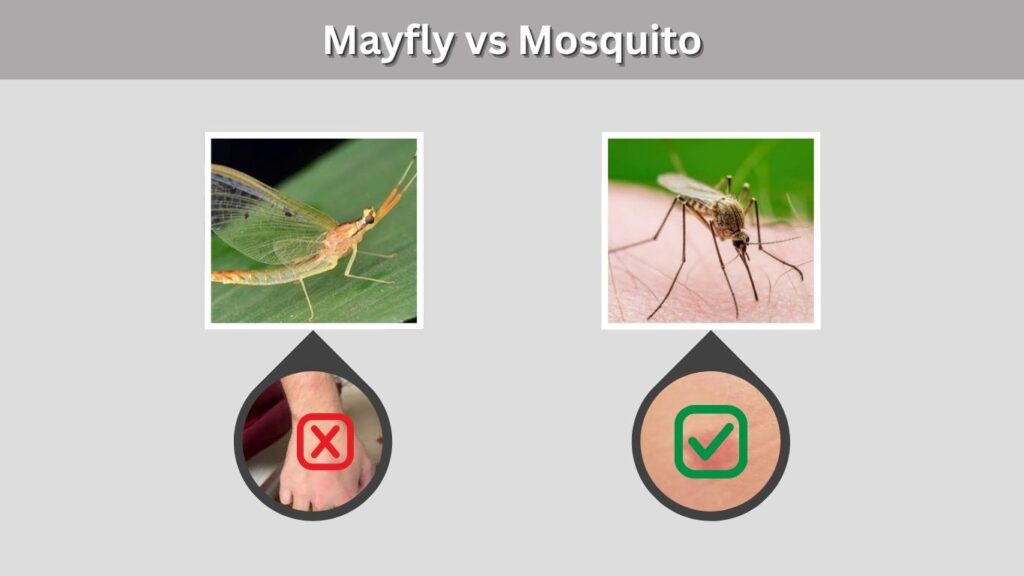
Mayflies and mosquitoes can both have delicate bodies and appear in large numbers near water. A closer look, however, reveals several obvious differences.
| Feature | Mayfly | Mosquito |
| Insect order | Ephemeroptera | Diptera |
| Wings | Two large forewings and usually two smaller hindwings | One pair of wings |
| Tails | Two or three long tail filaments | No tail filaments |
| Resting wings | Usually held upright | Usually held along the body |
| Mouthparts | Nonfunctional in adults | Long sucking proboscis |
| Adult diet | Does not eat | Nectar; females of many species also take blood |
| Aquatic young | Nymph | Larva and pupa |
| Human bite | Cannot bite | Females of many species can bite |
| Main adult purpose | Mating and egg laying | Feeding, mating, and egg laying |
Mayfly Appearance
An adult mayfly has a soft, slender body, clear triangular wings, and two or three long filaments extending from the abdomen. Its wings are commonly held upright like small sails when the insect rests.
Adults are generally about ¼ to 1¼ inches long, excluding their tails. They are closely associated with freshwater and frequently gather around outdoor lights in large numbers.
Mosquito Appearance
A mosquito has a narrow body, six long legs, one pair of scaled wings, and a noticeable proboscis projecting from its head. It does not have the long tail filaments seen on a mayfly.
Male mosquitoes often have bushier antennae than females. Adult mosquitoes feed on plant nectar, while females of many species also take blood meals to support egg development.
Are Mayflies Mosquitoes?
Mayflies are not mosquitoes and are not closely related to them.
Mayflies belong to the order Ephemeroptera and undergo incomplete metamorphosis. Their life cycle includes egg, aquatic nymph, winged subadult, and adult stages. They are unusual because the first winged stage molts again before becoming fully mature.
Mosquitoes belong to the order Diptera and undergo complete metamorphosis. Their life cycle consists of egg, larva, pupa, and adult. Mosquito larvae and pupae develop in standing water before adults emerge.
Why People Confuse Them
The confusion usually occurs because both insects:
- Develop in or around freshwater
- Have slender bodies and delicate legs
- May appear in large seasonal swarms
- Are strongly associated with warm weather
- Can gather near lights and buildings
- Rest on walls, screens, doors, and vegetation
The easiest identification clue is the tail. A flying insect with two or three long tails and upright triangular wings is probably a mayfly. A smaller insect with a long forward-pointing proboscis and no tails is more likely a mosquito.
Do Mayflies Bite People?
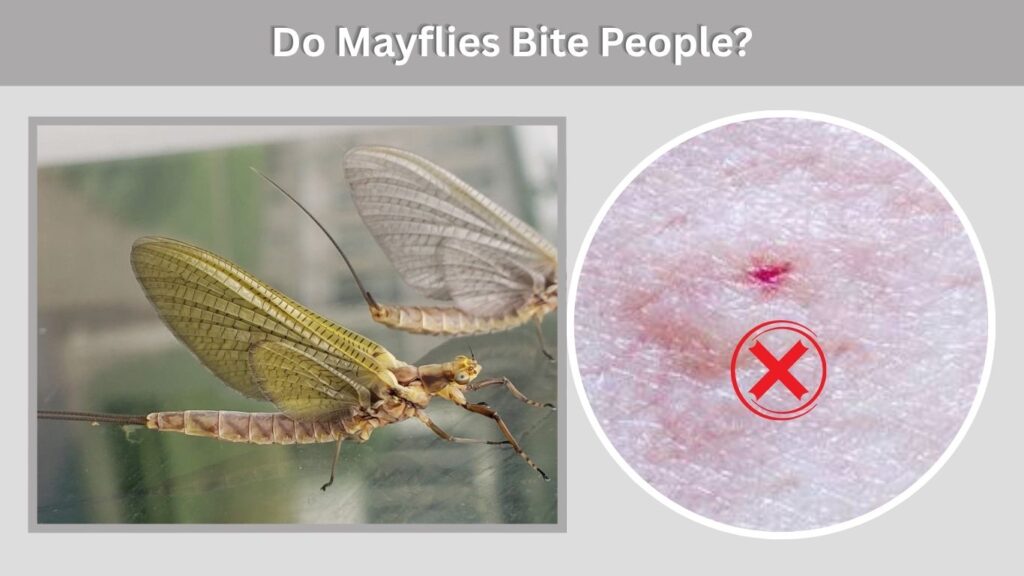
Mayflies cannot bite or sting. Adult mayflies lack working mouthparts, and neither adults nor aquatic nymphs are considered dangerous to people. Large swarms may be annoying, but they do not feed on blood or transmit mosquito-borne diseases.
A red or itchy bump noticed during a mayfly hatch was probably caused by another arthropod, such as a mosquito, biting midge, flea, or mite.
Mayflies may land on people because they are attracted to light-colored surfaces or nearby illumination. Landing is not an attempt to bite or feed.
Do Mayflies Kill Mosquitoes?
Mayflies do not actively kill adult mosquitoes. Adult mayflies cannot feed, hunt, or defend an area against other flying insects.
Their aquatic nymphs may share ponds, wetlands, and slow waterways with mosquito larvae, but they generally feed on algae and organic material rather than hunting mosquitoes. Mayflies therefore have little direct effect on the number of mosquitoes around a home.
Can Mayflies Compete With Mosquito Larvae?
Both insects may use aquatic resources, so limited competition for microorganisms or organic material could theoretically occur in some habitats. However, this would be an indirect ecological interaction rather than mayflies deliberately controlling mosquitoes.
Mosquito larvae can develop in very small amounts of standing water, including birdbaths, flowerpots, tires, gutters, and containers. Mayfly nymphs are more commonly associated with natural freshwater habitats such as rivers, streams, lakes, and ponds.
Removing artificial standing water around a property is therefore much more effective than relying on mayflies.
Mosquito Hawk vs Mayfly
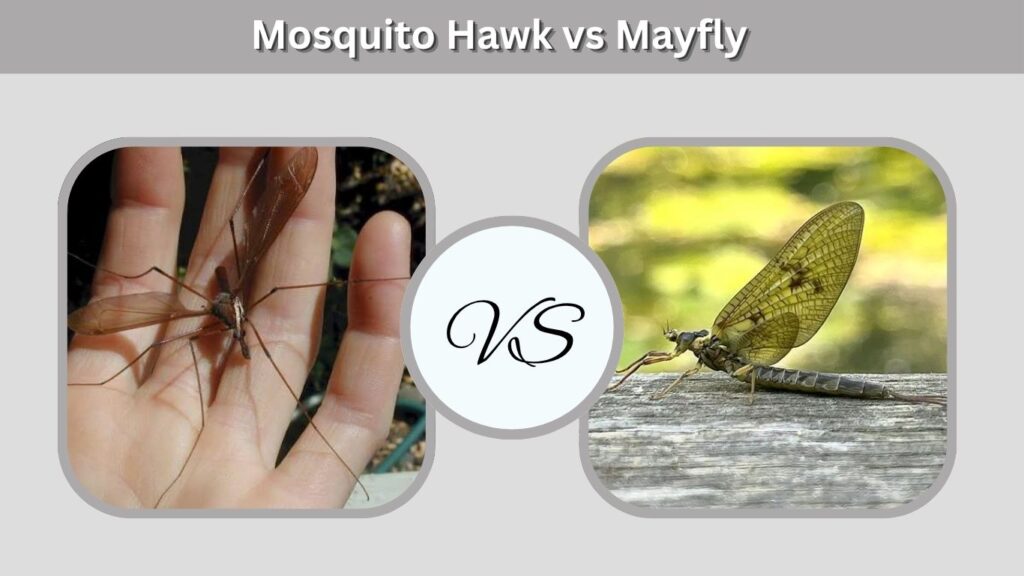
The name “mosquito hawk” is commonly applied to crane flies. Crane flies resemble oversized mosquitoes because they have narrow bodies, delicate wings, and extremely long legs.
A crane fly is not a mayfly. It has no long tail filaments and normally holds its wings differently. It also belongs to the fly order Diptera.
Do Mosquito Hawks Eat Mosquitoes?
Despite the nickname, adult crane flies do not hunt mosquitoes. Most adults do not feed, while some may consume nectar. Texas A&M confirms that crane flies are neither mosquitoes nor mosquito predators.
Crane flies are also harmless to people. They do not sting, and their fragile bodies and awkward flight often make them look more threatening than they are.
| Insect | Eats mosquitoes? | Bites people? | Best identification clue |
| Mayfly | No | No | Upright wings and long tails |
| Crane fly or “mosquito hawk” | No | No | Very long legs and no tails |
| Mosquito | Not normally | Females of many species do | Proboscis and one pair of wings |
| Dragonfly | Yes, sometimes | No blood-feeding bite | Large eyes and four horizontal wings |
What Actually Eats Mosquitoes?
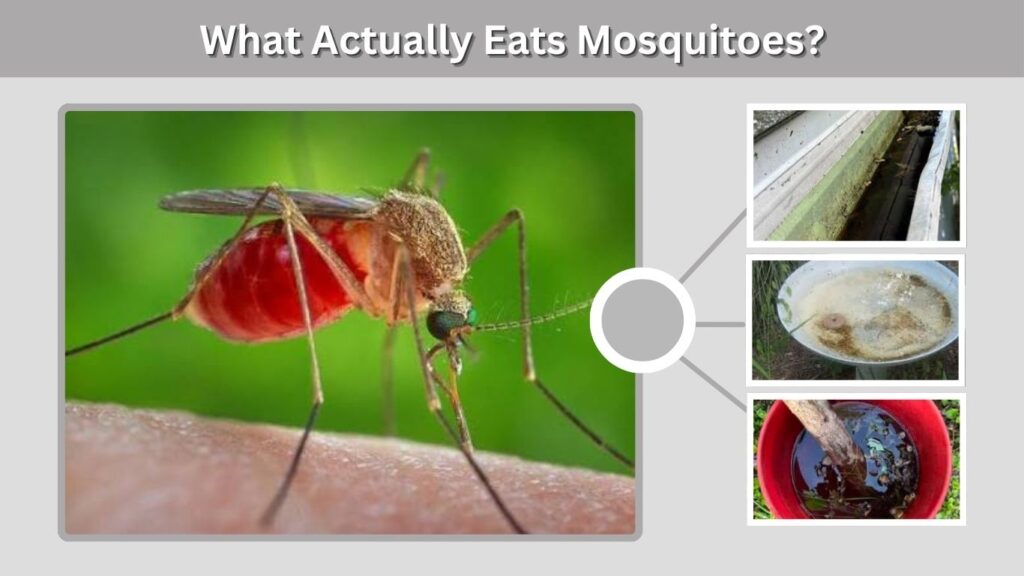
Mosquitoes are consumed by many aquatic and terrestrial predators. Depending on the life stage, potential predators include dragonfly and damselfly nymphs, predatory aquatic insects, fish, spiders, birds, bats, and adult dragonflies.
However, predators alone rarely eliminate mosquitoes from a property. Mosquitoes can reproduce quickly in small, overlooked water sources. The most practical control method is to empty, cover, or regularly clean containers that hold standing water.
Common breeding locations include:
- Buckets and plant saucers
- Clogged gutters
- Birdbaths
- Discarded tires
- Tarps and outdoor toys
- Pet water containers
- Rain barrels without screens
- Open trash cans or lids
Mosquito eggs are laid in or near water, and the larvae and pupae develop there. Some species can complete development in water held by an object as small as a bottle cap.
Why Are Mayflies and Mosquitoes Present Together?
Both insects depend on aquatic habitats, but they use those habitats differently.
Mayfly nymphs commonly develop in natural freshwater systems and may spend months or years underwater. Mosquito larvae usually develop in standing water, with some species favoring ponds and swamps and others using artificial containers.
Warm weather can cause both insects to become noticeable during the same period. A mayfly hatch may produce thousands of harmless adults, while mosquitoes may also become active around the shoreline. Seeing them together does not mean one is feeding on the other.
FAQs
Are Mayflies Mosquito Eaters?
No. Adult mayflies cannot eat, and their aquatic nymphs mainly consume algae, plants, microorganisms, and decaying organic material. They are not effective mosquito predators.
Is a Mayfly the Same as a Male Mosquito?
No. A male mosquito has one pair of wings, a proboscis, and often bushy antennae. A mayfly usually has upright triangular wings and two or three long tails.
Do Mayflies Bite Like Mosquitoes?
Mayflies do not bite. Their adult mouthparts are nonfunctional, and they do not feed on blood. A bite experienced near a mayfly swarm was caused by another insect.
Is a Mosquito Hawk a Mayfly?
No. “Mosquito hawk” usually refers to a crane fly. Crane flies have exceptionally long legs but lack the upright wings and tail filaments characteristic of mayflies.
Should You Kill Mayflies to Reduce Mosquitoes?
No. Killing mayflies will not meaningfully reduce mosquitoes. Mayflies are harmless aquatic insects and an important food source for fish and other wildlife. Mosquito management should focus on removing standing water where larvae develop.