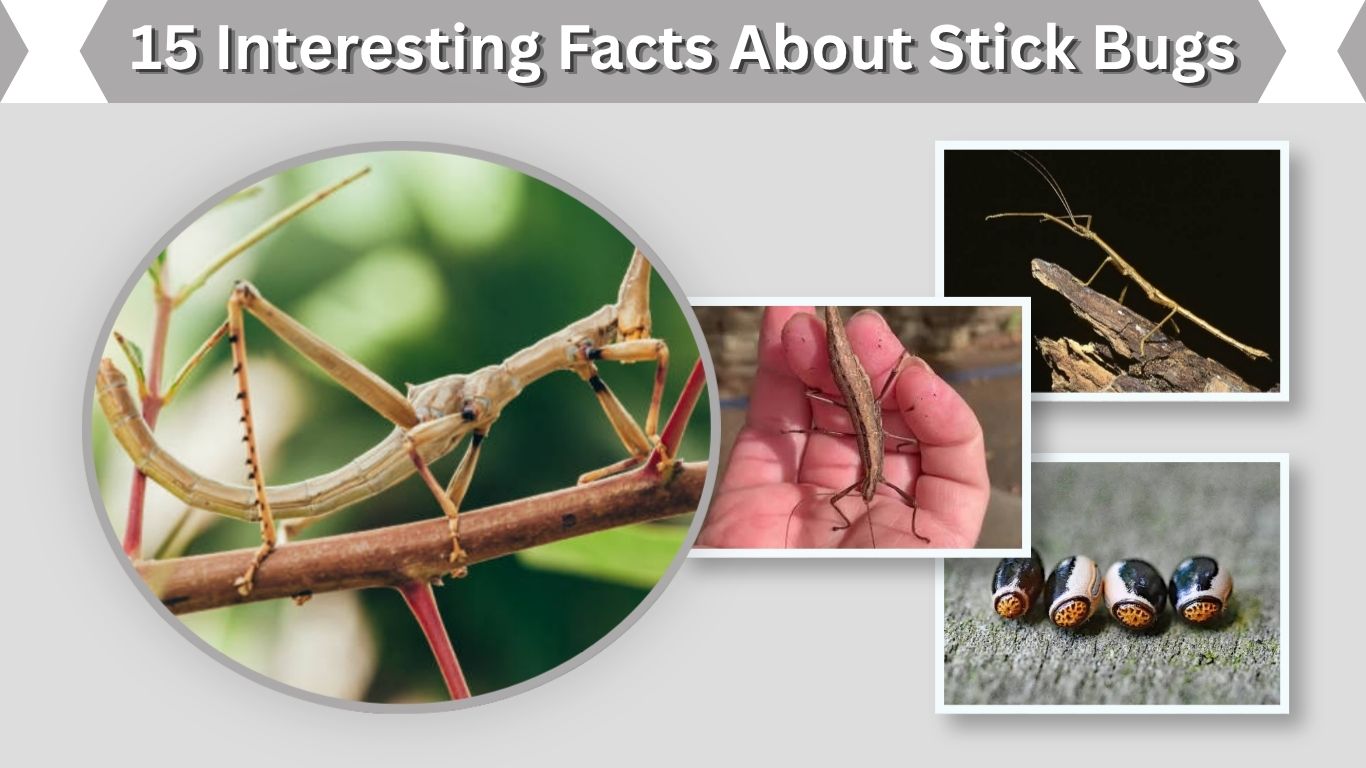
Stick bugs are masters of disguise that resemble twigs, branches, bark, or leaves. Also called walking sticks, stick insects, or phasmids, they belong to the insect order Phasmatodea. Most are quiet plant eaters that remain motionless during the day and feed after dark. Their unusual camouflage, seed-like eggs, defensive tricks, and ability to reproduce without mating make them some of the most fascinating insects in the world.
Stick Insect Fact File
| Feature | Information |
| Common names | Stick bug, walking stick, stick insect, phasmid |
| Scientific order | Phasmatodea |
| Diet | Leaves and other plant material |
| Activity | Mostly nocturnal |
| Main defense | Camouflage |
| Life cycle | Egg, nymph, adult |
| Habitat | Forests, woodlands, shrublands, and gardens |
| Colors | Usually green, brown, gray, or black |
| Danger to humans | Generally harmless |
| Special ability | Some females reproduce without males |
1. Stick Bugs Are Not True Bugs
Although commonly called stick bugs, these insects are not classified among the “true bugs” of the order Hemiptera. They belong to Phasmatodea, an order containing both stick-shaped insects and flattened leaf insects.
The name “phasmid” comes from a word associated with an apparition or phantom, referring to their ability to disappear visually among plants.
2. They Are Excellent Camouflage Artists
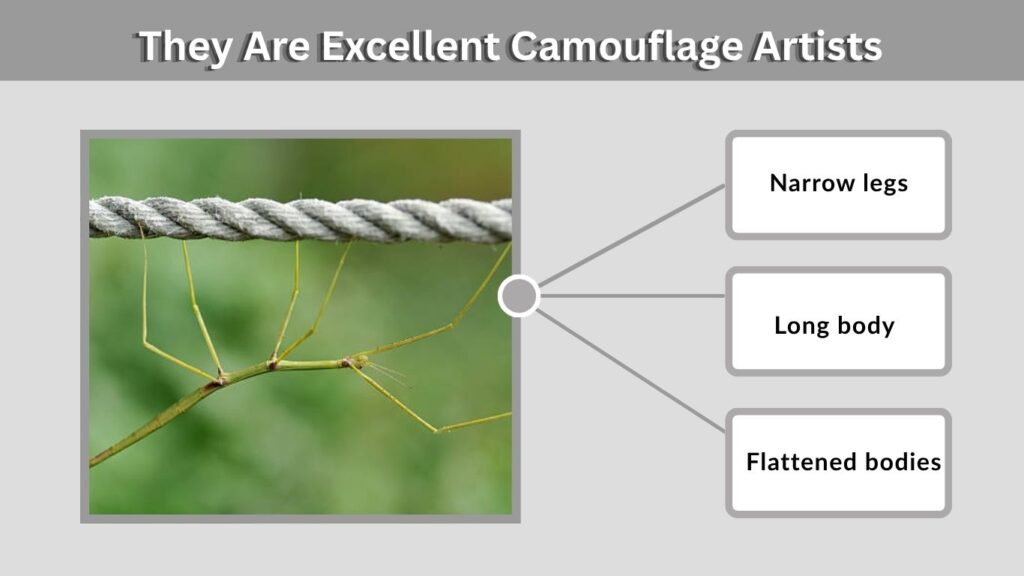
A stick insect’s long body, narrow legs, and bark-like texture help it resemble a twig. Leaf insects take camouflage even further with flattened bodies, leaf-like veins, irregular edges, and markings that may resemble damaged foliage.
This disguise allows them to remain in plain sight while being difficult for predators to recognize.
3. Some Sway Like Branches in the Wind
When walking, many stick insects rock their bodies from side to side. This movement may make them look like twigs or leaves being moved by a breeze.
They may also freeze completely when they sense danger. Remaining motionless strengthens their disguise and can prevent a bird or other visual predator from detecting them.
4. Stick Insects Are Herbivores
Stick insects eat plant material rather than hunting other animals. They use chewing mouthparts to cut pieces from leaves.
Their preferred plants depend on the species. Different phasmids may feed on eucalyptus, oak, rose, bramble, privet, ivy, guava, or other trees and shrubs. Both nymphs and adults eat vegetation.
5. Most Feed at Night
Many stick insects are nocturnal. They remain hidden or motionless among vegetation during daylight and become more active after dark.
Nighttime feeding helps them avoid birds and other daytime predators. Their vision and long antennae help them move through branches and locate suitable leaves under low-light conditions.
6. They Include Some of the World’s Longest Insects
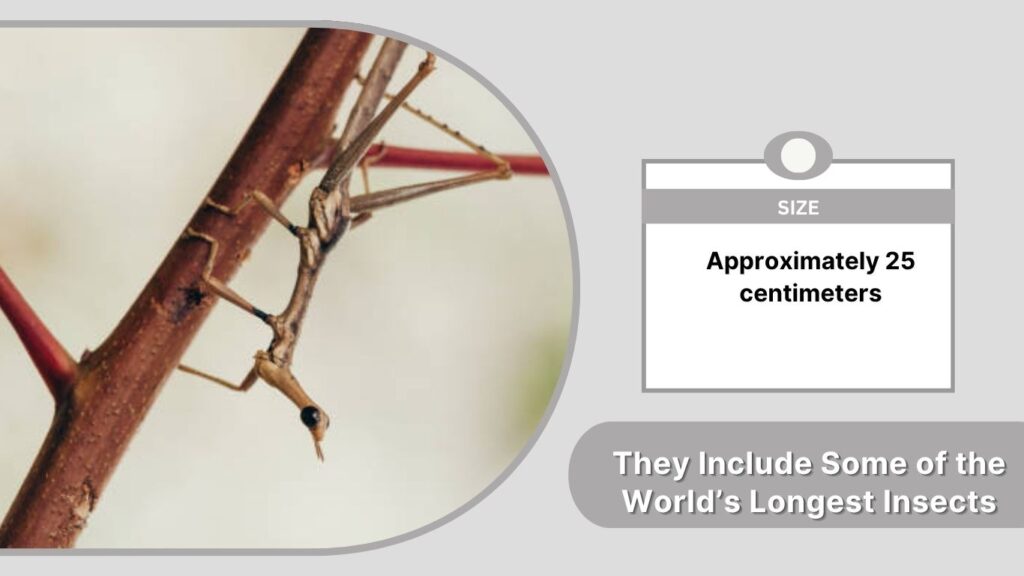
Phasmatodea includes the longest insects known. Their extended bodies and legs can create an impressive total length, although measurements vary depending on whether the legs are included.
Australia’s titan stick insect, for example, can grow to approximately 25 centimeters from head to abdomen and appear even longer when its front legs are stretched forward.
7. Not Every Stick Insect Can Fly
Some species are completely wingless, while others have full or reduced wings. Males are often slimmer and more capable of flying than the heavier females.
Certain winged species hide brightly colored hindwings beneath dull outer wings. When threatened, they suddenly expose the colors, potentially startling a predator long enough to escape.
8. Their Eggs Can Resemble Seeds
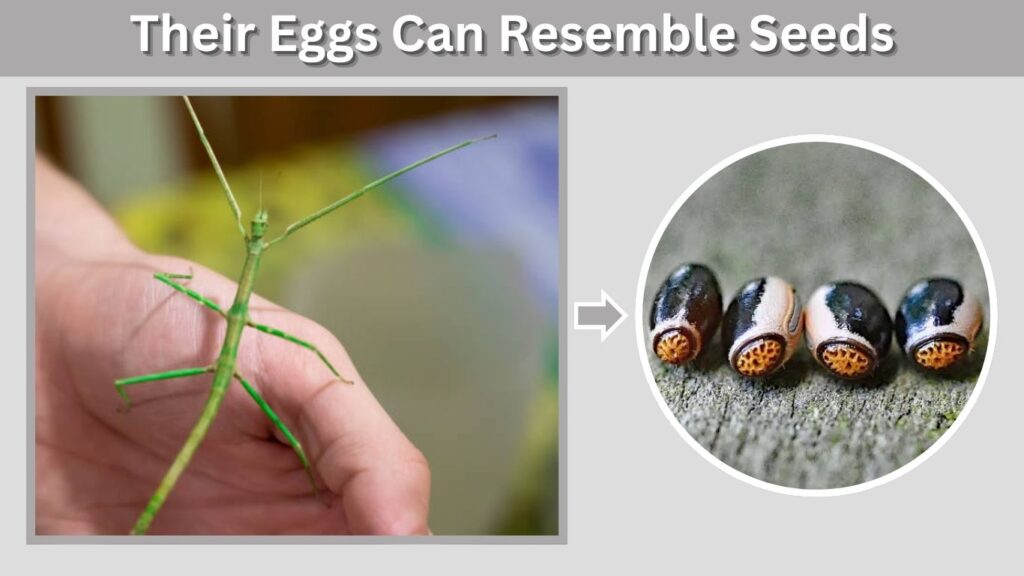
Stick insect eggs often look more like plant seeds than ordinary insect eggs. A female may drop them individually from a branch, allowing them to fall into leaf litter or soil.
The hard outer shell protects the developing insect. Depending on the species and environmental conditions, eggs may take months or even years to hatch.
9. Ants Sometimes Protect Their Eggs
Some phasmid eggs possess a small edible structure called a capitulum. Ants mistake these eggs for seeds, carry them underground, and consume the capitulum without damaging the embryo.
The egg remains protected inside the ant nest until the young stick insect hatches. Some newly emerged nymphs even resemble ants as they hurry away and climb toward fresh leaves.
10. Some Females Reproduce Without Males
Many female stick insects can reproduce through parthenogenesis. This means an unfertilized egg can develop without mating and will usually produce a female offspring.
When mating occurs, the offspring may include both males and females. This ability allows an isolated female to establish a population, although sexual reproduction generally creates greater genetic diversity.
11. Young Stick Insects Look Like Small Adults
Stick insects undergo incomplete metamorphosis. Their life cycle does not include a caterpillar or pupal stage.
A young stick insect, called a nymph, resembles a smaller adult. It grows by repeatedly shedding its exoskeleton. Its body expands and hardens after every molt until it reaches adulthood.
12. They Can Use More Than Camouflage for Defense
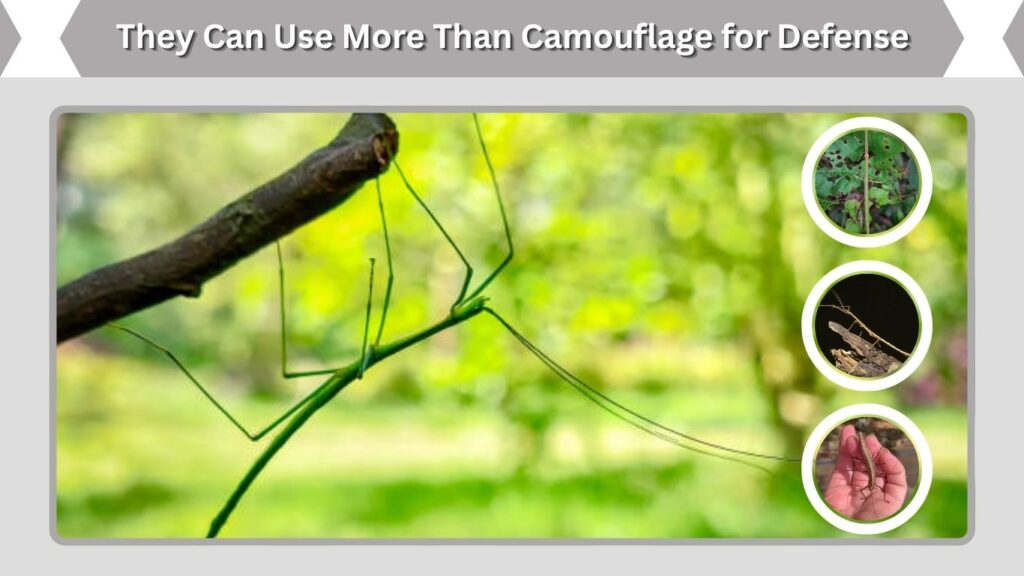
Camouflage is their main protection, but some species have additional defenses. These may include:
- Sharp spines on the body or legs
- Powerful kicking movements
- Startling wing displays
- Hissing sounds
- Unpleasant odors
- Irritating chemical sprays
- Dropping from a branch and remaining still
Large, heavily built species may use spiny hind legs to squeeze or kick an attacker.
13. Most Stick Bugs Do Not Bite or Sting
Stick insects possess chewing mouthparts, but they use them for eating leaves. They do not hunt people, drink blood, or have stingers.
However, large or spiny species may scratch or pinch when handled. A few species can release irritating defensive chemicals, so unfamiliar stick insects should be kept away from the eyes and face.
14. Males and Females Can Look Very Different
Female stick insects are frequently larger, heavier, and broader than males because their bodies must carry eggs. Males are commonly narrower, lighter, and more active.
In winged species, males may have longer functional wings, allowing them to fly in search of females. The size difference can be so great that males and females of the same species appear unrelated.
15. Their Lifespan Depends on the Species
Temperature, food, humidity, sex, and species all influence how long a stick insect lives. Some commonly kept Australian phasmids spend many months developing and live for more than a year.
The Australian Museum notes that females of some species may survive for approximately 18 months, whereas males may live around six to eight months. These figures should not be treated as universal for every phasmid.
Stick Bugs vs. Leaf Insects
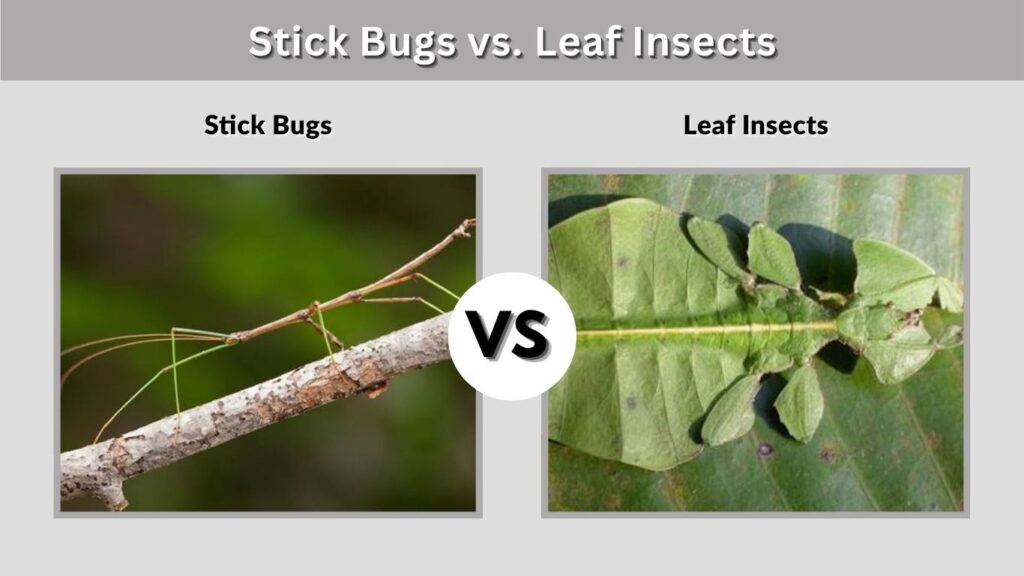
Stick bugs and leaf insects belong to the same order, but their disguises differ.
| Feature | Stick insect | Leaf insect |
| Body shape | Long and narrow | Broad and flattened |
| Main resemblance | Twig or branch | Living or dead leaf |
| Legs | Thin and stick-like | Often flattened with leaf-like lobes |
| Typical movement | Sways like a twig | Rocks like a moving leaf |
| Common colors | Brown, green, or gray | Mainly green, brown, or yellow |
Both groups depend on camouflage, eat leaves, and are generally harmless to people.
FAQs
Are stick bugs dangerous?
Most stick bugs are harmless and neither bite nor sting. Larger species may have sharp leg spines, while certain phasmids release unpleasant or irritating defensive substances. Observe unfamiliar species without squeezing them or placing them close to your face.
What do stick bugs eat?
Stick bugs eat leaves from trees, shrubs, and other plants. The correct food varies by species. Common host plants include bramble, eucalyptus, oak, privet, ivy, and rose. They do not normally eat meat or other insects.
How long do stick insects live?
Lifespan varies widely. Many live for approximately one year, while some females may survive for 18 months or longer. Males of the same species frequently have shorter lives than females.
Can stick bugs fly?
Some can, but many cannot. Certain species are entirely wingless, while others have reduced or fully developed wings. Males are generally more likely to fly because their lighter bodies make it easier to search for females.
Can stick insects reproduce without mating?
Yes. Females of many species can produce viable eggs through parthenogenesis. These unfertilized eggs normally develop into females, enabling reproduction when males are absent.