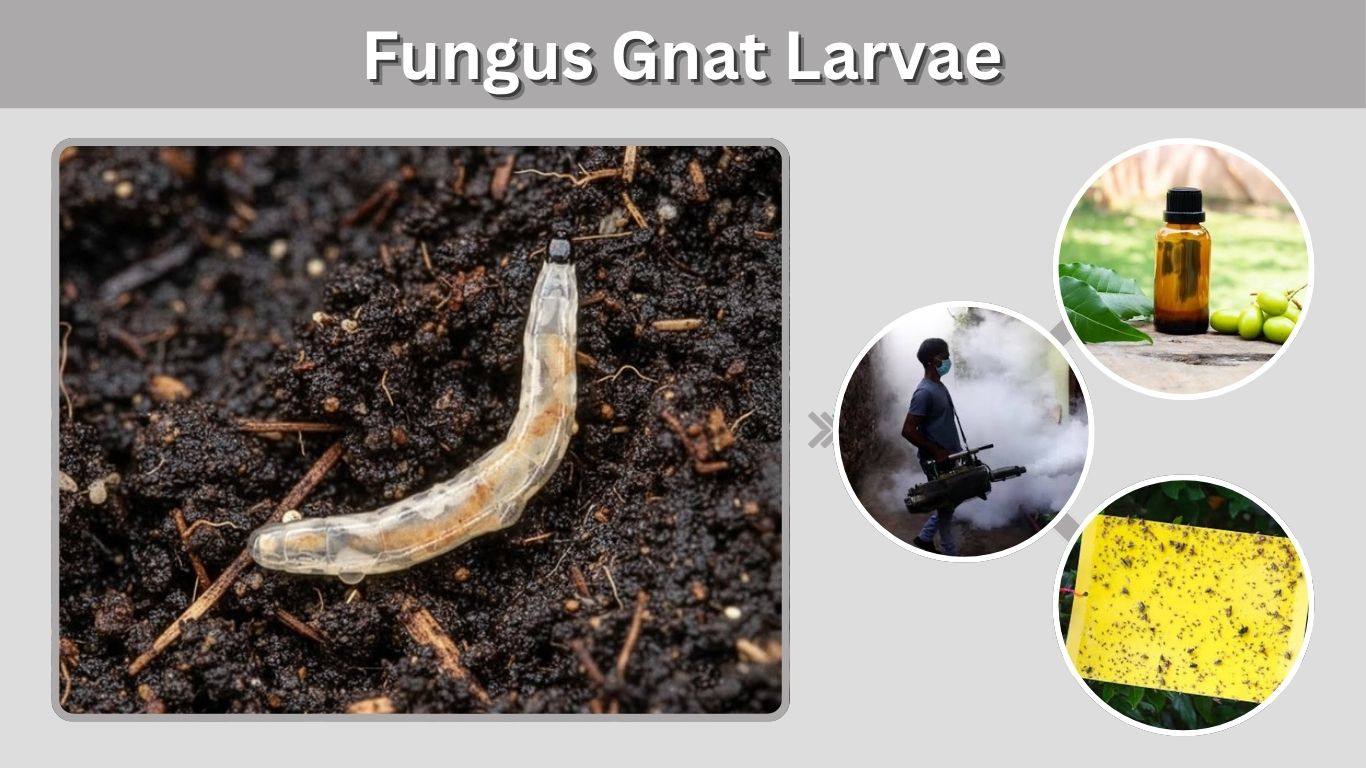
Fungus gnat larvae are tiny, worm-like insects commonly found in moist potting soil, greenhouses, and areas containing decaying organic matter. While adult fungus gnats are mostly annoying, the larvae can become a bigger problem because they feed on fungi, decaying material, and sometimes delicate plant roots. Heavy infestations may damage seedlings and young plants. This guide explains what fungus gnat larvae look like, where they live, what they eat, how to kill them, and the most effective ways to keep them from returning.
What Are Fungus Gnat Larvae?
Fungus gnat larvae are the immature stage of small flies commonly belonging to the family Sciaridae.
Adult females usually lay their eggs in damp soil rich in fungi and organic matter. Once the eggs hatch, the larvae begin feeding below the soil surface.
Their preferred environments include:
- Moist houseplant soil
- Seedling trays
- Greenhouses
- Compost
- Decaying leaves
- Organic-rich potting mixes
- Damp garden soil
They are particularly common when plants are watered frequently and the soil remains continuously wet.
What Do Fungus Gnat Larvae Look Like?
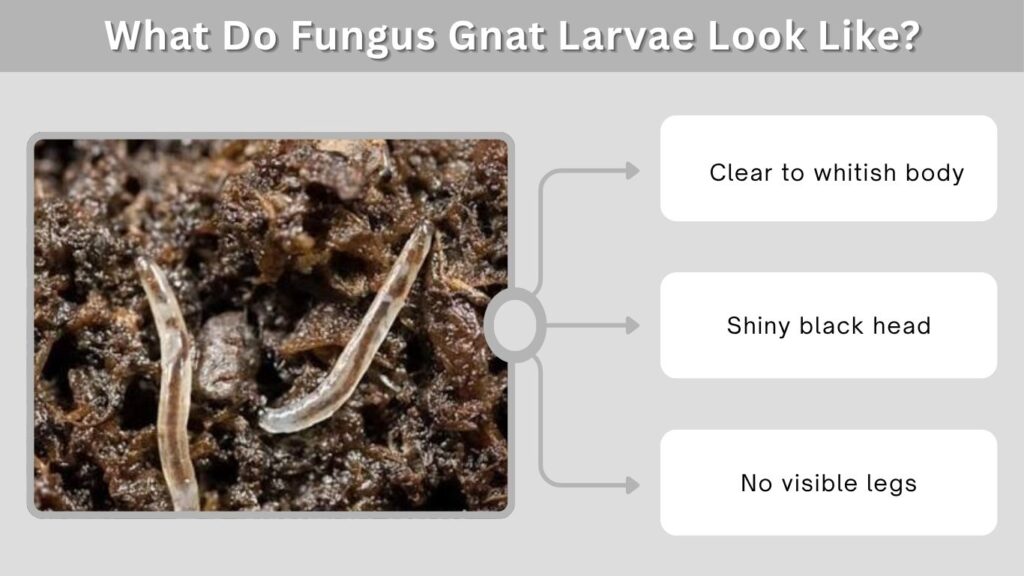
Fungus gnat larvae are small, slender, and almost transparent.
Typical identification features include:
- Clear to whitish body
- Shiny black head
- Long, narrow, worm-like shape
- No visible legs
- Usually only a few millimeters long
- Slow crawling or wriggling movement
The black head capsule is one of the easiest characteristics to recognize.
Because their bodies are nearly transparent, you may sometimes see the digestive tract through the body.
If you gently disturb moist potting soil, larvae may become visible moving near the surface.
Fungus Gnat Larvae in Soil
Most fungus gnat larvae live within the upper few inches of moist soil.
They prefer this area because it contains plenty of fungi, decaying plant material, and fine plant roots.
Houseplants become especially attractive when:
- Soil is constantly wet
- Drainage is poor
- Dead leaves remain on the surface
- Organic potting mixes stay damp
- Water remains in saucers
Adult females continually return to suitable soil to deposit eggs, allowing an infestation to grow quickly.
Reducing excessive moisture is therefore one of the most important steps in control.
What Do Fungus Gnat Larvae Eat?
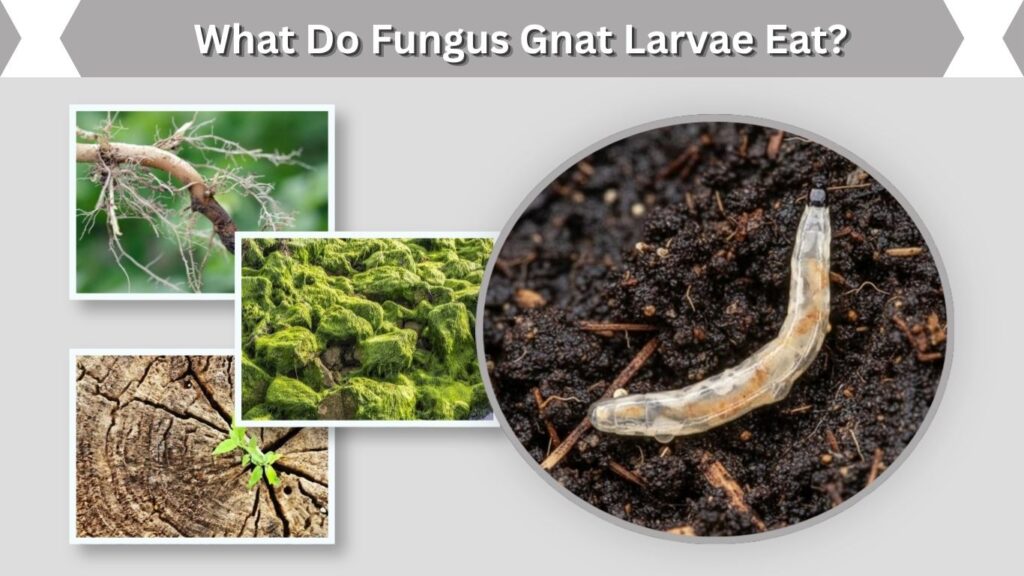
Their primary foods are fungi and decomposing organic matter.
They may consume:
- Fungal growth
- Algae
- Decaying roots
- Dead plant tissue
- Organic material in soil
However, when populations become large or food is limited, larvae can also feed on living plant roots and tender plant tissues.
This is why fungus gnats are more dangerous to young plants than established mature houseplants.
Are Fungus Gnat Larvae Harmful to Plants?
Small numbers usually cause little noticeable damage.
Heavy infestations, however, can become problematic, particularly for:
- Seedlings
- Young plants
- Newly rooted cuttings
- Delicate houseplants
- Greenhouse crops
Root feeding may lead to:
- Slow growth
- Yellow leaves
- Wilting
- Weak roots
- Poor seedling development
- Increased susceptibility to root diseases
Seedlings may be especially vulnerable because they have limited root systems.
How to Get Rid of Fungus Gnat Larvae
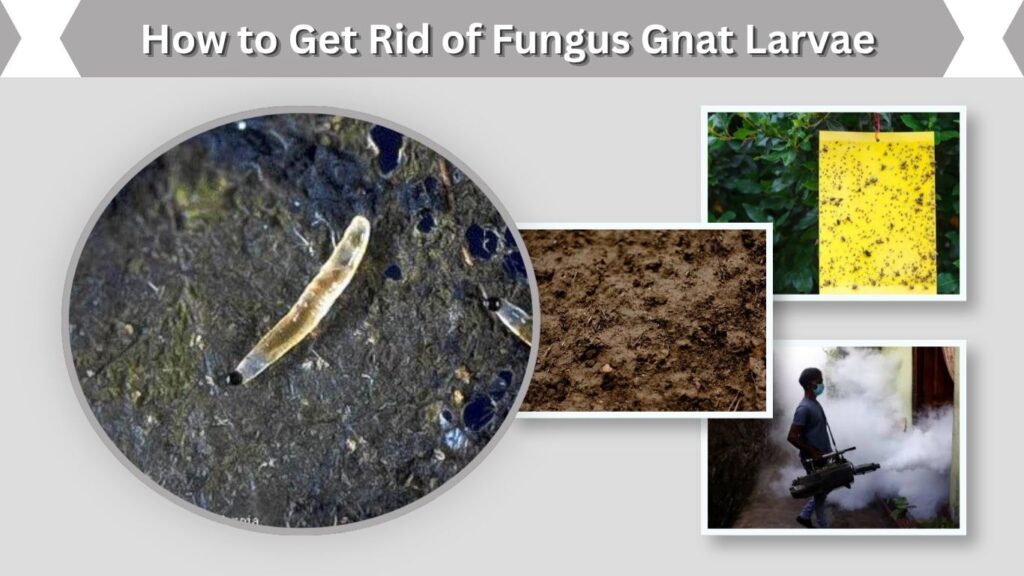
The best approach is to attack the larvae while also reducing adult fungus gnats.
Let the Soil Dry
Allow the upper layer of potting soil to become moderately dry before watering again when the plant species allows it.
Fungus gnat eggs and larvae thrive in continuously moist conditions.
Drying the surface makes it less attractive for adult females to lay eggs and less favorable for young larvae.
Use Bti
Bacillus thuringiensis israelensis, or Bti, is a biological control commonly used against certain fly larvae.
When used according to label directions, Bti can be applied to affected soil so fungus gnat larvae consume it.
Repeated applications may be needed because eggs can continue hatching after the first treatment.
Add Yellow Sticky Traps
Sticky traps do not kill larvae, but they reduce adult fungus gnats.
Catching adult females helps prevent them from laying additional eggs in the soil.
The combination of sticky traps and larval control is usually much more effective than either method alone.
Beneficial Nematodes for Fungus Gnat Larvae
The beneficial nematode Steinernema feltiae is widely used as a biological control for fungus gnat larvae.
These microscopic organisms move through moist soil and enter susceptible larvae.
They can be particularly useful in:
- Greenhouses
- Indoor plant collections
- Propagation areas
- Seedling trays
Because beneficial nematodes are living organisms, storage temperature and application instructions are important.
They work best when soil conditions remain suitable for the nematodes without being excessively waterlogged.
Does Hydrogen Peroxide Kill Fungus Gnat Larvae?
Hydrogen peroxide is a popular home treatment for fungus gnat larvae.
Diluted peroxide can kill some larvae on contact, but using excessively strong concentrations can damage plant roots and disrupt beneficial soil organisms.
For this reason, hydrogen peroxide should not automatically be considered the best long-term treatment.
Biological controls such as Bti or beneficial nematodes are often more suitable for repeated use.
Preventing overwatering remains essential regardless of which treatment you choose.
Does Neem Oil Kill Fungus Gnat Larvae?
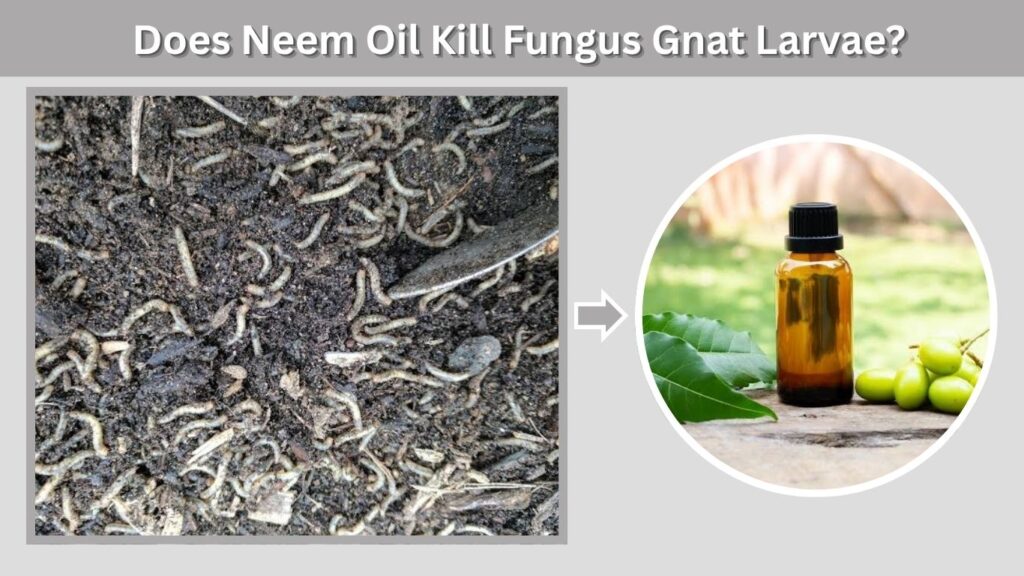
Neem-based products may reduce some fungus gnat activity when applied correctly, but results can vary depending on the formulation and how it is used.
Neem oil alone is unlikely to solve a severe infestation if the soil continues to remain excessively wet.
If using neem products, always follow the product label and confirm that the product is intended for the plant and application method involved.
Combining moisture management with direct larval control generally provides better results.
Does Diatomaceous Earth Kill Fungus Gnat Larvae?
Food-grade diatomaceous earth may help control insects that come into contact with it while it remains dry.
However, fungus gnat larvae live in moist soil, and diatomaceous earth becomes far less effective after getting wet.
Since houseplants require watering, maintaining a consistently dry layer can be difficult.
It may provide some additional control around the soil surface but should not be relied on as the only treatment.
Can You Drown Fungus Gnat Larvae?
Simply adding more water is not a reliable way to kill fungus gnat larvae.
In fact, repeatedly soaking the soil can make the infestation worse because fungus gnats thrive in wet conditions.
Good drainage and allowing soil to dry appropriately are much more effective.
If water sits in decorative pots or saucers, empty it promptly.
Fungus Gnat Larvae Life Cycle
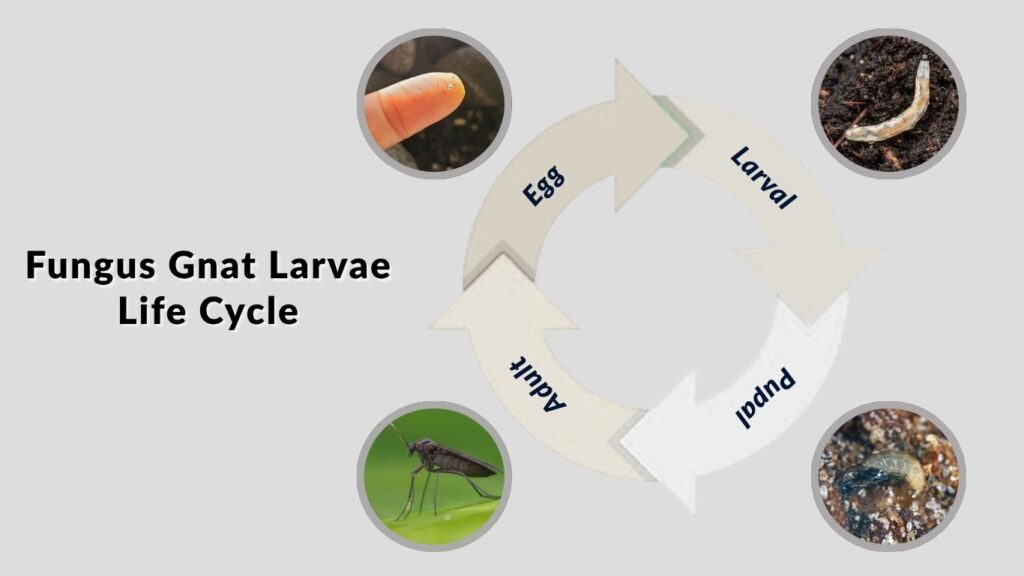
Fungus gnats develop through four main stages:
- Egg
- Larva
- Pupa
- Adult
Females deposit tiny eggs in moist growing media.
The eggs hatch into larvae, which spend much of their development feeding within the soil.
Once mature, they form pupae near the soil surface. Small adult gnats then emerge and begin searching for mates and suitable places to lay additional eggs.
Under warm indoor conditions, the entire life cycle can be completed relatively quickly, allowing populations to build rapidly.
How Long Do Fungus Gnat Larvae Live?
The larval stage generally lasts roughly one to two weeks, although temperature, species, food, and moisture can change development time.
Cooler conditions may slow development.
Because eggs, larvae, pupae, and adults can all exist at the same time, one treatment rarely eliminates an established infestation immediately.
Continued treatment for several weeks is often necessary.
Fungus Gnat Larvae Moving Together
Some fungus gnat larvae may occasionally move together in groups or form a visible trail.
Large numbers of larvae traveling closely together can create an unusual snake-like appearance.
This behavior is sometimes described as a larval procession or migration.
It can occur when larvae are searching for more favorable moisture, food, or pupation conditions.
Seeing large numbers moving together usually indicates that a substantial population is present nearby.
Can Fungus Gnat Larvae Live in Water?
Fungus gnat larvae generally prefer moist organic material rather than living as fully aquatic insects.
Extremely wet soil, algae-covered surfaces, drainage areas, and saturated growing media can still support them.
Larvae found swimming freely in household drains or standing water may belong to another type of fly or gnat.
Correct identification is important before beginning treatment.
Fungus Gnat Larvae in Humans
Typical fungus gnats associated with houseplants are not normal human parasites. Their larvae are adapted to living in soil, fungi, and decomposing organic material rather than human skin.
If someone believes they see larvae emerging from or living beneath their skin, it should not automatically be assumed to be fungus gnat larvae.
Other insects, skin conditions, infections, or environmental material may look similar.
A healthcare professional should evaluate persistent skin lesions, unexplained moving material, pain, swelling, or suspected larvae rather than attempting to treat the condition with household pesticides.
How to Prevent Fungus Gnat Larvae
Prevention mainly involves keeping growing conditions less favorable for egg laying.
Use these practices:
- Avoid overwatering
- Improve pot drainage
- Remove fallen leaves
- Empty water-filled saucers
- Use well-draining potting soil
- Inspect new plants
- Store potting soil properly
- Use sticky traps for monitoring
Keeping the top layer of soil appropriately dry is particularly helpful for houseplants that tolerate drying between waterings.
FAQs
Can you see fungus gnat larvae?
Yes. Fungus gnat larvae are visible to the naked eye if you look closely. They appear as tiny translucent worms with distinctive black heads.
What kills fungus gnat larvae in soil?
Bti and beneficial nematodes such as Steinernema feltiae are effective biological options. Allowing the soil surface to dry also helps interrupt their development.
Do fungus gnat larvae bite humans?
Fungus gnat larvae associated with houseplants do not normally bite people. They primarily feed on fungi, organic matter, and sometimes plant roots.
Do fungus gnat larvae jump?
No. Typical fungus gnat larvae crawl or wriggle through moist soil rather than jumping.
Why do I keep getting fungus gnat larvae?
Repeated infestations usually indicate that adult gnats still have access to consistently moist soil suitable for laying eggs. Controlling adults, treating larvae, and reducing excessive soil moisture are all necessary for long-term control.