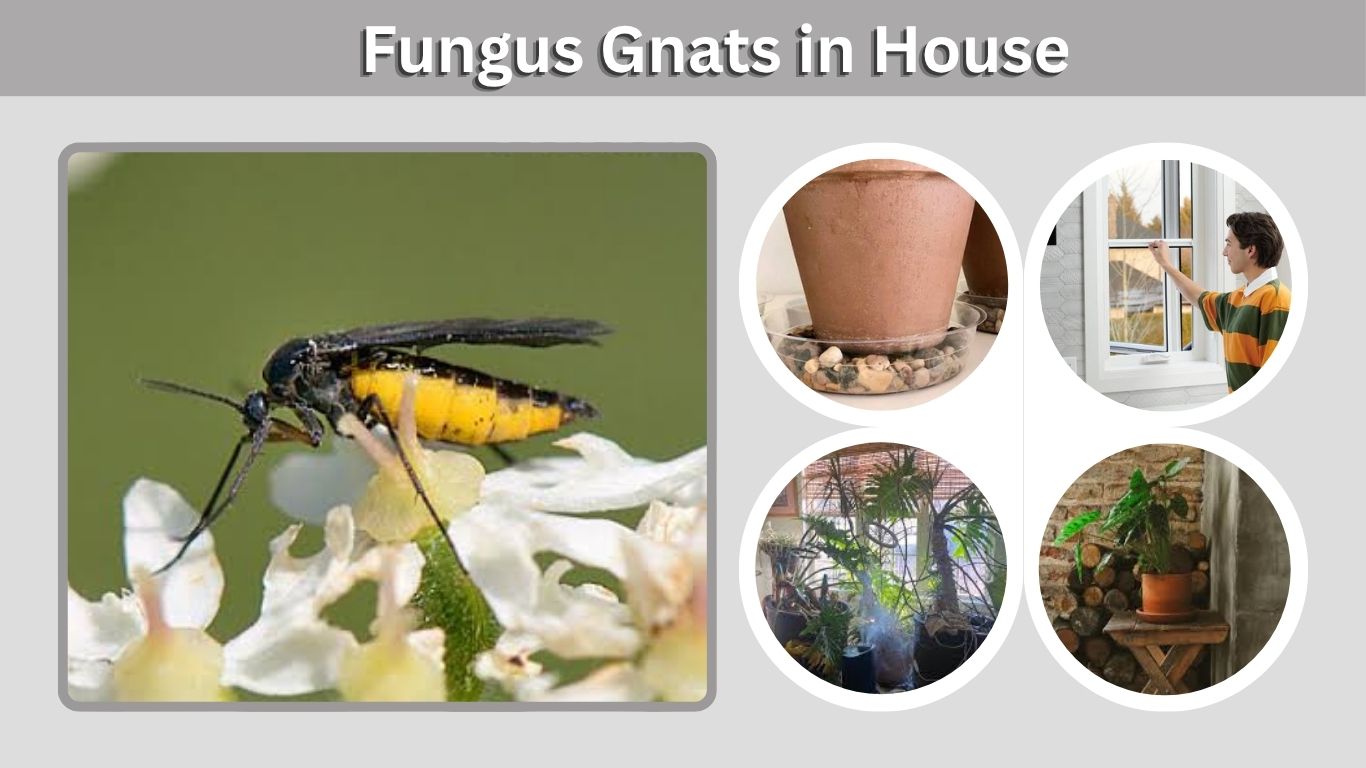
Finding fungus gnats in the house usually means there is a moist breeding source somewhere indoors. These tiny, dark, mosquito-like flies are commonly associated with houseplants, damp potting soil, and decaying organic material. While adult fungus gnats are mostly a nuisance, their larvae can feed on fungi and delicate plant roots. If you suddenly notice small flies around windows, bedrooms, or plants, finding the source is the key to stopping the infestation. Here’s how fungus gnats enter homes, where they breed, and how to get rid of them effectively.
What Are Fungus Gnats in the House?
Fungus gnats are tiny flies, often belonging to the family Sciaridae. Adults are usually dark gray or black and have long legs, slender bodies, and long antennae.
They are commonly mistaken for mosquitoes or fruit flies.
Typical signs include:
- Tiny black flies around houseplants
- Gnats walking over potting soil
- Adults gathering near windows
- Small flies appearing after watering plants
- Larvae in damp soil
- Increased activity in humid rooms
Adult fungus gnats are generally weak flyers. They often stay close to the soil where they developed.
Why Do I Have Fungus Gnats in My House?
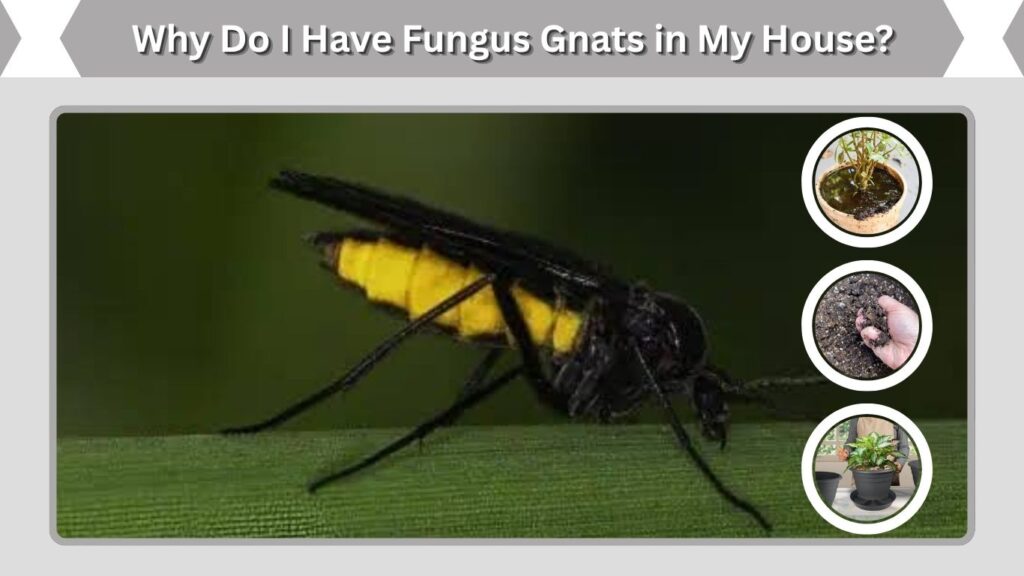
The most common reason is excess moisture.
Adult females look for damp organic material where they can lay eggs. Moist houseplant soil creates ideal conditions because it contains fungi and decomposing plant material that larvae can eat.
Common causes include:
- Overwatered houseplants
- Poorly draining potting soil
- Standing water in plant saucers
- Decaying leaves
- Damp bags of potting mix
- Leaking plumbing
- Wet organic debris
- High indoor humidity
New plants can also bring fungus gnat eggs or larvae into the house.
Where Do Fungus Gnats Come From?
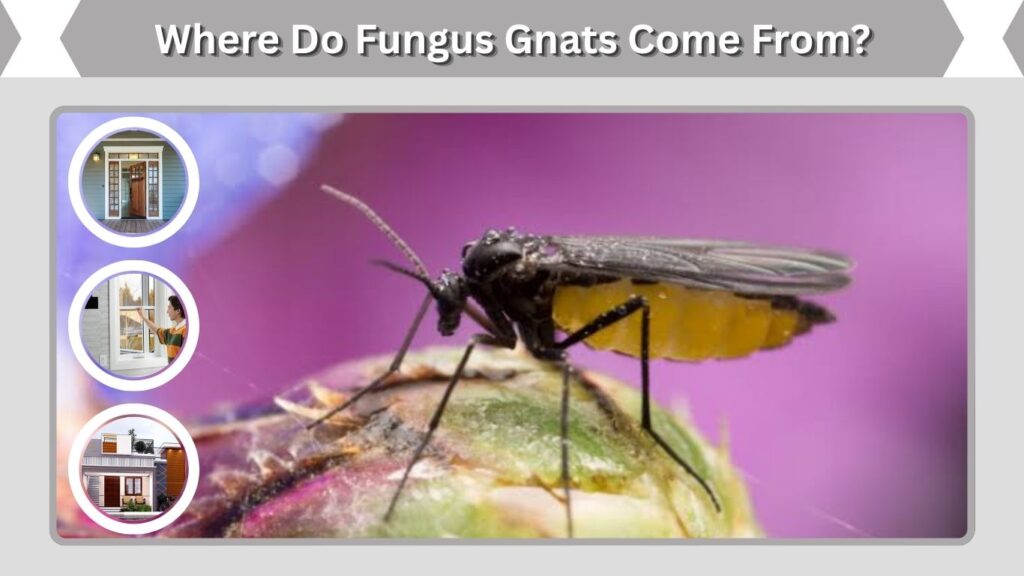
Fungus gnats may enter a home in several ways.
One of the most common is through newly purchased plants or bags of potting soil. Eggs and larvae can already be present in the growing medium without being visible.
Adult gnats may also enter through:
- Open doors
- Window screens
- Small gaps
- Ventilation openings
Once inside, they can reproduce rapidly if they find consistently damp soil.
Fungus Gnats in Houseplants
Houseplants are the most common indoor breeding source.
Adult females deposit eggs in moist potting soil. The eggs hatch into tiny translucent larvae with black heads.
These larvae feed primarily on:
- Fungi
- Algae
- Decaying roots
- Organic material
- Fine plant roots
A few larvae usually cause little damage to mature plants. Heavy infestations can be more serious for seedlings, cuttings, and young plants with fragile root systems.
Fungus Gnats in House With No Plants
You can still have fungus gnats even if you have no houseplants.
When this happens, look for other damp organic environments.
Possible breeding sources include:
- Damp potting soil stored indoors
- Water-damaged wood
- Moist crawlspaces
- Leaking windows
- Moldy organic debris
- Floor drains
- Garbage containers
- Wet basements
- Damp compost
- Terrariums
However, tiny flies around drains may actually be drain flies, while flies around fruit and food waste may be fruit flies.
Correct identification is important before treatment.
Fungus Gnats in the Bedroom
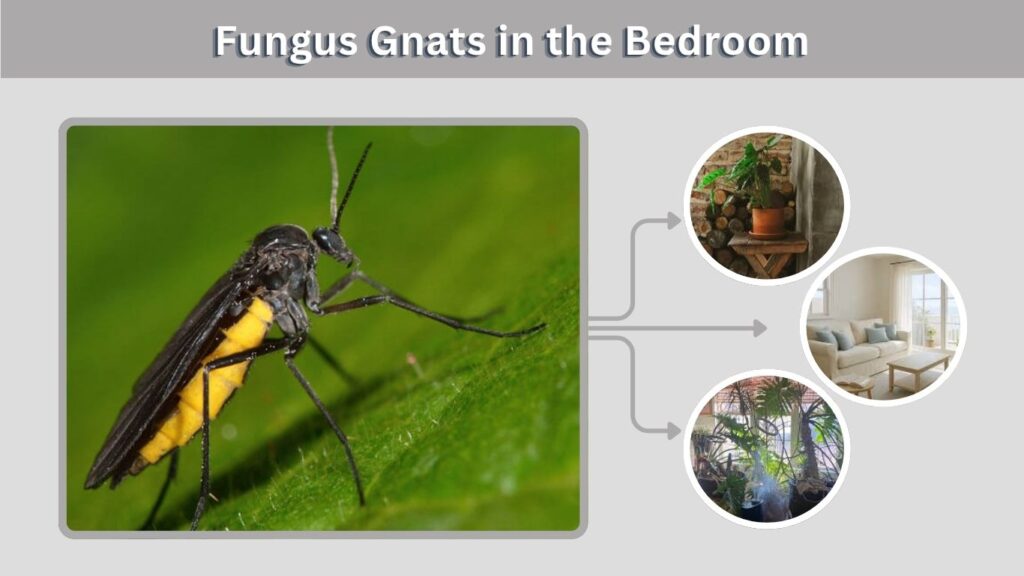
If small flying bugs appear in a bedroom, check for plants first.
A single heavily watered plant can produce many adult gnats.
Also inspect:
- Window areas
- Damp walls
- Plant saucers
- Humidifiers
- Leaky windows
- Stored soil
Adult fungus gnats are attracted to light, so they may gather around bedroom windows even when their breeding source is in another room.
Fungus Gnats Suddenly Everywhere in the House
A sudden increase usually means a large number of adults emerged from a breeding site at approximately the same time.
Because fungus gnats develop in soil before becoming adults, the infestation may have been developing unnoticed for several weeks.
Common triggers include:
- Frequent watering
- Warm indoor temperatures
- Bringing home new plants
- Using infested potting soil
- Increased humidity
If gnats are appearing throughout the house, inspect every plant rather than treating only the room where adults are most visible.
How to Get Rid of Fungus Gnats in the House
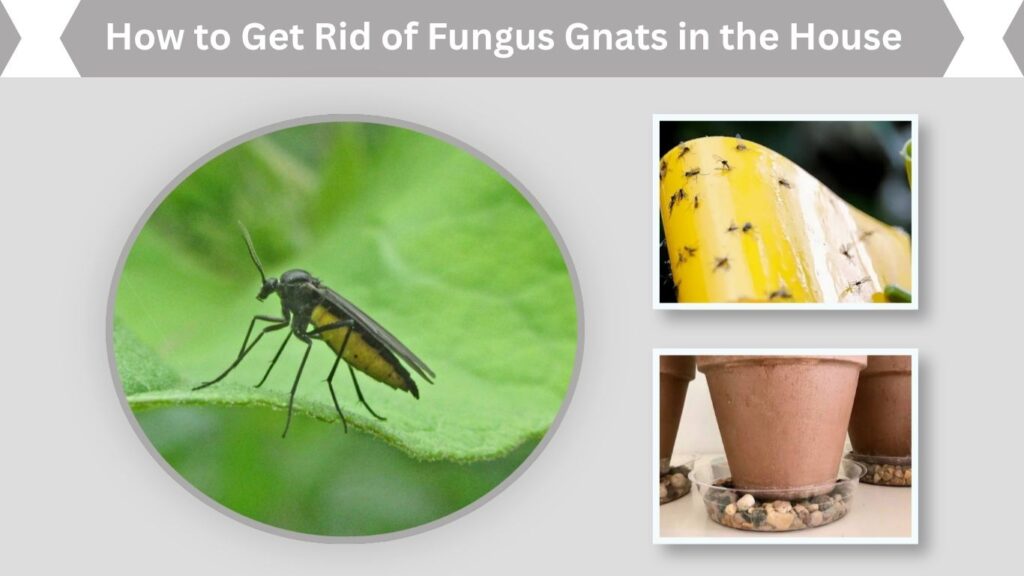
Successful control requires attacking both adults and larvae.
1. Reduce Watering
Allow the upper 1–2 inches of potting soil to dry between waterings when appropriate for the plant.
Fungus gnat larvae prefer continually moist growing media.
Drying the soil surface also makes it less attractive to adult females looking for places to lay eggs.
2. Use Yellow Sticky Traps
Place yellow sticky traps close to affected pots.
They catch adult gnats and reduce the number available to reproduce.
Sticky traps are also useful for identifying which plants have the biggest infestations.
Replace traps when they become covered with insects or dust.
3. Treat Fungus Gnat Larvae
A larval treatment is essential if you want to eliminate the infestation.
Bacillus thuringiensis israelensis (Bti) is commonly used against fungus gnat larvae.
Products containing Bti can be applied to potting media according to label directions.
Beneficial nematodes such as Steinernema feltiae can also target larvae in the soil.
4. Improve Drainage
Check that plant pots have functional drainage holes.
Empty water from saucers and decorative outer containers after watering.
Soil that remains saturated for extended periods encourages both fungus gnats and root diseases.
5. Remove Dead Plant Material
Remove fallen leaves, dead flowers, and rotting stems from pots.
Decomposing organic material provides food for fungus gnat larvae and encourages fungal growth.
How to Get Rid of Fungus Gnats Naturally in the House
You can control fungus gnats without relying heavily on conventional insecticides.
Useful approaches include:
- Allowing soil to dry appropriately
- Yellow sticky traps
- Beneficial nematodes
- Bti biological treatments
- Removing decaying material
- Improving drainage
Some home remedies such as cinnamon, vinegar, or dish soap are frequently suggested online, but they are usually less reliable than targeting larvae directly.
Vinegar traps are particularly effective for fruit flies but may be much less attractive to fungus gnats.
How to Kill Adult Fungus Gnats in the House
Adult fungus gnats can be removed fairly easily.
Use:
- Yellow sticky cards
- A handheld vacuum
- Sticky traps near windows
- Appropriate labeled insect-control products if necessary
However, killing adults alone will not eliminate the infestation.
New flies will continue emerging as long as eggs, larvae, and pupae remain in moist growing media.
Where Do Fungus Gnats Lay Eggs in a House?
Females usually lay eggs in moist, organic-rich material.
Indoors, this most commonly means potting soil.
Eggs may also occur in:
- Seedling trays
- Terrarium substrate
- Damp compost
- Stored growing media
- Moist greenhouse soil
The eggs hatch into larvae that stay near the upper portions of the growing medium before pupating.
Fungus Gnat Life Cycle in a House
Fungus gnats pass through four stages:
- Egg
- Larva
- Pupa
- Adult
Females lay eggs in moist soil.
After hatching, larvae feed for roughly one to two weeks, depending on temperature and environmental conditions.
They then pupate before emerging as adults.
Warm indoor temperatures can allow repeated generations throughout the year.
This is why an untreated infestation can continue indefinitely.
Do Fungus Gnats Bite Humans in the House?
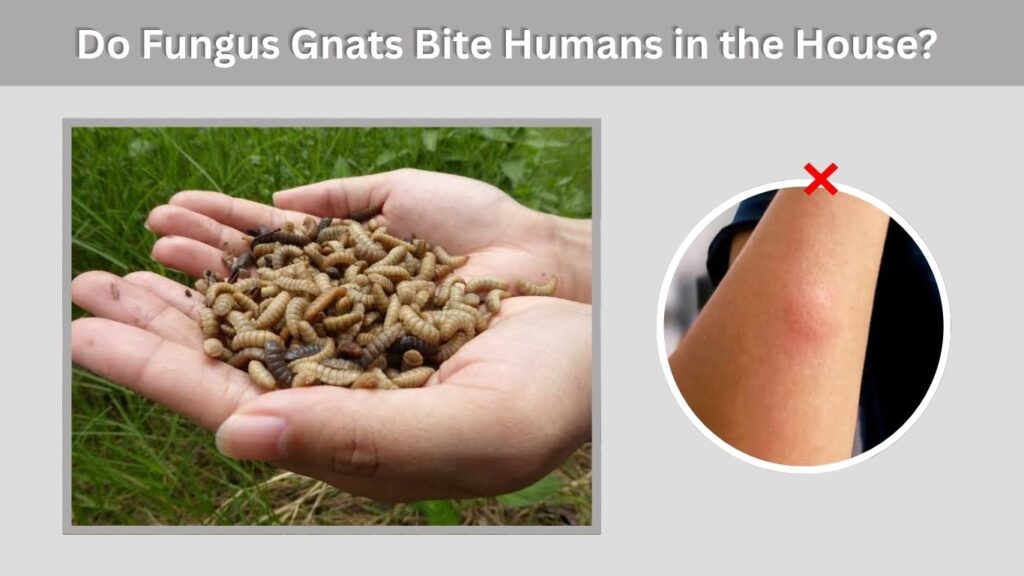
Typical fungus gnats found around houseplants do not normally bite humans.
Adults are primarily interested in reproducing and finding moist breeding sites.
Their larvae feed on fungi and organic material rather than human skin.
If you are experiencing itchy bites and seeing tiny flying insects indoors, another pest such as mosquitoes, biting midges, fleas, or another insect may be responsible.
Fungus Gnats vs Fruit Flies
These pests are easy to confuse.
Fungus gnats generally have:
- Thin bodies
- Long legs
- Long antennae
- Dark coloration
- Association with plant soil
Fruit flies usually have:
- Shorter, rounder bodies
- Tan or brown coloration
- Noticeable eyes
- Strong attraction to ripe fruit and fermenting food
Finding where the flies gather is often the easiest way to separate them.
How Long Does It Take to Get Rid of Fungus Gnats?
Most infestations take around two to four weeks to bring under control because multiple life stages are present simultaneously.
You may notice fewer adults within several days after using sticky traps and reducing moisture, but larvae already in the soil can continue producing new flies.
Continue control measures until:
- Sticky traps catch very few adults
- No gnats appear after watering
- No larvae are visible in soil
- New adults stop appearing around windows
How to Prevent Fungus Gnats From Returning
Once the infestation is controlled, prevention becomes much easier.
Follow these habits:
- Avoid overwatering
- Check soil before watering
- Use pots with drainage holes
- Empty standing water
- Remove dead leaves
- Inspect new plants
- Quarantine suspicious plants
- Store potting soil properly
- Keep indoor growing areas clean
Monitoring with occasional sticky traps can reveal a new infestation before it becomes serious.
FAQs
Why are there fungus gnats all over my house?
A breeding source, usually moist plant soil, is producing new adults. Large infestations can spread through several rooms even if they originated from only one or two pots.
Can fungus gnats live in a house without plants?
Yes. They may breed in other damp organic material, although similar-looking drain flies or fruit flies should also be considered.
Are fungus gnats harmful to people?
Fungus gnats are mainly nuisance pests and do not normally bite people. Their larvae are more concerning for plant roots than for humans.
What kills fungus gnats in a house?
Sticky traps kill adults, while Bti or beneficial nematodes can control larvae. Reducing excessive soil moisture is essential for long-term elimination.
Why do fungus gnats keep coming back?
Persistent infestations usually mean that moist breeding sites remain available. Until larvae and breeding conditions are addressed, new adults can continue emerging.