
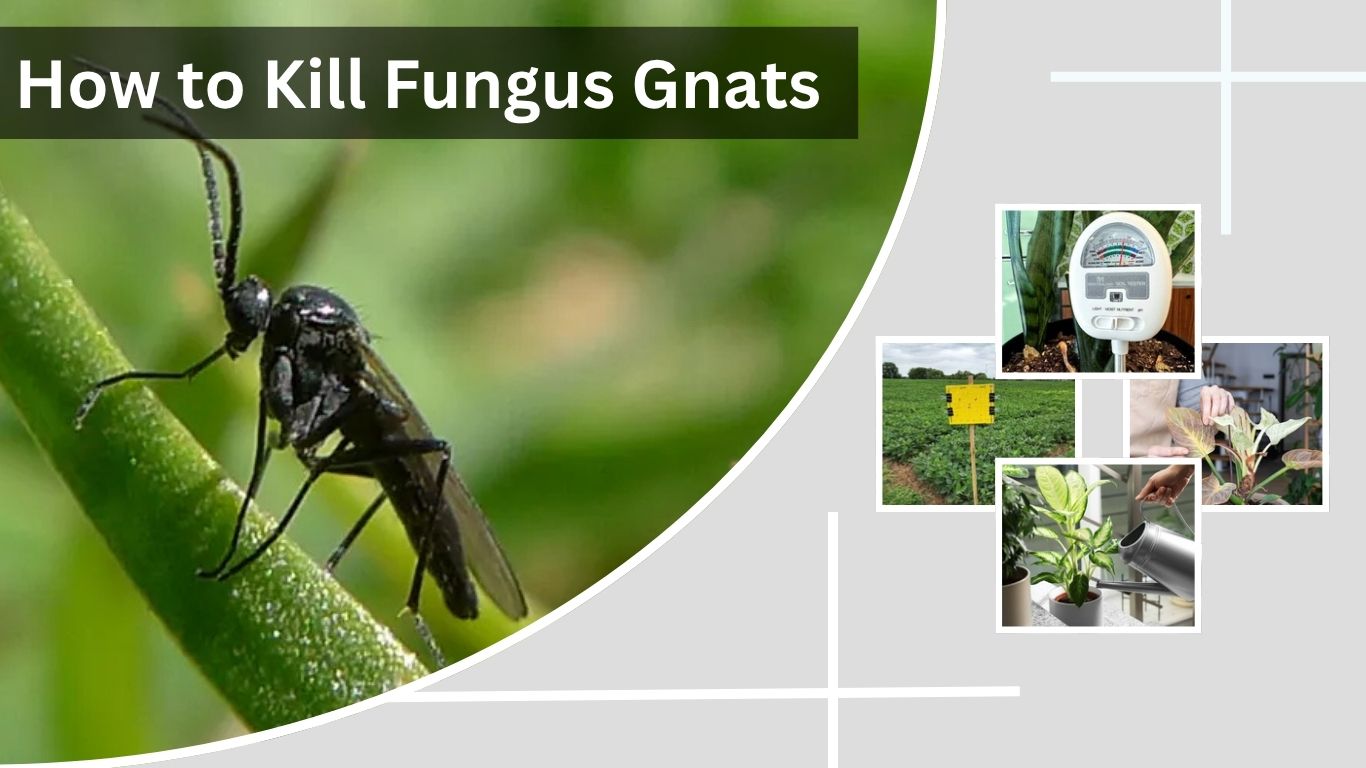
The fastest way to kill fungus gnats is to target both life stages: trap the flying adults and destroy the larvae living in moist potting soil. Letting the soil surface dry, placing yellow sticky traps near plants, and applying a larval treatment such as Bti usually provides the best results. Hydrogen peroxide, beneficial nematodes, and diatomaceous earth can also help in certain situations. Because new adults may continue emerging, consistent treatment for several weeks is essential.
Make Sure They Are Fungus Gnats
Fungus gnats are tiny, dark flies commonly found around houseplants. Adults are weak fliers and often hover near the soil, windows, or lights.
Their slender bodies, long legs, and clear wings can make them look like miniature mosquitoes. The larvae are translucent or white, with shiny black heads, and live beneath the soil surface. They feed primarily on fungi and decaying organic material but may damage delicate roots when populations are high. UC IPM’s houseplant guide describes adults as approximately 1/10 to 1/8 inch long.
Common Signs of an Infestation
- Small black flies rise when a plant is watered or moved.
- Gnats crawl across the surface of the potting mix.
- Tiny larvae appear around drainage holes or in moist soil.
- Seedlings grow slowly, wilt, or lose vigor.
- Adult gnats collect on nearby windows.
- The soil remains consistently wet or smells musty.
Flies coming mainly from drains may be drain flies rather than fungus gnats. Drain flies have broader, fuzzy, mothlike wings and require removal of organic buildup inside the drain.
How to Kill Fungus Gnats Fast
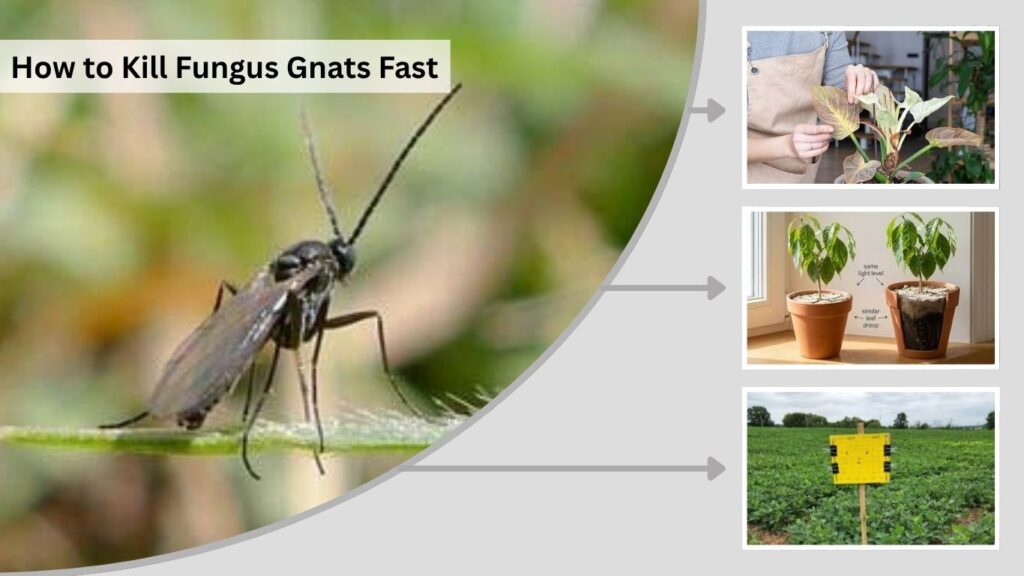
A complete treatment plan must remove adults while making the soil unsuitable for larvae.
Follow These Six Steps
- Isolate infested plants. Move affected pots away from healthy plants to slow the spread.
- Allow the surface to dry. Wait until the upper 1–2 inches of soil feel dry before watering again, provided the plant can tolerate it.
- Install yellow sticky traps. Position traps horizontally just above the soil to catch adults before they lay more eggs.
- Treat the larvae. Apply Bti, beneficial nematodes, or another labeled soil treatment.
- Remove decaying material. Clear dead leaves, flowers, algae, and organic debris from pots and saucers.
- Repeat consistently. Continue monitoring and treating for at least two to four weeks.
Fungus gnats develop from egg to adult in approximately 17 days under warm conditions, although temperature can change the timeline. Most of their lives are spent as larvae and pupae, so killing only the visible adults will not end the infestation. UC Integrated Pest Management recommends focusing control on the immature stages.
Best Ways to Kill Fungus Gnats in Soil
Use Bti or Mosquito Bits
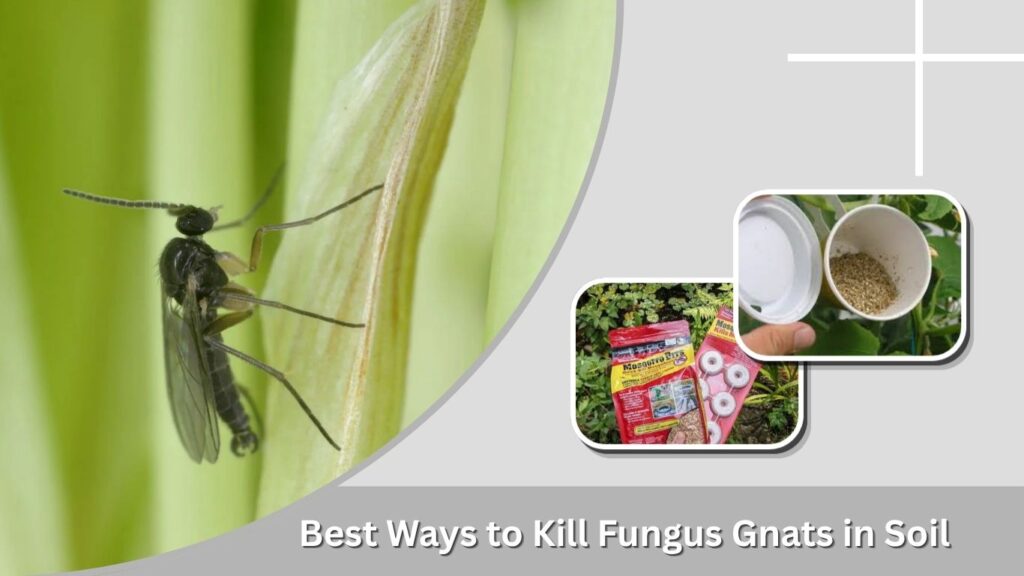
Bacillus thuringiensis israelensis, commonly abbreviated Bti, is a bacterium that kills fungus gnat larvae after they consume it. It does not directly kill eggs, pupae, or flying adults.
Some products sold as Mosquito Bits or Mosquito Dunks contain Bti. Only use a product if its label permits application to potting soil or for fungus gnat control.
Mix or soak the product according to its label and apply the resulting solution when watering. Multiple treatments are usually necessary because new larvae continue hatching. UC IPM notes that some Bti products may require applications at roughly five-day intervals.
Apply Beneficial Nematodes
The beneficial nematode Steinernema feltiae enters fungus gnat larvae and kills them underground. It is especially useful for large plant collections, greenhouses, coco coir, and locations where reducing watering is difficult.
Mix the nematodes with water and apply them immediately according to the supplier’s instructions. Protect them from direct sunlight and keep the growing medium slightly moist. They generally perform best when soil temperatures remain between 60°F and 90°F.
Try Diatomaceous Earth Carefully
Food-grade diatomaceous earth damages insects that crawl through the dry powder. Apply a thin layer to a dry soil surface, avoiding airborne dust.
Its effectiveness decreases after watering because it must remain dry. Consequently, it is better used as a supplementary barrier than as the primary treatment. Follow the product label and avoid inhaling the dust.
Consider Neem Products
A neem or azadirachtin product may suppress larvae if it is labeled for soil application and the treated plant. Mix and apply it exactly as instructed.
Do not assume every neem oil product can be used as a soil drench. Excessive concentrations may damage roots or stress sensitive plants.
Does Hydrogen Peroxide Kill Fungus Gnats?
Diluted hydrogen peroxide can kill some larvae on contact. A commonly recommended mixture is one part household 3% hydrogen peroxide and four parts water. Use it to water the soil once, then allow the surface to dry normally.
Test the mixture on one plant before treating an entire collection. Avoid using stronger peroxide, applying it repeatedly, or combining it with fertilizers, pesticides, vinegar, or bleach. Concentrated or excessive peroxide can damage roots and beneficial soil organisms.
Hydrogen peroxide is not a complete solution because it may miss larvae deeper in the pot and does not control flying adults. Combine it with sticky traps and better watering practices. Cornell Cooperative Extension discusses the diluted 1:4 mixture as one possible treatment but also recommends Bti for larval control.
Do Cinnamon, Vinegar, and Dish Soap Work?
Cinnamon is frequently promoted as a natural fungus gnat treatment, but there is limited scientific evidence that sprinkling it over soil reliably kills eggs or larvae. It should not replace moisture control or Bti.
Apple cider vinegar mixed with a drop of dish soap may catch some flying adults. However, vinegar traps are generally more useful for fruit flies and will not eliminate fungus gnat larvae in soil.
Dish soap drenches can injure roots when the concentration is too strong. If using insecticidal soap, choose a commercially formulated product labeled for the plant and intended use.
Should You Bake Infested Potting Soil?
For unused potting soil, replacing it with fresh, pasteurized mix is usually easier than heating it. Keep new bags sealed and stored in a dry location.
Small quantities of moist soil can be heat-treated, but kitchen baking may create unpleasant odors and damage the potting medium if it becomes too hot. Outdoor solarization is another option: seal moist soil in clear or black plastic, keep the layer no more than about eight inches deep, and leave it in a hot, sunny location for four to six weeks.
Repotting is generally unnecessary for a light infestation. Consider replacing the soil when it is badly decomposed, drains poorly, smells sour, or contains extremely high numbers of larvae.
How to Prevent Fungus Gnats From Returning
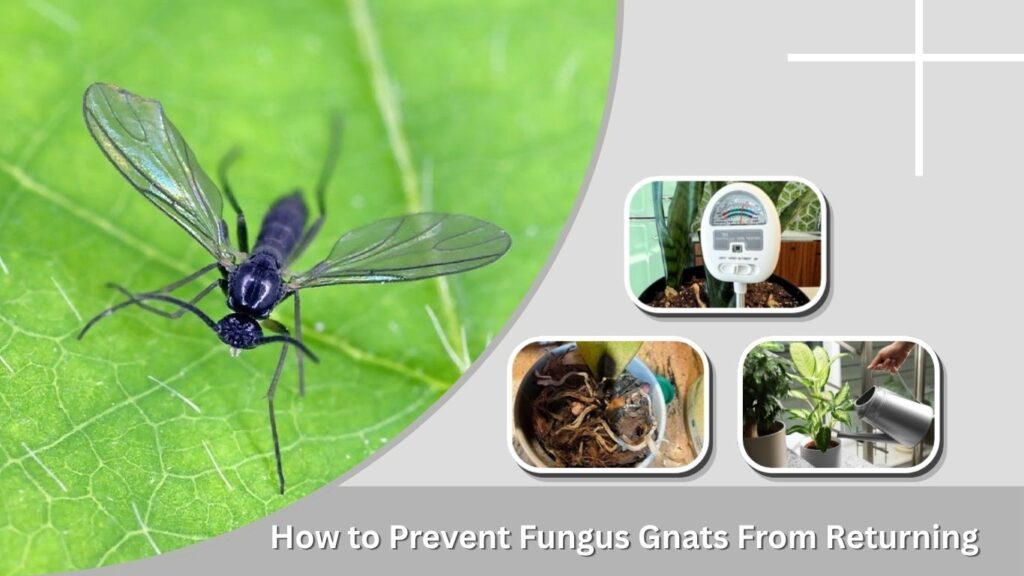
- Check soil moisture before watering.
- Empty water from saucers and decorative cachepots.
- Improve drainage and airflow around plants.
- Remove fallen leaves and dead roots.
- Use clean pots and pasteurized potting mix.
- Store unused soil in a sealed container.
- Quarantine new plants for two to three weeks.
- Place monitoring traps near new or vulnerable plants.
- Cover hydroponic reservoirs and remove algae promptly.
FAQs
How long does it take to kill fungus gnats?
Adult numbers may decline within several days, but complete control commonly takes two to four weeks because eggs, larvae, and pupae mature at different times.
How much hydrogen peroxide should I use?
If you choose this method, dilute one part 3% hydrogen peroxide with four parts water. Test it first and avoid repeated applications to sensitive plants.
How long do Mosquito Bits take to work?
Bti begins affecting larvae after they consume it, but adult gnats may remain visible for one or two weeks. Repeat treatment according to the product label.
Can vinegar kill fungus gnats?
Vinegar traps may catch a few adults but cannot reach the larvae living in potting soil. Sticky cards combined with a larval treatment are more dependable.
Can fungus gnats kill houseplants?
Small populations are primarily annoying. Heavy larval populations can damage tender roots, seedlings, cuttings, and already stressed plants, causing poor growth or wilting.
