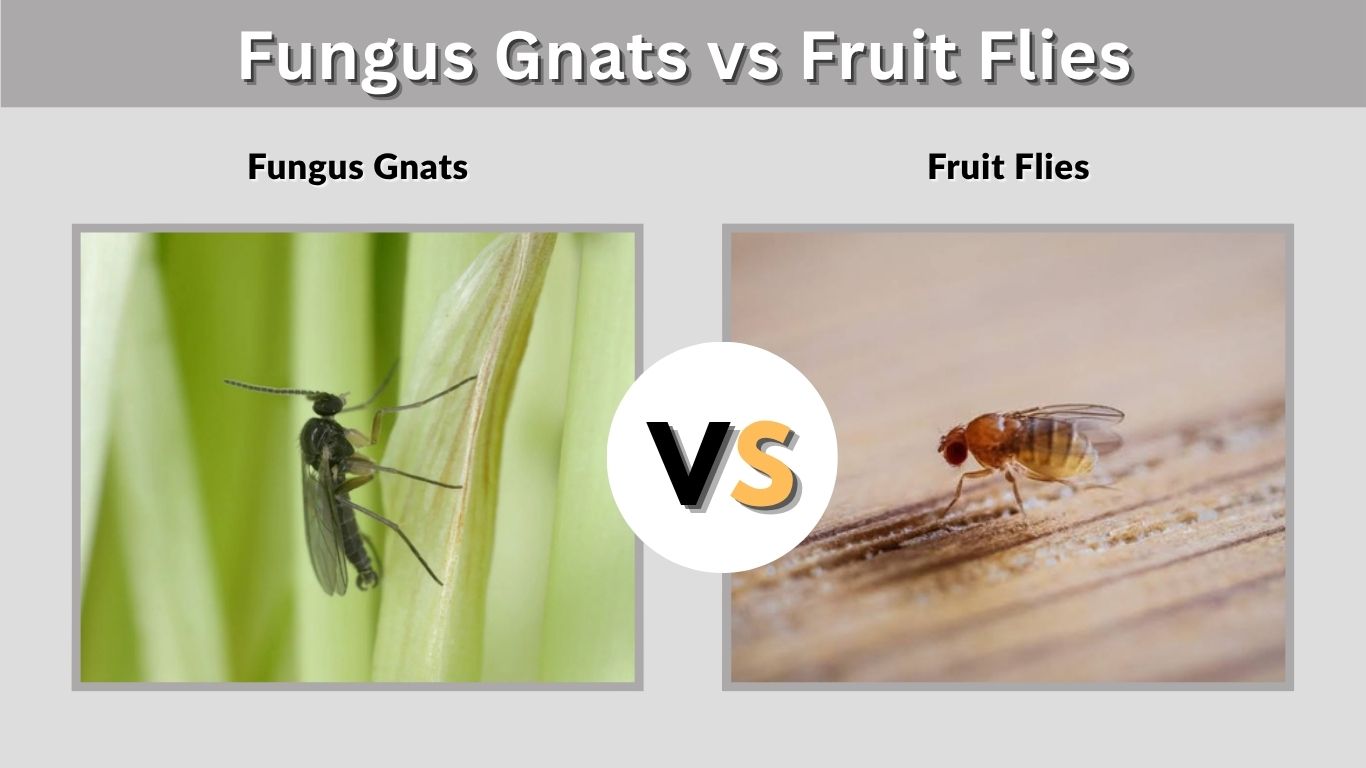
Fungus gnats and fruit flies are tiny household pests that are frequently mistaken for each other. However, they differ in appearance, breeding habits, food sources, and preferred locations. Fungus gnats usually live around damp houseplant soil, while fruit flies gather near ripe produce, garbage, and fermenting liquids. Drain flies add further confusion because they also appear in kitchens and bathrooms. Correct identification is essential because traps alone will not solve an infestation unless you remove the pest’s breeding source.
Fungus Gnats vs Fruit Flies: Quick Comparison
The easiest way to distinguish fungus gnats from fruit flies is to observe where they spend most of their time. Fungus gnats generally crawl or fly around potted plants, whereas fruit flies circle fruit bowls, recycling containers, drains, and food waste. Their body shape and flight patterns also provide useful identification clues.
Main Differences
| Feature | Fungus Gnats | Fruit Flies | Drain Flies |
| Size | About 1/8 inch | About 1/8 inch | About 1/8 inch |
| Body shape | Slender and mosquito-like | Rounded and compact | Broad and moth-like |
| Color | Black or dark gray | Tan, brown, or yellowish | Gray, brown, or black |
| Wings | Clear and narrow | Clear and proportionate | Fuzzy and heart-shaped |
| Common location | Houseplant soil | Fruit, garbage, and food spills | Sinks, showers, and drains |
| Larval habitat | Moist organic soil | Fermenting food | Drain biofilm |
| Flight | Weak and erratic | Quick and hovering | Short, hopping flights |
| Best trap | Yellow sticky card | Vinegar bait trap | Drain tape test |
How to Identify Fungus Gnats
Fungus gnats are small flies belonging mainly to the Sciaridae family. Although adults are harmless to people, their larvae can feed on delicate roots when populations become large. These pests are particularly common in frequently watered houseplants, seedling trays, greenhouses, and bags of damp potting soil.
Fungus Gnat Identification Features
- Slender black or dark-gray body
- Long legs and threadlike antennae
- Narrow, transparent wings
- Mosquito-like appearance
- Weak, irregular flight
- Adults walking across potting soil
- Translucent larvae with shiny black heads
- Increased activity immediately after watering
Where Fungus Gnats Come From
Adult fungus gnats lay their eggs in moist potting media containing fungi, algae, decaying roots, or other organic matter. The larvae hatch underground and feed for approximately two weeks before becoming pupae and adults.
Overwatering is the most common reason an infestation develops. Poor drainage, water-filled saucers, decomposing potting mix, and fallen leaves can also create suitable breeding conditions. Adults may enter a home through open doors, but they are frequently introduced in new plants or infested soil.
How to Identify Fruit Flies
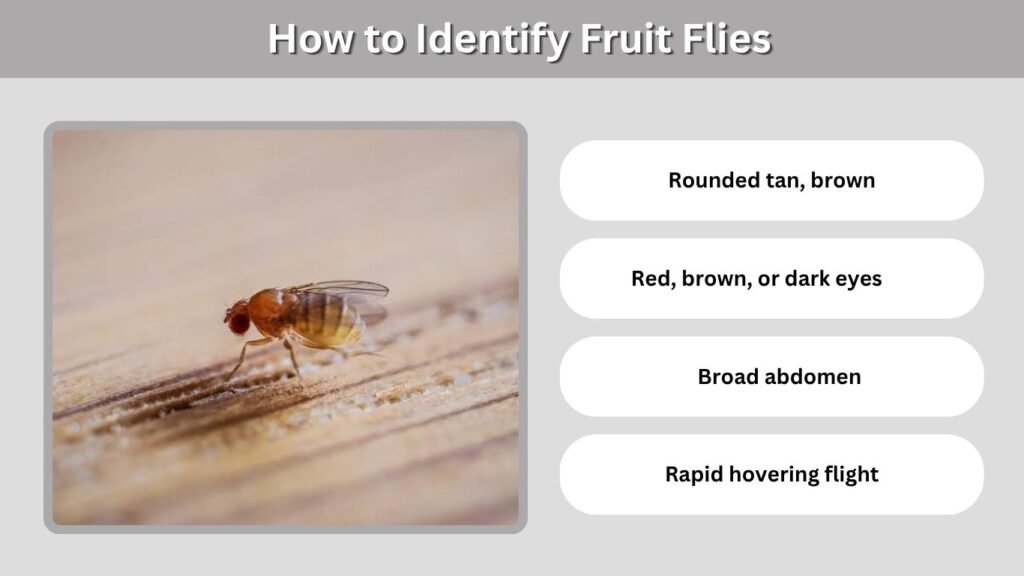
Fruit flies are compact, fast-moving flies commonly associated with kitchens. They are attracted to the yeasts and microorganisms growing on overripe or fermenting organic material. A small amount of juice, wine, soda, or food residue can support their development.
Fruit Fly Identification Features
- Rounded tan, brown, or yellowish body
- Shorter legs than fungus gnats
- Red, brown, or dark eyes
- Broad abdomen
- Rapid hovering flight
- Frequent activity around food and garbage
- Cream-colored larvae without visible legs
- Attraction to vinegar and fermenting liquids
Where Fruit Flies Breed
Fruit flies commonly lay eggs on overripe bananas, tomatoes, onions, potatoes, and other produce. They can also reproduce in garbage disposals, recycling bins, empty beverage containers, mop buckets, food residue, and dirty cleaning cloths.
Removing the fruit bowl may not stop an infestation if another breeding source remains. Inspect underneath appliances, inside recycling containers, around trash cans, and beneath cabinet liners for forgotten spills or decomposing food.
Fungus Gnats vs Drain Flies
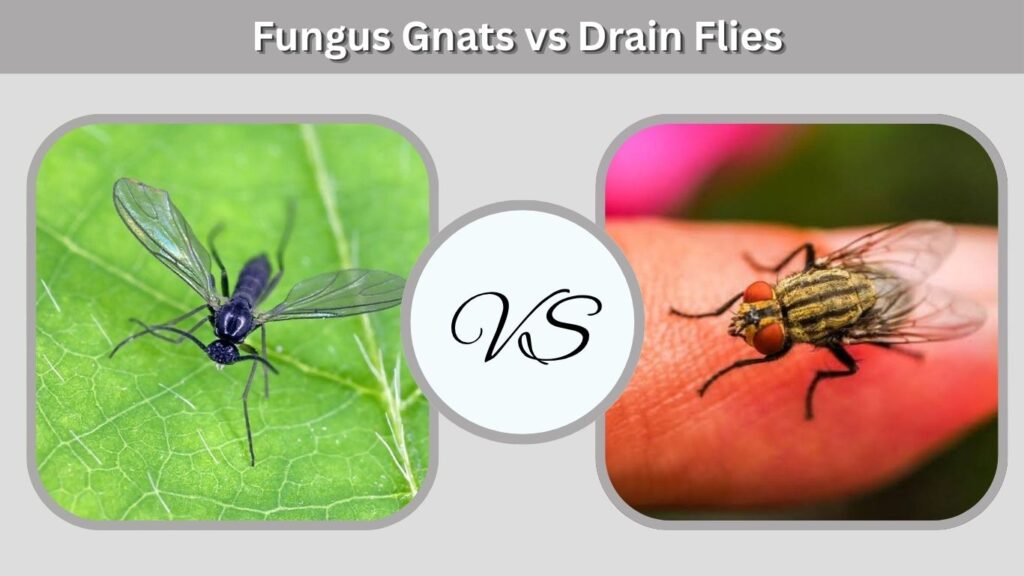
Drain flies are another small indoor fly that may be confused with fungus gnats. However, their broad, hairy wings make them look like tiny moths. They generally rest on walls near sinks, showers, floor drains, and sewage lines.
Drain Fly Identification
- Broad, fuzzy body
- Hairy wings held over the body
- Gray, brown, or black coloration
- Short, hopping flight
- Activity near plumbing fixtures
- Larvae living in wet organic slime
Place clear tape over part of a suspected drain overnight without completely sealing the opening. Flies caught on the underside suggest that the drain contains a breeding population. Simply pouring insecticide or bleach into the drain may not remove the organic film where the larvae live.
How to Find the Breeding Source
Finding the source is more effective than spraying the adult flies. Begin by observing where the greatest number of insects appear. You can then use simple traps and inspections to confirm whether the problem involves plant soil, fermenting food, or plumbing buildup.
Check These Common Locations
- Around plants: Examine soil, saucers, drainage holes, and fallen leaves.
- Near fruit: Inspect produce bowls, potatoes, onions, and food cabinets.
- Inside trash cans: Look beneath liners for liquid and food residue.
- Around recycling: Rinse bottles and cans containing juice, beer, or soda.
- Near drains: Check for slime inside sinks, showers, and floor drains.
- Under appliances: Search for spilled drinks or forgotten food.
- Around litter boxes: Remove wet litter and animal waste daily.
- Inside soil bags: Check opened potting mix for adults or larvae.
A raw potato slice placed cut-side down on houseplant soil can help reveal fungus gnat larvae. Check underneath it after one or two days for small, translucent larvae with dark heads.
How to Get Rid of Fungus Gnats
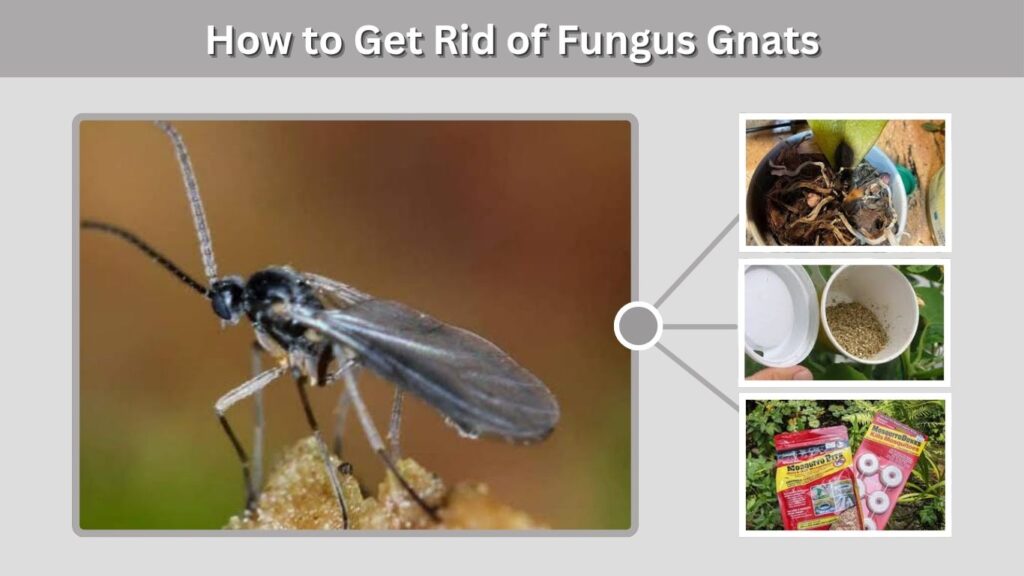
Controlling fungus gnats requires treating the larvae in the soil and reducing the adult population. Sticky traps kill adults but cannot reach eggs or larvae, so they must be combined with moisture management or a soil treatment.
Fungus Gnat Control Steps
- Allow the top one or two inches of soil to dry between waterings.
- Empty standing water from plant saucers and decorative pots.
- Place yellow sticky cards horizontally above the soil.
- Remove dead leaves and decomposing plant material.
- Apply a Bti product labeled for fungus gnat larvae.
- Consider beneficial Steinernema feltiae nematodes.
- Repot plants if the soil is badly decomposed or drains poorly.
- Continue monitoring for at least two to four weeks.
Avoid constantly wet soil, but do not withhold water from plants that require consistently moist conditions. Bottom watering may help keep the upper soil layer drier, although excess water should still be removed afterward.
How to Get Rid of Fruit Flies
Start by discarding or refrigerating overripe produce. Wash fruit bowls, clean garbage cans, rinse beverage containers, and remove food residue from countertops and appliances. Continue cleaning daily because fruit flies can complete their development quickly.
A trap containing apple cider vinegar and a drop of dish soap can capture adults. Covering the container with plastic wrap containing several small holes may improve retention. However, traps will not eliminate an infestation while fermenting food or liquid remains available.
How to Get Rid of Drain Flies
Drain fly control depends on physically removing organic slime from the affected plumbing. Scrub inside the drain and around the overflow opening with a long, stiff brush. An enzyme-based drain cleaner may help break down organic buildup when used according to its label.
Repair leaking pipes and eliminate standing water. Repeat the cleaning process for several days because eggs and larvae may remain in areas the first treatment did not reach.
Preventing Future Small-Fly Infestations
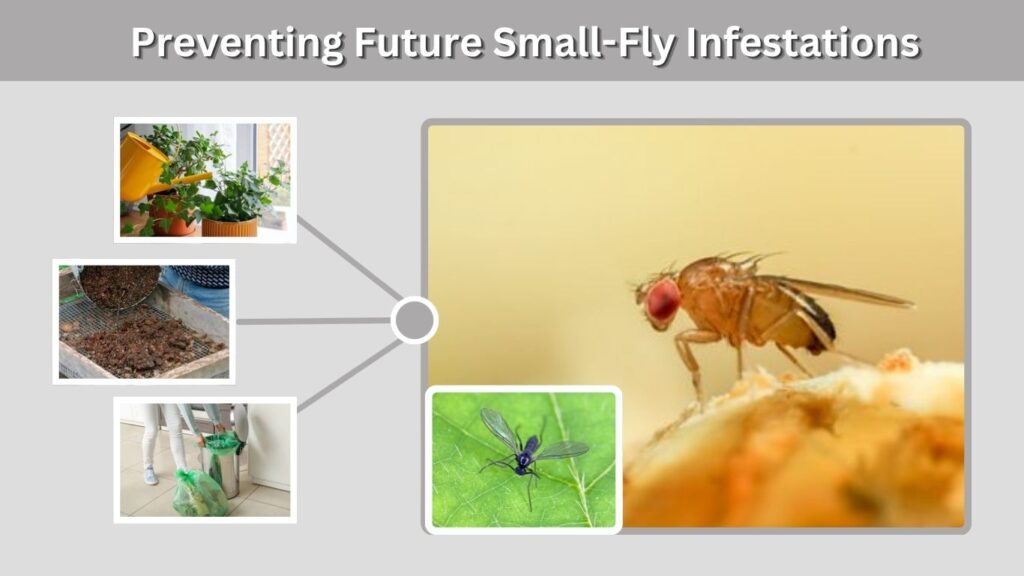
Clean, dry environments provide fewer places for fungus gnats, fruit flies, and drain flies to reproduce. Prevention should focus on moisture, food residue, and decaying organic material rather than relying on routine insecticide sprays.
Practical Prevention Tips
- Avoid overwatering houseplants.
- Use a well-draining, pasteurized potting mix.
- Store extra soil in sealed containers.
- Refrigerate ripe produce.
- Empty garbage frequently.
- Rinse recycling containers.
- Clean spills immediately.
- Scrub drains regularly.
- Repair plumbing leaks.
- Clean litter boxes every day.
- Quarantine new plants before placing them near others.
- Keep yellow sticky traps near vulnerable houseplants.
FAQs
Are fungus gnats the same as fruit flies?
No. Fungus gnats breed in moist soil, while fruit flies reproduce in fermenting produce, beverages, and food waste.
Which flies are attracted to apple cider vinegar?
Fruit flies are strongly attracted to vinegar. Fungus gnats may occasionally enter vinegar traps, but yellow sticky cards are usually more effective for them.
Do fungus gnats or fruit flies bite?
Neither typically bites people. Both are primarily household nuisances, although fungus gnat larvae can damage young or stressed plants.
Why are tiny flies coming from my litter box?
Wet litter, animal waste, or nearby food residue may attract several small-fly species. Clean the box daily, replace contaminated litter, and inspect nearby plants and drains.
Can fungus gnats come from kitchen drains?
Fungus gnats occasionally visit damp areas, but flies breeding inside drains are more likely to be drain flies or phorid flies. Check nearby houseplants before treating the plumbing.