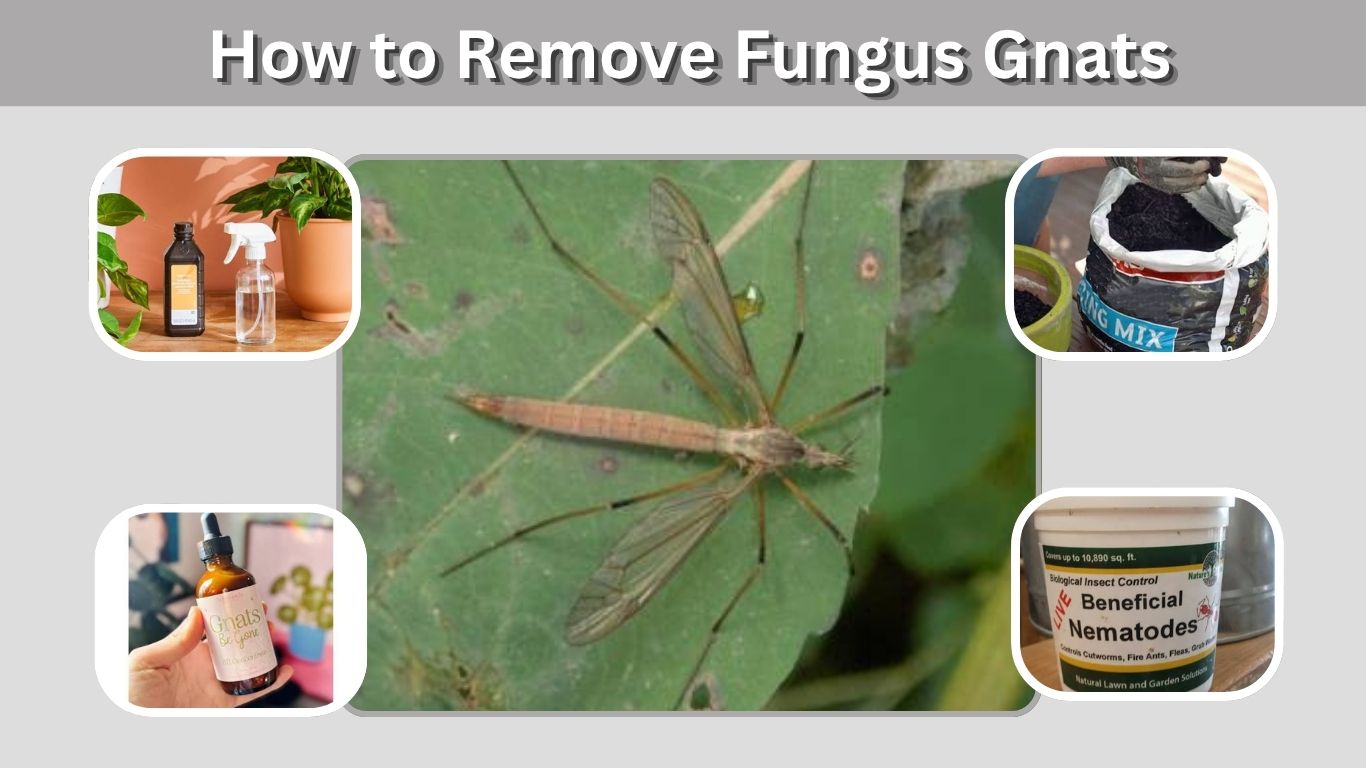
To remove fungus gnats from plants, you must target the larvae in the soil and the adults flying around the pots. Begin by allowing the upper soil layer to dry, removing decaying material, and placing yellow sticky traps near affected plants. Treat serious infestations with Bti or beneficial nematodes and continue monitoring for several weeks. Fungus gnats rarely kill mature, healthy plants, but large larval populations can damage the roots of seedlings, cuttings, and weakened houseplants.
How to Identify Fungus Gnats on Plants
Fungus gnats are tiny, dark flies that resemble miniature mosquitoes. Adults usually remain close to damp potting soil because that is where females lay their eggs. The slender, translucent larvae live underground and have distinctive shiny black heads. Correct identification is important because fruit flies and drain flies require different control methods.
Signs of Fungus Gnats in Plants
- Small black flies rise from the soil when you water.
- Adults crawl across the potting mix or container rim.
- Flies collect around windows near houseplants.
- Translucent larvae appear in moist soil.
- Numerous adults become caught on yellow sticky traps.
- The soil remains wet for long periods.
- Algae, fungi, or decomposing leaves cover the soil.
- Seedlings wilt or grow slowly despite adequate care.
Place a raw potato slice cut-side down on the soil to check for larvae. Inspect the underside after one or two days. Fungus gnat larvae may gather beneath it to feed.
Are Fungus Gnats Harmful to Plants?
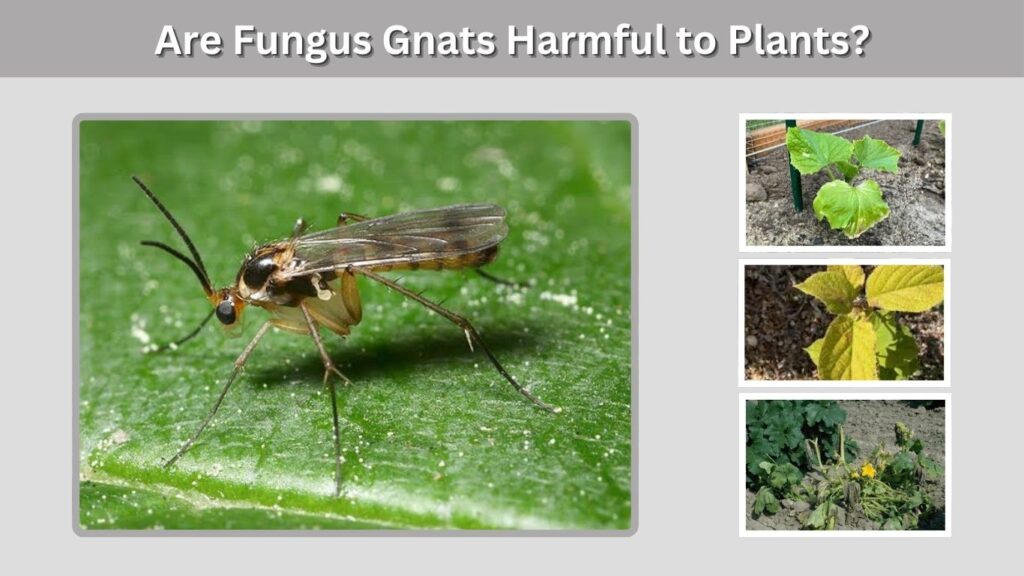
Adult fungus gnats do not eat leaves, stems, or roots. Their primary purpose is to reproduce. The larvae feed mainly on fungi, algae, decaying plant material, and microorganisms in moist soil. However, when populations become large, they may also consume tender roots and fine root hairs.
Fungus Gnat Damage to Plants
Heavy infestations may cause:
- Slow or stunted growth
- Yellow or pale leaves
- Unexplained wilting
- Loss of plant vigor
- Damaged roots
- Poor seed germination
- Seedling collapse
- Increased vulnerability to root diseases
Healthy, established houseplants are unlikely to be killed by a small infestation. Seedlings, recently rooted cuttings, young tomato plants, cannabis plants, and stressed specimens are more vulnerable because their root systems are tender or limited.
Snake plants, aloe, and other succulents may develop fungus gnats when their soil remains wet. In these plants, the infestation can also indicate overwatering and an increased risk of root rot.
How to Get Rid of Fungus Gnats in Plants
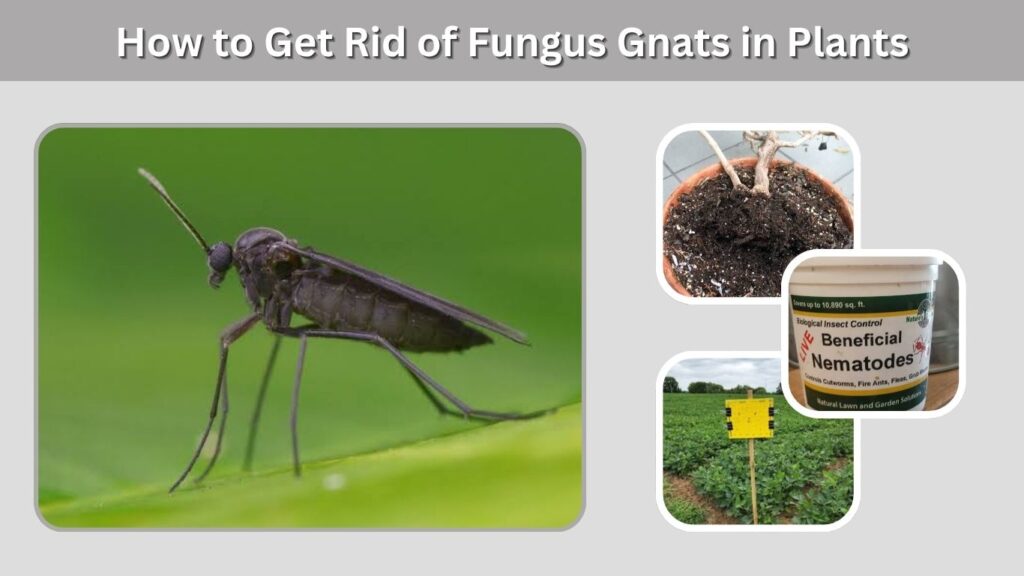
A complete treatment must interrupt the insect’s life cycle. Sticky traps capture adults, but eggs, larvae, and pupae remain inside the pot. Soil treatments reduce the developing population, while better watering practices make the potting mix less suitable for future generations.
Seven-Step Treatment Plan
- Separate infested plants: Move affected pots away from healthy plants to reduce adult movement.
- Let the soil surface dry: Wait until the upper one or two inches feel dry before watering again, if the plant tolerates drier conditions.
- Install yellow sticky traps: Position the cards horizontally just above the soil to catch emerging adults.
- Remove organic debris: Clear fallen leaves, dead flowers, algae, and decomposing material from the pot.
- Treat the larvae: Apply Bti or beneficial nematodes according to the product instructions.
- Empty standing water: Remove water from saucers and decorative cachepots after irrigation.
- Continue treatment: Monitor and treat the plants for at least three to four weeks.
Inspect every nearby plant, even if adults are not immediately visible. Female fungus gnats can fly or crawl between pots and establish several breeding sites.
Best Fungus Gnat Treatments for Indoor Plants
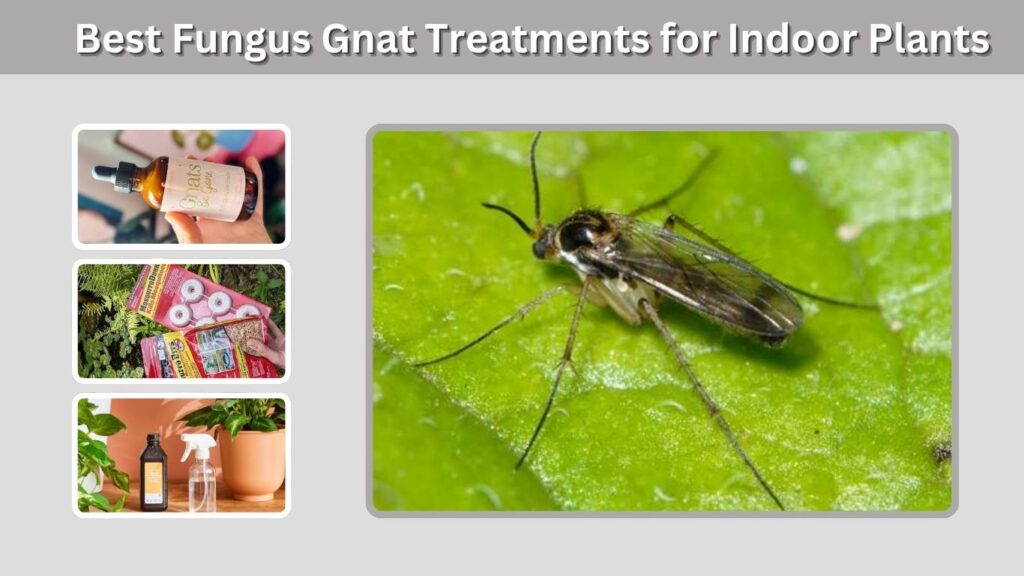
The best treatment depends on the plant, the infestation’s severity, and how much moisture the growing medium requires. Plants that prefer dry conditions may improve through watering changes alone. Moisture-loving plants generally need a biological larvicide because their soil cannot safely remain dry for long periods.
Bti for Fungus Gnat Larvae
Bacillus thuringiensis israelensis, usually called Bti, is a bacterium that kills fungus gnat larvae after they consume it. Certain Mosquito Bits, Mosquito Dunks, and horticultural products contain Bti.
Only use a product whose label allows application to potting media or fungus gnat control. Apply it with irrigation water according to the label. Multiple treatments may be required because Bti does not directly kill eggs, pupae, or adult gnats.
Beneficial Nematodes
The beneficial nematode Steinernema feltiae searches through moist soil and attacks fungus gnat larvae. Nematodes are helpful for large indoor plant collections, greenhouses, propagation trays, hydroponic systems, and plants that require consistently moist conditions.
Apply them soon after mixing and protect them from heat and direct sunlight. Keep the growing medium slightly moist while the nematodes are active.
Hydrogen Peroxide for Plant Soil
Diluted hydrogen peroxide may kill some larvae on contact. A commonly used mixture combines one part 3% household hydrogen peroxide with four parts water.
Test it on one plant before treating an entire collection. Use it as an occasional soil drench rather than a routine watering solution. Strong or repeated applications may injure roots and disrupt beneficial organisms in the potting mix.
Hydrogen peroxide will not reliably kill every egg, pupa, or adult. Combine it with sticky traps, moisture control, and sanitation.
Fungus Gnat Sprays
Sprays may kill exposed adults but usually provide little control over the larvae hidden in soil. Avoid spraying plants with unapproved household cleaners, strong dish-soap solutions, or concentrated essential oils.
If a spray is necessary, select a product labeled for indoor plants and fungus gnats. Follow its instructions regarding application rates, ventilation, protective equipment, pets, and edible plants.
Can Carnivorous Plants Control Fungus Gnats?
Sundews, butterworts, and pitcher plants may capture adult fungus gnats. Butterworts are particularly effective at trapping small flies on their sticky leaves. These plants can provide interesting supplementary control in an indoor collection.
However, carnivorous plants will not eliminate eggs and larvae in infested potting soil. Some also require continuously moist growing media, which may support fungus gnat development. They should be used alongside larval treatment, not as a replacement for it.
Fungus Gnats in Homes Without Plants
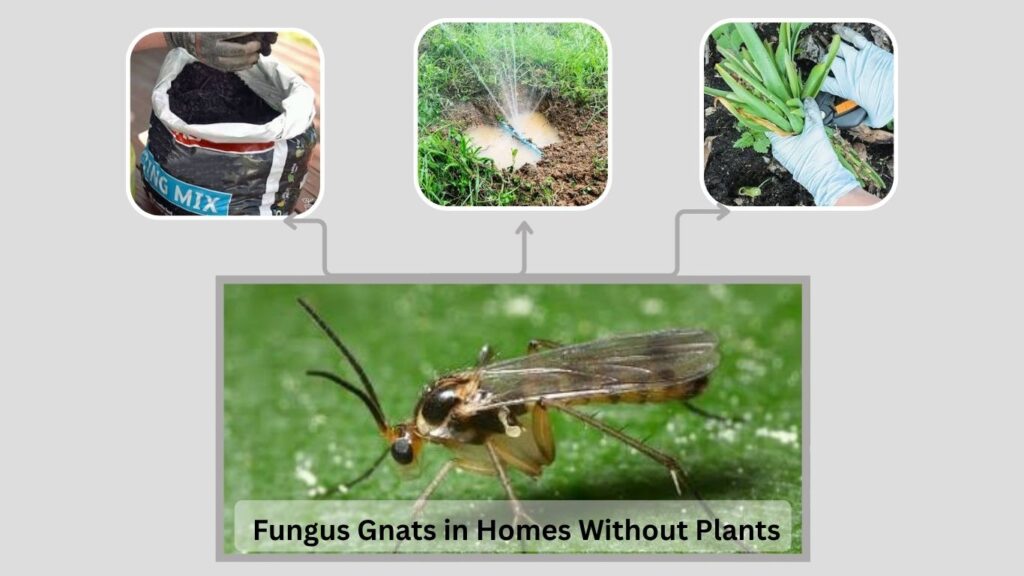
If small flies appear where no houseplants are present, they may be coming from another damp organic source. They may also be fruit flies, drain flies, phorid flies, or another small fly rather than fungus gnats.
Places to Inspect
- Open bags of potting soil
- Stored bulbs or plant cuttings
- Leaking pipes
- Damp basements and crawl spaces
- Moldy building materials
- Dirty garbage containers
- Pet litter boxes
- Floor drains
- Sink and shower drains
- Decaying food beneath appliances
Fungus gnats in a bathroom without plants may develop in continuously damp organic material. Drain flies have broader, fuzzy wings and are more likely to breed in slime inside plumbing. Clean the source instead of treating the room with an aerosol spray.
Fungus Gnat Eggs or Spider Eggs in Plant Soil?
Fungus gnat eggs are extremely small, pale, and usually hidden in the upper soil layer. They do not appear as a large, obvious cluster wrapped in silk.
A round silken sac attached to a pot, leaf, or soil surface is more likely to contain spider eggs. White or yellow balls throughout the potting mix may be fertilizer granules, perlite, fungal growth, or insect eggs. Avoid treating unidentified material until you examine it closely.
Preventing Fungus Gnats on Houseplants
Prevention depends on making the potting environment less attractive to egg-laying females. Proper irrigation is especially important because continuously moist organic soil provides food and protection for developing larvae.
Long-Term Prevention Tips
- Check soil moisture before every watering.
- Use containers with drainage holes.
- Empty water from saucers promptly.
- Remove dead leaves and flowers.
- Replace decomposed, poorly draining soil.
- Store potting mix in a sealed container.
- Quarantine new plants for two to three weeks.
- Inspect plants before purchasing them.
- Clean algae from propagation trays.
- Use sticky cards to detect adults early.
- Avoid adding unfinished compost to indoor pots.
- Keep hydroponic reservoirs clean and covered.
FAQs
Will fungus gnats kill my plants?
Small populations rarely kill mature plants. Heavy larval infestations can seriously damage seedlings, cuttings, and plants that are already stressed or diseased.
Can fungus gnats spread to other plants?
Yes. Adults can fly to nearby pots and lay eggs in moist soil. Isolate infested plants and inspect the entire collection.
What is the best fungus gnat killer for indoor plants?
Bti and Steinernema feltiae nematodes are effective options for larvae. Combine them with yellow sticky traps to reduce the adult population.
Does cinnamon remove fungus gnats from plants?
There is limited evidence that cinnamon reliably kills fungus gnat larvae. It should not replace soil drying, Bti, nematodes, or proper sanitation.
How long does it take to remove fungus gnats?
A light infestation may decline within one or two weeks. Complete control often requires three to four weeks because eggs, larvae, pupae, and adults can be present simultaneously.