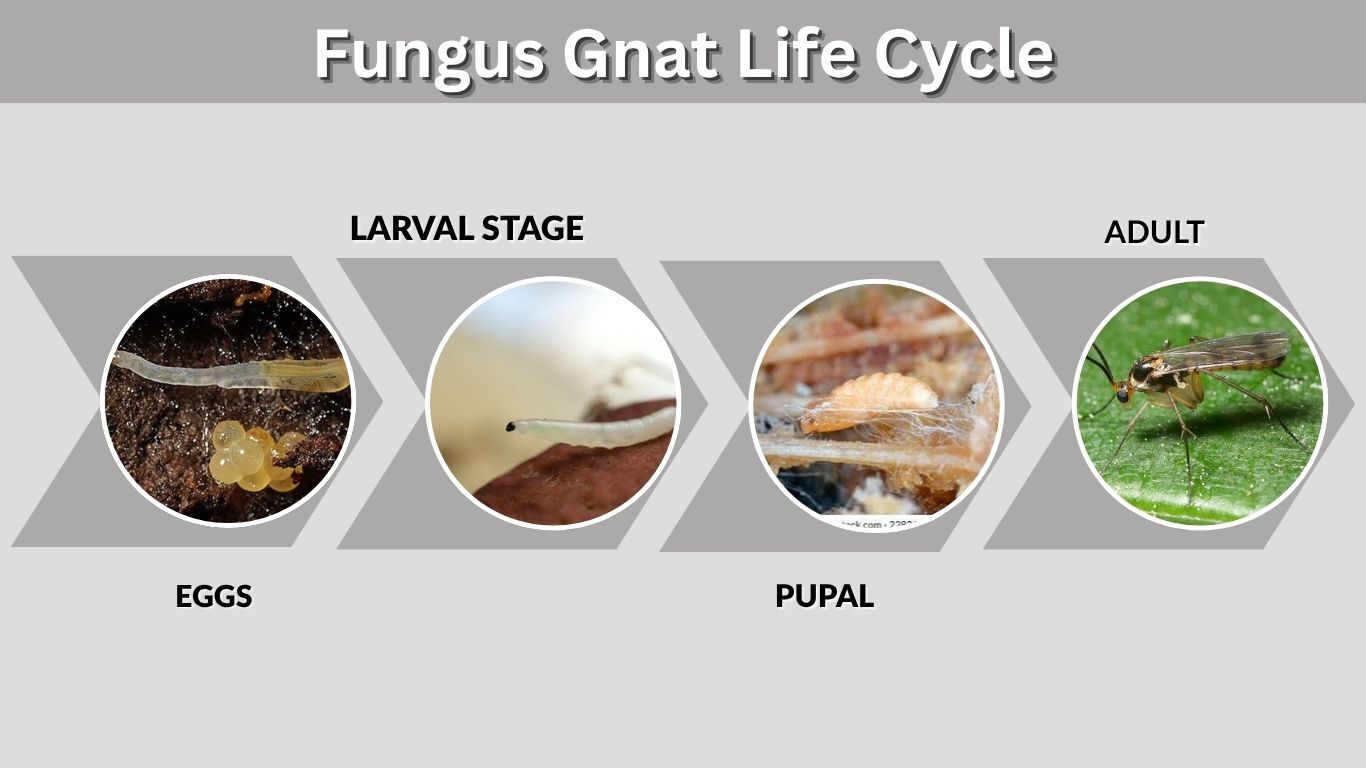
The fungus gnat life cycle includes four stages: egg, larva, pupa, and adult. Under warm indoor conditions, the entire cycle may be completed in approximately three to four weeks, although development can occur faster at ideal temperatures. Most of the insect’s life is spent beneath the soil, where larvae feed on fungi and decaying material. Understanding each stage helps you choose the correct treatment, determine application intervals, and prevent new adults from continually appearing around your houseplants.
Four Stages of the Fungus Gnat Life Cycle
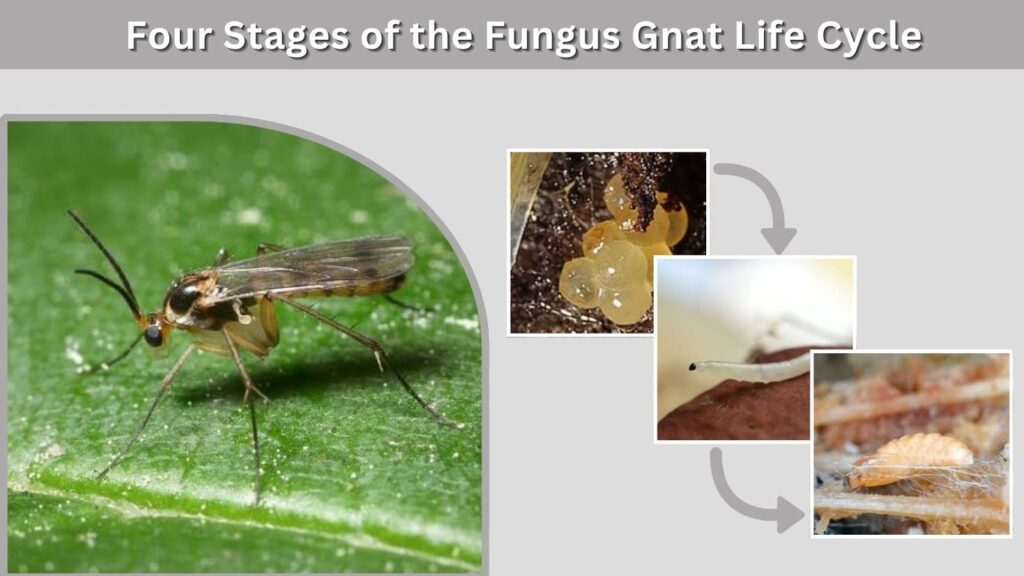
Dark-winged fungus gnats belong primarily to the family Sciaridae. Their development begins when females deposit eggs in damp, organic-rich growing media. The insects then pass through larval and pupal stages before emerging as winged adults. Because three stages can remain hidden inside the soil, catching visible adults alone rarely eliminates an established infestation.
1. Egg Stage
Female fungus gnats lay tiny, oval eggs in moist cracks near the surface of potting soil. The eggs are translucent white and extremely difficult to see without magnification.
A female may produce approximately 100–200 eggs during her short adult life. She usually places them near fungi, algae, decomposing leaves, or roots that will provide food for the emerging larvae. Under warm conditions, the eggs commonly hatch within three to six days.
Eggs are vulnerable to dehydration. Allowing the soil surface to dry between waterings can reduce the number that hatch successfully.
2. Larval Stage
Fungus gnat larvae are slender, translucent worms with shiny black heads. They do not have visible legs and usually remain within the upper few inches of damp soil.
The larval stage generally lasts about 10–14 days and includes four growth phases called instars. During this period, larvae feed on:
- Fungi growing in the potting medium
- Algae and decaying organic matter
- Dead roots and plant debris
- Fine root hairs
- Tender roots of seedlings and cuttings
Small populations generally cause little damage. Heavy infestations can injure roots, slow plant growth, cause yellowing, and increase the risk of disease in young or stressed plants.
3. Pupal Stage
Mature larvae form delicate pupae near the soil surface. The pupae begin pale and gradually become darker as the adult develops inside.
This stage usually lasts approximately three to six days. Pupae do not feed, making larval treatments such as Bti less effective once the insects reach this point. Adults may therefore continue appearing for several days after a successful soil treatment.
4. Adult Stage
Adults emerge from the soil as small, dark, mosquito-like flies. They have slender bodies, long legs, clear wings, and threadlike antennae.
Adult fungus gnats generally live for about seven to ten days. They are weak fliers and usually remain close to their breeding pots. Their main purpose is reproduction; they do not damage plants directly. Females begin laying eggs soon after mating, restarting the cycle.
Fungus Gnat Life Cycle Timeline
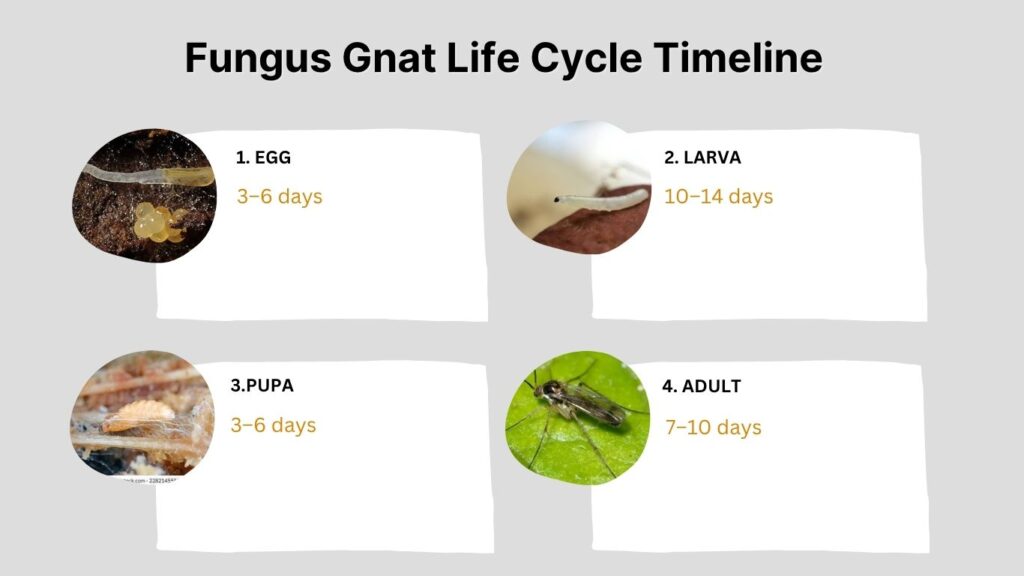
Temperature, moisture, food availability, and species affect development. At approximately 75°F, some fungus gnats can progress from egg to adult in about 17 days. Under typical household conditions, the process more commonly takes three to four weeks. Cooler conditions slow development, while warm, consistently moist soil accelerates it.
Typical Development Schedule
| Life stage | Approximate duration | Common location |
| Egg | 3–6 days | Damp soil surface |
| Larva | 10–14 days | Upper layers of potting soil |
| Pupa | 3–6 days | Near the soil surface |
| Adult | 7–10 days | Around plants and windows |
| Complete generation | 17–30 days | Soil and surrounding area |
Different generations commonly overlap. A single pot may contain eggs, young larvae, older larvae, pupae, and adults simultaneously. This overlapping development explains why fungus gnats may appear to return after one treatment.
How Water Affects the Fungus Gnat Life Cycle
Moisture is one of the most important factors influencing fungus gnat survival. Adults actively search for damp potting media where their eggs and larvae will be protected from dehydration. Overwatered houseplants consequently provide an almost continuous breeding habitat.
Why Wet Soil Encourages Fungus Gnats
Constantly damp soil supports the fungi, algae, and decaying organic matter eaten by larvae. It also prevents eggs and young larvae from drying out.
Several watering problems can encourage an infestation:
- Watering plants on a fixed schedule
- Using pots without drainage holes
- Leaving water inside saucers
- Growing plants in decomposed potting mix
- Allowing dead leaves to collect on the soil
- Keeping propagation trays continuously saturated
- Leaving algae inside hydroponic systems
Letting the upper one or two inches of soil dry can interrupt egg and larval development. However, plants that require continuously moist soil should not be allowed to wilt. For those plants, Bti or beneficial nematodes may provide safer control.
How to Break the Fungus Gnat Life Cycle
Effective control must address both the underground larvae and the flying adults. Adult traps reduce egg production, while soil treatments prevent larvae from reaching maturity. Continue the program long enough for existing pupae to emerge and disappear.
Step-by-Step Control Plan
- Isolate infested plants: Move them away from unaffected houseplants.
- Reduce watering: Wait until the soil surface feels dry before watering again.
- Use yellow sticky traps: Position traps horizontally close to the soil to catch emerging adults.
- Remove organic debris: Clear dead leaves, flowers, algae, and decomposing material.
- Treat the larvae: Apply Bti or beneficial nematodes according to the product instructions.
- Empty plant saucers: Do not allow drainage water to remain underneath pots.
- Inspect nearby plants: Adults may lay eggs in several containers.
- Continue for several weeks: Maintain treatment and monitoring for at least one complete generation.
Sticky traps are also useful for monitoring. When fewer adults appear on new traps, the breeding population is declining.
Treatments That Target Fungus Gnat Larvae
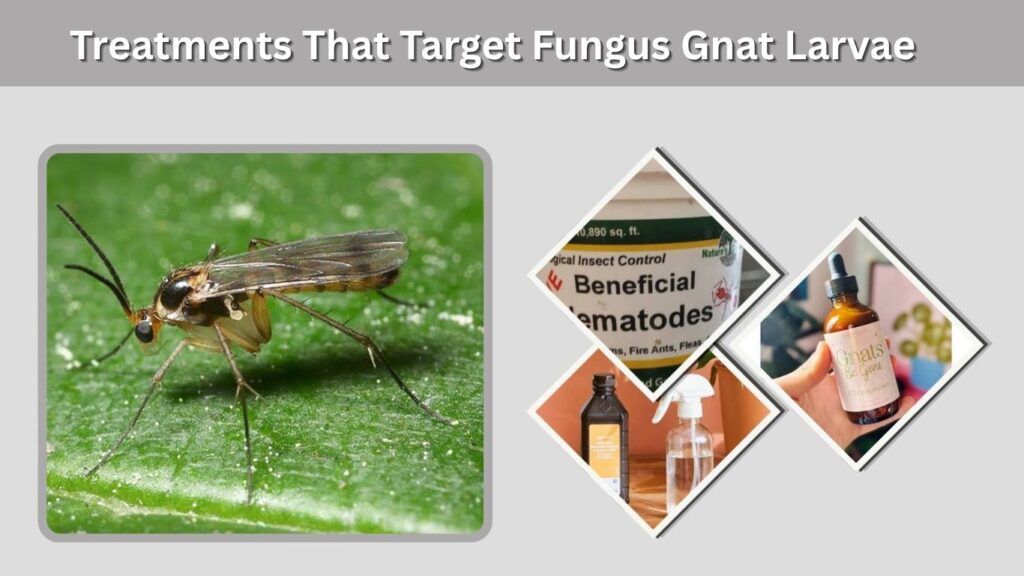
The larval stage is the most useful control target because larvae are actively feeding and have not yet reproduced. Treatments must reach the moist section of soil where they live. One application may not affect unhatched eggs or pupae, so carefully timed repeat treatments are often necessary.
Bti Application Intervals
Bacillus thuringiensis israelensis, or Bti, is a naturally occurring bacterium that kills fungus gnat larvae after they consume it. It is available in certain mosquito-control products and formulations made for greenhouse or houseplant use.
Apply only a product labeled for fungus gnats or soil drenches. Depending on the formulation, treatments may need to be repeated approximately every five to seven days. Always follow the label because concentrations and application intervals differ between products.
Bti does not directly kill adults, eggs, or pupae. Combine it with yellow sticky traps and repeat applications until new adults stop appearing.
Hydrogen Peroxide Treatment
Diluted hydrogen peroxide can kill some larvae on contact, but it is unlikely to reach every insect in the pot. A commonly used mixture is one part 3% household hydrogen peroxide with four parts water.
Apply it as a one-time soil drench only after testing a small amount on the plant. Stronger or repeated treatments may injure sensitive roots and harm beneficial soil organisms.
Hydrogen peroxide does not provide long-term protection or reliably kill eggs and pupae. Therefore, adults may continue emerging after treatment. Moisture control and sticky traps must still be used.
Beneficial Nematodes
The beneficial nematode Steinernema feltiae actively searches for fungus gnat larvae in the growing medium. It enters the larvae and releases bacteria that kill them.
Nematodes are useful for large plant collections, propagation areas, greenhouses, coco coir, and hydroponic systems. Apply them to moist media according to the supplier’s instructions and protect them from direct sunlight. The soil must not dry completely while the nematodes are active.
Preventing Another Fungus Gnat Generation
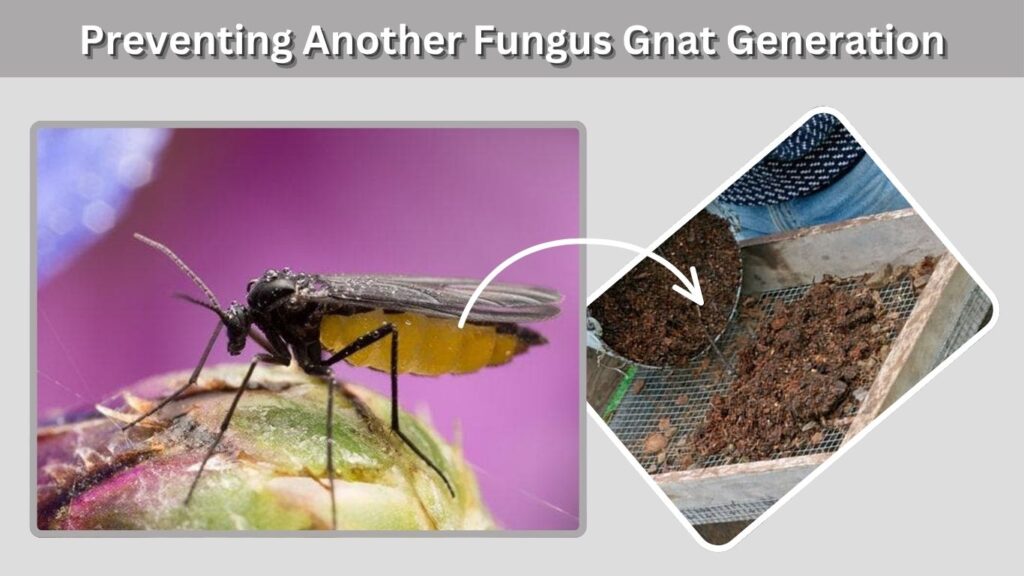
Once the population declines, preventive care can keep new females from finding suitable breeding soil. Proper watering is the most important measure, but sanitation and careful inspection of new plants also reduce the chance of another infestation.
Long-Term Prevention Tips
- Check soil moisture before watering.
- Use pots with unobstructed drainage holes.
- Empty saucers after each watering.
- Remove dead leaves from the soil.
- Store unused potting mix in sealed containers.
- Choose clean, pasteurized growing media.
- Quarantine new plants for two to three weeks.
- Replace badly decomposed or waterlogged soil.
- Clean algae from propagation and hydroponic systems.
- Keep monitoring traps near vulnerable plants.
FAQs
How long is the fungus gnat life cycle?
The complete life cycle usually takes three to four weeks, although it may be completed in approximately 17 days under ideal warm conditions.
Which fungus gnat stage damages plants?
The larval stage causes plant damage. Larvae may feed on fine roots and root hairs, particularly in seedlings, cuttings, and stressed plants.
Why do fungus gnats remain after treatment?
Existing pupae may survive a larval treatment and emerge as adults several days later. Eggs may also hatch after the first application.
How often should fungus gnat treatments be applied?
The interval depends on the product. Some Bti treatments are applied every five to seven days, while nematodes and other products have different instructions.
Can dry soil stop the fungus gnat life cycle?
Drying the soil surface can kill or discourage eggs and young larvae. However, it may not eliminate larvae living deeper in the pot, so severe infestations may require additional treatment.