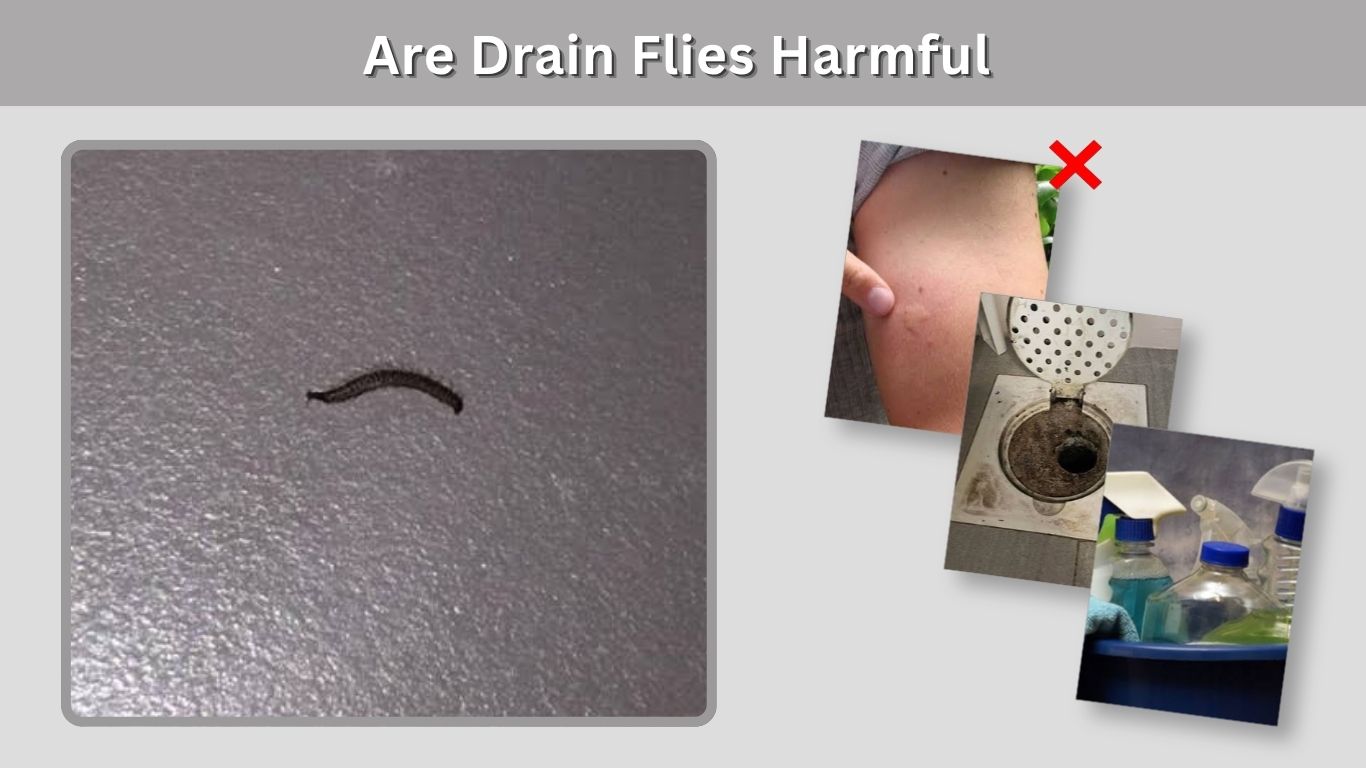
Drain flies are generally not dangerous because they do not normally bite, sting, or transmit disease directly. However, an infestation may indicate that sewage, bacterial slime, or decomposing organic material is accumulating inside a drain. Large numbers can contaminate surfaces, irritate sensitive individuals, and create an ongoing sanitation problem. Their larvae are also usually harmless, but they should not be ignored when found in toilets, pet water, aquariums, or areas with sewage odors. Removing the breeding material is the safest response.
Are Drain Flies Harmful to Humans?
Adult drain flies, also called moth flies or sewer flies, are primarily nuisance pests. Their fuzzy bodies and broad wings can make them look alarming, but they are weak fliers that spend most of their time resting near the damp area where they developed.
Do Drain Flies Bite or Sting?
Drain flies do not normally bite or sting humans. Unlike mosquitoes, fleas, and biting flies, they do not require blood meals. Adults primarily obtain moisture and feed on available organic substances.
A person who develops unexplained bites should check for mosquitoes, fleas, bed bugs, biting midges, or other pests rather than assuming drain flies are responsible.
Can Drain Flies Spread Disease?
Drain flies are not considered major disease-transmitting insects. However, they often develop in sewage, dirty drains, and decaying organic matter containing bacteria and fungi. Adults can potentially pick up microorganisms and carry them to nearby surfaces.
The risk is usually low in an ordinary household infestation, but flies should not be allowed to gather around food preparation areas, medical facilities, or places requiring strict sanitation.
Can Drain Flies Cause Allergies?
A large infestation may affect people who are sensitive to insects, dust, or airborne particles. Dead flies, shed material, and insect fragments can accumulate around windows, drains, and ventilation areas.
Possible reactions in sensitive individuals may include:
- Sneezing or nasal irritation
- Itchy or watery eyes
- Coughing
- Throat irritation
- Worsening of existing respiratory sensitivities
These symptoms can have many causes. Anyone experiencing persistent or severe breathing problems should seek medical advice rather than assuming drain flies are responsible.
Are Drain Fly Larvae Harmful?
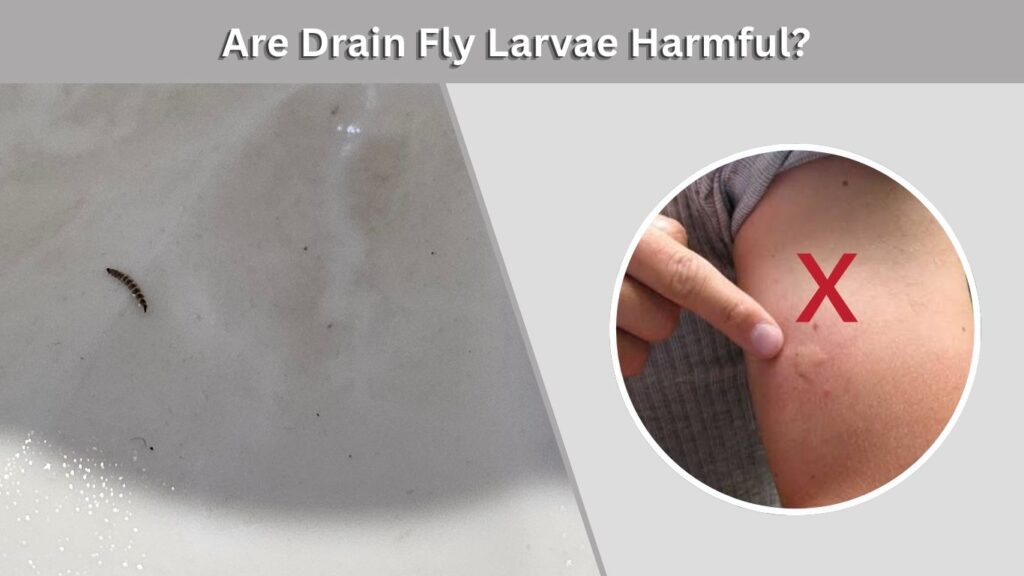
Drain fly larvae are small, segmented worms that live in moist organic slime. They feed on bacteria, fungi, algae, and decomposing material rather than attacking people or animals. Their presence is more important as evidence of contamination than as a direct physical threat.
Are Drain Fly Larvae Harmful to Humans?
Drain fly larvae are not poisonous and do not normally bite. Touching one accidentally is unlikely to cause harm, although hands should be washed afterward because the larva may have been living in sewage-contaminated material.
Larvae should not be handled unnecessarily or allowed to remain around kitchens, bathrooms, or drinking water. The source should be cleaned even if the insects themselves are not dangerous.
Can Drain Fly Larvae Get Inside Your Skin?
Drain fly larvae do not ordinarily penetrate healthy skin. They are adapted to living in wet, decomposing organic material and are not typical skin parasites.
Rare cases involving drain-fly-related larvae in the human body have been reported. However, many organisms can be mistaken for drain fly larvae. If a worm-like organism is found in a wound, stool, urine, or body opening, preserve the specimen if practical and seek medical evaluation. Never place drain cleaner, bleach, or insecticide on the body.
Are Black Drain Fly Larvae Dangerous?
Black larvae are not necessarily more dangerous than pale ones. Some appear dark because of their species, age, or the material visible through their bodies.
Nevertheless, black worms in a toilet may also belong to another organism. Repeated appearances, especially with sewage odors or slow drainage, may indicate a failed toilet seal, blocked pipe, or septic problem.
Are Drain Flies Harmful to Cats and Dogs?
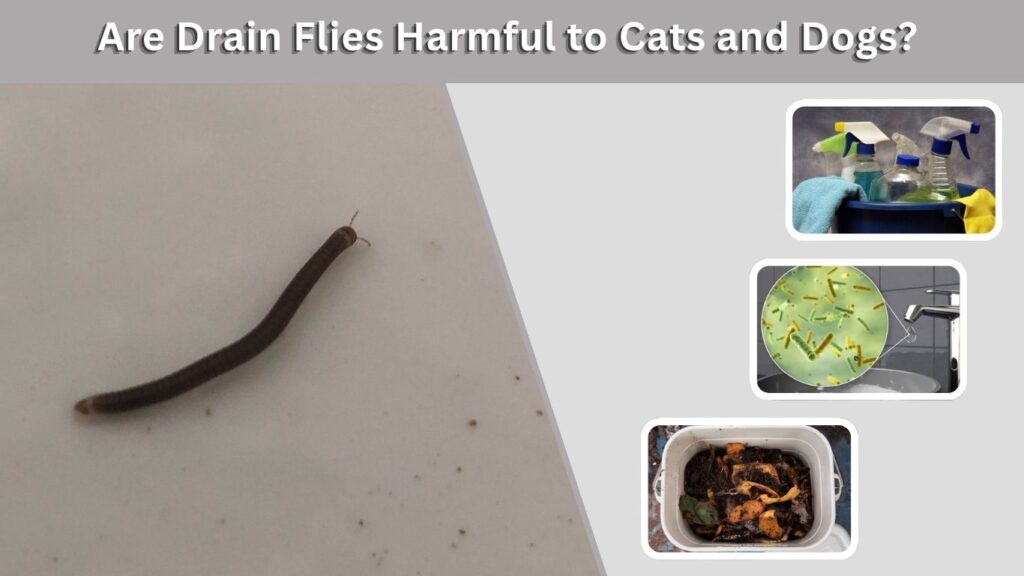
Drain flies do not normally bite cats or dogs, and neither the adults nor larvae are generally considered poisonous to them. A pet accidentally swallowing one or two flies is unlikely to experience a serious problem.
The contaminated environment supporting the insects is a greater concern than the flies themselves.
Risks Around Pets
An infestation could expose pets to:
- Dirty or bacteria-contaminated water
- Mold and organic waste
- Sewage from a damaged pipe
- Cleaning chemicals used incorrectly
- Insecticides applied around food and water bowls
Keep pets away from treated drains until the product label says the area is safe. Never apply insecticide directly to an animal unless the product has been prescribed or approved for that species.
Drain Fly Larvae in Pet Water
Larvae in a cat fountain, dog bowl, or other water container suggest that the water or internal components have remained dirty long enough for insects to reproduce.
Take the following steps:
- Prevent the animal from drinking the contaminated water.
- Empty the bowl or fountain.
- Disassemble all removable components.
- Replace disposable filters.
- Clean the pump, tubing, reservoir, and drinking surface.
- Rinse everything thoroughly before refilling.
- Refresh the water and clean the container more frequently.
Consult a veterinarian if the pet drank heavily contaminated water and later develops vomiting, diarrhea, loss of appetite, weakness, or another concerning symptom.
Are Drain Fly Larvae Harmful to Fish?
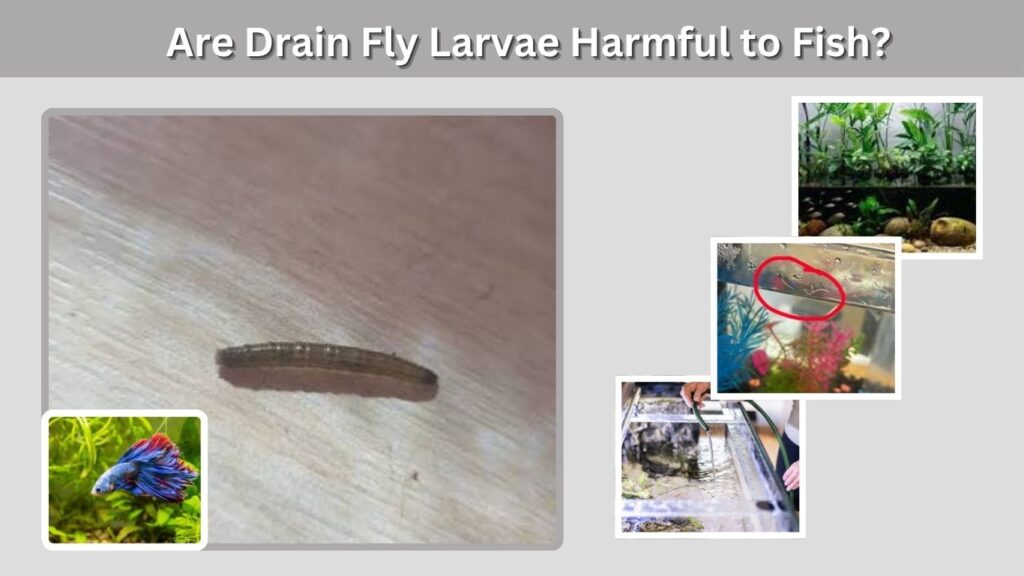
Drain fly larvae are not normally poisonous to fish. Some fish may even eat small insect larvae. However, worms in an aquarium are not always drain fly larvae, and their presence may signal excessive organic waste or poor maintenance.
What to Do When Larvae Appear in an Aquarium
Use these precautions:
- Remove visible larvae manually.
- Check for uneaten food and decaying plant material.
- Clean accumulated waste from the substrate.
- Inspect filters and areas with slow water movement.
- Perform an appropriate partial water change.
- Test important water-quality parameters.
- Improve routine tank maintenance.
Never add bleach, insecticide, drain gel, or household pesticide to an occupied aquarium. If fish appear ill or the organism cannot be identified, consult an aquatic veterinarian or experienced aquarium professional.
Why Drain Flies Should Not Be Ignored
Even though drain flies are rarely dangerous, an infestation provides useful information about conditions inside the property. The insects require moisture and organic material, so their continued presence indicates that a suitable breeding source remains nearby.
Problems an Infestation May Reveal
Drain flies can be associated with:
- Organic slime inside a drain
- A clogged or slow pipe
- A leaking faucet or drain line
- A damaged toilet seal
- An unused plumbing trap
- Contaminated standing water
- A sewage or septic-system problem
- Moisture beneath damaged grout
- Dirty garbage disposals or drain pans
A few flies may come from an ordinary dirty drain. Large infestations affecting several rooms may indicate a more extensive plumbing or sanitation problem.
How to Remove Drain Flies Safely
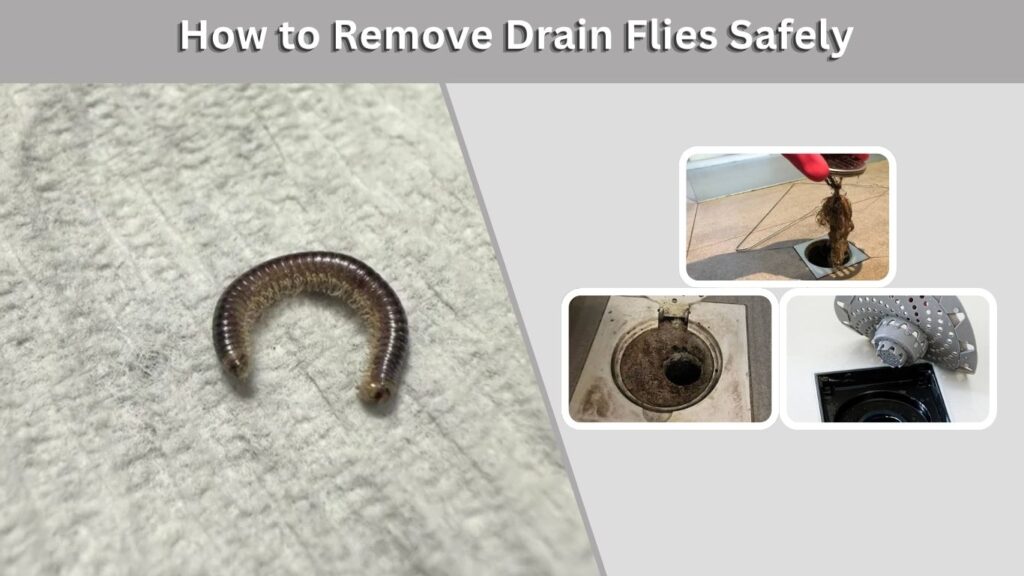
Killing visible adults will not eliminate eggs and larvae inside the drain. Effective control requires removing the organic film supporting their development and correcting the moisture source.
Safe Removal Steps
- Identify the breeding drain using clear tape or an inverted cup.
- Remove the stopper, strainer, or drain cover.
- Extract hair, grease, and other solid debris.
- Scrub the pipe walls with a stiff drain brush.
- Flush away loosened material with hot tap water.
- Apply an enzyme or microbial drain cleaner as directed.
- Clean overflow openings and garbage-disposal components.
- Repair leaking pipes, grout, and toilet seals.
- Monitor the area for one to two weeks.
Adult flies can be captured with sticky cards or vinegar-and-dish-soap traps. These traps reduce the visible population but do not eliminate larvae.
Chemical Safety
Never mix bleach with vinegar, ammonia, acids, drain openers, or other cleaning products. Such combinations can produce toxic gases or dangerous reactions.
Use only treatments intended for the relevant drain, septic system, or RV plumbing. Store all chemicals away from children, pets, food, and aquariums.
When to Call a Professional
Professional assistance is appropriate when an infestation continues after one to two weeks of thorough cleaning. A plumber should inspect the property if drain flies accompany sewage odors, wastewater leaks, recurring toilet worms, or damaged plumbing.
A pest-control professional can help locate concealed breeding sources. However, pesticide treatment alone will not solve an infestation caused by a leaking sewer line or organic buildup inside a pipe.
FAQs
Are drain flies dangerous?
Drain flies are not usually dangerous. They do not normally bite or sting, but their presence can indicate dirty drains, sewage contamination, or another sanitation problem.
Can drain flies make you sick?
Direct illness from drain flies is uncommon. However, flies developing in contaminated material may carry microorganisms, and heavy infestations could irritate sensitive individuals.
Are drain fly larvae poisonous?
No. Drain fly larvae are not considered poisonous. Their breeding material may contain harmful bacteria or sewage, so the affected area should still be cleaned.
Can drain flies harm cats or dogs?
Drain flies do not normally harm cats or dogs. The main risks come from contaminated water and cleaning chemicals used to treat the infestation.
Should I call an exterminator for drain flies?
Call a professional when repeated cleaning does not control the infestation or when flies appear throughout the property. A plumber may be necessary if a leak, failed seal, or sewer problem is involved.