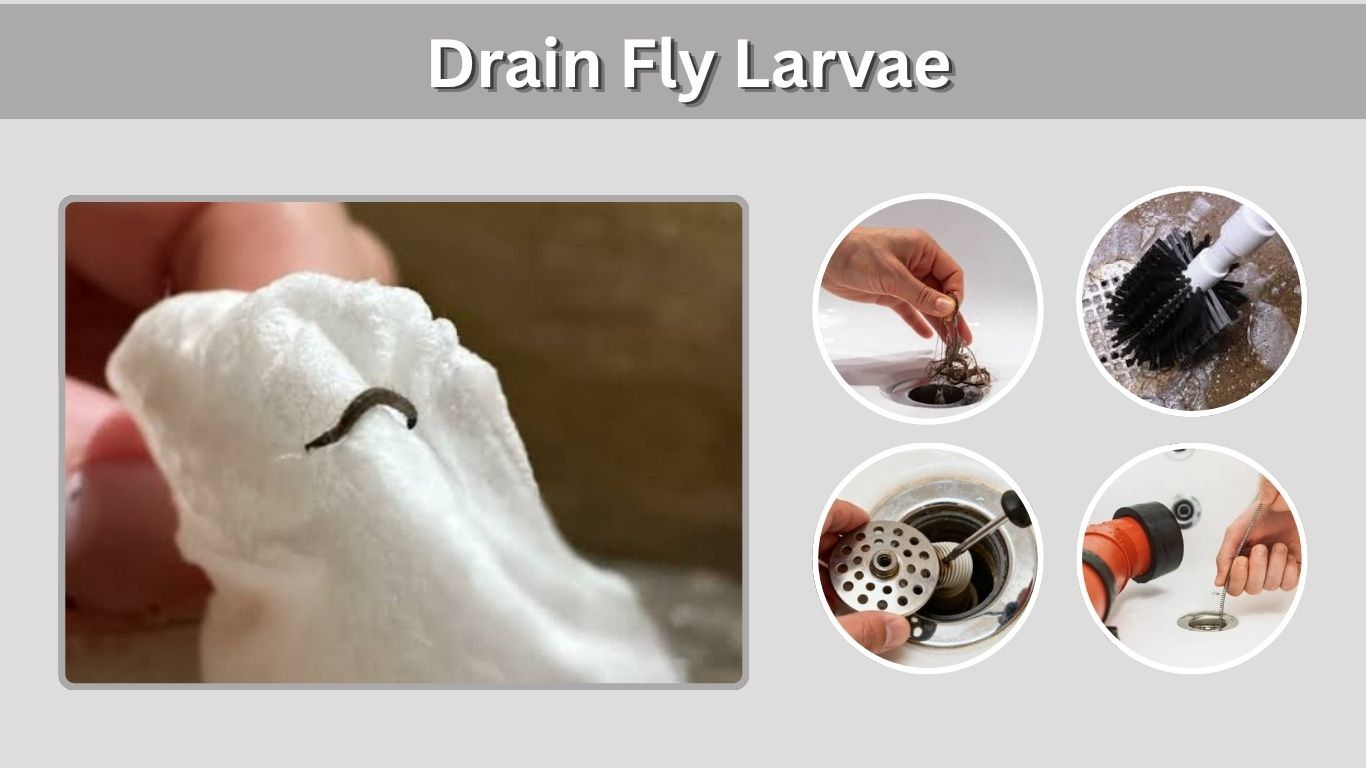
Drain fly larvae are tiny, worm-like insects that develop in wet organic buildup inside drains, toilets, showers, and other damp locations. Although they are generally harmless, finding them often signals that a drain contains decomposing material where drain flies can reproduce. Killing visible worms alone will not stop an infestation because eggs and pupae may remain hidden nearby. Proper removal requires identifying the breeding area, scrubbing away organic slime, treating the drain safely, and correcting leaks or sanitation problems that allow larvae to return.
What Are Drain Fly Larvae?
Drain fly larvae are the immature stage of drain flies, also known as moth flies or sewer flies. Adult females deposit eggs in moist material rich in bacteria and decomposing debris. Once the eggs hatch, the larvae feed within this film until they are ready to pupate and emerge as fuzzy adult flies.
What Do Drain Fly Larvae Look Like?
Drain fly larvae have several distinguishing features:
- Slender, worm-like bodies
- Usually 1/8 to 1/4 inch long
- Cream, gray, translucent, brown, or nearly black coloring
- A dark head or breathing tube
- Segmented bodies without visible legs
- Slow, wriggling movements
- A thin dark line sometimes visible inside the body
Larvae may appear black after feeding on dark organic material. Pale or whitish individuals are often younger. Pink or bright-red worms are more likely to be bloodworms or another aquatic insect rather than drain fly larvae.
Drain Fly Larvae vs. Other Worms
Tiny worms found in a toilet or shower are not always drain flies. Earthworms may enter through damaged plumbing, while horsehair worms are much longer and thinner. Red worms may be midge larvae, and small jumping larvae around spoiled food could be fruit fly larvae.
Adult fuzzy flies resting near the same drain provide strong evidence that the worms belong to drain flies.
Where Do Drain Fly Larvae Come From?
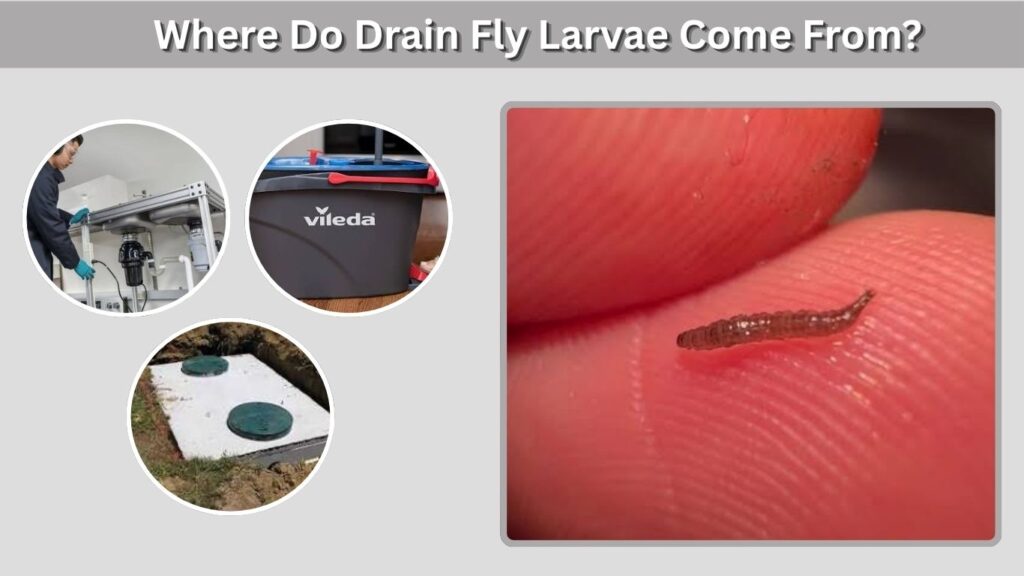
Larvae develop wherever moisture and decomposing organic material remain together. Indoor plumbing offers an ideal environment when hair, grease, soap, food particles, skin cells, and bacteria form a gelatinous coating along the pipe walls.
Common Breeding Locations
Drain fly larvae may be found in:
- Bathroom and kitchen sink drains
- Shower and bathtub drains
- Toilet rims and damaged toilet seals
- Floor drains and sewage lines
- Garbage disposals
- Septic tanks and sump pits
- Dirty mop buckets and drain pans
- Refrigeration or air-conditioner drip trays
- Damp grout and leaking plumbing
- Pet fountains and stagnant water containers
Larvae can tolerate very wet environments, but most do not live freely in clean water. They generally remain within organic slime or debris close to the water’s surface, where they can breathe.
Drain Fly Larvae in a Toilet
Worm-like larvae inside a toilet may come from buildup beneath the rim, an unused bowl, a leaking wax seal, or contaminated plumbing. A frequently flushed, properly maintained toilet is not a typical breeding site because it lacks stable organic film.
If larvae repeatedly appear after cleaning, inspect the tank, rim jets, floor connection, and nearby drains. Black worms combined with sewage odors may indicate a damaged seal, blocked sewer line, or septic problem requiring a plumber.
Drain Fly Larvae in a Shower
Hair, soap scum, skin cells, and standing water make shower drains attractive breeding sites. Larvae may also develop beneath a removable drain cover or inside cracked grout that remains wet.
Clean the pipe walls, drain cover, overflow opening, and surrounding grout. Repair loose tiles, failed caulk, and leaks that allow moisture to remain beneath the shower surface.
Are Drain Fly Larvae Harmful?
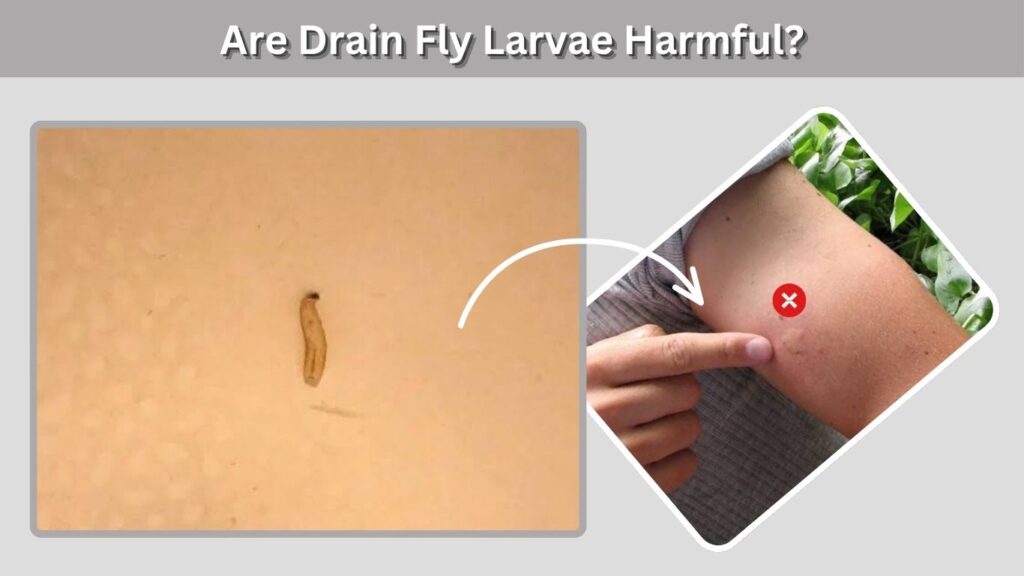
Drain fly larvae normally feed on microorganisms and decomposing material rather than living tissue. They do not have biting mouthparts designed to attack people or pets. However, their presence may indicate unsanitary buildup, contaminated standing water, or damaged plumbing.
Risks to Humans
Drain fly larvae generally:
- Do not bite or sting
- Do not intentionally enter healthy skin
- Are not poisonous
- Rarely cause direct illness
- May indicate bacterial growth or sewage contamination
Rare cases involving larvae in the human body have been reported, but identification can be complicated, and many worm-like organisms are mistaken for drain fly larvae. Anyone who discovers a suspected larva in a wound, stool, urine, or body opening should preserve the specimen if possible and contact a medical professional. Do not attempt treatment with household chemicals.
Risks to Cats and Other Pets
Drain fly larvae are not generally considered poisonous to cats or dogs. Nevertheless, pets should not drink from contaminated bowls or fountains because the dirty water may contain bacteria, mold, or decomposing debris.
Discard the water, replace disposable filters, and clean every component according to the manufacturer’s directions. Rinse thoroughly before refilling, and keep pets away from pesticides and drain-cleaning chemicals.
Drain Fly Larvae in a Fish Tank
Worms in an aquarium may be drain fly larvae, midge larvae, detritus worms, mosquito larvae, or another aquatic organism. Avoid adding bleach, insecticide, or drain cleaner to the aquarium.
Remove visible larvae, clean accumulated waste, rinse filter media appropriately, and improve tank maintenance without destroying beneficial bacteria. If fish appear sick or the organism cannot be identified, consult an aquarium specialist or aquatic veterinarian.
How to Get Rid of Drain Fly Larvae
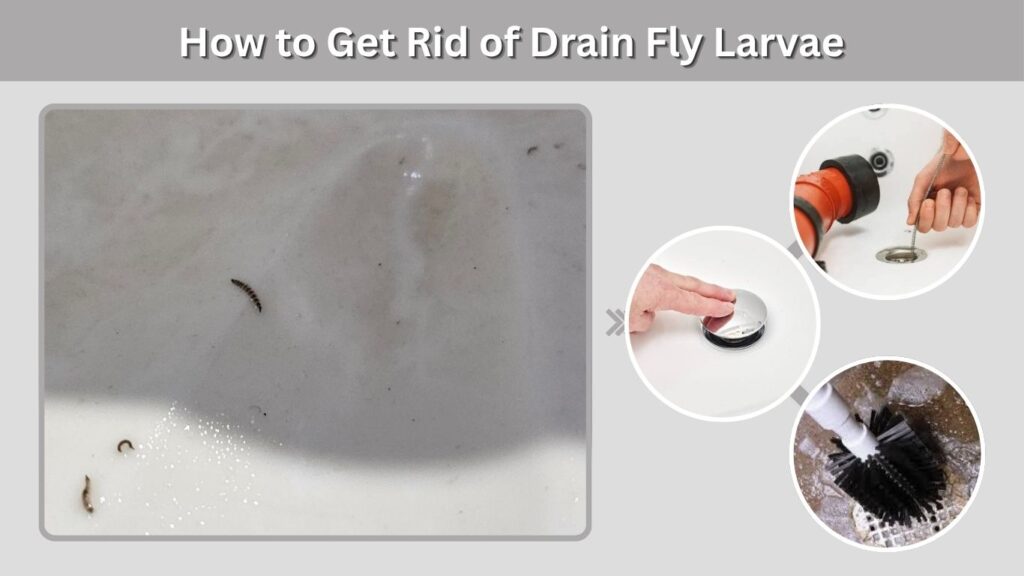
The best treatment is to remove the organic film where larvae feed. Insect sprays may kill exposed adults but rarely penetrate the material inside a drain. Treatment should target the entire breeding source rather than only the visible worms.
Clean the Affected Drain
Follow these steps:
- Remove the drain cover, strainer, or stopper.
- Pull out hair, grease, and solid debris with a drain tool.
- Scrub the pipe walls using a stiff, long-handled drain brush.
- Clean the underside of the cover and the overflow opening.
- Flush loosened debris away with hot tap water.
- Apply an enzyme or microbial drain gel as directed.
- Repeat the process for several nights if activity continues.
- Keep the area clean and repair any nearby leaks.
Treat all nearby drains because adult flies may move between rooms. Continue monitoring for at least one to two weeks to ensure that newly emerging adults cannot restart the infestation.
What Kills Drain Fly Larvae?
Useful control methods include:
- Physical scrubbing to remove larvae and their food
- Enzyme drain cleaners that digest organic buildup
- Microbial drain treatments designed for plumbing
- Hot tap water to flush away loosened material
- Plumbing repairs that eliminate leaks and sewage deposits
Choose products labeled for the intended plumbing system. A treatment safe for ordinary drains may not be appropriate for septic systems, garbage disposals, or fixtures connected to sensitive equipment.
Does Bleach Kill Drain Fly Larvae?
Bleach may kill larvae it directly contacts, but it frequently flows through the center of the pipe without removing slime attached to the walls. Therefore, it may provide only temporary results.
Never combine bleach with vinegar, ammonia, acids, drain openers, or other cleaners. These mixtures can release poisonous gases or cause violent chemical reactions.
Does Baking Soda and Vinegar Work?
Baking soda and vinegar create fizzing that may loosen light surface residue, but the reaction is not a dependable drain fly larvae treatment. It usually cannot remove thick organic film deep inside a drain.
Mechanical scrubbing followed by a properly labeled enzyme or microbial cleaner is more reliable. Avoid pouring boiling water into toilets or plumbing that could crack or become damaged by sudden heat.
How to Prevent Drain Fly Larvae
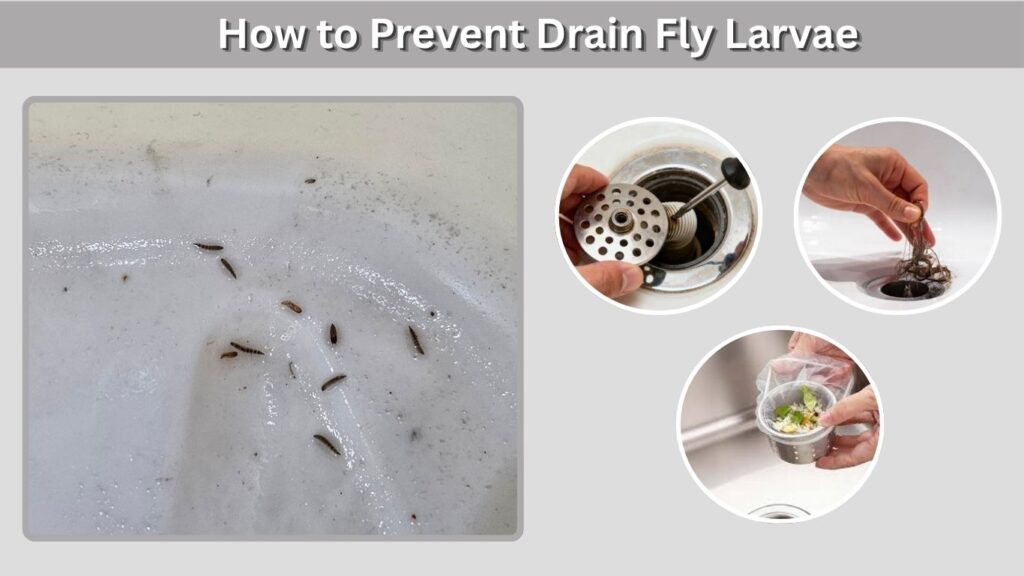
Prevention involves eliminating the moisture and organic material required for development. Regular attention is particularly important for guest bathrooms, basement drains, and other fixtures that are used infrequently.
Prevention Tips
- Clean drain covers and stoppers regularly.
- Remove hair before it accumulates inside shower drains.
- Keep grease and food scraps out of sinks.
- Run water through rarely used drains.
- Maintain water in plumbing traps.
- Repair leaking faucets, pipes, and toilet seals.
- Clean pet fountains and replace their filters routinely.
- Empty and wash mop buckets and drip trays.
- Investigate persistent sewage odors.
- Keep grout, floors, and areas beneath fixtures dry.
FAQs
How big are drain fly larvae?
Most drain fly larvae are approximately 1/8 to 1/4 inch long when fully developed. Their narrow bodies can make them appear smaller from a distance.
Do drain fly larvae bite?
No. Drain fly larvae feed on microorganisms and decompose organic material. They do not normally bite humans, cats, dogs, or other household animals.
Can drain fly larvae live in water?
They can survive in very wet environments but usually depend on oxygen and organic film near the water’s surface. Clean, moving water is less suitable than stagnant, contaminated material.
How long does it take to eliminate the larvae?
Numbers may decline within several days of thorough cleaning. Complete control often takes one to three weeks because eggs, pupae, and adults may be present at different stages.
Why do drain fly larvae keep returning?
Recurring larvae usually indicate that organic buildup or another breeding source remains. Hidden leaks, dirty overflow openings, damaged toilet seals, floor drains, or sewer problems may require further inspection.