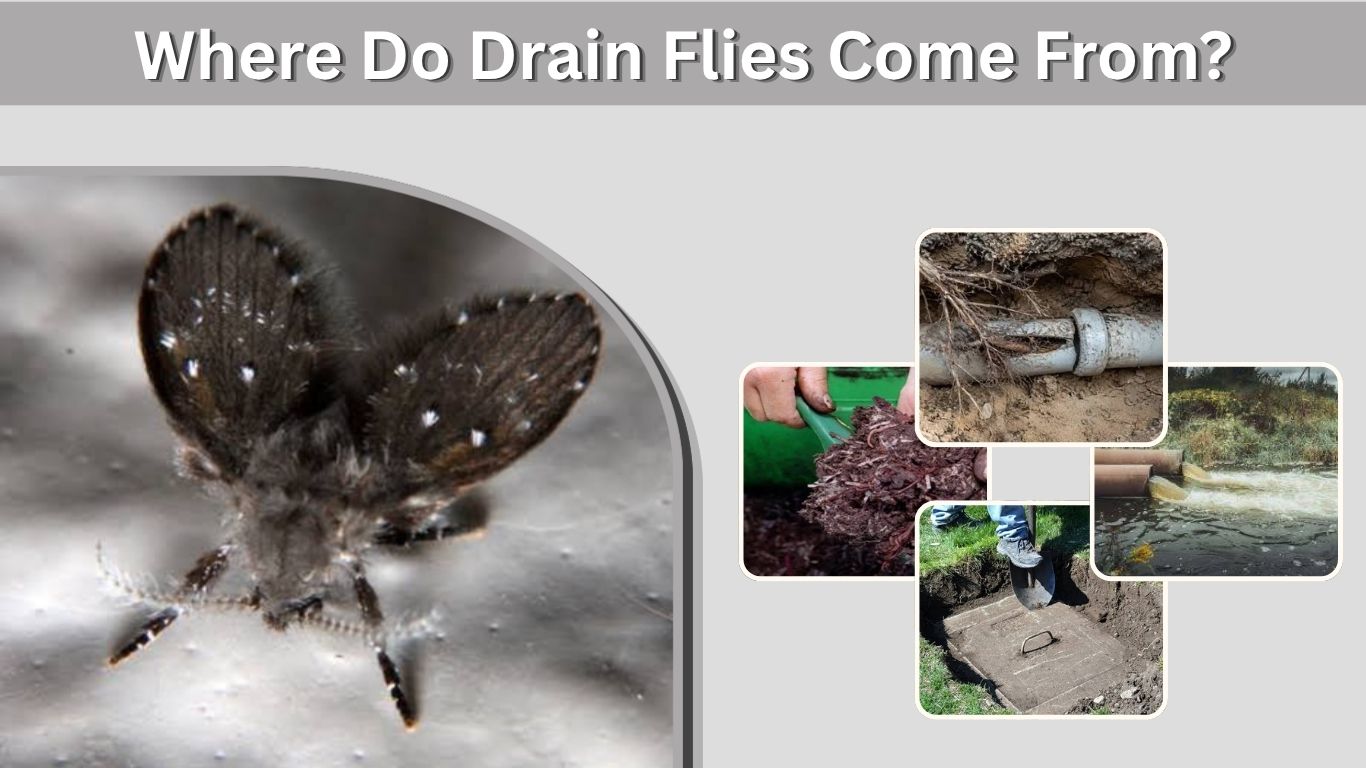
Drain flies come from moist places containing decaying organic material, especially the slimy buildup inside sink, shower, and floor drains. Adults can enter from outdoors, lay eggs in suitable material, and establish an indoor infestation. Others may enter through plumbing defects or dry drain traps. They do not appear spontaneously from water or dirt. Understanding whether flies are breeding inside your home or entering from elsewhere helps you locate the source and stop repeated outbreaks instead of continually removing adults.
What Are the Flies That Come Out of Drains?
Several small fly species can develop around drains. True drain flies, also called moth flies or sewage gnats, have a distinctive fuzzy appearance. Identifying them correctly matters because other flies may require you to inspect different breeding materials.
Drain Fly Identification
Look for these characteristics:
- Size: Commonly around 2–4 millimeters long.
- Color: Gray, tan, brown, or nearly black.
- Wings: Broad and covered with fine hairs.
- Appearance: Resembles a tiny moth.
- Movement: Weak, short flights between nearby surfaces.
- Resting places: Bathroom walls, tiles, and areas near drains.
A close-up photograph is often more useful than judging the insect by its location alone.
Where Do Drain Fly Larvae Come From?
Larvae hatch from eggs laid by adult females in moist organic material. They feed within the slime coating drains or other suitable surfaces, then pupate before emerging as winged adults.
Their development can take approximately 8–24 days, depending on temperature. Because immature stages remain concealed, an infestation may seem sudden even though the insects have been developing for days.
Where Do Drain Flies Breed Inside a House?
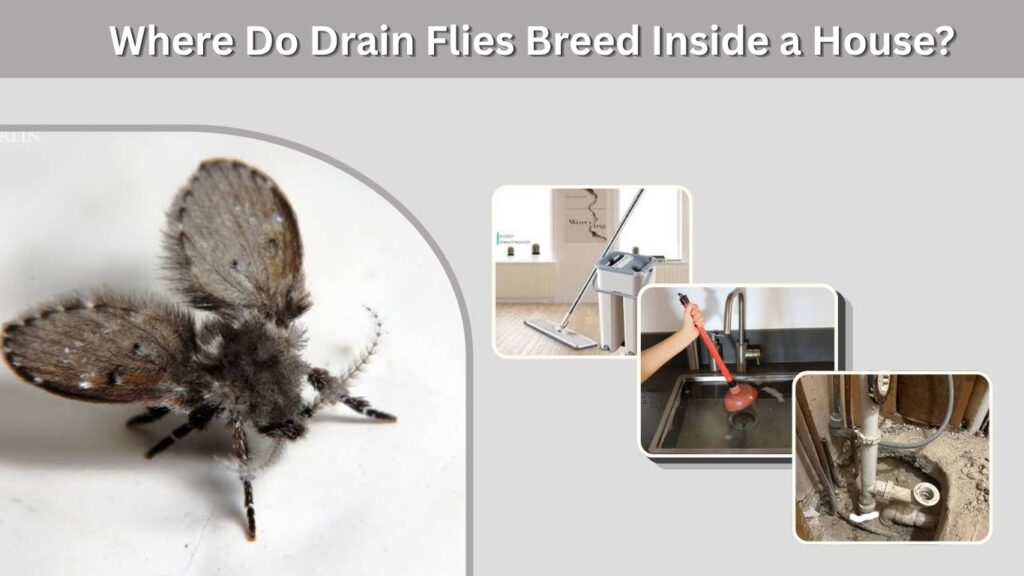
Drain flies need moisture and suitable organic material. Humidity alone does not create an infestation, and a clean-looking room can still contain hidden breeding sites. Start with plumbing, but expand your inspection if cleaning the obvious drains does not resolve the problem.
Common Indoor Sources
Potential breeding locations include:
- Sink drains with accumulated organic slime.
- Shower and bathtub drains containing hair and sludge.
- Sink overflow passages and the undersides of stoppers.
- Floor drains with persistent organic deposits.
- Wet debris beneath leaking pipes.
- Dirty mop heads and damp garbage containers.
- Appliance drip pans containing algae or organic buildup.
These places offer both moisture and food for developing larvae.
Why Infrequently Used Rooms Develop Problems
Guest bathrooms, basement sinks, and unused utility rooms can go unnoticed long enough for organic deposits to accumulate. Leaks may also persist without being discovered.
However, frequent use does not guarantee a drain is clean. Water can flow through the middle of a pipe while slime remains attached to its walls.
Can Drain Flies Come Through Drains or Toilets?
Flies emerging from plumbing do not necessarily travel all the way from a sewer. Some develop close to the drain opening, while others gain access through a missing water seal or damaged plumbing. These situations require different solutions.
Can Flies Come Up Through Drains?
Yes. Adults can emerge from breeding material inside accessible sections of drainpipes.
A functioning plumbing trap holds water that blocks an open route from the drainage system into the room. If that trap dries out, flies may enter from farther along the plumbing. However, a water-filled trap does not prevent breeding in slime above it.
Run water periodically through unused fixtures, but also remove organic buildup.
Can Drain Flies Come From the Toilet?
They can be associated with toilets, particularly where a damaged base seal allows access from the drainage system or leakage creates wet organic material.
Seeing flies near a toilet does not prove they swam through the bowl water. Nearby sink drains, floor drains, or hidden leaks may be responsible.
A loose toilet, sewage odor, or recurring moisture around the base warrants a plumbing inspection.
Can Drain Flies Come From Outside or Appliances?
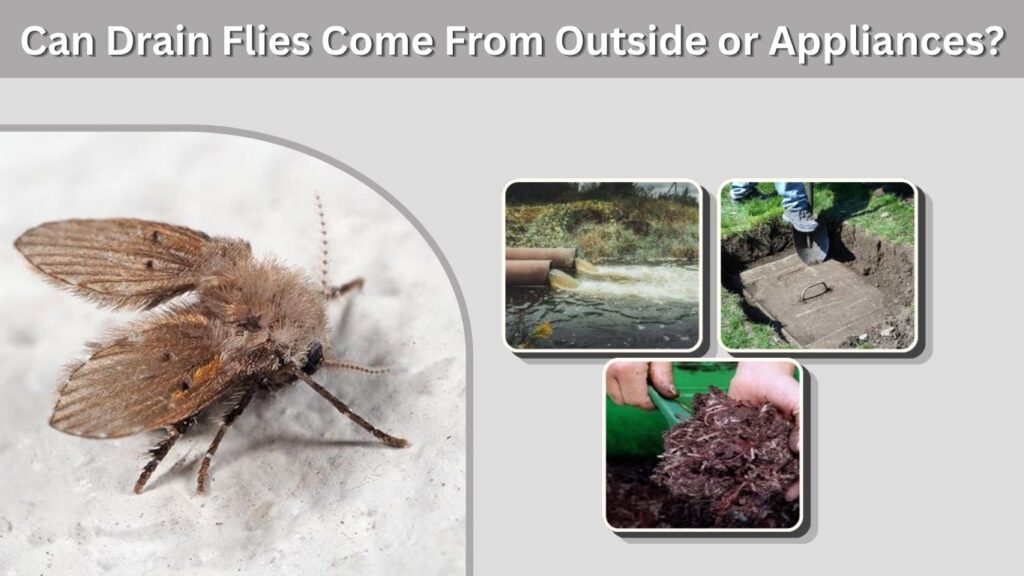
Despite their name, drain flies are not restricted to household drains. Outdoor breeding areas and neglected moisture around equipment can also support them. Where adults gather is a useful clue, but it is not conclusive evidence of their origin.
Outdoor Sources and Septic Systems
Outdoor sources include sewage-treatment areas, septic systems, moist compost, and decaying material around persistent leaks.
Adults may enter through open doors, unscreened windows, or small gaps. Although weak fliers, they can also be carried by wind. Their presence indoors does not automatically mean your septic system is failing.
Air Conditioners, Sump Pumps, and Laundry Areas
Drain flies can develop in dirty AC drip pans and around sump pumps when wet organic material is present. Laundry-room drains and leaking appliance connections are also worth inspecting.
For a suspected washing-machine source, examine the surrounding drainage and moisture conditions before assuming insects are breeding inside the machine. Have inaccessible equipment inspected professionally.
Do Fruit Flies and Other Flies Come From Drains?
Not every fly emerging near plumbing is a drain fly. Different insects may use similar wet environments, while others simply enter the room and land near a sink.
Can Fruit Flies Come From Drains?
Yes. Some fruit flies breed in drain biofilm and other decaying organic material. They do not need a bowl of fruit nearby.
Fruit flies generally have less fuzzy bodies and narrower, clearer wings than moth flies. Many have reddish eyes, although eye color alone is not a dependable identification method.
What About Phorid Flies and Bigger Flies?
Phorid flies can breed in drains, sewage-contaminated material, and other decomposing matter. They have a humpbacked appearance and often run across surfaces.
Large flies are not typical drain flies. House-fly sightings should prompt an inspection of garbage and other decaying material, not an automatic assumption that plumbing is responsible.
Cluster flies are different again: they enter buildings for shelter and do not breed indoors.
How to Find and Remove the Source
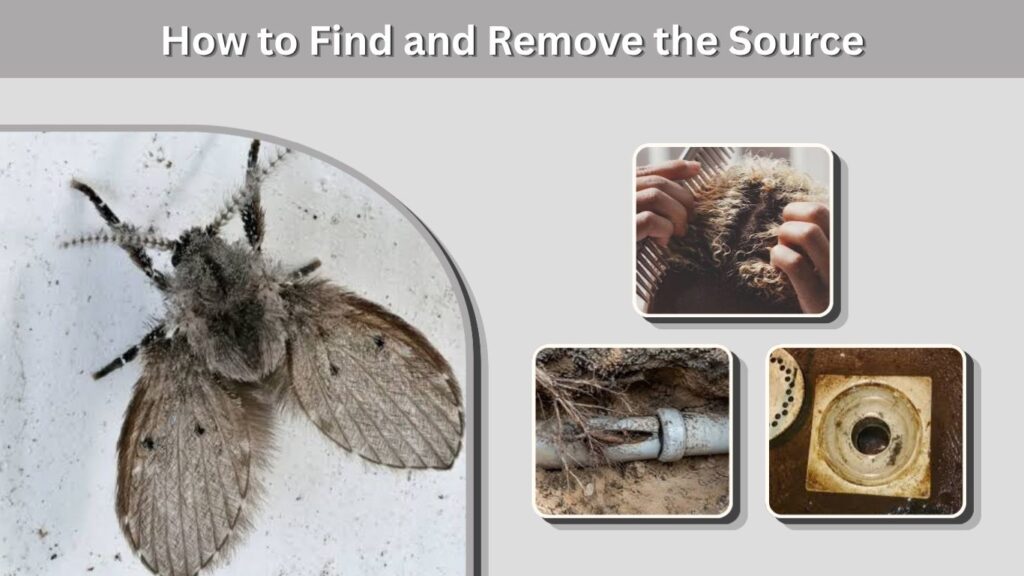
Successful control starts with confirming where flies emerge. Treating one drain without checking other possibilities can leave the actual breeding site untouched.
Test Suspected Drains
Place clear tape sticky-side down across part of a suspected drain opening, leaving a small gap. Leave the fixture unused overnight, then check the underside for trapped flies.
Remove the tape before using the fixture. Repeat if necessary, and test several drains separately. A single empty test does not conclusively exclude a source.
Remove Breeding Material
Clean accessible stoppers, covers, and drain surfaces with an appropriately sized stiff-bristled brush. An enzyme-based drain cleaner may help maintain drains after physical cleaning; follow its label and plumbing-compatibility instructions.
Do not brush plumbing containing chemical drain-cleaner residue, and never mix cleaners. Persistent infestations or suspected hidden leaks require professional inspection.
Prevent Another Infestation
- Remove hair and organic deposits regularly.
- Keep unused drain traps supplied with water.
- Repair leaks and recurring drainage problems.
- Clean dirty drip pans according to equipment instructions.
- Dry mop heads and remove wet waste.
- Repair damaged window screens.
FAQs
These answers clarify common misunderstandings about drain fly origins.
Do Drain Flies Only Come From Drains?
No. They can breed wherever suitable wet organic material accumulates, including compost, sewage systems, dirty drip pans, and debris around leaks.
Do Drain Flies Come Out Only at Night?
They are often more active during the evening and nighttime, but adults can also be seen resting indoors during daylight.
Can Drain Flies Come Through Air Vents?
Adults may enter through unscreened openings, but flies near a vent do not prove breeding inside ductwork. Investigate nearby moisture and condensation sources.
Do Drain Flies Mean My House Is Dirty?
Not necessarily. A clean home can have hidden drain biofilm or a small plumbing leak. Their presence indicates a breeding source to investigate, not the cleanliness of every room.
Why Do Drain Flies Return After Cleaning?
Some breeding material may remain in an overflow passage, another drain, or an inaccessible damp area. Outdoor adults may also reenter. Recheck the source rather than repeatedly treating visible flies.