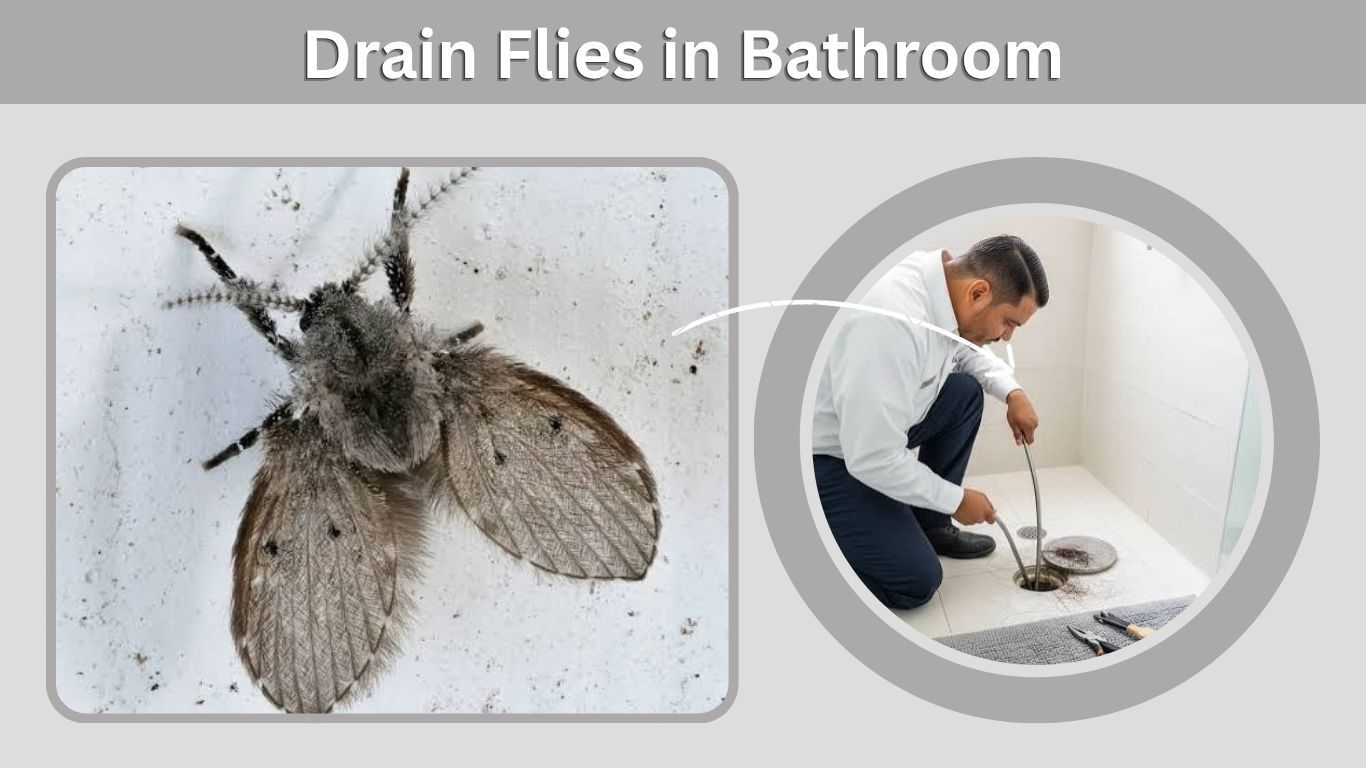
Drain flies in the bathroom usually indicate moist organic buildup where their larvae can develop. These tiny, fuzzy insects often appear near sinks, showers, and floor drains, then rest on nearby walls. Removing the adults alone will not solve the problem if their breeding site remains. The most effective approach is to identify the insects, locate the affected drain or damp area, and remove the material supporting them. Even a bathroom that looks clean can have hidden buildup inside its plumbing.
What Do Bathroom Drain Flies Look Like?
Drain flies are also called moth flies because their hairy bodies and wings resemble miniature moths. However, not every small black fly in a bathroom is a drain fly.
Drain Fly Identification
Look for these features:
- Size: Usually about 2–4 millimeters long.
- Color: Gray, tan, brown, or nearly black.
- Body: Noticeably fuzzy when viewed closely.
- Wings: Broad and hairy, held roof-like when resting.
- Movement: Short, weak flights rather than sustained flying.
- Location: Often resting on walls near damp breeding sites.
A close-up photograph can help reveal the wing shape and hair covering.
Small Black Flies in Bathroom That Are Not Drain Flies
Body shape and behavior help narrow down the possibilities.
| Insect | Identification clue | Places to investigate |
| Drain fly | Fuzzy, moth-like wings | Drain slime and damp organic debris |
| Fungus gnat | Slender body, long legs and antennae | Wet potting soil or persistent moisture |
| Fruit fly | Rounded body, often reddish eyes | Fermenting material and some drain biofilms |
| Phorid fly | Humpbacked profile; frequently runs across surfaces | Decaying material, drains, and plumbing leaks |
Finding flies beside a sink does not prove they developed inside it. Inspect nearby plants, bins, and damp materials too.
What Causes Drain Flies in the Bathroom?
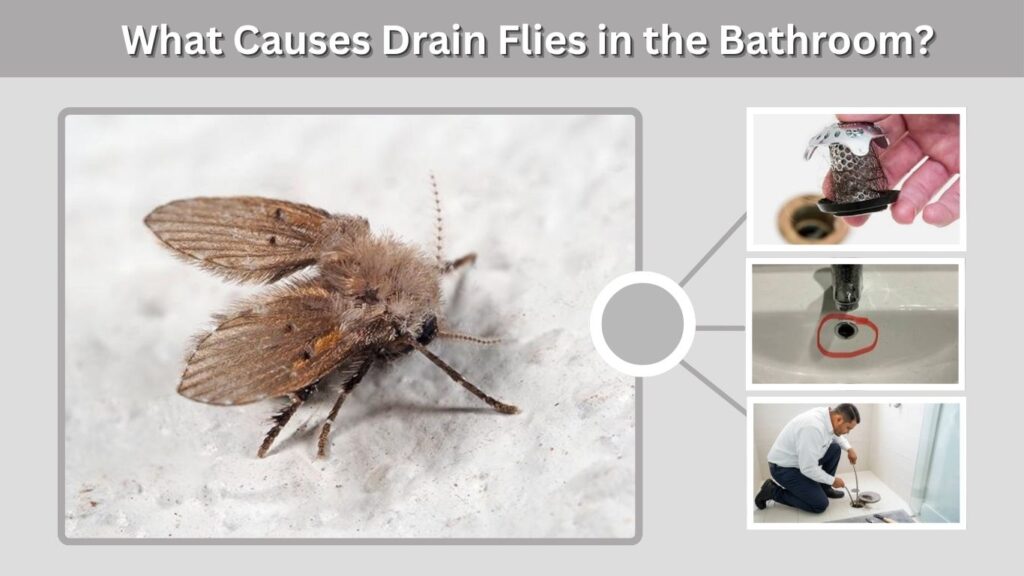
Drain flies need a moist breeding material, not simply humid air. The slimy layer inside plumbing—called biofilm—contains microorganisms and accumulated organic debris.
Common Breeding Sites
Potential sources include:
- Slime beneath sink stoppers and drain covers.
- Organic buildup inside sink overflow passages.
- Hair and sludge beneath shower drains.
- Dirty, infrequently maintained floor drains.
- Wet debris around leaking pipes.
- Damp, dirty cleaning equipment.
Their presence does not automatically mean your bathroom is unsanitary. Hidden drain deposits can remain even when visible surfaces are cleaned regularly.
Drain Fly Larvae and Life Cycle
Drain flies develop through egg, larval, pupal, and adult stages. Their worm-like larvae feed within wet organic material rather than on the clean bathroom floor.
Development can take approximately 8–24 days, depending on temperature. Worms found on bathroom tiles require identification; their location alone does not confirm they are drain fly larvae.
How to Get Rid of Drain Flies in Bathroom
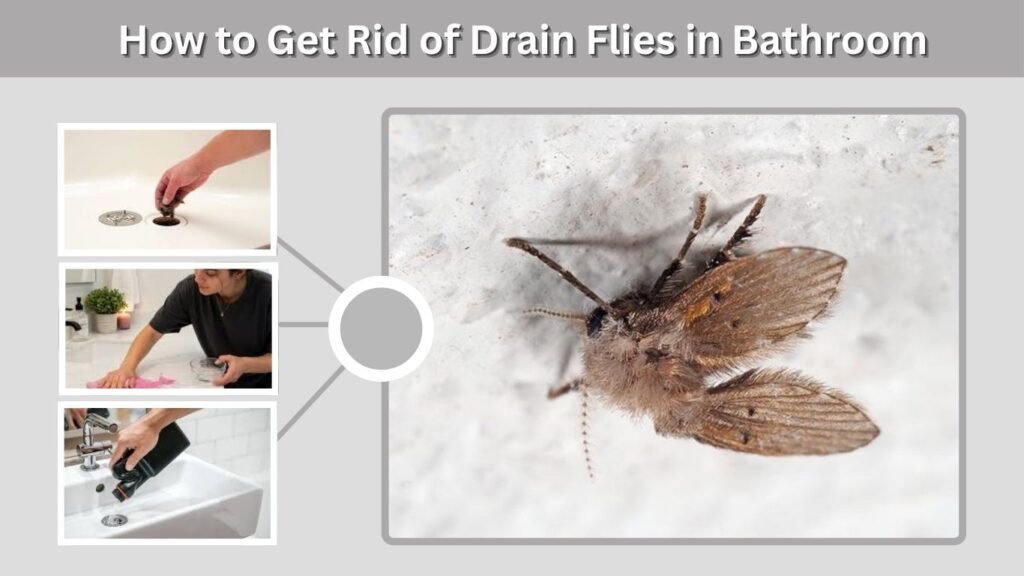
Effective removal targets the breeding material. Treating only the flies you can see leaves the next generation developing out of sight.
1. Find the Source
Check the sink, shower, bathtub, and floor drains separately.
Before bed, place clear adhesive tape sticky-side down across part of a suspected drain opening, leaving a gap. Do not use that fixture overnight. Check the underside for emerging flies the next morning, then remove the tape before using the drain.
Repeat monitoring if necessary. One empty test does not rule out a source, and more than one drain may be involved.
2. Remove Hair and Scrub Away Slime
Remove accessible stoppers or drain covers according to the fixture instructions. Clear trapped hair and debris, then use an appropriately sized stiff-bristled brush to scrub accessible buildup inside the drain.
Clean the stopper’s underside and accessible overflow passages too. Rinse afterward and confirm that water flows freely. Physical removal of the slime is central to eliminating larval habitat.
Wear gloves and eye protection, avoid splashing, and move toothbrushes away from the cleaning area. Do not brush or dismantle plumbing containing drain-cleaner residue. For inaccessible blockages or uncertain plumbing, contact a plumber.
3. Use an Appropriate Drain Cleaner if Needed
An enzyme-based drain cleaner may help break down remaining organic deposits and maintain cleaner drains. Choose one suitable for your plumbing and septic system, if applicable, and follow its directions.
These products support thorough cleaning; they are not a substitute for removing substantial hair and sludge.
Never mix cleaning products or add one immediately after another unless their instructions explicitly permit it.
4. Remove Adults and Correct Moisture Problems
Sticky traps placed away from splashes, children, and pets can help monitor remaining adults. They do not remove the breeding source.
Repair leaks, clean damp organic debris, and allow wet mats and cleaning equipment to dry. Foggers and repeated room sprays cannot resolve an infestation while larval habitat remains.
Do Bleach, Vinegar, or Boiling Water Work?
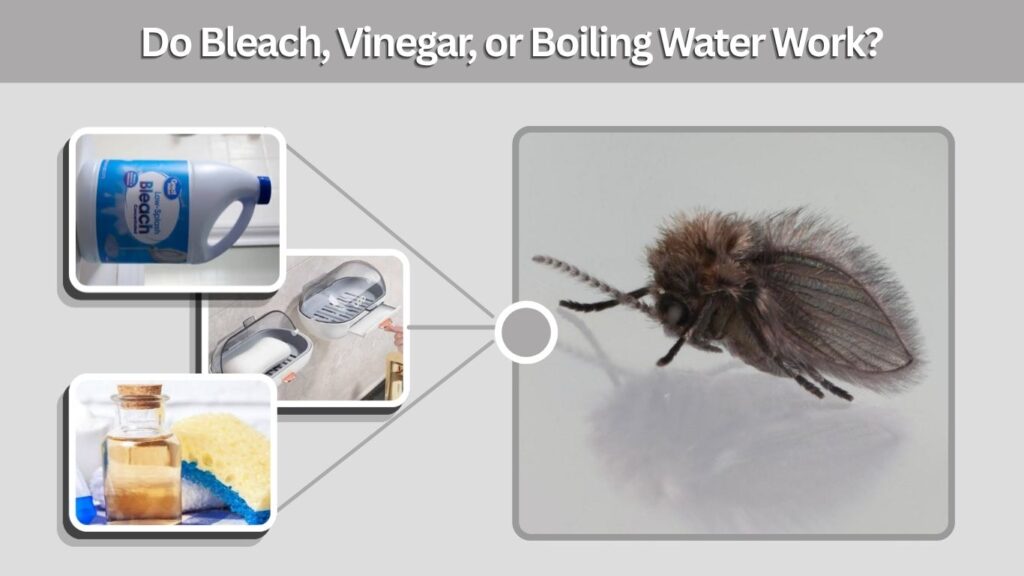
Common home remedies may affect some insects without removing the material that keeps an infestation going.
Bleach and Boiling Water
Bleach or boiling water alone does not reliably remove drain biofilm and may provide only temporary control. Scrubbing away the buildup is more important than repeatedly pouring liquids down the drain.
Never mix bleach with vinegar, ammonia, drain openers, or other cleaners. Avoid pouring boiling water into plumbing without checking the fixture manufacturer’s guidance.
Apple Cider Vinegar and Dish Soap
Vinegar-based traps are commonly used for fruit flies, but they are not a reliable way to identify or eliminate a drain fly infestation. Even if a trap catches adults, larvae may remain inside the plumbing.
Do not treat an empty vinegar trap as proof that your bathroom is insect-free.
How to Prevent Bathroom Drain Flies
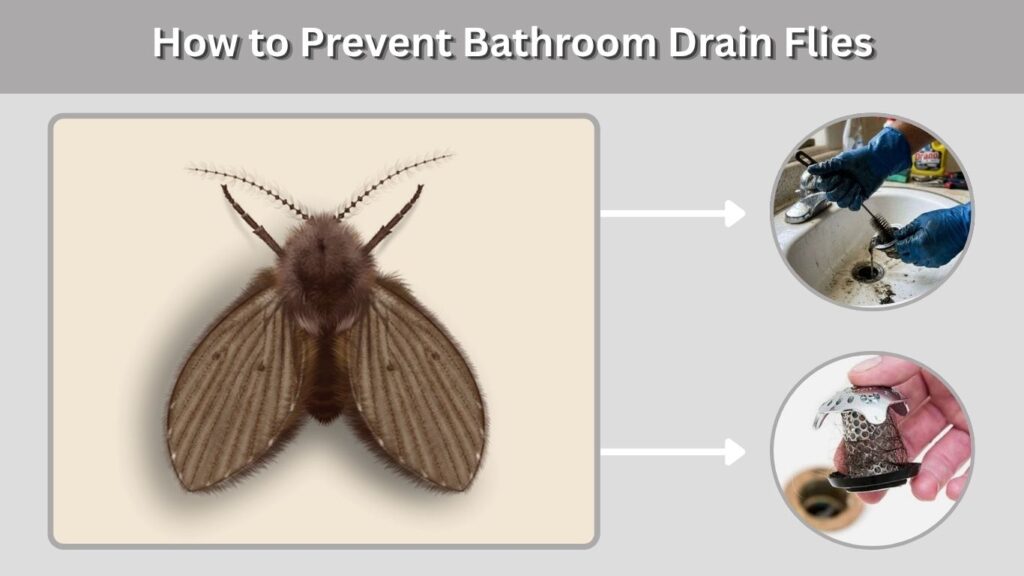
Prevention means limiting organic buildup and correcting unwanted moisture while keeping plumbing functioning properly.
- Remove hair from drain covers regularly.
- Clean sink stoppers and accessible overflow openings.
- Address slow drainage before deposits accumulate.
- Repair leaking pipes and fixtures.
- Wash and dry bath mats and cleaning equipment.
- Run water periodically through seldom-used fixtures to maintain their drain-trap water seals.
Drying bathroom surfaces is helpful, but deliberately drying out plumbing traps is not.
When to Call a Professional
Arrange a plumbing inspection if flies persist despite thorough cleaning, especially alongside sewage odors, recurring blockages, or visible leaks. A pest professional can also confirm the insect’s identity.
Hidden breeding sites can occur beneath floors or around damaged waste pipes, but flies alone do not prove a sewer leak. Avoid opening walls or disturbing potentially contaminated material yourself.
FAQs
These answers address common concerns about bathroom drain fly infestations.
Why Are Drain Flies on My Bathroom Ceiling?
Adults may rest on walls and ceilings after emerging elsewhere. Their resting location does not establish where they are breeding, so investigate drains and damp organic material before treating the ceiling.
Do Bathroom Drain Flies Bite?
Common bathroom drain flies do not bite. They are mainly nuisance pests, although they can carry microorganisms from dirty breeding sites, and large accumulations of dead flies may contribute allergens.
How Long Does It Take to Get Rid of Them?
There is no guaranteed deadline. Existing adults may remain after cleaning, but numbers should decline when breeding sources are eliminated. Continued emergence suggests overlooked material or another source.
Can Fruit Flies Breed in Bathroom Drains?
Yes, some fruit flies develop in drain biofilm. Identify the insect before choosing treatment; neither a bathroom location nor attraction to vinegar conclusively identifies it.
Why Do Drain Flies Keep Coming Back?
Recurring flies often mean breeding material remains beneath a stopper, inside an overflow passage, in another drain, or around a leak. Recheck the source rather than repeatedly treating visible adults.