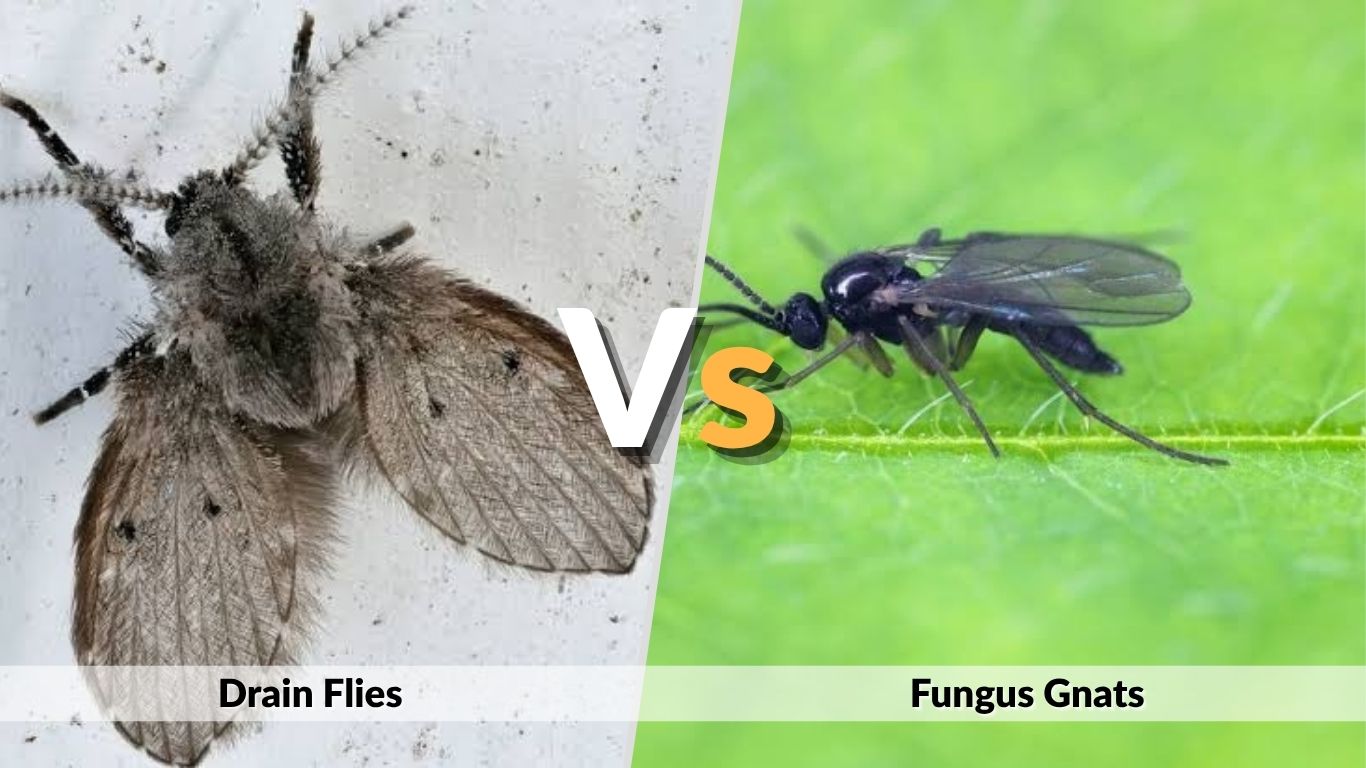
Drain flies and fungus gnats are tiny indoor pests that can look similar from a distance, but they breed in entirely different places. Drain flies are fuzzy, moth-like insects that develop in organic slime inside drains and other wet plumbing areas. Fungus gnats are slender, mosquito-like flies associated with damp houseplant soil. Fruit flies are a third common look-alike attracted to fermenting produce and drink residue. Identifying the source is essential because traps and sprays cannot stop an infestation while larvae continue developing.
Are Drain Flies and Gnats the Same?
Drain flies are sometimes informally called drain gnats, sewer gnats, or moth flies. However, they are not the same insects as fungus gnats.
The Main Difference
- Drain flies belong to the family Psychodidae
- Fungus gnats commonly belong to the family Sciaridae
- Fruit flies commonly belong to the family Drosophilidae
- “Gnat” is an informal term used for several groups of tiny flies
A person asking about gnats may therefore be describing fungus gnats, drain flies, fruit flies, phorid flies, or another small flying insect.
Drain Flies vs. Fungus Gnats vs. Fruit Flies
Appearance provides the fastest initial identification, but the breeding location offers stronger confirmation.
| Feature | Drain fly | Fungus gnat | Fruit fly |
| Body shape | Short and fuzzy | Thin and mosquito-like | Rounded and compact |
| Color | Gray, brown, or black | Gray or black | Tan, brown, or dark |
| Wings | Broad and hairy | Narrow and transparent | Smooth and transparent |
| Antennae | Hairy and noticeable | Long and threadlike | Short |
| Eyes | Small and dark | Dark | Often red |
| Movement | Short, weak flights | Runs and flies around plants | Active hovering flight |
| Main source | Drain biofilm | Moist potting soil | Fermenting food |
| Common location | Bathroom or kitchen | Houseplants and windows | Kitchen and pantry |
All three are commonly around 1/16–1/8 inch long. Size alone is therefore not enough to distinguish them.
What Do Drain Flies Look Like?
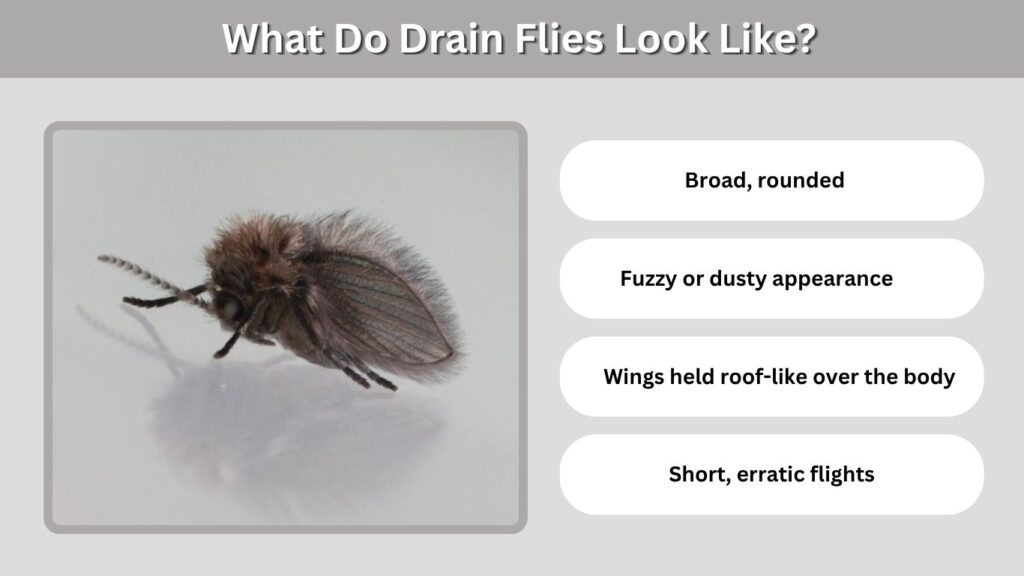
Drain flies resemble miniature moths. Their bodies and wings are covered with fine hairs, creating a fuzzy appearance.
Identification Features
- Broad, rounded, or heart-shaped wings
- Wings held roof-like over the body
- Fuzzy or dusty appearance
- Short, erratic flights
- Frequently rests on walls
- Usually remains close to plumbing
- Gray, tan, brown, or nearly black coloration
They are weak fliers and often move by making short hops between the drain, sink, wall, and nearby fixtures.
Drain Fly Breeding Sources
Drain fly larvae live inside moist films containing bacteria, fungi, and decomposing organic material. Common sources include:
- Sink drains
- Shower and bathtub drains
- Floor drains
- Garbage disposals
- Overflow openings
- Sump pits
- Condensate trays
- Sewage pipes
- Septic systems
- Wet mop buckets
- Leaking plumbing
- Water-damaged areas beneath floors
Clean water alone does not normally support an infestation. The larvae need a layer of organic buildup on a consistently damp surface.
What Do Fungus Gnats Look Like?
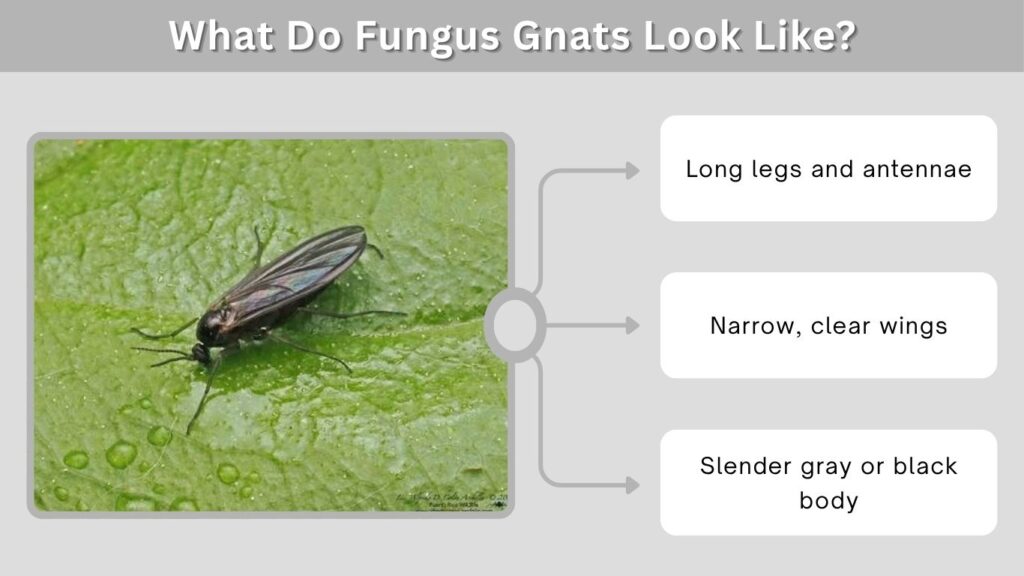
Fungus gnats have thin bodies, long legs, and threadlike antennae. Their shape resembles a miniature mosquito more than a moth.
Identification Features
- Slender gray or black body
- Long legs and antennae
- Narrow, clear wings
- Frequently walks across potting soil
- Flies around plants and windows
- Appears after heavy or frequent watering
- Moves more smoothly than a drain fly
Some species have a Y-shaped vein on their wings, but magnification may be required to see it.
Fungus Gnat Breeding Sources
Fungus gnat larvae develop in damp material containing fungi and decaying plant matter. Common sources include:
- Overwatered houseplant soil
- Seed-starting mixes
- Organic potting mixes
- Moss containers
- Plant propagation stations
- Decaying roots
- Wet compost
- Organic fertilizers
- Moist debris beneath plant pots
A few fungus gnats around healthy plants are primarily a nuisance. Heavy larval populations may damage tender roots, seedlings, and young plants.
What Do Fruit Flies Look Like?
Fruit flies have smooth, compact bodies and are often tan or yellowish brown. Many common household species have prominent red eyes, although the eye color may appear dark without magnification.
Fruit Fly Identification
- Rounded body
- Short antennae
- Smooth, clear wings
- Often has red eyes
- Hovers around food and drinks
- Flies more actively than a drain fly
- Common around kitchens, bars, and trash
Fruit flies breed in yeasts growing within fermenting organic material. Overripe produce, beverage residue, recycling, garbage disposals, dirty mops, and food spills can all support them.
They may also breed in a dirty drain, so location alone does not prove an insect is a drain fly.
Drain Flies or Fungus Gnats in the Bathroom?
Fuzzy insects resting near a shower, sink, toilet, or floor drain are probably drain flies. Bathrooms offer the moisture and plumbing deposits they require.
When They May Be Fungus Gnats
Fungus gnats may appear in a bathroom containing houseplants, moss, propagation containers, or consistently damp potting mix. They often gather around the plants or fly toward windows and lights rather than remaining directly beside a drain.
Small smooth flies running rapidly across surfaces may be phorid flies. Persistent phorid flies can indicate decomposing material, damaged sewage plumbing, or contamination beneath a floor.
How to Test for Drain Flies
Testing helps determine which drain is producing adults. More than one source may be active.
The Tape Test
- Dry the area around the drain opening.
- Place clear tape over part of the opening.
- Keep the sticky side facing downward.
- Do not seal the drain completely.
- Leave the tape overnight.
- Check it the following morning.
- Repeat for several nights if necessary.
Fuzzy flies trapped on the underside indicate that adults are emerging from the drain. A clear cup placed over the opening overnight can also capture emerging flies.
A negative result on one night does not completely eliminate the drain because adults may emerge irregularly.
How to Test for Fungus Gnats
Place a yellow sticky card immediately above the soil of each houseplant. Adult fungus gnats are attracted to the card and become trapped.
Check the Soil
Inspect the upper soil layer for slender, translucent larvae with dark head capsules. Another method is to place a raw potato slice on the soil temporarily. Larvae may gather beneath it, making them easier to see.
Check every plant separately. One recently purchased or overwatered plant can maintain an infestation throughout the house.
How to Get Rid of Drain Flies
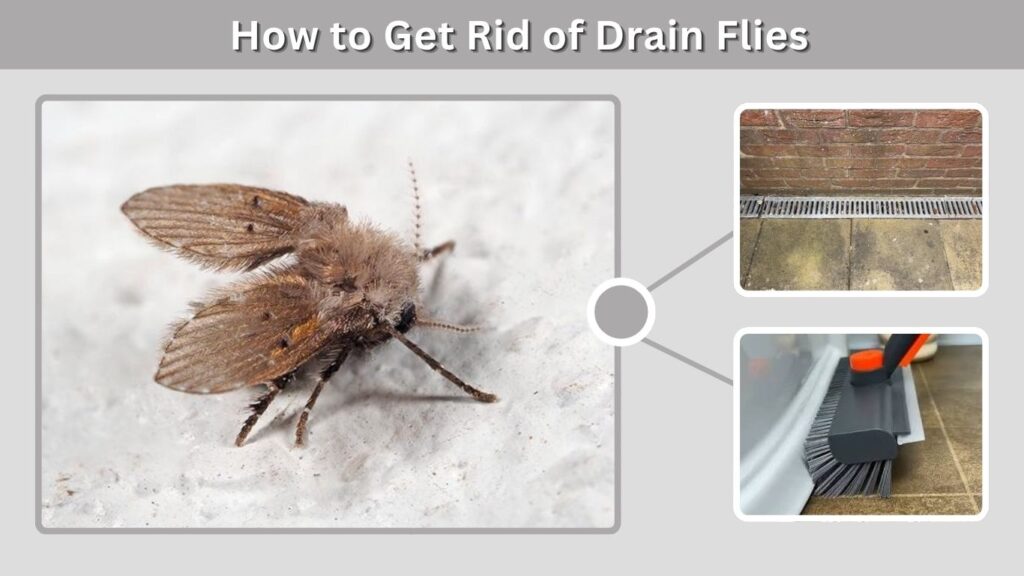
Drain fly control requires removing the organic biofilm where eggs and larvae develop. Killing adults provides only temporary improvement.
Drain Fly Treatment
- Identify every active drain.
- Remove accessible drain covers.
- Scrub the interior walls with a stiff drain brush.
- Clean the drain edges and overflow opening.
- Clean beneath the garbage-disposal splash guard.
- Apply a labeled enzyme or microbial drain gel.
- Repair leaks and eliminate standing wastewater.
- Repeat until adult activity stops.
An enzyme or microbial gel formulated for organic drain buildup is generally more helpful than a standard chemical clog remover. The product must coat the inside of the pipe long enough to break down residue.
Do Drano or Liquid-Plumr Kill Drain Flies?
A chemical drain opener may kill some larvae, but it is designed primarily to clear clogs. It may pass through the pipe without removing all the organic material coating its sides.
Never combine drain openers with bleach, vinegar, ammonia, enzyme products, or other cleaners. Mixing chemicals can produce dangerous heat or toxic gases.
How to Get Rid of Fungus Gnats
Fungus gnat treatment must focus on moisture and potting soil rather than plumbing.
Fungus Gnat Treatment
- Allow the upper soil layer to dry between waterings
- Empty water from plant saucers
- Remove fallen leaves and decaying material
- Improve drainage
- Use yellow sticky cards for adults
- Replace badly decomposed potting mix
- Repot severely infested plants
- Apply a labeled Bacillus thuringiensis israelensis product
- Quarantine new houseplants
Do not let a drought-sensitive plant become severely dehydrated. Adjust watering according to the plant species while avoiding constantly saturated soil.
How to Eliminate Fruit Flies
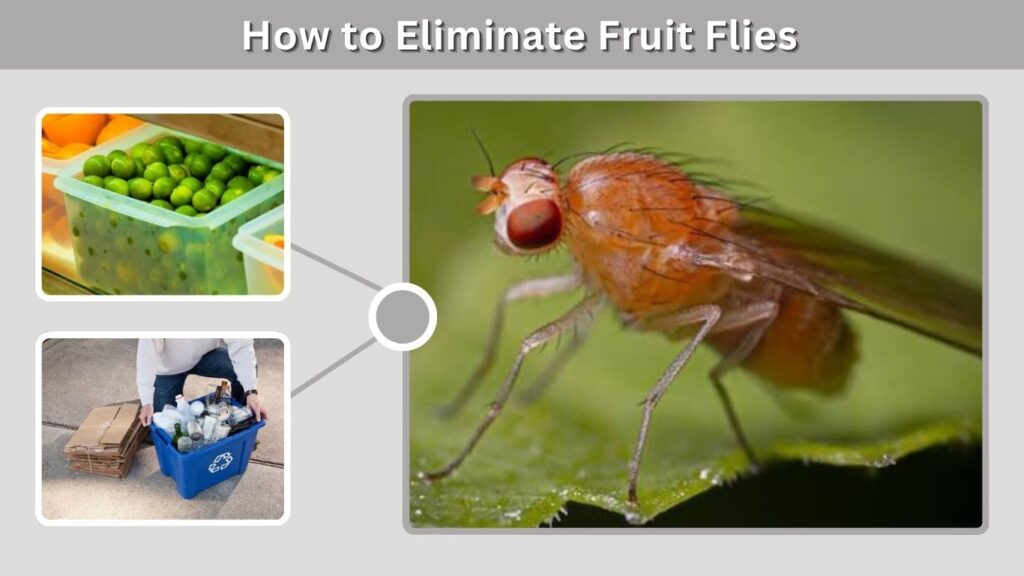
Remove every source of fermentation, including hidden spills and forgotten produce.
Fruit Fly Treatment
- Refrigerate ripe fruit
- Discard rotting produce
- Inspect stored potatoes and onions
- Clean trash and compost bins
- Rinse recycling
- Wash beverage containers
- Clean beneath appliances
- Scrub garbage disposals
- Wash dirty mops and cloths
- Store food in sealed containers
Vinegar traps can catch adults but will not eliminate eggs and larvae developing elsewhere.
Do Bug Bombs or Foggers Work?
Bug bombs are poor choices for drain flies, fungus gnats, and fruit flies. They may kill exposed adults without reaching larvae inside plumbing, potting soil, or fermenting residue.
Foggers also spread pesticides throughout indoor spaces and may create fire or exposure hazards if used incorrectly. Removing the breeding source is safer and more effective.
A professional inspection is appropriate when flies continue after thorough cleaning, appear from wall openings, or suggest a damaged sewer line.
FAQs
Are drain flies fungus gnats?
No. Drain flies are fuzzy moth-like flies associated with plumbing biofilm. Fungus gnats are slender flies that breed primarily in moist potting soil.
Do drain flies look like gnats?
They are similarly small, but drain flies have broad hairy wings. Fungus gnats have narrow wings, long legs, and thin bodies.
Can fungus gnats come from a drain?
They normally come from damp soil or decaying vegetation. Small flies emerging from a drain are more likely drain flies, fruit flies, or phorid flies.
What is the best drain cleaner for drain flies?
Use a labeled enzyme or microbial drain gel that breaks down organic buildup, combined with physical brushing. A product alone may fail when heavy slime remains.
How long does elimination take?
Adult numbers may decline within several days after the breeding source is removed. Complete control often requires one to three weeks because eggs and larvae already present must finish developing.