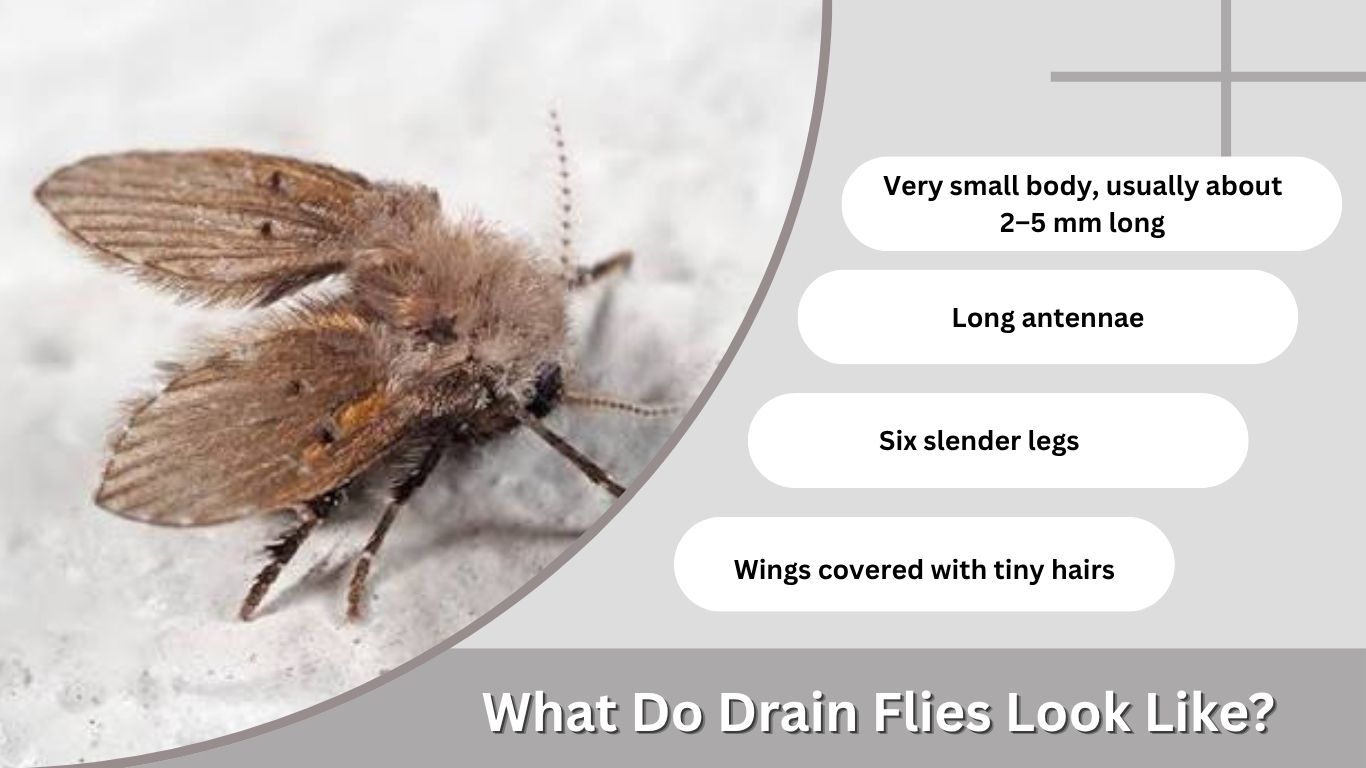
Drain flies are tiny, fuzzy insects commonly found around sinks, showers, floor drains, and other damp areas. At first glance, they may look like miniature moths because their bodies and wings are covered with fine hairs. Adult drain flies are usually gray, brown, or nearly black and often rest with their broad wings held roof-like over the body. Their eggs and larvae look very different from the adults, so identifying every life stage can help confirm whether drain flies are breeding inside a drain.
What Do Drain Flies Look Like?
Adult drain flies are very small flies belonging to the family Psychodidae. They are also commonly called moth flies, sewer flies, or filter flies because of their fuzzy appearance and tendency to breed in moist organic material.
Most adults measure only about 1/8 inch long, although exact size varies by species.
Adult Drain Fly Identification
Look for these features:
- Very small body, usually about 2–5 mm long
- Gray, tan, brown, or black coloration
- Broad, rounded wings
- Wings covered with tiny hairs
- Fuzzy or moth-like appearance
- Long antennae
- Six slender legs
- Wings held roof-like over the body while resting
- Slow, short flights rather than strong continuous flying
The fuzzy wings are one of the easiest ways to distinguish drain flies from fruit flies and fungus gnats.
Why Do Drain Flies Look Like Tiny Moths?
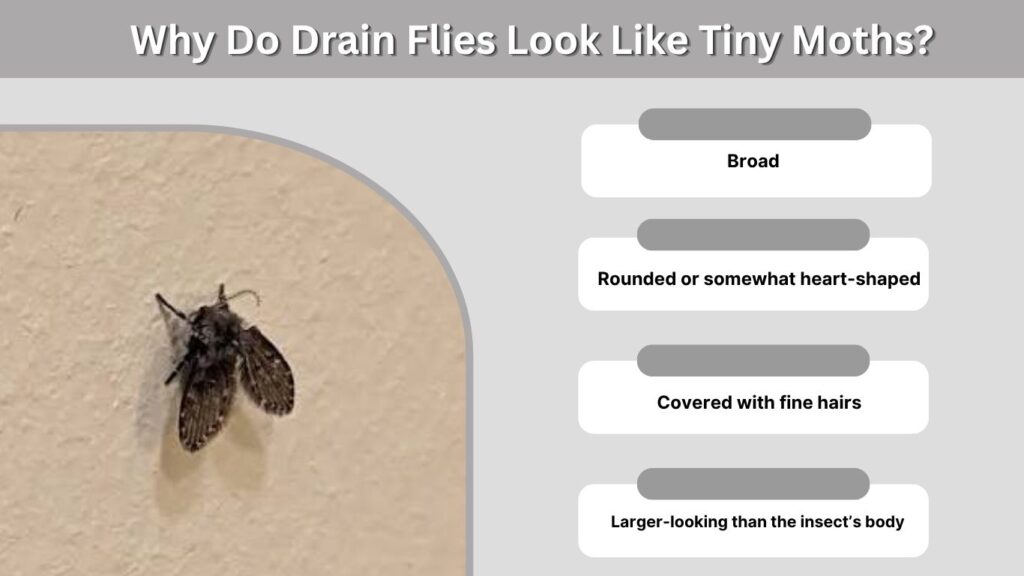
Drain flies are true flies, but their bodies and wings have a thick covering of fine hairs.
This gives them a soft, powdery appearance similar to a miniature moth.
Wing Shape and Texture
Drain fly wings are generally:
- Broad
- Rounded or somewhat heart-shaped
- Covered with fine hairs
- Larger-looking than the insect’s body
- Held in a tent-like position while resting
When viewed closely, the wings may show noticeable veins surrounded by dense hairs.
Unlike house flies, drain flies usually do not have smooth, transparent-looking wings.
What Do Black Drain Flies Look Like?
Some drain flies appear dark gray, charcoal, or almost black, especially when viewed against light-colored bathroom walls.
A black drain fly still has the same characteristic fuzzy body and broad hairy wings.
Black Drain Fly Features
A dark-colored drain fly may have:
- Blackish or dark gray body
- Dark hairy wings
- Pale or dark antennae
- Rounded wing shape
- Fuzzy outline
- Very small size
Color can vary depending on species, age, lighting, and whether the fly is wet.
Therefore, body shape and wing texture are usually more useful for identification than color alone.
What Do Drain Flies Look Like in a Shower?
Drain flies frequently appear around showers because drains provide the damp organic film their larvae need.
Adults may rest on shower walls, tile, curtains, ceilings, or near the drain itself.
Signs of Drain Flies in a Shower
You may notice:
- Tiny fuzzy flies sitting on shower walls
- Small dark flies around the drain opening
- Several adults appearing after the shower is unused overnight
- Flies making short hopping flights when disturbed
- Larvae inside slimy material around the drain
A few adult flies may wander around the bathroom, but repeated sightings near one particular drain often indicate that larvae are developing inside it.
What Do Drain Fly Eggs Look Like?
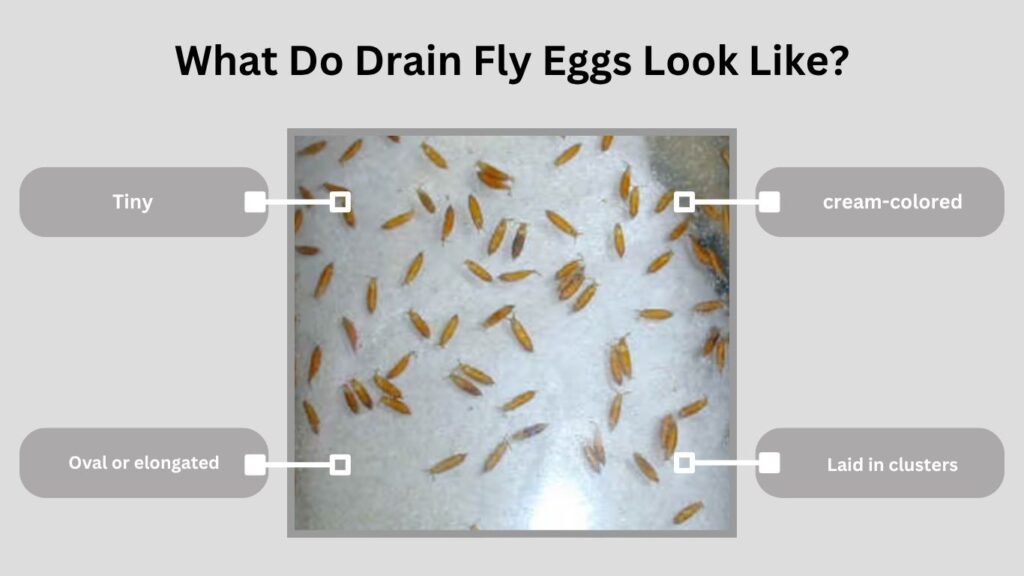
Drain fly eggs are extremely small and usually difficult to see without magnification.
Females deposit their eggs in moist, gelatinous organic material where the larvae will have immediate access to food after hatching.
Drain Fly Egg Appearance
Drain fly eggs are generally:
- Tiny
- Pale, translucent, or cream-colored
- Oval or elongated
- Laid in clusters
- Difficult to see with the naked eye
The eggs are often hidden in the slimy film coating the inside of drains, sewage pipes, filters, or other wet surfaces.
Because they are so small, homeowners are much more likely to notice adult flies or larvae than individual eggs.
Where Are Drain Fly Eggs Laid?
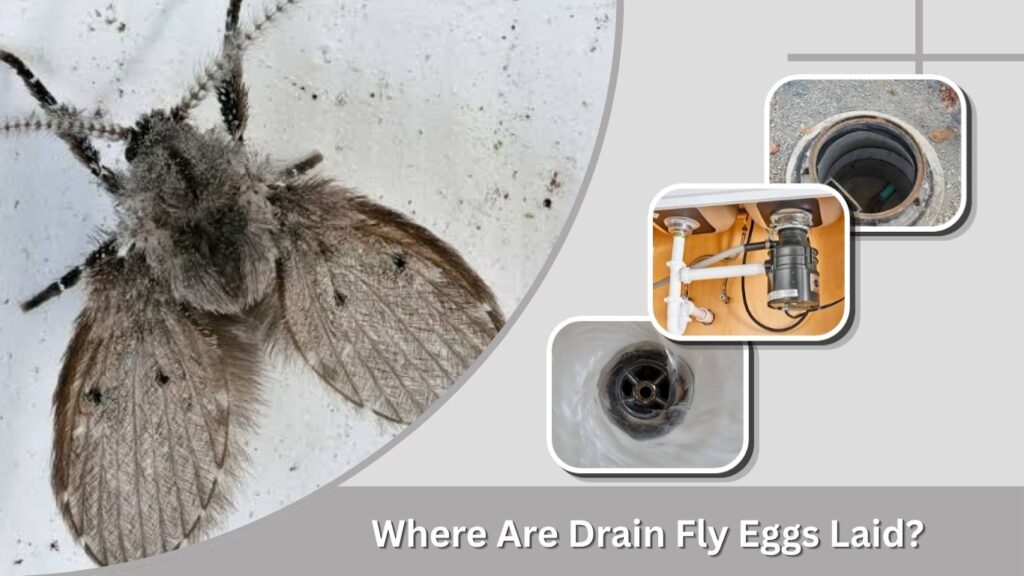
Females look for constantly moist locations containing decaying organic material.
Common egg-laying sites include:
- Sink drains
- Shower drains
- Floor drains
- Bathtub drains
- Sewage lines
- Garbage disposals
- Dirty drain traps
- Condensation pans
- Mop buckets
- Septic areas
- Wet organic debris
The dark, moist film inside a neglected drain provides both shelter and food for newly hatched larvae.
What Do Drain Fly Larvae Look Like?
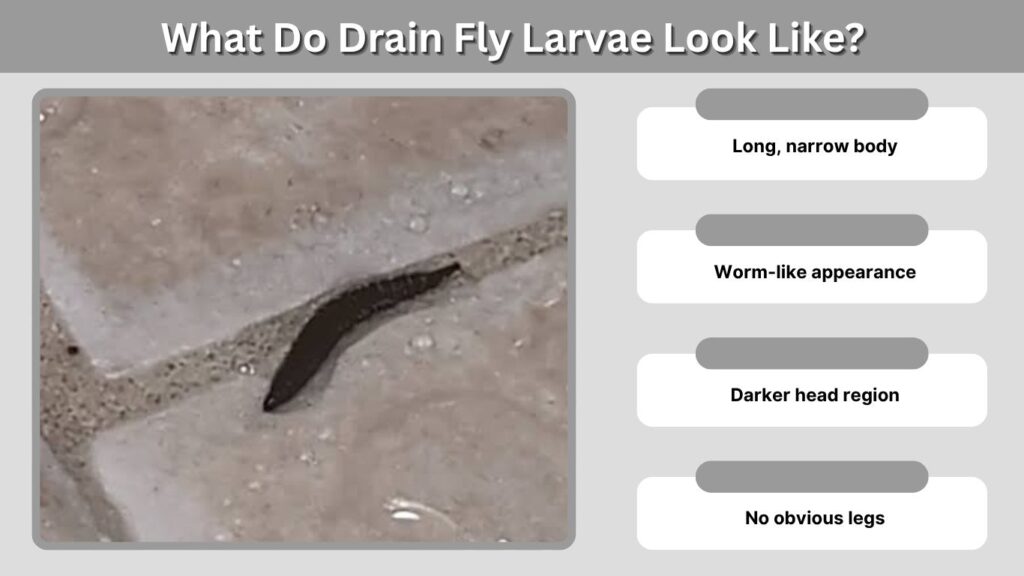
Drain fly larvae look nothing like the fuzzy adults.
They resemble tiny slender worms and live inside the wet organic material coating drains and similar environments.
Drain Fly Larvae Identification
Larvae typically have:
- Long, narrow body
- Worm-like appearance
- Cream, white, gray, or translucent coloration
- Darker head region
- Dark breathing tube toward the rear
- No obvious legs
- Segmented body
- Length of several millimeters when mature
They may wriggle through the slimy film found around drain openings and inside pipes.
Because they remain hidden within organic buildup, larvae may not become visible unless the drain is inspected closely.
What Do Baby Drain Flies Look Like?
People sometimes use the phrase baby drain flies to refer to larvae.
Drain flies undergo complete metamorphosis, so they do not hatch as tiny winged versions of adults.
Their development progresses through:
- Egg
- Larva
- Pupa
- Adult fly
A newly hatched drain fly therefore looks like a tiny pale worm rather than a miniature fuzzy fly.
As the larva develops, it feeds on bacteria, fungi, algae, and decomposing organic material.
What Do Drain Fly Pupae Look Like?
After finishing the larval stage, drain flies enter a pupal stage before becoming adults.
The pupa remains close to the moist breeding material and does not actively feed.
Drain Fly Pupa Appearance
Pupae are usually:
- Small
- Brownish or dark
- More compact than larvae
- Slightly tapered
- Found near the surface of wet organic material
Once development is complete, the adult emerges from the pupa and begins flying around the surrounding area.
Drain Fly vs. Fruit Fly
Drain flies and fruit flies frequently appear in kitchens and bathrooms, but their appearance is noticeably different.
Drain Fly
Drain flies usually have:
- Fuzzy bodies
- Hairy broad wings
- Gray or dark coloration
- Moth-like appearance
- Slow, short flight
Fruit Fly
Fruit flies typically have:
- Smooth bodies
- Clear wings
- Tan or yellow-brown coloration
- Rounded abdomen
- Often reddish eyes
- Faster flight around food
Fruit flies are commonly associated with fermenting fruits, vegetables, and food waste rather than the slime inside drains.
Drain Fly vs. Fungus Gnat
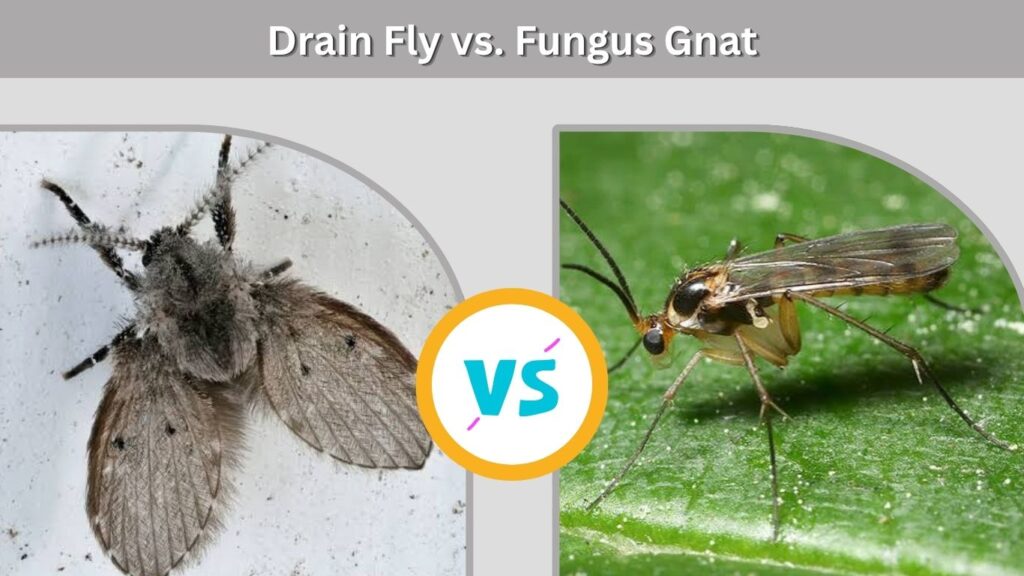
Fungus gnats can also be mistaken for drain flies.
However, fungus gnats resemble tiny mosquitoes more than moths.
Key Differences
Drain flies are broad, hairy, and fuzzy.
Fungus gnats are thin-bodied with long legs and narrow transparent wings.
Fungus gnats are especially common around moist houseplant soil, while drain flies are usually concentrated around drains and wet organic buildup.
Where Do Drain Flies Usually Hide?
Adult drain flies do not normally travel far from their breeding sites.
During the day, they may remain still on nearby walls or ceilings.
Common Places to Find Drain Flies
Check:
- Bathroom walls
- Shower walls
- Around sink drains
- Kitchen walls
- Beneath sinks
- Near floor drains
- Laundry rooms
- Basements
- Around sewage pipes
- Near garbage disposals
- Around poorly maintained plumbing
Large numbers usually indicate that a suitable breeding site is nearby.
How Can You Tell If Drain Flies Are Coming From a Drain?
Seeing one fuzzy fly does not automatically prove that a drain is the source.
A simple inspection can help locate the breeding area.
Signs of an Active Drain
Watch for:
- Adults gathering around one drain
- Flies appearing after several hours of inactivity
- Slimy organic buildup inside the pipe
- Worm-like larvae near the drain opening
- Repeated infestations after killing adults
You can also temporarily place clear adhesive tape over part of a suspected drain overnight while leaving some airflow. If adult flies appear underneath or around the tape, the drain may be an active breeding site.
Are Drain Flies Dangerous?
Drain flies are generally considered nuisance insects rather than dangerous household pests.
They do not normally bite people and are weak fliers.
However, their presence often indicates accumulated organic material or unsanitary moisture somewhere in the plumbing system.
Large infestations should therefore be addressed by locating and cleaning the breeding material rather than simply spraying adult flies.
How to Get Rid of Drain Flies
The most effective method is removing the slimy organic film where eggs and larvae develop.
Basic Control Steps
- Scrub inside the drain with a stiff drain brush.
- Clean the sides of the pipe thoroughly.
- Remove trapped hair and organic debris.
- Clean garbage disposals and drain traps.
- Repair leaking plumbing.
- Eliminate standing water.
- Keep seldom-used drains maintained.
- Repeat cleaning if adults continue appearing.
Pouring chemicals into a drain without physically removing the organic film may provide only temporary improvement.
The adult population normally declines after the breeding source is eliminated.
FAQs
What do drain flies look like up close?
Drain flies are tiny gray, brown, or black flies with fuzzy bodies and broad hairy wings. Their appearance resembles a miniature moth.
What do drain fly eggs look like?
Their eggs are tiny, pale, and oval or elongated. They are usually deposited in clusters inside moist organic slime and are difficult to see without magnification.
What do drain fly larvae look like?
Larvae look like tiny cream, gray, or translucent worms with segmented bodies and a darker breathing structure near the rear.
Why are drain flies in my shower?
The shower drain may contain moist organic buildup where drain fly larvae can feed and develop. Adults remain close to this breeding site.
Are drain flies the same as fruit flies?
No. Drain flies have broad fuzzy wings and a moth-like appearance, while fruit flies are smoother, usually tan, and commonly breed around fermenting food.