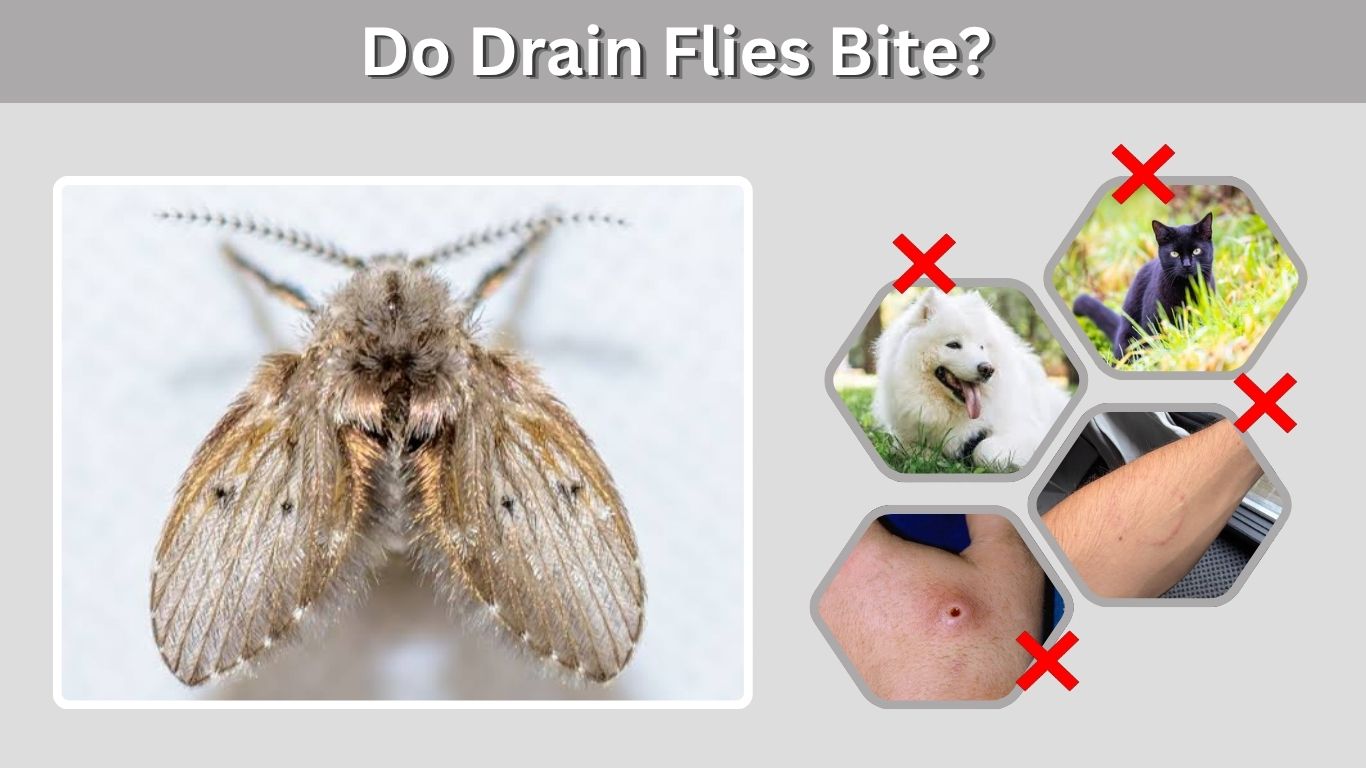
Drain flies do not bite humans. These tiny, fuzzy insects—also called moth flies or sewer flies—lack the mouthparts needed to pierce human skin and feed on blood. They may gather around sinks, showers, floor drains, and other damp areas, but they are primarily nuisance pests rather than biting insects. Their larvae also do not bite people or pets. However, a large drain fly infestation can indicate accumulated organic matter, plumbing leaks, or sewage problems that should be investigated and corrected.
Do Drain Flies Bite?
No. Typical drain flies in the family Psychodidae do not bite humans.
Adult drain flies feed primarily on moisture and organic material rather than blood. They do not have piercing mouthparts like mosquitoes, fleas, or biting midges.
The University of Minnesota Extension specifically describes moth flies, another name for drain flies, as nuisance insects that do not bite people.
What Drain Flies Do Instead
Drain flies usually:
- Rest on bathroom or kitchen walls
- Remain close to drains
- Make short, weak flights
- Feed around moist organic matter
- Lay eggs inside drain buildup
- Become active around sinks and showers
- Gather near lights or windows
Their slow flight and fuzzy appearance can make them easy to distinguish from many biting insects.
Do Drain Flies Bite Humans?
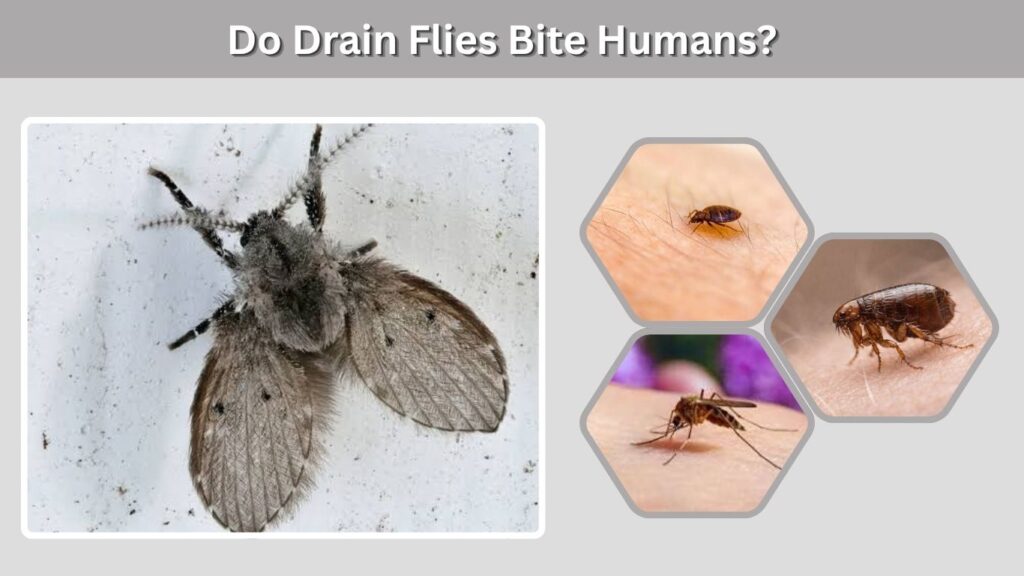
Drain flies do not normally bite or feed on humans.
Their presence close to people often causes confusion because they frequently appear in bathrooms, kitchens, basements, and other indoor spaces.
Why People Think Drain Flies Bite
A person may notice small itchy marks while drain flies are also present and assume the flies caused them.
However, possible alternative causes include:
- Mosquitoes
- Fleas
- Bed bugs
- Biting midges
- Mites
- Skin irritation
- Allergic reactions
- Contact dermatitis
Finding drain flies in the room does not prove they caused a skin reaction.
If unexplained bites continue, look for other insects rather than assuming drain flies are responsible.
Do Black Drain Flies Bite?
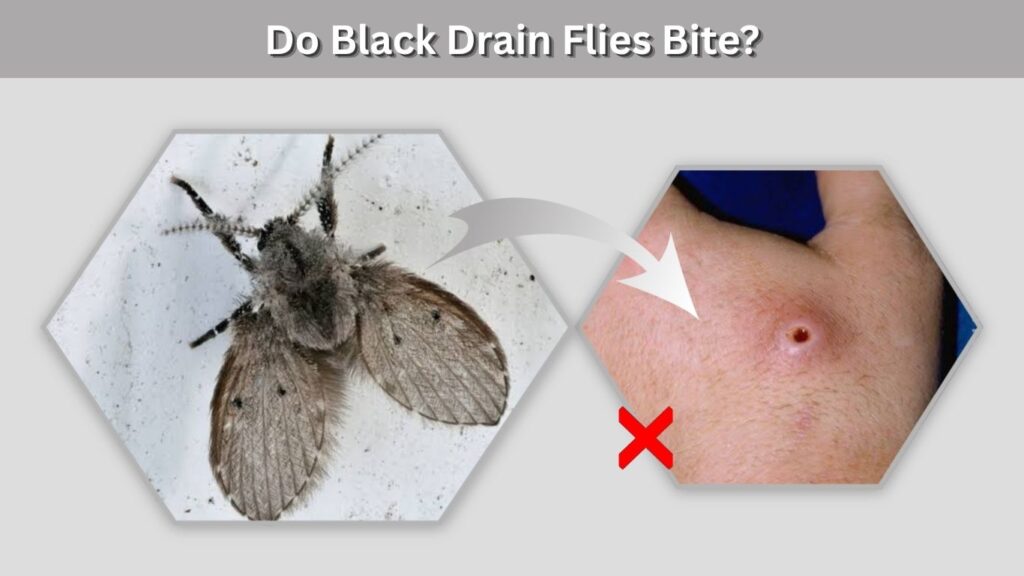
No. Dark gray or almost black drain flies are not more likely to bite than lighter-colored ones.
Drain fly coloration can vary from pale gray and brown to charcoal or nearly black depending on the species, lighting, and age of the insect.
How to Recognize a Drain Fly
Typical adult drain flies have:
- Tiny bodies about 2–5 mm long
- Gray, brown, or black coloration
- Broad fuzzy wings
- Hairy bodies
- Long antennae
- Moth-like appearance
- Wings held roof-like when resting
The University of Minnesota describes them as approximately 1/8 inch long with dark, fuzzy bodies and leaf-shaped wings.
Do Drain Fly Larvae Bite?
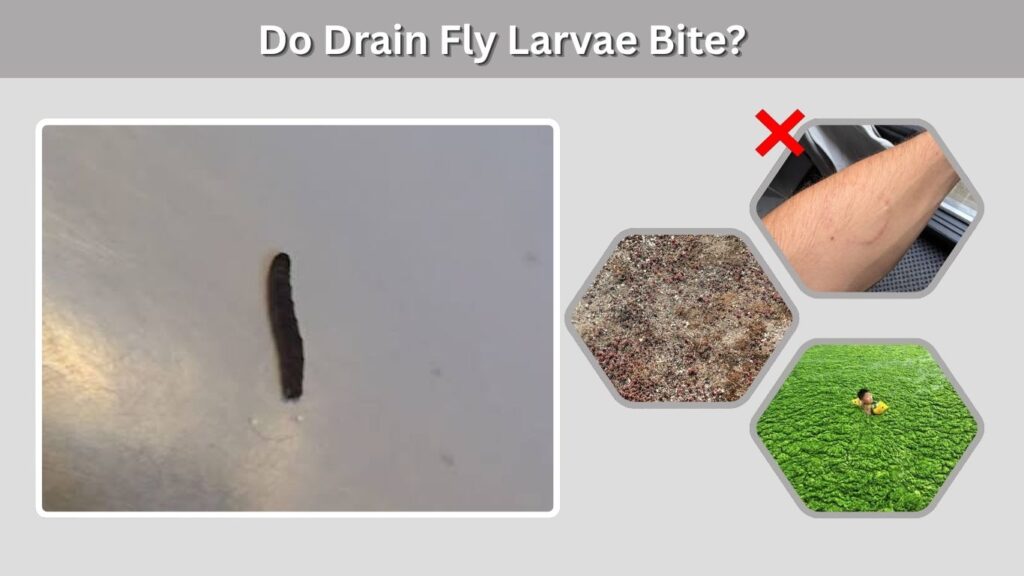
Drain fly larvae do not normally bite humans.
Larvae are tiny worm-like organisms that develop in moist organic material. They spend their time feeding on microorganisms and decaying material rather than animals.
Drain Fly Larvae Feed On
Their food includes:
- Bacteria
- Algae
- Fungi
- Decaying organic material
- Microorganisms in drain slime
Larvae are commonly hidden inside the gelatinous film coating the walls of drains.
They may also develop in sewage-contaminated areas, wet filters, or other continuously damp locations containing organic material.
Do Drain Flies Sting?
No. Drain flies cannot sting.
They have:
- No stinger
- No venomous spine
- No blood-feeding mouthparts
If a tiny insect is repeatedly biting or stinging you, it is probably not a typical drain fly.
Identification is especially important because several small flying insects can occur indoors and may be mistaken for one another.
Do Drain Flies Bite Pets?
Typical drain flies do not bite dogs, cats, or other household pets.
They are not blood-feeding parasites like fleas or mosquitoes.
A pet scratching excessively while drain flies are present should therefore be checked for another cause, such as:
- Fleas
- Mites
- Ticks
- Allergies
- Skin infection
- Mosquito bites
Drain flies may occasionally land near animals, but this does not mean they are feeding on them.
Are Drain Flies Dangerous?
Drain flies are generally considered nuisance pests rather than dangerous insects.
Their main importance comes from where they live and reproduce.
They breed in moist organic material, which can include dirty drain buildup and sewage-contaminated areas.
Potential Concerns
A drain fly infestation can indicate:
- Organic sludge inside drains
- Blocked or poorly maintained plumbing
- Standing wastewater
- Leaking pipes
- Broken sewer lines
- Dirty floor drains
- Persistent moisture problems
Because drain flies can develop in unsanitary environments, there is concern that they may mechanically carry microorganisms on their bodies.
The University of Minnesota notes that they could potentially carry disease-causing organisms because of their association with filth, although they are primarily considered nuisance pests.
Can Drain Flies Make You Sick?
Most household drain fly infestations do not directly make people ill.
Seeing several drain flies around a bathroom sink does not mean disease transmission is occurring.
The larger concern is the breeding environment.
For example, persistent numbers of drain flies emerging from the floor or areas without obvious drains may indicate leaking plumbing or a damaged sewer line.
Colorado State University Extension notes that large populations can occur where drainpipes are broken or leaking.
When to Investigate Further
Pay closer attention when:
- Hundreds of flies appear
- Flies return immediately after cleaning
- A sewage odor is present
- Flies emerge from cracks in floors or walls
- Multiple rooms suddenly develop infestations
- Plumbing leaks are suspected
A plumber or pest-management professional may be needed when the breeding source cannot be located.
Drain Fly vs. Biting Fly
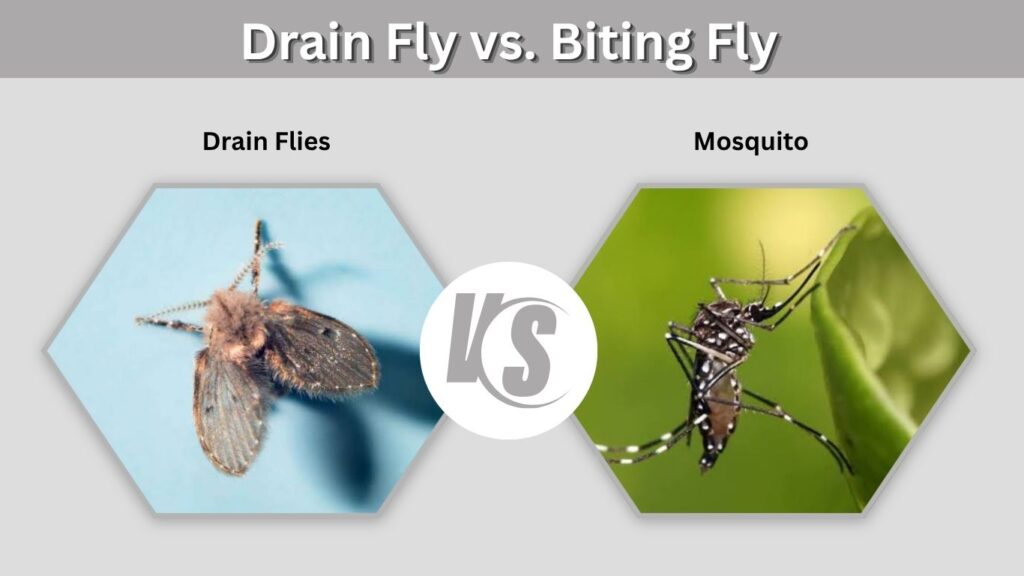
People sometimes use “small fly” to describe many unrelated insects.
Understanding the differences helps determine whether a bite is actually possible.
Drain Fly
Drain flies are:
- Fuzzy
- Moth-like
- Weak fliers
- Usually found near drains
- Non-biting
Mosquito
Mosquitoes have:
- Long narrow bodies
- Long legs
- Narrow wings
- Prominent proboscis
- Blood-feeding females
Biting Midge
Biting midges are:
- Extremely small
- More mosquito-like
- Stronger fliers
- Capable of painful or irritating bites
Fruit Fly
Fruit flies are:
- Small and tan or brown
- Smooth rather than fuzzy
- Common around fruit and food waste
- Not typical blood-feeding insects
If an insect appears like a miniature fuzzy moth resting near a drain, it is much more likely to be a harmless drain fly.
Why Are Drain Flies Around Your Shower?
Shower drains provide nearly ideal conditions for drain fly development.
Hair, soap residue, skin oils, bacteria, and other organic debris can build up along the inside of the drainpipe.
This produces a gelatinous film where females can lay eggs and larvae can feed.
Common Breeding Areas
Check:
- Shower drains
- Bathroom sinks
- Bathtub drains
- Kitchen sinks
- Floor drains
- Garbage disposals
- Drain traps
- Basement drains
- Sewage lines
- Condensation pans
Penn State notes that the organic deposits accumulating inside drains provide ideal breeding material for drain flies.
How to Get Rid of Drain Flies
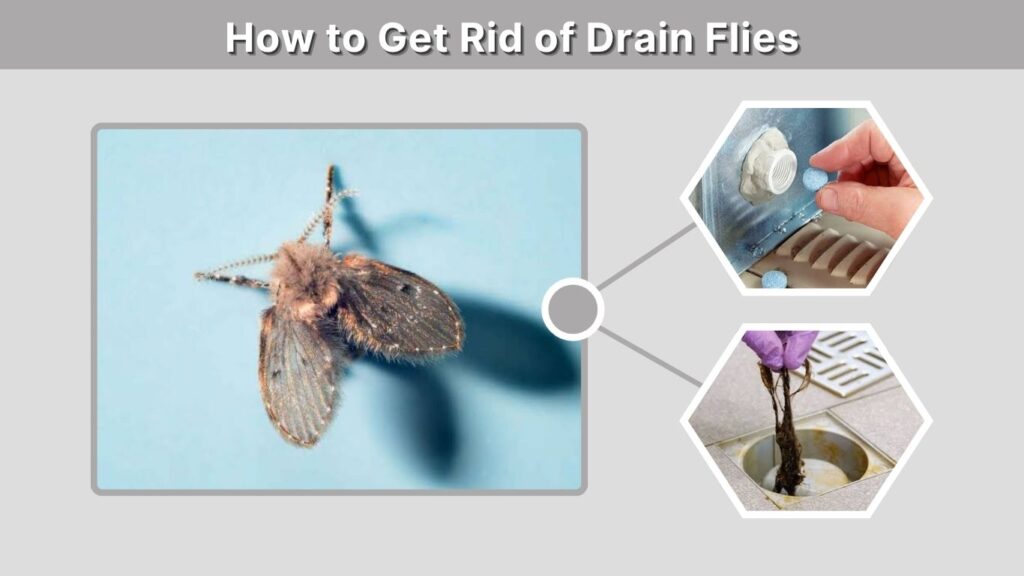
Killing visible adults will not solve an infestation if eggs and larvae remain inside the drain.
The most effective approach is to remove the breeding material.
Drain Fly Control Steps
- Identify which drain is producing the flies.
- Remove hair and physical debris.
- Scrub the inside walls of the drain.
- Remove gelatinous organic buildup.
- Clean drain traps when accessible.
- Repair plumbing leaks.
- Eliminate standing wastewater.
- Monitor the drain for new adults.
A stiff drain brush can physically remove the organic film where larvae develop.
The University of Minnesota Extension notes that simply pouring boiling water, bleach, or ordinary chemical drain cleaners into the drain may not effectively eliminate the breeding material; physical cleaning or appropriate biological drain cleaners can be more useful.
What If Something Is Biting You?
If you have drain flies and unexplained skin marks at the same time, consider them two separate problems until there is evidence connecting them.
Check bedrooms, pets, windows, indoor plants, and outdoor entry points for other pests.
If bites or skin reactions are severe, persistent, infected, or associated with significant swelling or breathing problems, seek medical care rather than attempting to identify the cause solely from the presence of insects.
FAQs
Do drain flies bite humans?
No. Typical drain flies, also called moth flies, do not bite people. They lack the blood-feeding behavior of mosquitoes, fleas, and biting midges.
Do drain fly larvae bite?
No. Drain fly larvae live in moist organic buildup and primarily consume bacteria, fungi, algae, and decomposing material.
Do drain flies bite or sting?
Neither. Drain flies do not normally bite humans and do not possess a stinger.
Why do I have bites when drain flies are present?
Another insect or a non-insect skin condition may be responsible. Mosquitoes, fleas, bed bugs, mites, and biting midges are possible alternatives.
Are drain flies harmful?
They are mainly nuisance pests, but an infestation can indicate dirty drains, standing wastewater, leaking plumbing, or sewage problems that should be corrected.