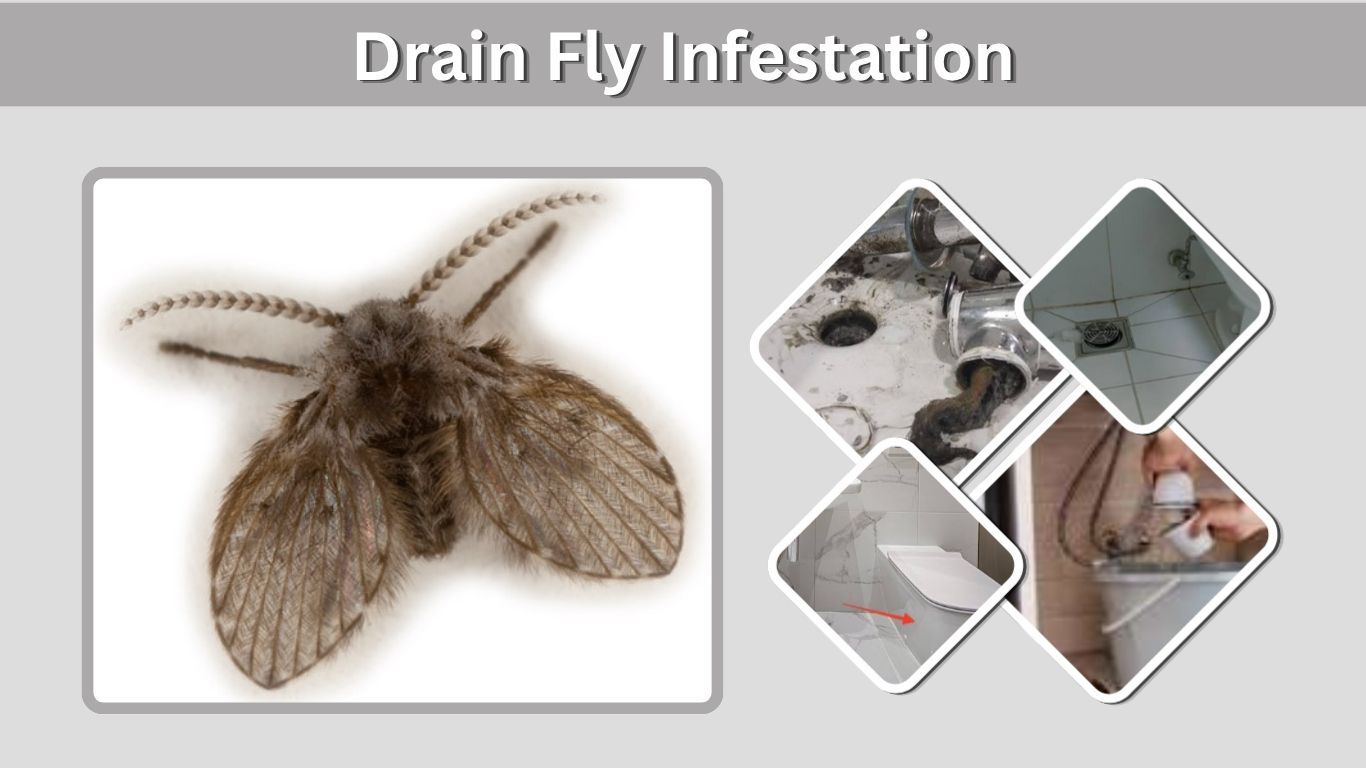
A drain fly infestation usually starts when tiny moth-like flies find wet organic buildup inside a drain, sewer line, sump pit, or other constantly damp area. While a few adults may seem harmless, repeated sightings often mean eggs and larvae are developing nearby. Simply killing the flying adults rarely solves the problem. Successful drain fly treatment depends on finding the breeding source, removing the slimy material where larvae feed, correcting moisture or plumbing problems, and monitoring the area until the life cycle is completely interrupted.
What Is a Drain Fly Infestation?
Drain flies, also called moth flies or sewer flies, are small fuzzy insects in the family Psychodidae. Adults are typically only a few millimeters long and have broad, hairy wings that make them resemble tiny moths.
An infestation develops when adults repeatedly reproduce in damp organic material.
Signs of an Infestation
Common warning signs include:
- Several drain flies appearing every day
- Flies resting around sinks or shower walls
- Adults gathering near one particular drain
- Tiny worm-like larvae inside drain slime
- Flies appearing after a room has been unused overnight
- Repeated activity despite killing visible adults
- Increasing numbers in bathrooms, kitchens, or basements
One drain fly does not necessarily mean you have an infestation. However, finding new adults every day usually suggests a nearby breeding source.
What Causes Drain Fly Infestations?
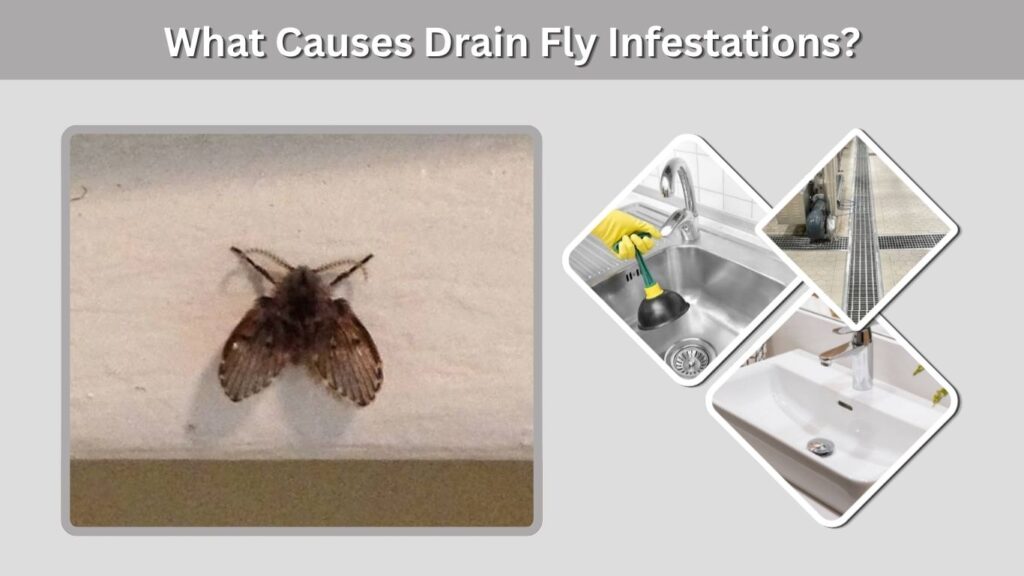
Drain flies need moisture and decomposing organic material to reproduce. The problem is therefore usually linked to plumbing, drainage, or sanitation conditions rather than the flies simply entering from outdoors.
Common Breeding Sources
Drain flies may develop in:
- Shower drains
- Bathroom sinks
- Kitchen drains
- Floor drains
- Garbage disposals
- Sump pumps
- Sewage lines
- Drain traps
- Washing-machine drains
- Condensation pans
- Septic systems
- Leaking pipes
- Standing wastewater
Inside a drain, soap residue, hair, grease, skin cells, food particles, bacteria, and other debris can combine to form a slimy film.
Females lay eggs in this material, and the larvae feed within it.
Drain Fly Infestation in the Bathroom
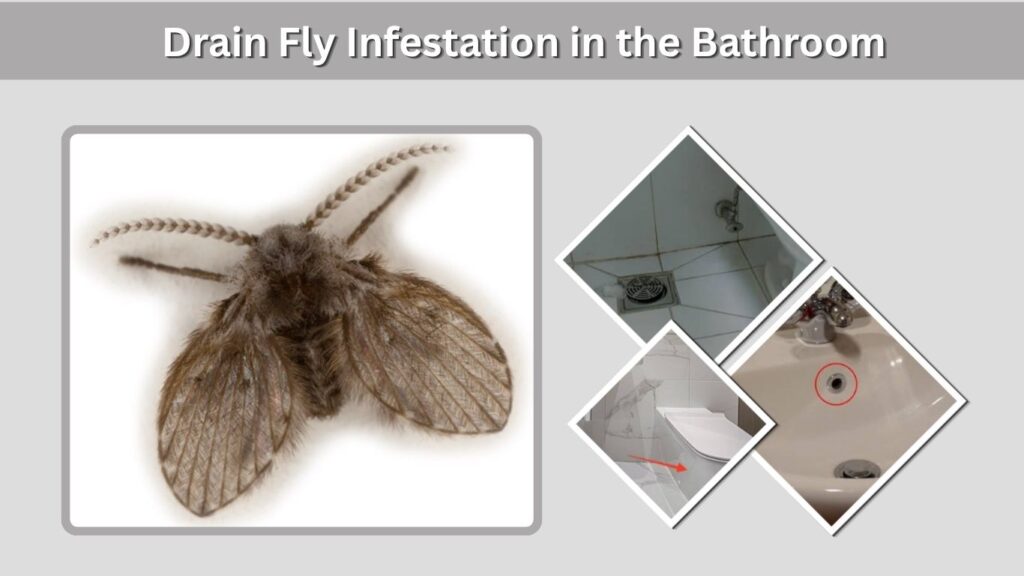
Bathrooms are among the most common places for drain fly problems because they provide several moist breeding sites.
A shower or sink drain that remains wet and contains organic buildup can support a surprisingly large population.
Where to Check
Inspect:
- Shower drains
- Bathtub drains
- Sink overflow openings
- Floor drains
- Toilet bases
- Plumbing under sinks
- Areas around leaking pipes
If flies concentrate around one fixture, that drain should be investigated first.
A drain that looks clean from the top can still have significant organic buildup several inches deeper inside the pipe.
Drain Fly Infestation in the Kitchen
Kitchen drains provide another excellent breeding environment because food particles and grease accumulate easily.
The garbage disposal can be especially problematic when organic material collects beneath internal components or around the rubber splash guard.
Kitchen Problem Areas
Pay attention to:
- Sink drains
- Garbage disposals
- Dishwasher connections
- Drain traps
- Leaking pipes
- Floor drains
- Areas beneath appliances
Cleaning only the visible sink basin will not stop the infestation if larvae remain deeper inside the plumbing.
Drain Fly Infestation in a Basement or Sump Pump
A persistent basement infestation may indicate a breeding site that is less obvious than a household sink.
Basements commonly contain floor drains, sump pits, condensation lines, sewage pipes, and areas with standing moisture.
Sump Pump Infestations
Drain flies can reproduce in a sump pit when stagnant water and organic debris accumulate.
Treatment may involve:
- Removing debris from the sump area.
- Cleaning accessible surfaces.
- Checking that the pump operates correctly.
- Preventing unnecessary standing organic water.
- Inspecting nearby floor drains.
- Correcting leaks or sewage contamination.
If large numbers of flies continue despite cleaning, consider having the plumbing or drainage system professionally inspected.
Drain Fly Larvae Infestation
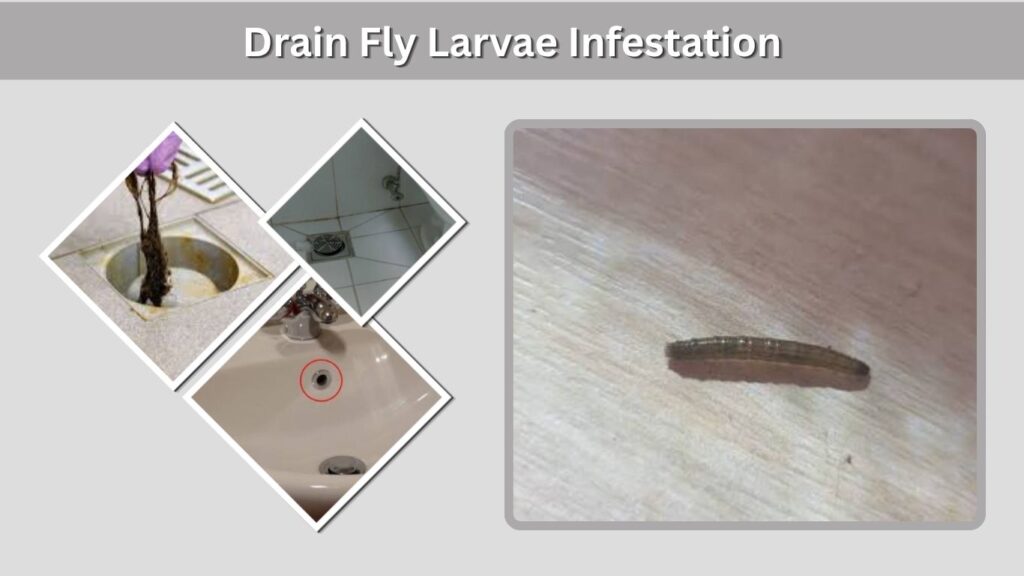
Drain fly larvae look like tiny, narrow worms. They are usually pale, grayish, or translucent and may have a darker head or breathing structure toward the rear.
The larvae live within the wet organic film rather than flying around the house.
What Drain Fly Larvae Eat
They feed primarily on:
- Bacteria
- Fungi
- Algae
- Decaying organic material
- Microorganisms living in drain slime
Finding larvae confirms that the area is an active breeding source.
Removing adults without eliminating larvae allows the infestation to continue.
How to Find Where Drain Flies Are Coming From
Finding the breeding source is the most important part of controlling an infestation.
If several drains are present, inspect them individually rather than treating every drain blindly.
Simple Drain Test
You can monitor a suspected drain by placing a piece of clear adhesive tape across part of the opening overnight.
Do not completely seal a drain that needs ventilation.
If adult flies appear beneath or around the tape, that drain may be an active source.
Repeat the test on other drains when necessary.
Also inspect areas without obvious drains if flies persist. Hidden plumbing leaks or damaged sewer lines can sometimes create breeding material beneath floors or inside walls.
How to Get Rid of a Drain Fly Infestation
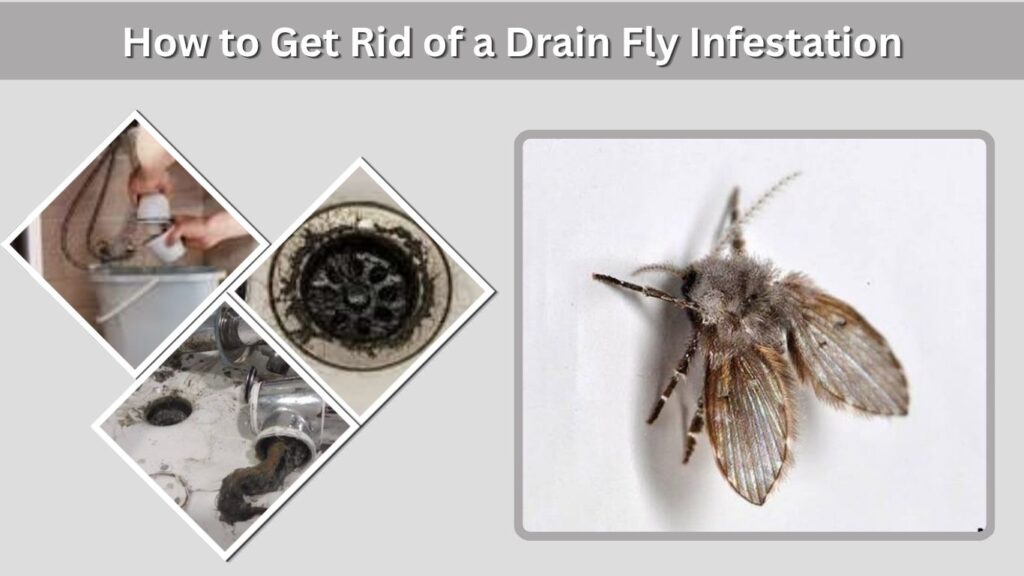
The goal is to remove the breeding film, not simply kill adult flies.
Physical cleaning is usually one of the most important steps.
Step 1: Remove Debris
Remove hair, food particles, sludge, and other material from the drain opening.
Clean removable strainers or stoppers separately.
Step 2: Scrub the Drain
Use a long, stiff drain brush to scrub the inside surfaces of the pipe.
Pay particular attention to the sides because larvae live within the film attached to these surfaces.
Step 3: Clean the Drain Trap
When accessible and appropriate, clean accumulated organic matter from the trap.
Kitchen traps may contain especially heavy grease and food buildup.
Step 4: Use an Appropriate Drain Cleaner
Enzyme or microbial drain-cleaning products designed to break down organic buildup may help after physical cleaning.
Follow all product directions carefully.
Step 5: Correct Moisture Problems
Repair:
- Leaking pipes
- Damaged seals
- Standing water
- Clogged drains
- Broken plumbing
- Sewer leaks
The infestation may return if the underlying moisture problem remains.
Step 6: Monitor Adult Activity
Adults already present may survive briefly after the drain has been cleaned.
Continue monitoring for several days. Numbers should gradually decline when the breeding source has been eliminated.
Does Bleach Kill a Drain Fly Infestation?
Bleach may kill some insects or microorganisms it contacts, but simply pouring bleach down a drain often fails to remove the thick organic film where larvae live.
The liquid may flow through the center of the pipe without penetrating the buildup attached to the sides.
The same limitation applies to many home remedies.
Physical removal of the breeding material is generally more important than pouring a single chemical down the drain.
Never mix bleach with ammonia, acids, drain cleaners, or other household chemicals because dangerous gases or reactions can result.
Does Drain Fly Spray Work?
Sprays can kill visible adult drain flies, but they usually do not eliminate the infestation.
Adults are only one stage of the life cycle.
Eggs, larvae, and pupae may remain protected inside the drain, allowing new adults to appear shortly afterward.
Sprays are therefore best viewed as temporary adult control rather than the main solution.
How Long Does It Take to Eliminate Drain Flies?
A properly treated infestation does not always disappear immediately.
Adult flies already present can remain visible for several days while immature stages complete development.
If the breeding material has been thoroughly removed, activity should steadily decrease.
Persistent or increasing activity after repeated cleaning suggests:
- Another drain is involved
- Organic buildup remains
- A hidden leak exists
- A sewer line is damaged
- A sump or floor drain is breeding flies
- The insects have been misidentified
Severe infestations may require professional pest-control and plumbing assistance.
Can Drain Flies Infest Humans?
No. Drain flies do not establish infestations on or inside healthy humans.
They are not blood-feeding parasites and do not live on human skin.
Their normal breeding environment is wet organic material.
Rare medical reports involving fly larvae should not be interpreted as the normal behavior of household drain flies. A typical home infestation involves plumbing or sanitation conditions, not human infestation.
Drain Fly Infestation in an Apartment
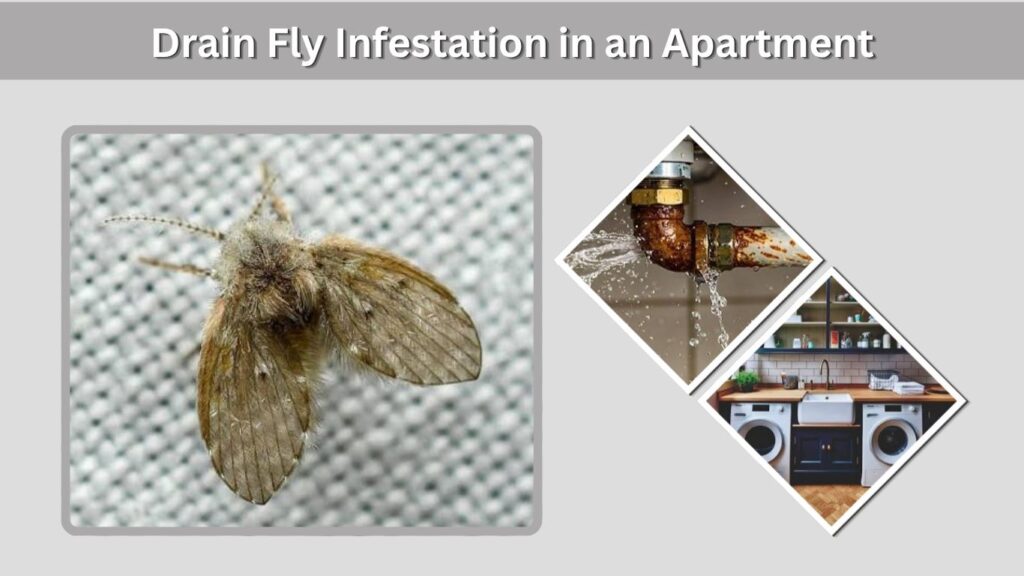
Apartment infestations can be more complicated because plumbing systems are often shared between units.
Even if one resident cleans every visible drain, flies may originate from:
- Neighboring units
- Shared sewage lines
- Utility rooms
- Basement drains
- Damaged communal plumbing
If repeated cleaning does not solve the problem, document where and when flies appear and notify building management.
A plumber or pest professional may need to investigate the shared system.
How to Prevent Drain Fly Infestations
Prevention mainly involves keeping drains clean and eliminating persistent moisture.
Prevention Tips
- Remove hair from shower drains regularly.
- Clean sink and floor drains periodically.
- Avoid allowing grease to accumulate in kitchen plumbing.
- Run water through rarely used drains.
- Keep garbage disposals clean.
- Fix leaks promptly.
- Remove standing wastewater.
- Maintain sump pumps.
- Clean condensation pans.
- Investigate unusual sewage odors.
Regular drain maintenance prevents the thick organic film that makes breeding possible.
When Should You Call a Professional?
Professional help is worth considering when an infestation becomes severe or persists despite thorough cleaning.
Contact a plumber or pest-management professional if:
- Hundreds of flies appear
- Multiple rooms are affected
- Flies emerge from floors or walls
- Sewage odors are present
- A broken pipe is suspected
- The infestation repeatedly returns
- A sump or sewer system appears involved
In these situations, finding the structural source is more important than repeatedly applying insecticide.
FAQs
Does one drain fly mean an infestation?
Not necessarily. A single adult could have wandered from another area. Repeated daily sightings or multiple adults around the same drain are stronger evidence of an active breeding site.
How do you get rid of a drain fly infestation?
Locate the breeding source, remove organic debris, scrub the inside of the drain, clean traps when appropriate, repair leaks, and continue monitoring until adult activity stops.
Can drain flies infest humans?
No. Household drain flies normally reproduce in wet organic material such as drain slime and sewage buildup, not on or inside humans.
Why do drain flies keep coming back?
Recurring infestations usually mean organic breeding material remains somewhere or another hidden source—such as a floor drain, sump pit, plumbing leak, or damaged sewer line—has not been treated.
What is the best treatment for a severe drain fly infestation?
Thorough physical cleaning and elimination of the moisture or plumbing problem are the most important steps. Severe or persistent infestations may require professional drain cleaning, plumbing inspection, and targeted pest management.