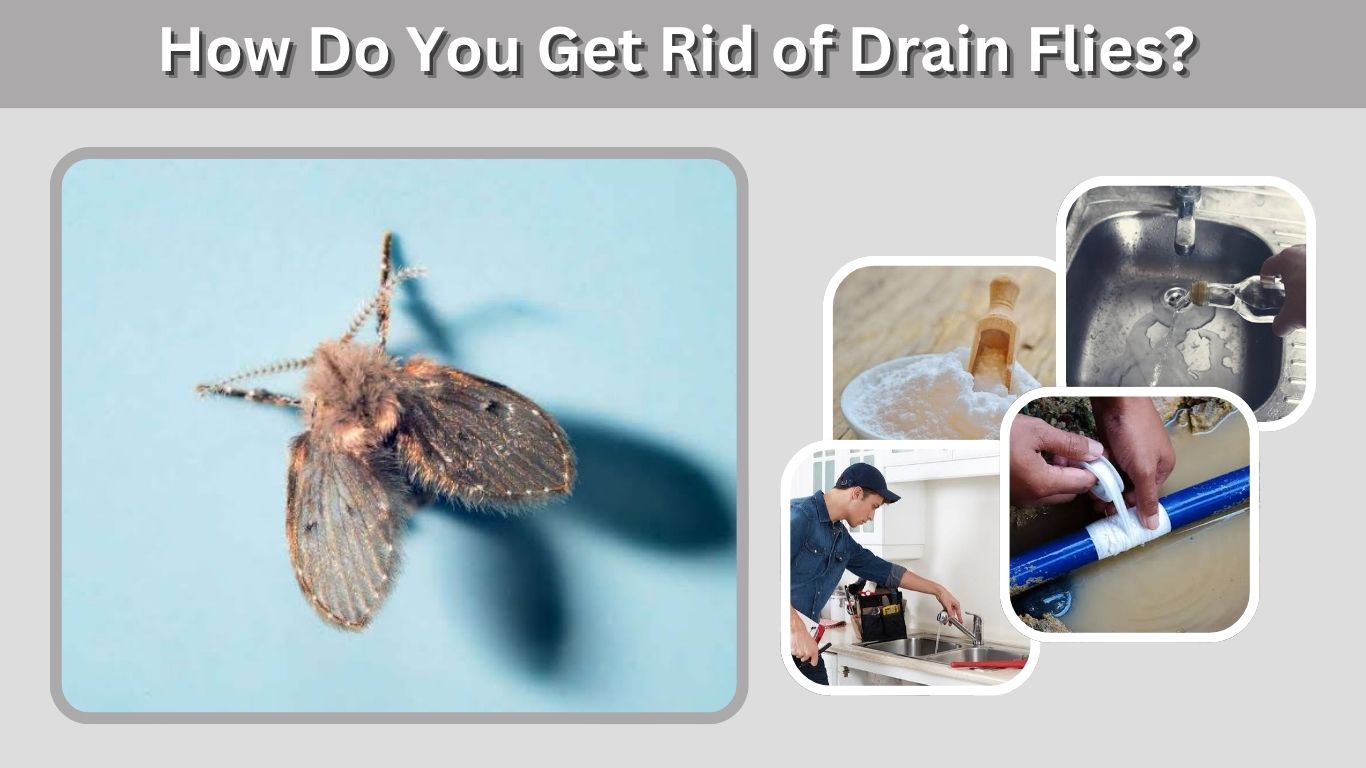
Drain flies are tiny, fuzzy insects that often appear around sinks, showers, floor drains, and other damp areas. Getting rid of the adults is easy, but stopping them permanently requires removing the slimy organic buildup where their eggs and larvae develop. The most effective approach is to identify the breeding drain, scrub the inside of the pipe, remove trapped debris, correct leaks, and keep the area dry and clean. With proper treatment, most drain fly problems can be brought under control without relying heavily on insecticides.
How Do You Get Rid of Drain Flies?
The key to eliminating drain flies is to target the breeding source, not just the adults flying around your home.
Drain flies lay eggs in moist organic material inside plumbing, so killing visible flies will only provide temporary relief if larvae remain inside the drain.
Basic Drain Fly Removal Steps
- Identify the drain producing the flies.
- Remove hair, grease, and visible debris.
- Scrub the inside walls of the drain.
- Clean the drain trap when accessible.
- Use an enzyme-based drain cleaner if needed.
- Repair leaking plumbing.
- Remove standing water.
- Continue monitoring for several days.
Physical cleaning is usually the most important part of treatment because larvae live within the sticky film lining the pipe.
How to Get Rid of Drain Flies Fast
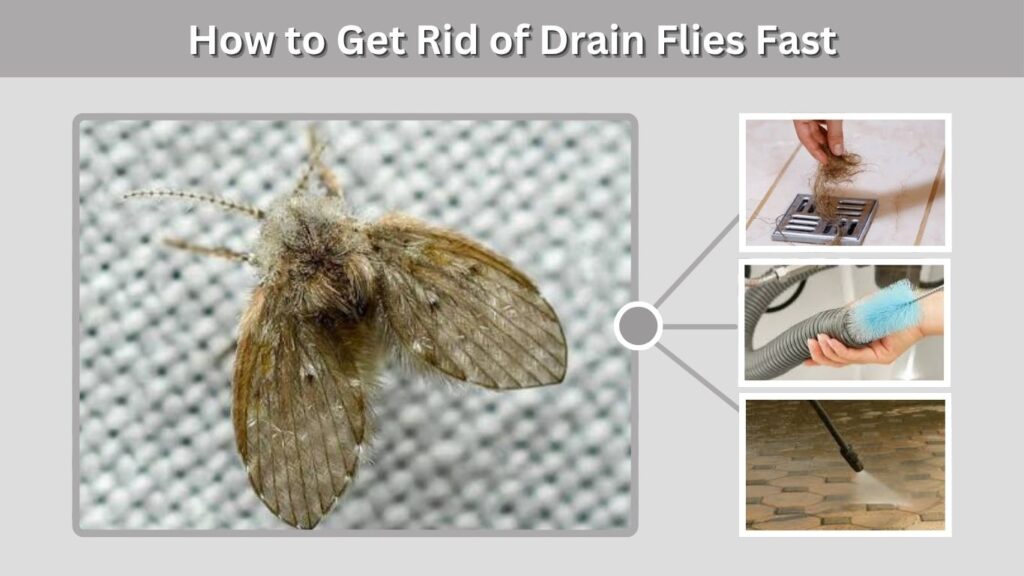
If you need rapid relief, combine adult control with immediate drain cleaning.
Killing only the adults may make the room look better for a day or two, but new flies can continue emerging from larvae and pupae.
Fast Treatment Method
Start by vacuuming or swatting visible adults.
Next:
- Remove the drain cover.
- Pull out trapped hair and debris.
- Scrub the pipe with a long drain brush.
- Flush away loosened organic material.
- Clean around the drain opening.
- Dry nearby wet surfaces.
- Repeat cleaning if flies continue appearing.
You may still see some adults after treatment because flies that developed before cleaning can continue emerging.
The population should decline once the breeding material has been removed.
How to Get Rid of Drain Flies Permanently
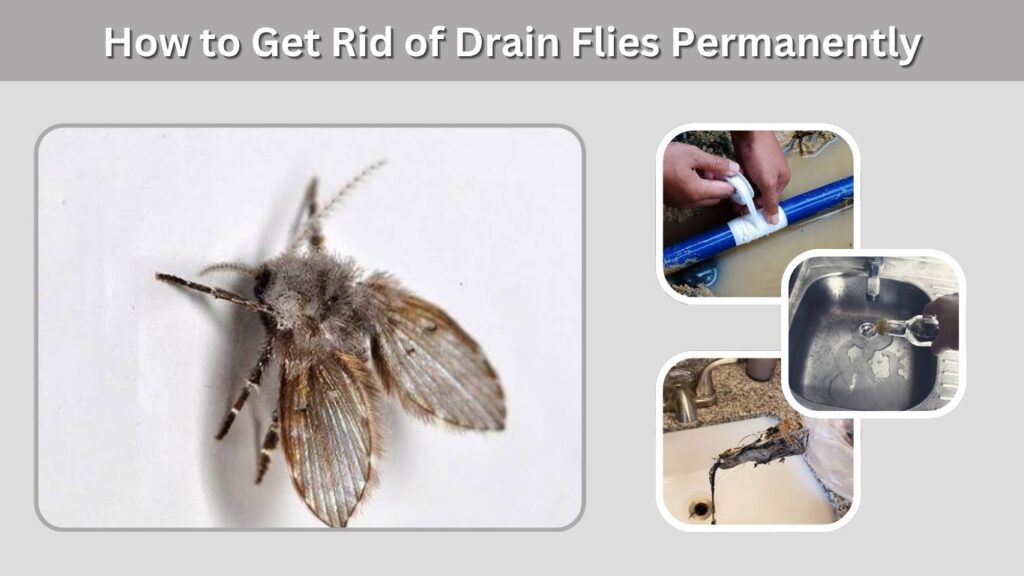
Permanent control depends on preventing the drain from becoming a suitable breeding site again.
Drain flies need moisture and decomposing material. Remove both, and the chances of another infestation drop dramatically.
Long-Term Prevention
- Clean shower drains regularly.
- Remove hair before it builds up.
- Avoid pouring grease into kitchen sinks.
- Keep garbage disposals clean.
- Repair dripping faucets.
- Fix leaking pipes.
- Maintain floor drains.
- Clean sump pits when needed.
- Prevent standing wastewater.
- Run water through rarely used drains.
- Investigate sewage odors quickly.
A drain that repeatedly produces flies despite cleaning may have a deeper plumbing problem.
How to Get Rid of Drain Flies Naturally
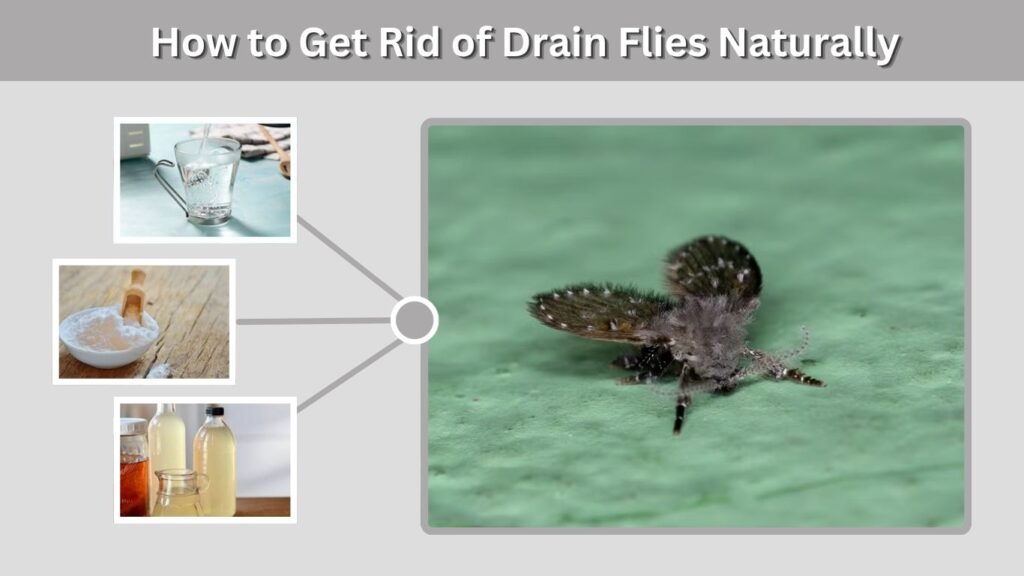
Many people prefer to start with non-insecticidal methods.
Fortunately, physical cleaning is already one of the best drain fly treatments.
Natural Control Methods
You can use:
- Hot water
- Drain brushes
- Baking soda
- Vinegar
- Mechanical debris removal
- Enzyme or microbial drain products
- Regular drying and cleaning
Baking soda and vinegar may loosen some buildup, but they should not replace thorough brushing.
The sticky layer inside the pipe may remain attached even after liquid treatments pass through it.
Baking Soda and Vinegar Method
For minor buildup:
- Pour baking soda into the drain.
- Add vinegar slowly.
- Allow the mixture to react.
- Let it sit for a period of time.
- Flush with warm water.
- Scrub the pipe when possible.
This method may help with light organic material, but heavy infestations usually require physical cleaning.
How Do You Get Rid of Black Drain Flies?
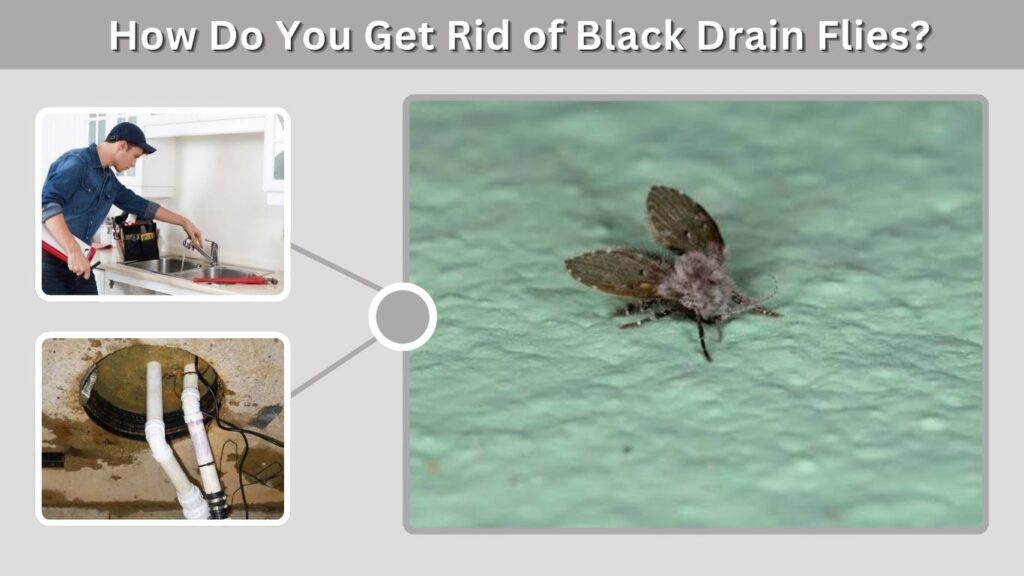
Black drain flies are treated the same way as gray or brown drain flies.
Color does not significantly change their breeding habits.
Black Drain Fly Treatment
Focus on:
- Bathroom drains
- Shower drains
- Floor drains
- Kitchen plumbing
- Garbage disposals
- Sump pits
- Sewage leaks
Black or dark gray drain flies still usually have fuzzy bodies and broad moth-like wings.
If the insect looks smooth, slender, or mosquito-like, make sure it is actually a drain fly before treating the plumbing.
How Do You Get Rid of Drain Fly Larvae?
Larvae are the stage that must be removed if you want long-term control.
They resemble tiny worms and live inside the organic slime coating moist surfaces.
Larvae Control
To eliminate larvae:
- Scrub the inside of the drain.
- Remove slime from pipe walls.
- Clean drain traps.
- Remove hair and grease.
- Use an appropriate biological drain cleaner.
- Eliminate stagnant water.
- Repeat treatment when needed.
Larvae do not normally live deep inside clean water. They need the wet organic film that forms along the pipe.
Destroying that habitat interrupts their life cycle.
Can You Use Bleach to Get Rid of Drain Flies?
Bleach may kill some larvae or adults that it directly contacts, but it is usually not the best stand-alone treatment.
The main problem is that bleach flows quickly through the center of the drain and may not remove the thick slime attached to the sides.
Why Bleach May Fail
Bleach may:
- Miss larvae protected inside organic buildup
- Fail to remove grease and slime
- Provide only temporary improvement
- Leave the breeding habitat intact
Never mix bleach with vinegar, ammonia, drain cleaners, or other chemicals.
Dangerous fumes or reactions can occur.
For lasting results, scrub the drain instead of relying entirely on bleach.
Should You Use Drain Fly Spray?
Insect sprays can kill adult flies but normally do not reach eggs and larvae deep inside the drain.
That means spraying should not be your primary treatment.
Spray vs. Drain Cleaning
Spray:
Kills visible adults quickly.
Drain cleaning:
Removes the source producing new adults.
If you use a household insecticide, follow the label exactly and avoid spraying directly around food, pets, or water sources unless the product instructions allow it.
How to Find Which Drain Has Drain Flies
When several drains are present, identifying the active one can save time.
Adults usually remain fairly close to their breeding site.
Signs of an Active Drain
Look for:
- Several flies resting nearby
- Flies appearing early in the morning
- Worm-like larvae around the opening
- Dark slime inside the pipe
- A persistent musty or sewage odor
- Flies returning soon after adults are killed
You can place clear adhesive tape loosely over part of a suspected drain overnight.
If flies appear beneath or around the tape, that drain may be producing them.
Do not completely block drains that require airflow.
How to Get Rid of Drain Flies in a Shower
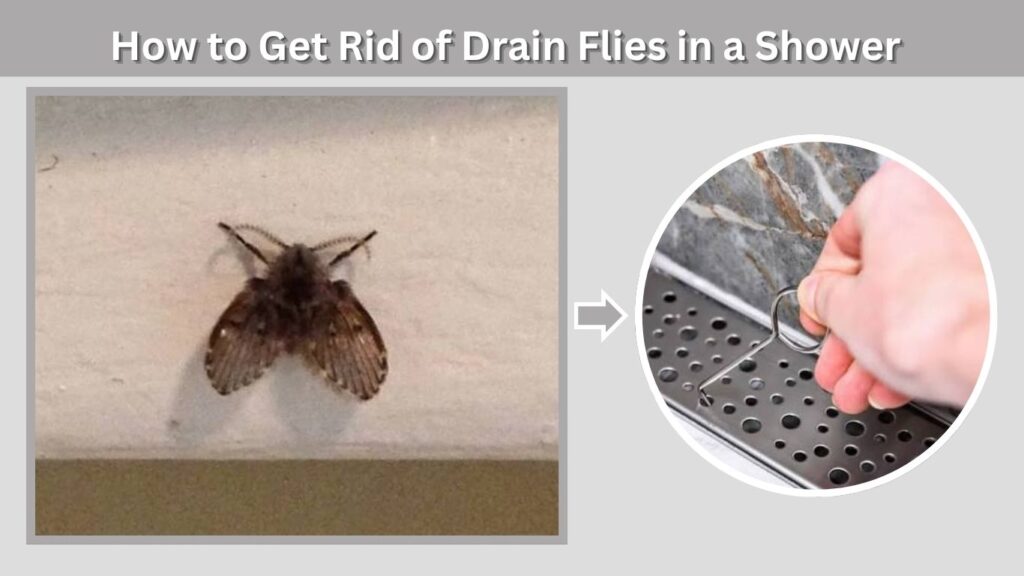
Showers are among the most common breeding sites because hair, soap, skin oils, and moisture accumulate inside the drain.
Shower Drain Treatment
- Remove the drain cover.
- Pull out accumulated hair.
- Scrub the drain opening.
- Brush several inches into the pipe.
- Remove visible slime.
- Flush away debris.
- Clean the drain cover.
- Keep the shower area dry between uses when practical.
Also check overflow openings and nearby floor drains if the problem continues.
How to Get Rid of Drain Flies Outside
Outdoor drain flies may breed in wet organic material rather than indoor plumbing.
Possible sources include:
- Outdoor drains
- Sewage leaks
- Septic systems
- Clogged gutters
- Standing water
- Wet compost
- Animal waste
- Organic sludge
- Dirty trash areas
Outdoor Control
Remove decaying material, improve drainage, repair leaks, and eliminate unnecessary standing water.
If flies are coming from a sewer or septic problem, professional maintenance may be necessary.
Drain Flies vs. Fruit Flies in Drains
Fruit flies can sometimes gather around drains, particularly kitchen sinks containing food residue.
However, they are different insects and may require a slightly different treatment approach.
Drain Fly Appearance
Drain flies are:
- Fuzzy
- Gray, brown, or black
- Broad-winged
- Moth-like
- Weak fliers
Fruit Fly Appearance
Fruit flies are:
- Smooth-bodied
- Usually tan or brown
- Small with clear wings
- Often associated with fruit and food waste
- More active fliers
If fruit flies are breeding near a drain, remove food residue, fermenting material, and other organic sources in addition to cleaning the plumbing.
Why Do Drain Flies Keep Coming Back?
Recurring drain flies usually mean the true breeding site has not been eliminated.
Common hidden sources include:
- A second drain
- Sink overflow channels
- Garbage disposals
- Floor drains
- Sump pits
- Broken sewer lines
- Plumbing leaks
- Condensation pans
- Standing water under appliances
A severe infestation that continues despite repeated cleaning can be a sign of damaged plumbing.
In that situation, a plumber or pest-control professional may be needed.
How Long Does It Take to Get Rid of Drain Flies?
You may not eliminate every adult immediately.
Existing pupae can continue producing flies for several days after cleaning.
If the breeding material has been removed, however, the number of adults should steadily decrease.
If activity remains unchanged or increases, inspect for another source.
Consistent monitoring is more useful than repeatedly spraying adults.
FAQs
What is the fastest way to get rid of drain flies?
Remove visible adults and immediately scrub the drain to eliminate slime, eggs, and larvae. Killing adults alone will not stop an active infestation.
How do you get rid of drain flies naturally?
Physical drain cleaning is the best natural approach. Remove debris, scrub pipe walls, eliminate standing water, and keep drains maintained.
Does bleach get rid of drain flies?
Bleach may kill some flies or larvae on contact, but it may not remove the organic film where they breed. Physical cleaning is usually more effective for long-term control.
How do you kill drain fly larvae?
Remove the wet organic slime where larvae live. Scrub the inside of the drain, clean traps, remove debris, and correct moisture problems.
How do you permanently prevent drain flies?
Keep drains clean, remove hair and grease regularly, fix leaks, prevent standing wastewater, and investigate plumbing problems if flies repeatedly return.