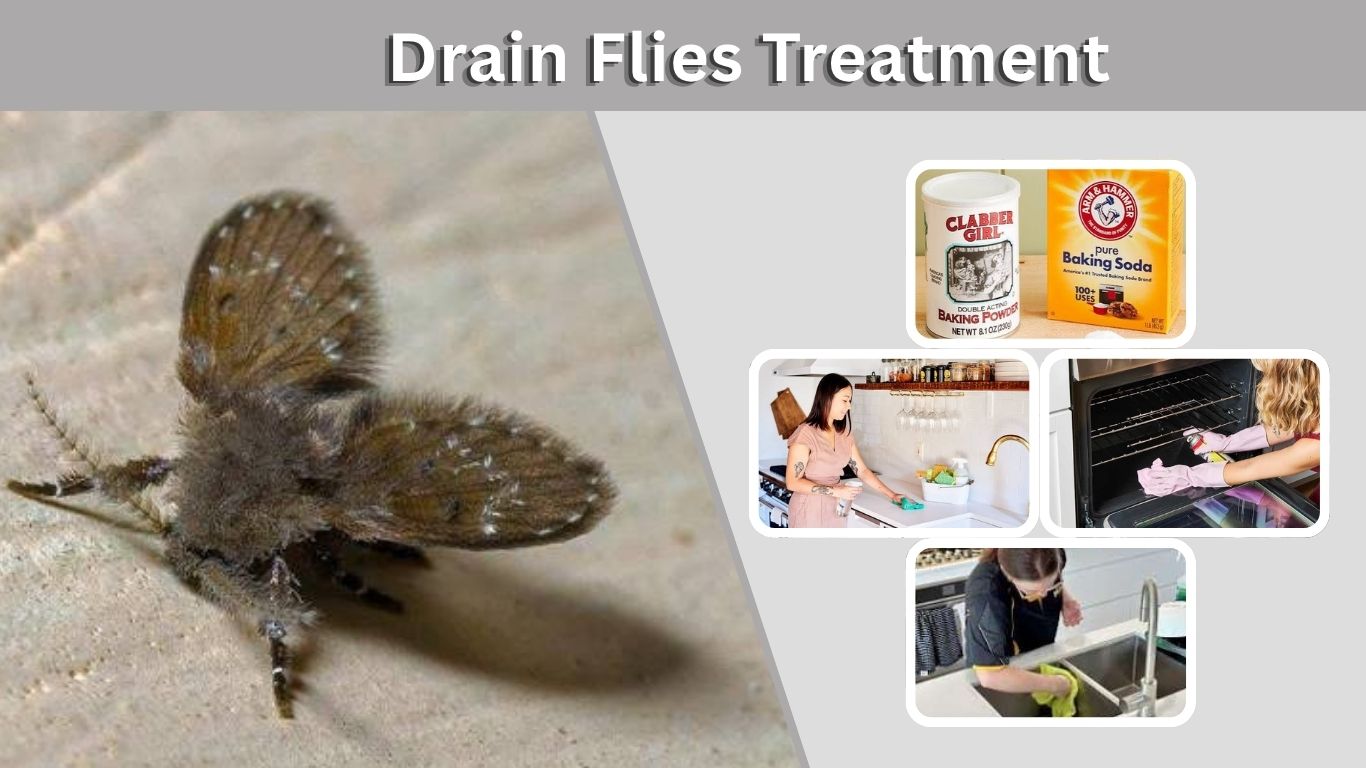
Drain fly treatment works best when you eliminate the slimy organic buildup where these tiny flies breed rather than simply killing the adults you see. Drain flies, also called moth flies, commonly develop inside bathroom, kitchen, basement, and floor drains containing wet debris and bacterial film. Effective control usually combines drain inspection, mechanical scrubbing, enzyme or microbial cleaners, moisture correction, and temporary adult trapping. This guide explains the best drain fly treatments, home remedies, larvae control, prevention methods, and when professional help may be necessary.
How Drain Fly Treatment Works
Drain flies reproduce in moist organic material rather than simply living inside clean water pipes. Their larvae feed within the gelatinous film that forms along drain walls, traps, sewage lines, and similar wet areas. Therefore, successful treatment must remove this breeding material. Killing visible adults without cleaning the source usually provides only temporary relief.
Signs You Have Drain Flies
Common signs include:
- Tiny fuzzy flies resting near sinks or showers
- Gray or brown adults with moth-like wings
- Flies appearing mainly around drains
- Small worm-like larvae inside organic drain slime
- Increasing numbers in bathrooms or kitchens
- Adults appearing after a drain has been unused
- Persistent flies despite killing visible adults
Drain flies do not normally bite people. Their presence primarily indicates a damp breeding source containing decaying organic matter.
Find the Breeding Drain First
Before treating every drain, determine which one is producing the flies.
Place clear tape across part of a suspected drain overnight with the sticky surface facing downward. Do not completely seal the opening. Emerging adults may become trapped on the tape.
You can also place an inverted transparent container over a drain when it is not being used.
Repeat the test on sinks, showers, tubs, floor drains, overflow openings, and rarely used drains. Persistent infestations may originate from hidden plumbing leaks rather than the drain you first suspect.
Best Treatment for Drain Flies
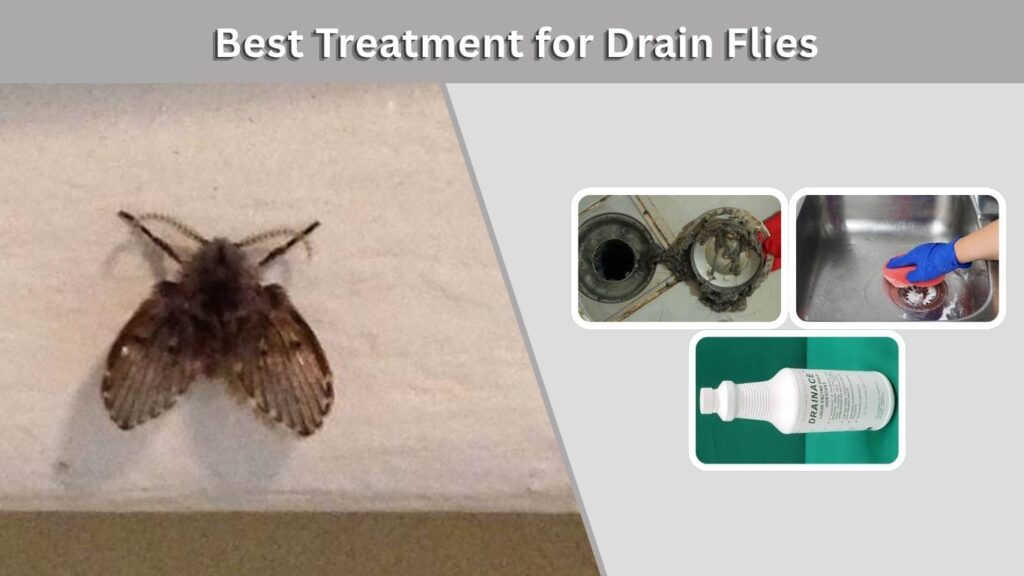
The most effective treatment removes the organic film supporting eggs and larvae. A drain that looks clean from above can still contain thick deposits farther inside the pipe. Physical cleaning followed by an appropriate biological or enzymatic drain cleaner usually addresses the source more effectively than repeatedly spraying adult flies.
1. Scrub the Inside of the Drain
Mechanical cleaning is one of the most important steps.
Use an appropriate stiff drain brush to scrub accessible pipe surfaces, particularly:
- Around the drain opening
- Under removable drain covers
- Inside the pipe
- Around drain traps where accessible
- Inside overflow openings
- Areas coated with dark or gelatinous residue
The goal is to physically remove the bacterial and organic film in which larvae develop.
University extension guidance specifically recommends stiff-bristle or wire-brush cleaning because eliminating this material removes the insects’ breeding habitat.
2. Use an Enzyme or Microbial Drain Cleaner
After brushing, an enzyme- or microbial-based drain treatment can help break down remaining organic deposits.
These products are particularly useful because they target the food and breeding material rather than merely trying to poison adult flies.
For best results, apply the cleaner according to its label, often during periods when the drain will not be used for several hours.
Foaming products can be useful because foam contacts a larger portion of the pipe wall. Colorado State University Extension notes that enzyme-based foam cleaners can remain in contact with organic buildup long enough to help break it down.
3. Repeat Treatment
One cleaning may not eliminate a heavy infestation because eggs, larvae, pupae, and adults can be present simultaneously.
Continue cleaning according to the product directions until:
- No new adults emerge
- Organic buildup disappears
- Larvae are no longer visible
- Sticky-monitoring traps remain empty
Avoid pouring several unrelated chemicals into the drain in an attempt to accelerate the process.
Drain Fly Larvae Treatment
Treating larvae is more important than chasing individual adults. Larvae live inside moist organic scum and can continue developing even while adult flies are being trapped or sprayed. Unless their feeding material is removed, new generations may continually emerge.
How to Kill Drain Fly Larvae
For effective larvae control:
- Remove accessible organic debris.
- Scrub drain walls thoroughly.
- Clean underneath drain covers.
- Treat overflow channels when applicable.
- Use an appropriate enzyme or microbial cleaner.
- Correct plumbing leaks.
- Clean nearby garbage disposals when they contain buildup.
- Repeat treatment as directed.
Penn State recommends removing breeding material with brushing or steam and notes that bacterial or enzyme products can break down gelatinous drain deposits.
Drain Fly Larvae in a Toilet
If larvae repeatedly appear around a toilet, the source may not be the toilet bowl itself.
Check for persistent moisture around the base, nearby floor drains, damaged seals, sewage leakage, or plumbing problems. A significant infestation associated with leaking wastewater may require a plumber or pest-management professional.
Simply pouring chemicals into the toilet will not repair a broken pipe or contaminated area beneath a floor.
DIY Drain Fly Treatment and Home Remedies
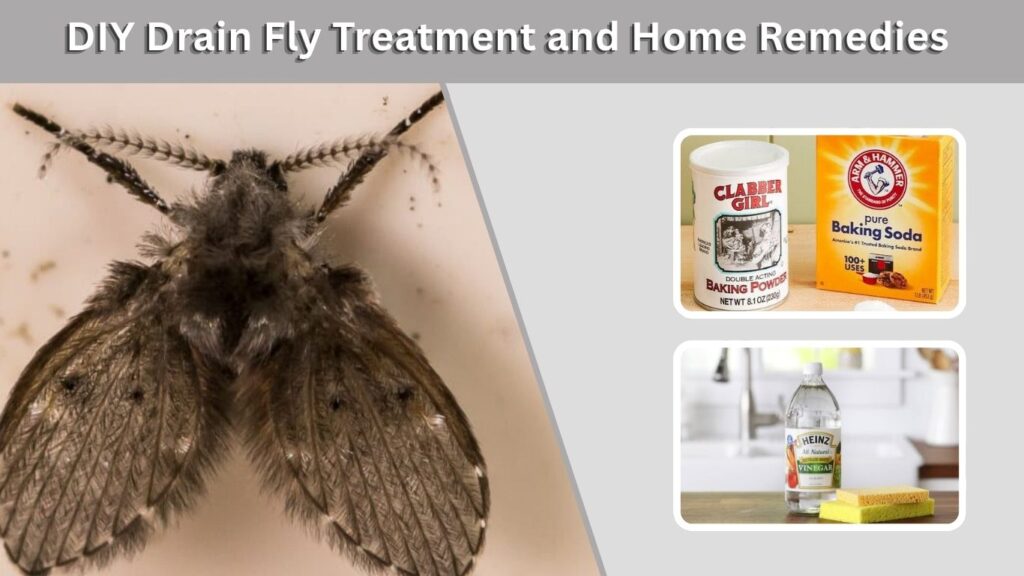
Home remedies are popular because ingredients such as vinegar and baking soda are readily available. They may help clean light residue, but they should not replace physical removal of thick organic buildup. Several extension sources emphasize that scrubbing the breeding film is central to long-term drain fly control.
Baking Soda and Vinegar
Baking soda followed by vinegar creates vigorous bubbling that may loosen some debris.
However, this reaction does not guarantee that the deeper biological film containing larvae has been removed. If you use this approach, follow it with proper mechanical cleaning.
Never combine vinegar with bleach. Mixing bleach with acids can release dangerous chlorine gas.
Does Boiling Water Kill Drain Flies?
Hot water may kill some exposed larvae or loosen debris, but it is unreliable as a complete treatment.
Colorado State and Minnesota Extension both note that hot water alone performs poorly at eliminating the material supporting drain fly development.
The same problem applies to simply pouring harsh drain-opening chemicals down the pipe: they may pass through without thoroughly removing the film along the drain walls.
Drain Fly Treatment Gel vs Spray
Drain fly products come in gels, foams, liquids, and sprays. The best product depends less on the marketing term and more on whether it actually removes the organic breeding layer and is labeled for the intended drain.
Drain Treatment Gel or Foam
Gel or foam treatments can be useful because they cling to pipe walls instead of immediately flowing away.
Look for products designed to digest organic buildup using enzymes or microorganisms. Always follow the application frequency and safety instructions on the product label.
For homes with septic systems, confirm that the specific product is labeled as suitable for septic use.
Drain Fly Spray
A flying-insect spray may temporarily reduce adult flies but does not solve larvae breeding inside the drain.
Spraying pesticides directly into drains is generally unnecessary and may conflict with product labeling. Mississippi State University Extension specifically advises eliminating the drain’s organic scum and states that insecticides should not be used in drains.
Drain Flies vs Fruit Flies Treatment
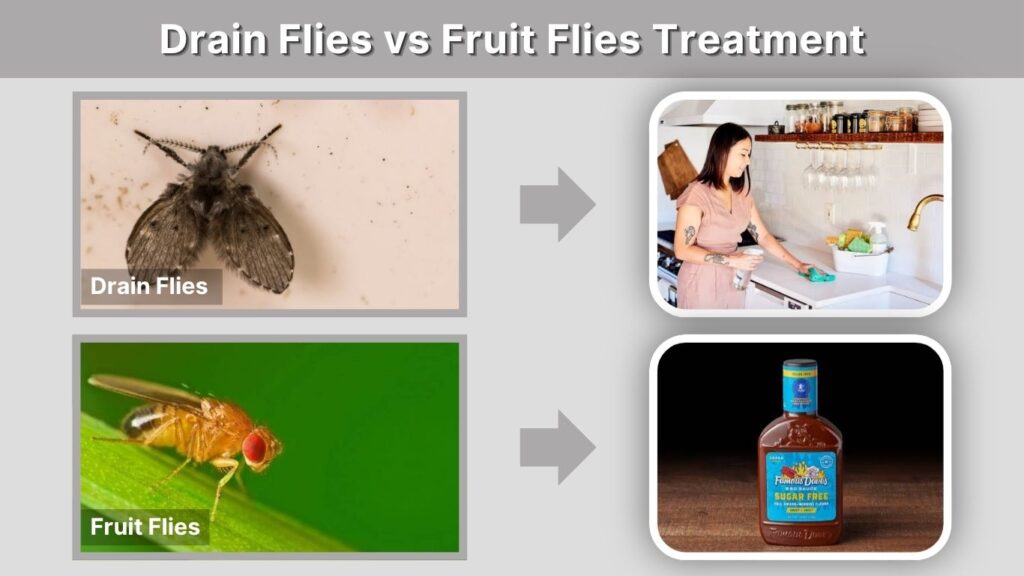
Drain flies and fruit flies are often confused because both are tiny and can appear in kitchens. Correct identification matters because their breeding sources differ.
Main Differences
Drain flies are fuzzy, moth-like insects commonly associated with drains, sewage, wet organic film, and standing wastewater.
Fruit flies are smoother-bodied flies commonly associated with fermenting fruit, vegetables, sugary liquids, recycling containers, alcohol residue, and food waste.
If flies continue after thorough drain cleaning, inspect:
- Overripe fruit
- Trash cans
- Recycling bins
- Mop buckets
- Garbage disposals
- Beverage residue
- Compost containers
Treating drains will not eliminate a fruit fly infestation breeding in spoiled produce.
How to Treat a Heavy Drain Fly Infestation
A severe infestation sometimes indicates a larger moisture or sanitation problem. Hundreds of flies appearing despite repeated drain cleaning should raise concern about hidden breeding sites.
Check for Hidden Sources
Inspect:
- Broken sewer pipes
- Leaking drain lines
- Wet areas beneath cabinets
- Floor drains
- Sump pits
- Septic problems
- Refrigerator drip pans
- Condensation
- Grease traps
- Standing wastewater
- Areas beneath floors or behind walls
Drain flies can reproduce in sewage associated with broken or leaking plumbing. If this is the source, chemical drain treatment alone cannot solve the infestation.
A plumber may need to locate and repair the leak, while professional pest control can help identify difficult breeding areas.
How to Prevent Drain Flies
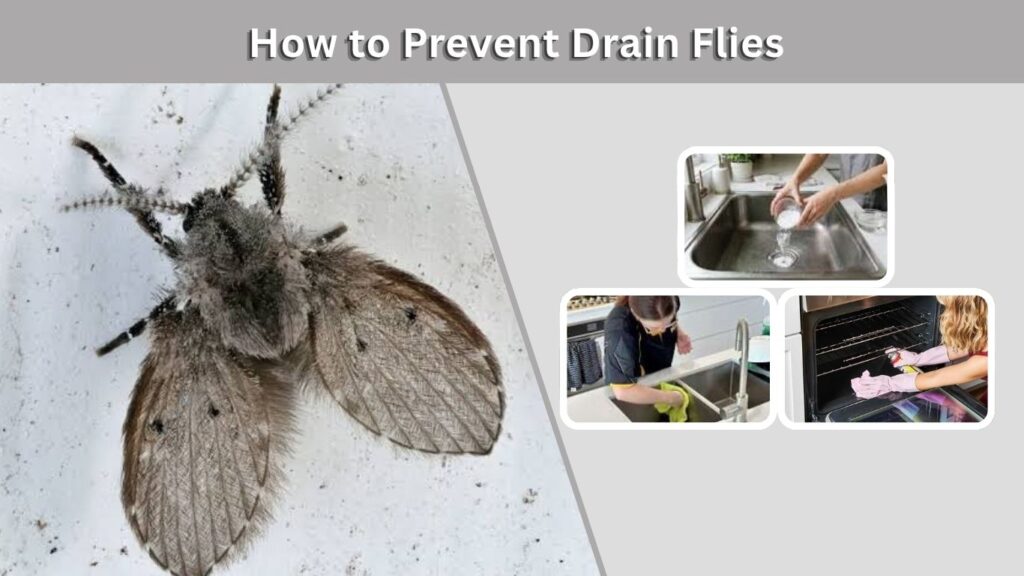
Once the infestation disappears, simple sanitation and moisture management can greatly reduce the chance of another outbreak. Prevention is especially important in drains that receive food debris or remain unused for long periods.
Drain Fly Prevention Tips
- Keep drains free of organic buildup.
- Clean sink strainers regularly.
- Remove food particles promptly.
- Maintain garbage disposals.
- Repair dripping faucets and leaking pipes.
- Keep rarely used drains from becoming neglected.
- Clean floor drains periodically.
- Maintain grease traps properly.
- Correct standing-water problems.
- Investigate unexplained sewage odors promptly.
Preventing the wet organic film removes the habitat drain flies required for reproduction.
FAQs
Drain fly infestations are usually manageable at home when the breeding source is accessible. The key is treating the drain as a habitat problem rather than concentrating exclusively on adult insects.
What is the best treatment for drain flies?
Mechanical scrubbing followed by an enzyme or microbial drain cleaner is among the most effective approaches because it removes the organic film where larvae feed and develop.
Does vinegar kill drain flies?
Vinegar may help with light cleaning and can be useful in traps for some small flies, but it usually will not eliminate a drain fly infestation unless the breeding material inside the drain is removed.
How long does drain fly treatment take?
Minor infestations may improve after several days of thorough cleaning, while heavier infestations can take longer because developing larvae and pupae may continue producing adults temporarily.
Should I use bleach for drain flies?
Bleach is not considered a reliable long-term solution because it may not remove the organic coating supporting larvae. Never mix bleach with vinegar, ammonia, or other cleaners.
When should I call a professional?
Seek professional help when flies remain after repeated thorough drain cleaning, appear in very large numbers, occur away from obvious drains, or are accompanied by sewage odors or signs of leaking or broken plumbing.