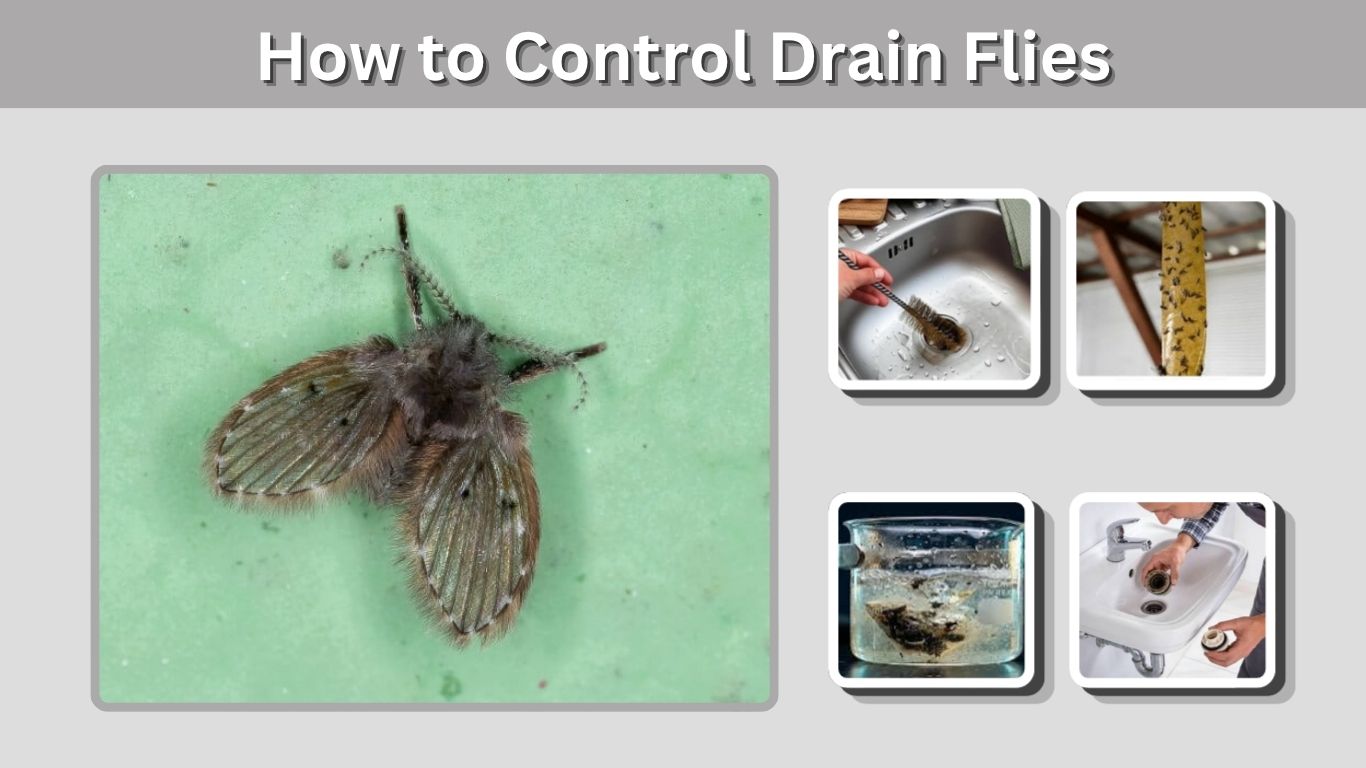
Drain flies are tiny, fuzzy insects that often appear around sinks, showers, floor drains, and other damp areas. Also called moth flies or sewer flies, they reproduce in the slimy organic film that develops inside drains and plumbing. Killing the adults provides only temporary relief because eggs and larvae remain in the breeding material. Effective drain fly control requires finding the source, physically removing organic buildup, treating remaining residue, fixing moisture problems, and preventing the slime from returning.
How to Identify Drain Flies
Correct identification is important before beginning control. Drain flies are small members of the family Psychodidae and have hairy bodies and wings that give them a miniature moth-like appearance. They commonly rest on bathroom walls, sinks, tubs, and tiles close to breeding areas. Adults are mainly a nuisance and typically do not bite people.
Signs of Drain Flies
Common signs include:
- Tiny gray, brown, or dark fuzzy flies
- Broad, hairy wings held roof-like over the body
- Adults sitting near sinks and showers
- Several flies appearing from the same drain
- Small larvae living in dark drain slime
- Increased activity around bathrooms or kitchens
- Flies repeatedly returning after adults are killed
Because drain flies develop in wet organic material, their presence usually means there is a breeding site somewhere nearby.
Drain Flies vs Fruit Flies
Drain flies look hairy and moth-like, while fruit flies usually have smoother, rounded bodies. Fruit flies commonly breed around fermenting fruit, sugary residues, recycling containers, and food waste.
If cleaning the drains does not reduce the infestation, make sure you have not confused drain flies with fruit flies, phorid flies, or fungus gnats.
How to Find Where Drain Flies Are Coming From
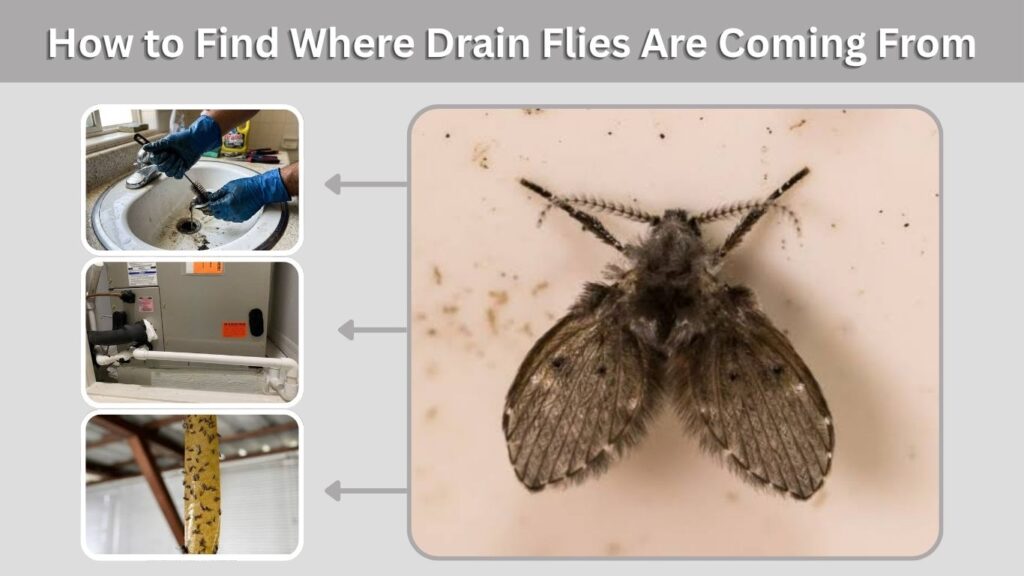
Finding the breeding source is the most important step in drain fly control. Most infestations originate from the gelatinous organic film coating a drain, but larvae can also develop around leaking pipes, sewage contamination, wet garbage disposals, or other continuously damp areas.
Test Suspected Drains
Try the following:
- Place clear tape partly across the drain overnight, sticky side down.
- Leave enough space for air to move through the drain.
- Check the tape the following morning for trapped flies.
- Repeat the test for several nights if necessary.
- Test shower, sink, bathtub, floor, and utility drains separately.
- Inspect overflow openings as well.
Penn State also recommends covering suspected outlets and watching for emerging adults to identify the breeding drain.
Best Ways to Control Drain Flies
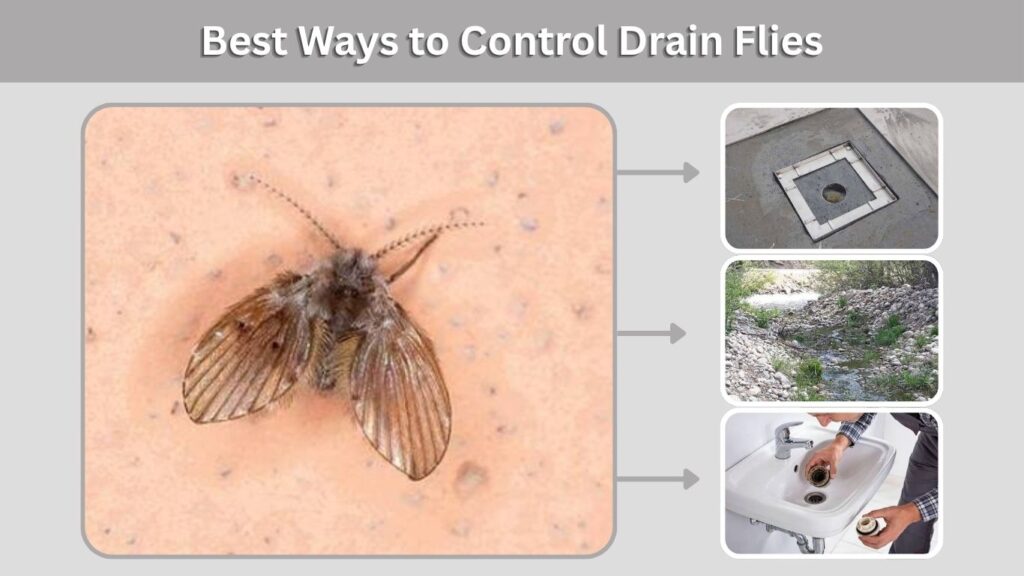
The most effective drain fly control targets the larvae and their food source. Larvae feed on bacteria, fungi, algae, and decaying organic matter inside the wet film coating pipes. Removing that material interrupts their life cycle and prevents new adults from continually emerging.
1. Scrub the Drain Thoroughly
Use a stiff drain brush to physically remove the gelatinous buildup.
Pay special attention to:
- Inside the drain opening
- The sides of accessible pipes
- Underneath drain covers
- Overflow channels
- Areas around sink stoppers
- Garbage disposal openings
Mechanical removal is highly effective because it eliminates the material in which eggs and larvae develop. Simply pouring liquid through the center of the pipe may leave much of this coating untouched.
2. Use an Enzyme or Biological Drain Cleaner
After physical cleaning, an enzyme- or bacteria-based drain cleaner can help break down remaining organic deposits.
Foaming formulations may be particularly useful because they can remain in contact with the sides of plumbing instead of immediately flowing away. Follow the label instructions carefully and repeat applications for the recommended period.
3. Fix Leaks and Moisture Problems
A spotless sink drain will not solve the problem if flies are actually breeding in wastewater beneath the floor or behind a wall.
Check for leaking:
- Sink traps
- Garbage disposals
- Toilet seals
- Sewer lines
- Floor drains
- Pipes beneath cabinets
- Plumbing behind walls
Large or persistent infestations can sometimes indicate a broken or leaking drain line.
4. Trap Remaining Adult Flies
Adult trapping can reduce the nuisance while source control takes effect.
Sticky traps, tape near the breeding drain, or manually removing visible flies can help. However, trapping adults alone will not end an infestation because larvae continue developing inside untreated organic material.
How to Control Drain Flies in the Bathroom
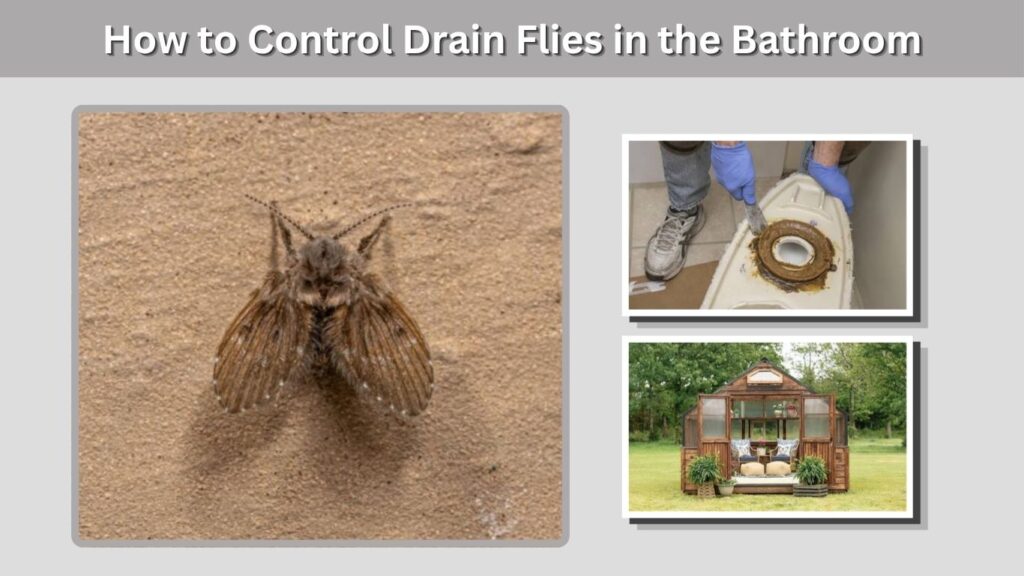
Bathrooms provide ideal conditions because showers, tubs, sinks, and floor drains remain moist and collect hair, soap residue, skin debris, and other organic material. A rarely used bathroom drain can also become a breeding site when stagnant water and buildup remain undisturbed.
Bathroom Drain Fly Control
For bathroom infestations:
- Remove hair from drain strainers.
- Clean underneath removable drain covers.
- Scrub the pipe with a drain brush.
- Clean sink overflow openings.
- Use an appropriate biological or enzyme cleaner.
- Repair dripping faucets.
- Check around toilets for leaks.
- Inspect floor drains.
- Keep surrounding surfaces clean and relatively dry.
Continue monitoring even after the number of adults drops. A few flies may continue emerging while remaining pupae complete development.
Do Baking Soda, Vinegar or Boiling Water Work?
DIY drain fly remedies are popular, but they vary considerably in effectiveness. The key issue is not whether a substance kills a few exposed insects—it is whether the treatment removes the biological film supporting the entire population.
Natural Drain Fly Control
Baking soda and vinegar may loosen some light organic material because of their bubbling reaction, but they should not replace proper scrubbing.
Hot or boiling water is also unreliable as a standalone control method. University of Minnesota Extension specifically notes that hot water, bleach, and conventional chemical drain cleaners do not effectively eliminate moth flies because they fail to remove the breeding material sufficiently.
Never mix household cleaning chemicals. In particular, mixing bleach with acids such as vinegar can release hazardous chlorine gas.
Drain Fly Control Products
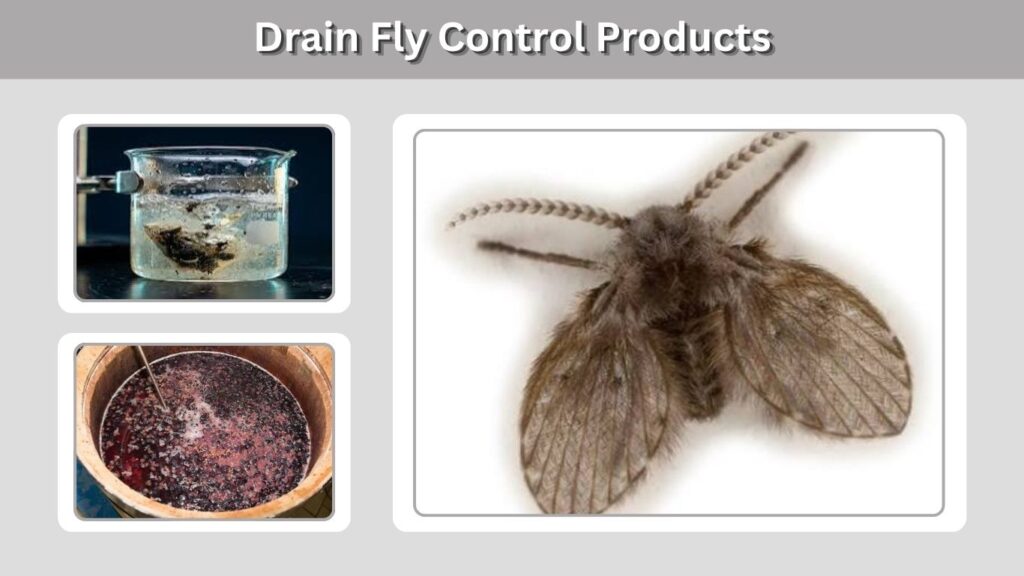
Products designed to digest drain buildup can be useful when combined with sanitation and mechanical cleaning. The best product is not necessarily the one labeled as the strongest insect killer; products that remove the larvae’s food and breeding habitat generally address the underlying problem more effectively.
What to Look For
Useful features can include:
- Enzyme-based formulation
- Beneficial bacterial or microbial ingredients
- Foaming action
- Ability to break down organic residue
- Clear application directions
- Compatibility with your plumbing
- Septic-system compatibility when needed
Avoid routinely applying insecticide sprays into drains unless the product is specifically labeled for that use. Source removal remains the foundation of control.
Drain Fly Control in Restaurants
Restaurants can experience difficult infestations because grease, food debris, water, and organic matter continuously enter drains. Floor drains and areas underneath equipment are particularly important because they may be overlooked during routine surface cleaning.
Commercial Control
Restaurant sanitation should include regular cleaning of floor drains, grease traps, beverage stations, mop areas, garbage handling zones, and plumbing beneath equipment.
Professional drain-management programs may use specialized brushes, steam, foam cleaners, and monitoring systems.
Persistent flies in a commercial kitchen should be investigated quickly because nearby food residue, leaking plumbing, or hidden wastewater can sustain large populations.
When to Call Pest Control for Drain Flies
Most small infestations can be controlled by locating and thoroughly cleaning the breeding drain. Professional help becomes more useful when the source is inaccessible or flies continue despite repeated cleaning.
Pest Control May Be Needed When
Consider professional assistance if:
- Large numbers appear every day.
- Multiple drains are affected.
- You cannot locate the breeding source.
- Flies return after thorough cleaning.
- There is a strong sewage odor.
- You suspect a broken sewer line.
- Larvae appear beneath floors or walls.
- The infestation affects a restaurant or commercial property.
A pest-control professional can help locate breeding areas, but a plumber may also be necessary when broken or leaking pipes are responsible. Drain flies associated with hidden wastewater will continue until the underlying plumbing problem is repaired.
How to Prevent Drain Flies
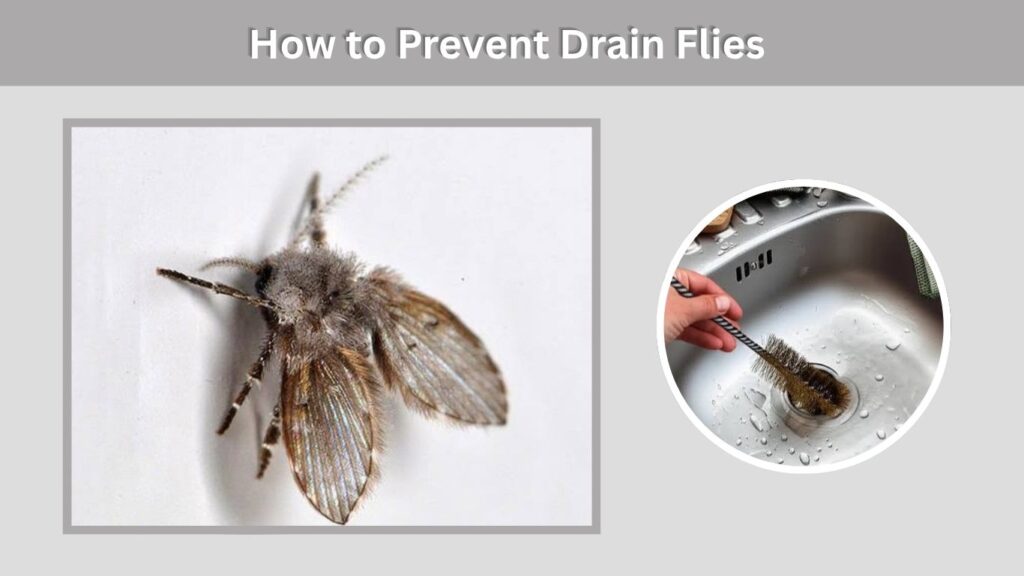
Once the breeding material has been removed, keeping drains clean and correcting moisture problems can greatly reduce the chance of another infestation. Prevention is especially useful in bathrooms, kitchens, basements, restaurants, and buildings containing drains that are only occasionally used.
Drain Fly Prevention Tips
- Clean drains regularly.
- Remove hair and food debris.
- Keep garbage disposals clean.
- Repair leaking pipes promptly.
- Maintain floor drains.
- Prevent standing wastewater.
- Clean grease traps as required.
- Investigate sewage odors.
- Keep damp cleaning equipment sanitary.
- Monitor problem drains periodically.
Preventing organic slime from accumulating removes the environment drain fly larvae need to survive.
FAQs
Drain flies can be persistent, but they are usually easier to control once their breeding source is identified. The most important rule is to remove the wet organic material rather than repeatedly attacking only the flying adults.
What is the fastest way to control drain flies?
Find the infested drain, physically scrub away the organic film, and follow with an appropriate enzyme or biological drain cleaner. Killing adults alone will not eliminate the infestation.
Can pest control get rid of drain flies?
Yes, particularly when the breeding source is difficult to locate. However, successful pest control still depends on eliminating organic buildup, leaks, sewage, or other larval habitats.
Will boiling water control drain flies?
Boiling water alone is generally ineffective because it does not reliably remove the gelatinous organic layer where larvae develop.
Why do drain flies keep coming back?
Recurring flies usually indicate that some breeding material remains or that another hidden source exists, such as a floor drain, overflow channel, leaking pipe, or sewer-line problem.
How long does drain fly control take?
Adults may continue appearing briefly after cleaning because some pupae can already be developed. Once all breeding sources have been eliminated, numbers should steadily decline rather than continually rebound.