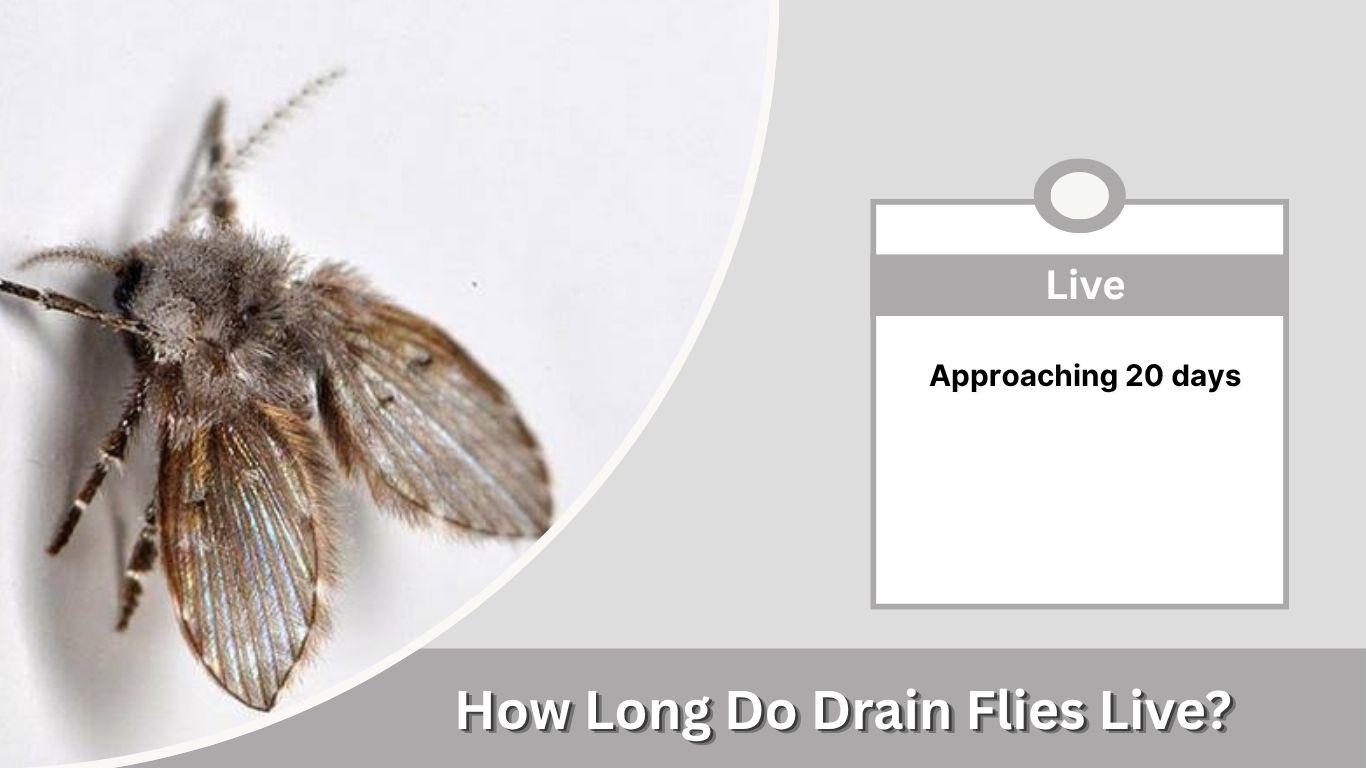
Drain flies usually have short adult lives, but an infestation can continue for weeks or months when new generations keep developing inside a drain. Depending on the species and conditions, an adult drain fly may survive roughly one to three weeks, while development from egg through larva and pupa can take several additional weeks. Warm, wet drains containing organic buildup allow populations to reproduce continuously. This guide explains drain fly lifespan, life cycle, larvae, breeding habitats, winter survival, and whether fruit flies can also live in drains.
How Long Do Drain Flies Live?
Drain flies, also called moth flies or sewer flies, belong to the family Psychodidae. Their exact lifespan varies by species, temperature, humidity, and food availability. Research on the common bathroom moth fly Clogmia albipunctata has found adults surviving up to about 10 days under some conditions, while pest-management references commonly give adult lifespans approaching 20 days.
Average Drain Fly Lifespan
A useful general estimate is:
- Adult lifespan: About 1–3 weeks
- Egg stage: Usually only a few days
- Larval stage: Often around two weeks or longer
- Pupal stage: Several days
- Total lifespan: Commonly several weeks from egg to adult death
- Development speed: Faster in warm, moist conditions
Laboratory research on Clogmia albipunctata found an egg-to-adult developmental period averaging about 27 days under controlled conditions, with an approximate total lifespan of 35 days.
Drain Fly Life Cycle
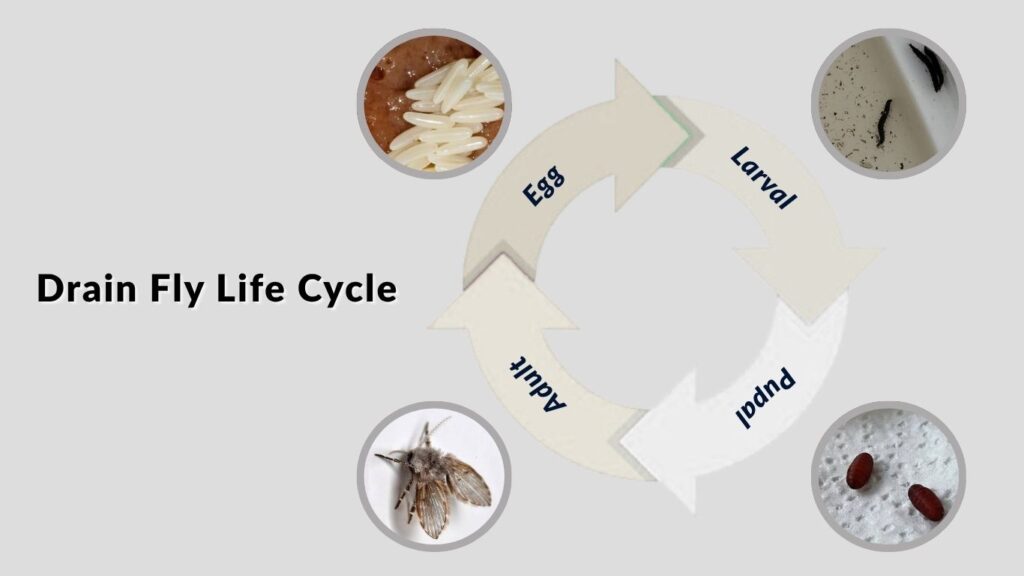
Drain flies undergo complete metamorphosis, passing through egg, larva, pupa, and adult stages. The problem for homeowners is that several generations can overlap. While adult flies are resting on bathroom walls, eggs and larvae may already be developing inside the drain, allowing the infestation to continue even after visible adults are killed.
Egg Stage
Adult females lay their eggs in wet, decomposing organic matter rather than clean water.
Common egg-laying locations include:
- Drain slime
- Sewer deposits
- Floor drains
- Garbage disposals
- Sewage-contaminated areas
- Other wet organic debris
Penn State Extension notes that the gelatinous organic deposits accumulating inside drains provide an ideal breeding environment.
Drain Fly Larvae
The eggs hatch into slender, worm-like larvae. These larvae feed on microorganisms and decomposing organic material inside the moist film coating drain surfaces.
Under favorable conditions, larvae may mature in approximately two weeks before pupating.
They are often difficult to notice because they remain inside the slime rather than openly swimming around a sink.
Pupa and Adult
After completing larval development, the insect enters a pupal stage before becoming an adult.
Adults emerge from the drain and commonly remain close to the breeding site. Their weak flight explains why people often see them resting on nearby sinks, showers, tiles, and bathroom walls rather than flying throughout the entire home.
Where Do Drain Flies Live?
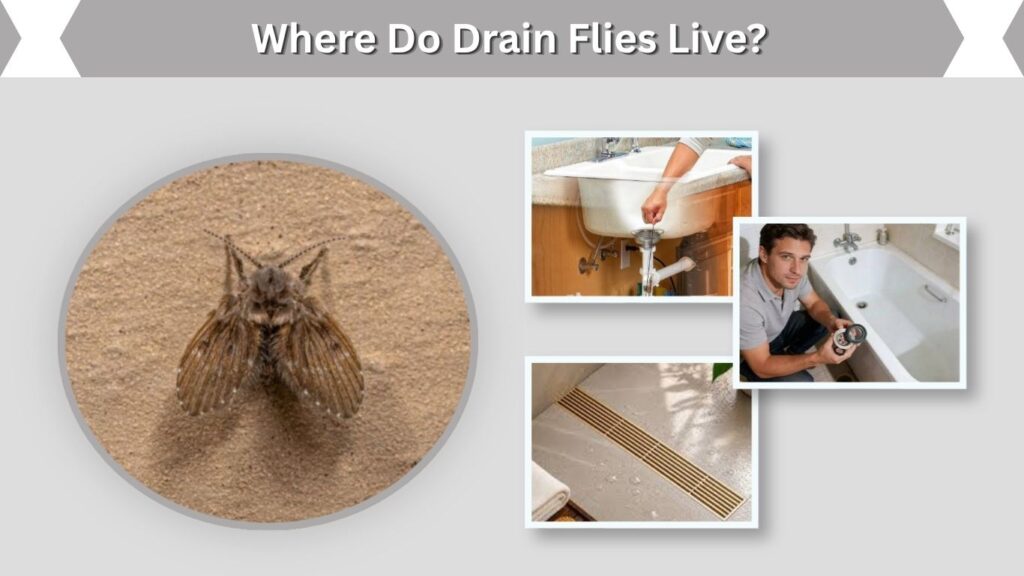
Although their name suggests they live exclusively inside drains, moth flies can occupy many environments containing continuously wet organic material. Indoor plumbing is simply one of the most convenient habitats humans provide.
Common Drain Fly Habitats
Drain flies may develop in:
- Sink drains
- Shower drains
- Bathtub drains
- Floor drains
- Sewage systems
- Broken sewer lines
- Garbage disposals
- Wet organic sludge
- Sewage-treatment areas
- Continuously wet filters
- Other moist sites rich in bacteria
Colorado State University Extension notes that larvae can also develop in continuously wet plumbing, swamp-cooler filters, fish-tank-related environments, and places affected by leaking drainpipes.
Do Drain Flies Live Outside?
Yes. Drain flies occur naturally outdoors as well.
They can develop in wet environments containing decaying vegetation, organic sludge, polluted water, and other moist material. Adults may also be attracted to outdoor lights.
Indoor infestations occur when similar conditions develop inside plumbing or when outdoor adults enter buildings.
Can Drain Flies Live in Water?
Drain fly larvae are adapted to very wet environments, but saying they simply “live in water” can be misleading. Their preferred habitat is usually the moist organic film at the water-air interface or along wet surfaces rather than clean running water.
Can Drain Fly Larvae Live Underwater?
Larvae can tolerate semiaquatic conditions and occur in sewage, sludge, drains, and other saturated habitats.
However, they need organic matter and microorganisms for food. A clean container of water without suitable food is very different from a dirty drain coated with bacterial slime.
Removing the organic coating is therefore more effective for long-term control than simply flushing the pipe with water. University of Minnesota Extension recommends physically removing the gelatinous buildup or using a biological drain cleaner.
Can Drain Flies Live in Toilets?
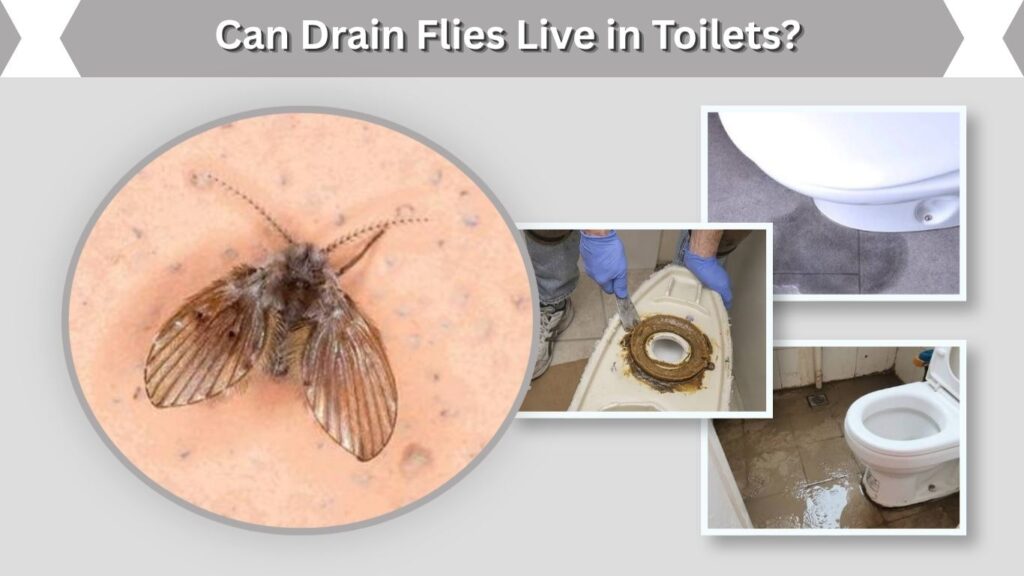
Drain flies may be seen around toilets, but a regularly cleaned toilet bowl is not necessarily their breeding source. Nearby plumbing, sewage buildup, floor drains, or leaking toilet seals can provide much better larval habitat.
Drain Flies Around a Toilet
If drain flies repeatedly appear around a toilet, check:
- The toilet base for leakage
- Nearby floor drains
- Overflowing or damaged plumbing
- Sewer connections
- Areas containing persistent sewage odors
- Wet spaces beneath flooring
A broken sewer line can support large drain fly populations because it supplies continuous moisture and organic waste.
Can Drain Flies Live in Walls or Air Vents?
Adult drain flies may rest on walls or occasionally appear near ventilation openings, but dry walls and clean air ducts are not normal larval habitats. Persistent flies emerging from a wall may indicate hidden moisture rather than an infestation living in dry drywall itself.
Hidden Breeding Areas
Potential hidden sources include:
- Leaking pipes behind walls
- Condensation
- Broken drain lines
- Sewage beneath floors
- Damp wall cavities
- Wet organic debris
- Plumbing leaks near ventilation systems
Colorado State University Extension specifically notes that moth flies can develop where leaking plumbing or condensation keeps hidden areas beneath floors or behind walls continuously moist.
Do Drain Flies Live in Septic Tanks?
Septic and sewage environments can contain exactly the conditions drain fly larvae prefer: moisture, bacteria, and decomposing organic material. Drain flies may therefore occur around septic or sewage systems.
However, large numbers appearing inside the house should still prompt an inspection of drains and plumbing.
Drain Flies From Sewage Systems
Indoor activity may be associated with:
- Damaged plumbing
- Open or poorly sealed drains
- Sewer-line breaks
- Dry drain traps
- Leaking wastewater
- Other routes connecting breeding material with indoor rooms
Simply killing the adults will not solve the problem when a plumbing defect provides an ongoing breeding source.
Can Fruit Flies Live in Drains?
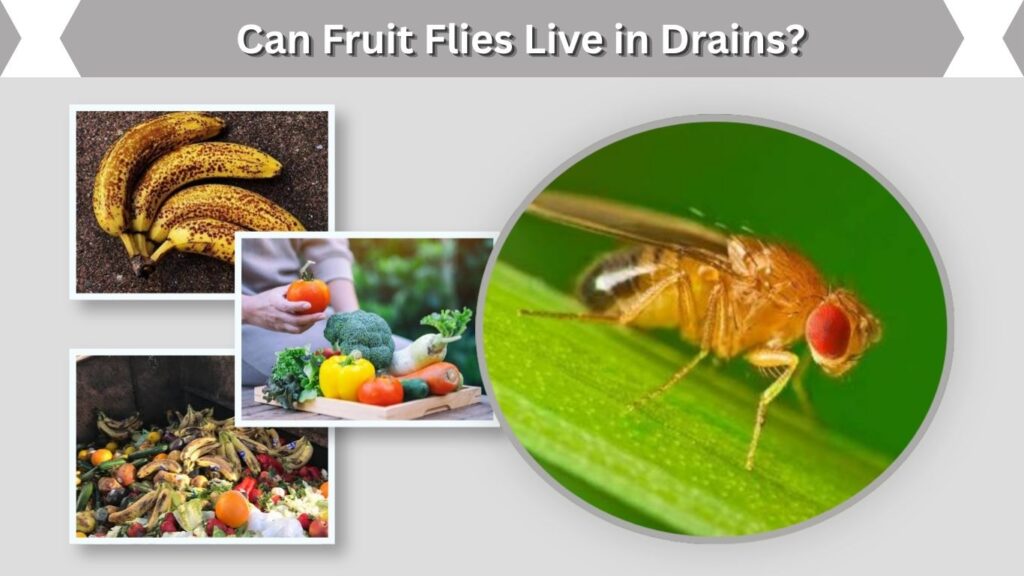
Yes. Fruit flies can sometimes reproduce in drains, although they are different insects from drain flies. Fruit flies are especially attracted to moist areas containing fermenting organic material.
Penn State Extension notes that fruit flies may occur in drains and garbage disposals as well as around ripe fruits, vegetables, trash containers, and other moist fermenting materials.
Drain Fly vs Fruit Fly
The major differences include:
- Drain flies: Fuzzy and moth-like
- Fruit flies: Smooth-bodied and often have noticeable red eyes
- Drain fly larvae: Favor slimy organic deposits
- Fruit flies: Favor fermenting food and sugary organic material
- Drain flies: Common near showers and floor drains
- Fruit flies: Common near kitchens, fruit, beverages, and garbage
A kitchen drain can potentially support either type when enough organic residue accumulates.
Do Drain Flies Live During Winter?
Drain flies can remain active indoors throughout the year when heated buildings continue to provide moisture and organic material. University of Minnesota Extension lists moth flies as insects that may be found indoors at any time of year.
Why They Survive Indoors
Indoor drains provide relatively stable conditions:
- Warm temperatures
- Constant moisture
- Protection from freezing
- Organic residue
- Bacteria and fungi for larvae
Therefore, cold outdoor weather does not necessarily end an established bathroom or kitchen infestation.
Why Drain Flies Seem to Live Forever
Individual drain flies do not live very long. The reason an infestation may seem endless is continuous reproduction.
Killing today’s adults does nothing to the larvae already growing inside the pipe. Those larvae mature, produce another group of adults, and those adults deposit more eggs.
How to Break the Life Cycle
For lasting control:
- Identify the breeding drain.
- Remove hair and debris.
- Scrub away organic drain slime.
- Clean overflow openings.
- Use an appropriate enzyme or biological drain cleaner.
- Repair plumbing leaks.
- Eliminate standing wastewater.
- Continue monitoring for newly emerging adults.
Source removal is the most important step. Simply using boiling water or bleach generally does not remove the breeding film well enough for reliable long-term control.
FAQs
Drain flies have short individual lives, but rapid development and overlapping generations can make an untreated population seem permanent. Understanding where each stage lives is the key to figuring out why flies keep returning.
How long do adult drain flies live?
Adults generally survive roughly one to three weeks, depending on species and environmental conditions. Some studied moth flies live around 10 days, while other pest-control estimates approach 20 days.
How long do drain fly larvae live?
The larval period commonly lasts around two weeks under favorable conditions, although temperature and food availability can change development time.
Can drain flies survive without water?
Adults can temporarily survive away from a drain, but their immature stages depend on moist breeding material. Drying and removing the breeding habitat prevents successful reproduction.
Do drain flies actually live inside drains?
Yes. Eggs, larvae, and pupae commonly develop in the organic film coating drains, while adults usually emerge and rest on nearby surfaces.
Why do drain flies keep appearing after I kill them?
New adults are probably emerging from eggs, larvae, or pupae already developing in the drain. Removing the organic breeding material is necessary to stop the cycle rather than simply killing the visible flies.