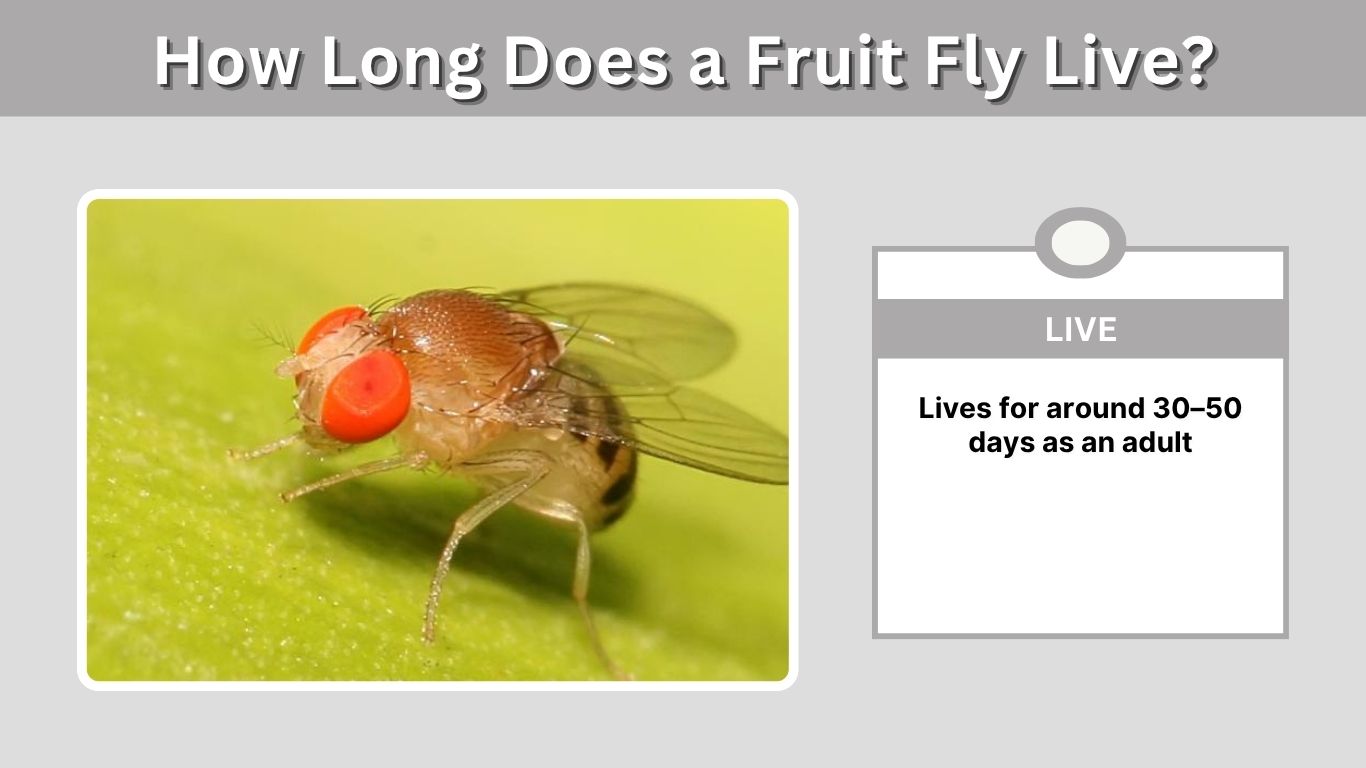
A fruit fly may look short-lived, but it can survive for several weeks under favorable conditions. The common fruit fly (Drosophila melanogaster) generally lives for around 30–50 days as an adult, although temperature, food, humidity, and environmental conditions can shorten or extend its life. More importantly, fruit flies reproduce extremely quickly. Eggs can hatch in about a day, larvae develop within several days, and a new generation may reach adulthood in roughly 8–10 days in warm conditions. This rapid life cycle is why a small kitchen infestation can quickly become a large one.
How Long Does a Fruit Fly Live?
The average fruit fly lifespan is usually measured in weeks rather than days.
Adult fruit flies commonly survive for about one month, while some may live approximately 40–50 days when temperature, food, and humidity are favorable.
Average Fruit Fly Lifespan
A typical timeline looks like this:
- Egg: about 1 day
- Larva: about 4–6 days
- Pupa: about 4–6 days
- Adult: roughly 30–50 days
- Complete lifespan: often several weeks to around two months
Development can be much slower in cool environments.
Because adults can reproduce long before they die, one fruit fly can contribute to several overlapping generations inside a home.
How Long Does a Fruit Fly Live as an Adult?
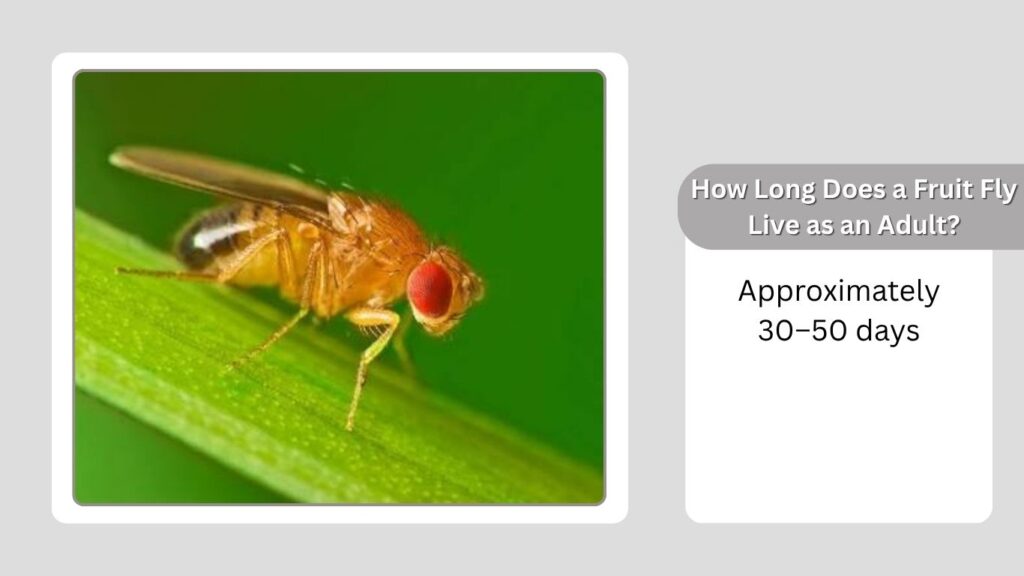
The adult stage is considerably longer than many people assume.
A mature fruit fly may live for approximately 30–50 days under favorable conditions.
What Adult Fruit Flies Do
During this stage, adults:
- Search for fermenting food
- Feed on yeasts and microorganisms
- Find mates
- Lay eggs
- Move between breeding sites
- Produce multiple generations
Females do not have to wait until late in life to reproduce. They can begin laying eggs soon after reaching maturity.
This makes eliminating breeding sites more important than simply waiting for existing adults to die.
Fruit Fly Life Cycle
Fruit flies undergo complete metamorphosis.
Their life cycle has four distinct stages:
Egg → Larva → Pupa → Adult
Each stage can develop rapidly when temperatures are warm and fermenting food is readily available.
Egg Stage
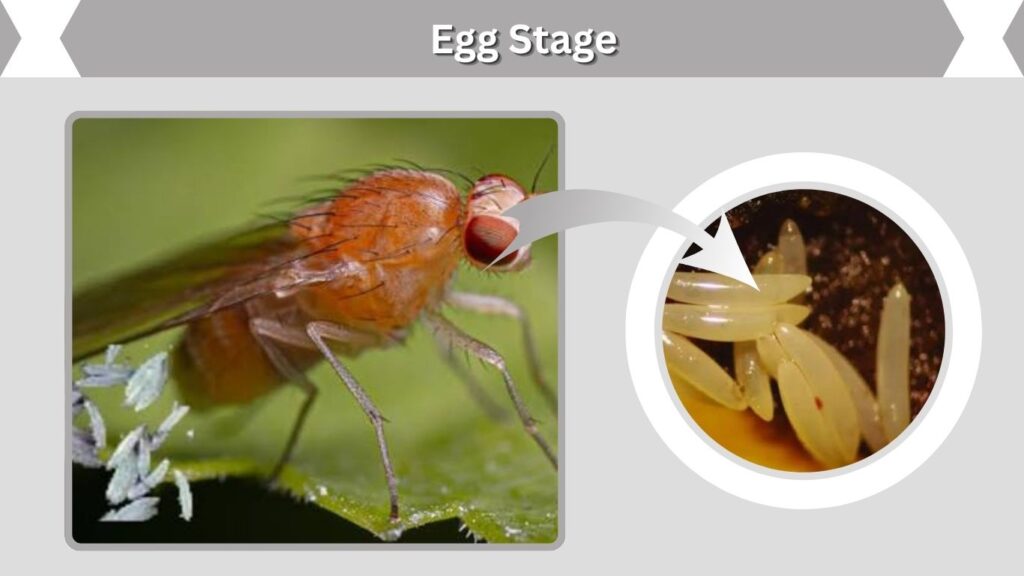
Female fruit flies lay extremely small eggs on or near moist fermenting material.
Common locations include overripe fruit, vegetables, garbage, beverage residue, and organic material inside drains.
How Long Until Fruit Fly Eggs Hatch?
Under warm conditions, eggs may hatch in approximately 24–30 hours.
The newly hatched larvae immediately begin feeding on microorganisms and decomposing organic material.
Larval Stage
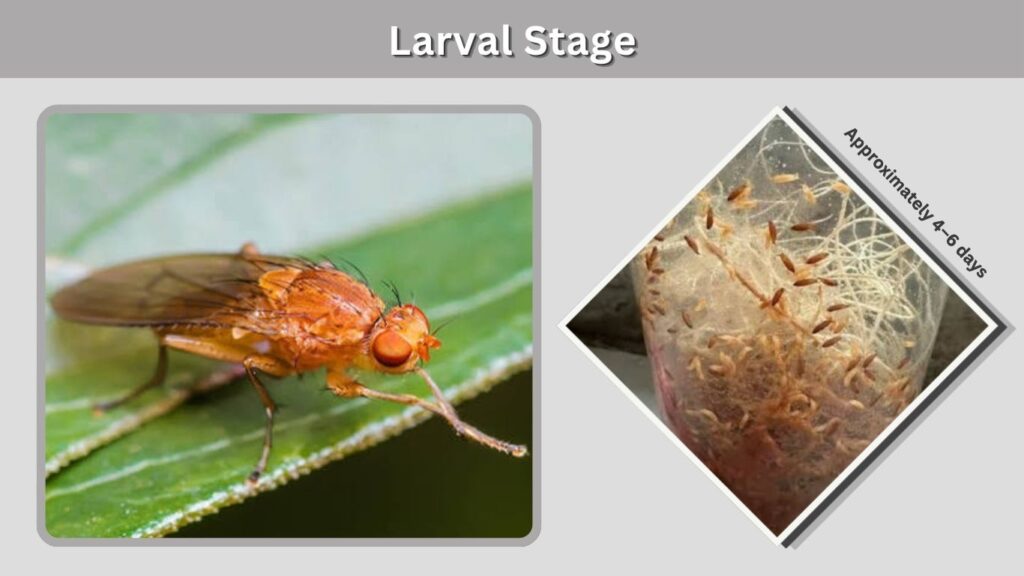
Fruit fly larvae are tiny white or cream-colored maggots.
They pass through three larval stages as they grow.
How Long Do Fruit Fly Larvae Live?
The larval period commonly lasts approximately 4–6 days under favorable conditions.
During this time, larvae feed continuously before moving to a relatively dry location where they can pupate.
Temperature and food quality have a major influence on how quickly they develop.
Pupal Stage
After completing the larval stage, the fruit fly forms a pupa.
The pupa initially looks pale but gradually becomes darker as the adult develops inside.
How Long Does the Pupal Stage Last?
The pupal stage commonly lasts approximately 4–6 days.
When development is complete, the adult fly emerges and eventually begins reproducing.
This means an entire generation can sometimes develop in only about 8–10 days under warm indoor conditions.
How Long Does a Fruit Fly Live in Your House?
A fruit fly can potentially survive for several weeks inside a house if it has access to food and moisture.
Kitchens often provide ideal conditions.
Indoor Food Sources
Fruit flies may survive around:
- Overripe bananas
- Apples
- Tomatoes
- Potatoes
- Onions
- Fruit juice
- Wine
- Beer
- Soda
- Garbage disposals
- Trash cans
- Recycling containers
- Dirty drains
- Food spills
A warm kitchen with continuous access to fermenting material can support multiple fruit fly generations at the same time.
This is why an infestation may appear to continue indefinitely even though individual flies do not live very long.
Why Do Fruit Flies Seem to Live Forever?
Individual fruit flies do not live forever.
What appears to be one continuous population is usually a series of rapidly overlapping generations.
Rapid Reproduction
A female can lay hundreds of eggs over her lifetime when conditions are favorable.
By the time the first adults begin dying, their offspring may already be developing as larvae, pupae, or newly emerged adults.
As a result, simply killing visible flies rarely eliminates an infestation.
How Long Does a Fruit Fly Live Without Food?
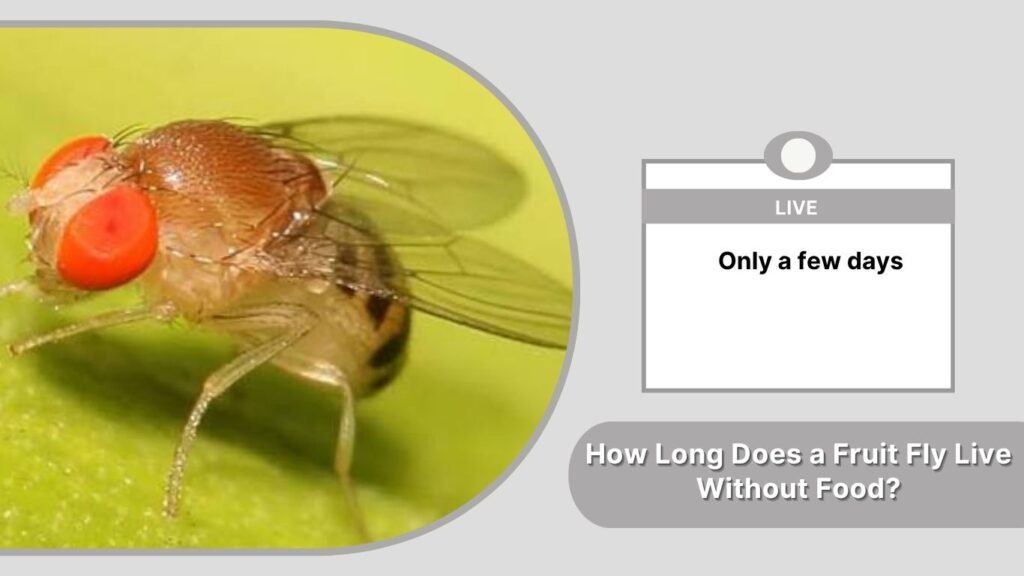
Fruit flies survive much less time when food is unavailable.
An adult deprived of suitable nutrition may survive only a few days, although the exact period varies depending on temperature, humidity, age, and access to water.
Water Matters Too
Fruit flies obtain moisture from fruits, fermenting liquids, and other wet organic materials.
A fly with access to water but no food may survive longer than one deprived of both food and moisture.
Because tiny amounts of food residue are enough to support fruit flies, completely starving them inside a kitchen can be surprisingly difficult.
What Do Fruit Flies Need to Survive?
Fruit flies are attracted primarily to fermenting organic material rather than fresh food alone.
Important Resources
They need:
- Moisture
- Sugars and carbohydrates
- Yeasts
- Bacteria and other microorganisms
- Suitable egg-laying sites
- Warm enough temperatures
Overripe fruit creates an ideal environment because natural yeasts begin breaking down its sugars.
Does Temperature Affect Fruit Fly Lifespan?
Yes. Temperature strongly influences both development and adult longevity.
Warm Temperatures
Warm conditions accelerate egg, larval, and pupal development.
This allows fruit fly populations to grow rapidly.
Extremely high temperatures, however, can reduce survival.
Cooler Temperatures
Cool temperatures generally slow development and activity.
Eggs and larvae may take longer to mature, meaning the entire life cycle is extended.
This is one reason refrigerating ripe fruit can help prevent fruit fly infestations.
How Fast Do Fruit Flies Reproduce?
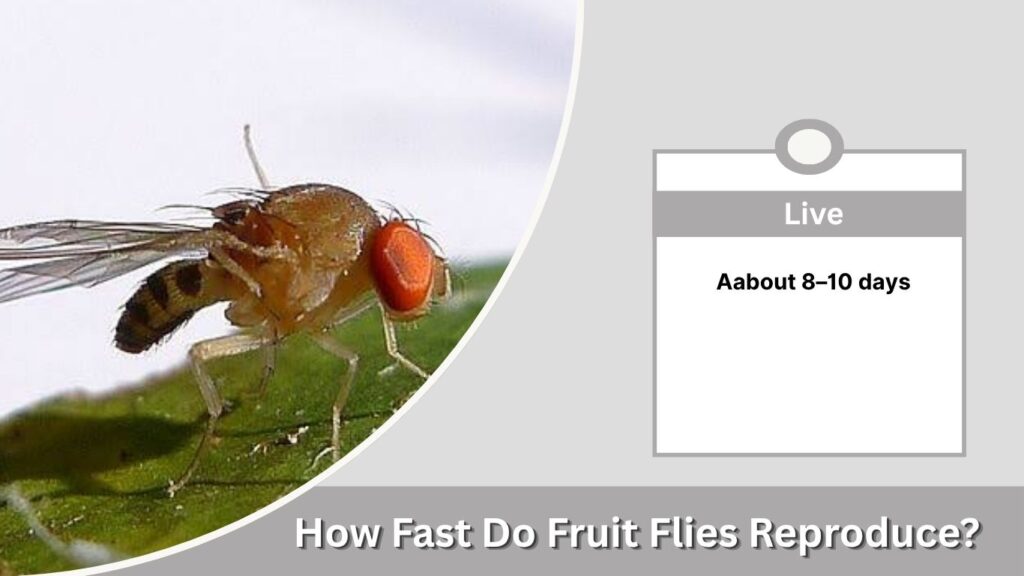
Their reproduction is one of the main reasons they become household pests so quickly.
A female can lay hundreds of eggs during her lifetime.
From Egg to Adult
In favorable warm conditions, development from egg to adult may take only about 8–10 days.
That means new adults can appear little more than a week after eggs are deposited.
Several generations can therefore develop during the time it takes one adult generation to die naturally.
Where Do Fruit Flies Spend Their Lives?
Common household fruit flies stay close to places containing fermenting food.
Typical Locations
You may find adults around fruit bowls, garbage cans, sinks, recycling bins, bottles, kitchen counters, compost containers, and drains.
Larvae remain much closer to the actual breeding material because they cannot fly.
Pupae may be found slightly away from the wet food source on drier surfaces.
How Long Will Fruit Flies Live After Removing the Fruit?
Removing fruit helps, but existing adults may continue flying around for several days or longer.
More importantly, larvae and pupae may already be developing in another location.
Check for Other Breeding Sources
Inspect:
- Trash cans
- Garbage disposals
- Empty bottles
- Recycling bins
- Potato and onion storage
- Drains
- Damp mops
- Compost containers
- Food underneath appliances
Removing every breeding source breaks the life cycle.
Can Fruit Flies Survive in Drains?
Fruit flies can reproduce around drains when fermenting organic material has accumulated there.
They are not living on clean water alone.
Why Drains Become a Problem
Food particles, grease, juice, and other organic residues can form a moist layer along a drain.
Fruit flies may lay eggs in this material, allowing larvae to develop away from obvious fruit sources.
Cleaning away the organic buildup is therefore more effective than simply pouring water down the drain.
How to Shorten a Fruit Fly Infestation
Because fruit flies reproduce faster than they die, control should target every stage of the life cycle.
Remove Breeding Sources
Discard rotten or overripe produce and refrigerate ripe fruit whenever possible.
Wash trash and recycling containers, clean beverage spills, and remove food residue from drains and garbage disposals.
Adult traps can help reduce the number of flying insects, but they should be used alongside sanitation.
Once all breeding sources are removed, the remaining population should gradually disappear because adults can no longer replace themselves with new generations.
FAQs
1. What is the average lifespan of a fruit fly?
An adult fruit fly generally lives for about 30–50 days under favorable conditions, although environmental conditions can significantly affect longevity.
2. How long does a fruit fly live in a house?
A fruit fly may survive for several weeks indoors when fermenting food and moisture are continuously available.
3. How long can fruit flies live without food?
Without suitable food, adults usually survive only a few days. Survival depends on temperature, humidity, and whether they still have access to water.
4. How quickly do fruit flies reproduce?
Under warm favorable conditions, fruit flies may develop from egg to adult in approximately 8–10 days, allowing populations to grow extremely quickly.
5. Why do fruit flies keep coming back?
Usually because eggs, larvae, or pupae remain in a hidden breeding source such as rotten produce, drains, garbage, recycling residue, or spilled liquids. Removing those sources is essential for stopping new adults from emerging.